


The Vietnam War grew out of the Cold War struggle to stop the spread of communism, evolving from France’s colonial fight in Indochina into a full U.S. military commitment by the mid 1960s. Between roughly 1955 and the fall of Saigon in 1975, more than half a million American troops cycled through the region, while millions of Vietnamese, Laotians, and Cambodians were caught in the crossfire. It was the first “living room war,” broadcast on television, and it split the United States over the draft, protests, and a conflict many never fully understood.
These 50 facts dig into the hidden side of that war, from secret bombing campaigns and wild psychological operations to draft dodgers, unlikely heroes, and decisions that still echo today.
1 Laos Most Heavily Bombed Country

During the Vietnam War, U.S. leaders, including President Lyndon Johnson, forbade an invasion of North Vietnam, so the military relied on massive aerial bombardment as its main way to attack the North and its supply routes. This strategy expanded into neighboring, officially neutral Laos, where the United States secretly dropped about two million tons of bombs between 1964 and 1973, averaging roughly eight bombs every minute for nine years. The campaign made Laos the most heavily bombed country in history and left the landscape littered with unexploded ordnance that still endangers civilians today.
2. From 1965 to 1968, during the Vietnam War, the United States dropped 32 tons of bombs per hour on North Vietnam as part of its air campaign. Over the course of the conflict, U.S. forces dropped a total of 7 million tons of bombs in the region, including 400,000 tons of napalm. This bombing total was more than three times the tonnage dropped in all of World War II.
3. In 1967, the U.S. military launched Operation Popeye, a cloud-seeding mission in Vietnam that aimed to increase rainfall and extend the monsoon season. Military aircrafts sprayed chemicals into clouds to trigger heavier rains over enemy supply routes and later described the effort as “outstandingly successful.” After the operation was declassified in 1974, international concern over weather modification led the United Nations to ban the weaponization of weather.
4. During the Vietnam War, President Lyndon Johnson and Defense Secretary Robert McNamara launched Project 100,000, which swept through the ghettos of America to induct low-IQ men into the armed forces, a group critics called “McNamara’s Morons.” The program recruited about 354,000 intentionally selected “misfits” who often could not read or write, had IQs below 75, or had dropped out of high school, and some of them did not even know the United States was at war. One estimate holds that 25 percent of U.S. Army soldiers in Vietnam came from these kinds of recruits, and they suffered casualty rates three times higher than regular soldiers.
5. In 1968, after an article exposed widespread marijuana use among U.S. soldiers in Vietnam, media uproar in the United States pushed the Army to crack down, and many troops in Vietnam shifted to heroin, which was odorless and harder to detect. By 1973, reports estimated that up to 20 percent of these soldiers were habitual heroin users. Heroin and opium use became widespread as servicemen tried to cope with the war environment, and a 1974 study found that about 43 percent of U.S. servicemen who served in Vietnam had used heroin or opium at least once, with roughly half of them dependent at some point.
6 Operation Ranch Hand Dioxin Legacy
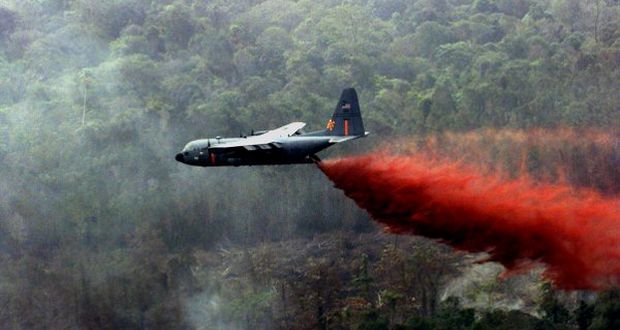
During the Vietnam War, the United States carried out Operation Ranch Hand, spraying nearly 20 million gallons of chemical herbicides and defoliants across large areas of Vietnam. The program aimed to strip away vegetation, but the chemicals lingered in the environment long after the spraying ended. Their longstanding effects led to approximately 400,000 deaths in Vietnam. At least 500,000 children were born with congenital disorders linked to this exposure.
7. During the Vietnam War, the U.S. military sprayed about 73 million liters of Agent Orange on Vietnam in a campaign it first called Operation Hades to strip away vegetation that hid Viet Cong forces. It destroyed forests, mangrove swamps, and cropland. U.S. soldiers, unaware of the danger, sometimes showered in the empty 55-gallon drums, used them to store food, and repurposed them as barbecue pits. The dioxin in Agent Orange contaminated soil, water, and food chains, causing long-term health problems, birth defects, and environmental damage that still affect both Vietnamese civilians and American veterans.
8. On April 26, 1968, architecture student Kiyoshi Kuromiya and some friends at the University of Pennsylvania announced that a dog would be burned alive with napalm in front of the campus library to protest the Vietnam War. Thousands of people turned up to stop the supposed killing and were handed a leaflet that read, “Congratulations on your anti-napalm protest. You saved the life of a dog.” The leaflet then continued, “Now, how about saving the lives of tens of thousands of people in Vietnam?”
9. In Vietnam, people do not commonly call the conflict with America the Vietnam War but instead refer to it as the Resistance War against America or simply the American War.
10. In 1968, in South Vietnam, U.S. Army Master Sergeant Roy Benavidez heard a distress call from a 12-man Special Forces team surrounded by an estimated 1,000 North Vietnamese troops. Armed only with a knife and his medical bag when he jumped from a helicopter into the firefight, he spent the next six hours under heavy fire treating the wounded, organizing the defense, and dragging his comrades to evacuation helicopters. By the time rescuers pulled him out, he had suffered so many wounds that medics at the base assumed he was dead and placed him in a body bag. As a doctor prepared to zip it closed, Benavidez spat in his face to show he was still alive.
11 Hugh Thompson Stops My Lai

During the Vietnam War, U.S. Army officer Hugh Thompson Jr. ordered his men to point their guns at American soldiers when he saw them attacking Vietnamese civilians at My Lai. He used his helicopter crew to shield the villagers and made it clear that his men would protect them from further fire. By turning his guns on his own side to defend unarmed people, he helped put a stop to the My Lai massacre.
12. During the Vietnam War, the U.S. government ran a secret sabotage program called Project Eldest Son that targeted Vietcong weapons. American operatives slipped thousands of doctored AK-47 and mortar rounds into enemy stockpiles, each rigged to explode in the gun and kill or maim the person firing it. At the same time, they leaked fake documents that cast doubt on quality control in Chinese munitions factories, so the Vietcong would blame bad Chinese ammo rather than deliberate tampering.
13. During the Fall of Saigon in April 1975, South Vietnamese pilot Major Buang-Ly loaded his family of five into a small Cessna and flew out over the sea looking for the USS Midway. When he found the carrier, he dropped a paper note onto the flight deck asking for space to land. Captain Larry Chambers ordered several helicopters pushed overboard to clear the deck, risking equipment losses to save the family. With the deck finally open, Major Buang brought the Cessna in and landed safely on the Midway.
14. In 1968, during the U.S. presidential campaign, Richard Nixon feared that a breakthrough at the Paris peace talks between North and South Vietnam might end the war and damage his chances of winning. According to later accounts, he sent an aide through back-channel contacts to urge the South Vietnamese government to stall and withdraw from the negotiations. South Vietnam then pulled back from the talks just before a possible breakthrough. This move helped prolong the Vietnam War while Nixon campaigned on the promise of achieving “peace with honor.”
15. During the Vietnam War, U.S. soldiers coined the term “fragging” for attacks in which they threw live fragmentation grenades into the quarters of officers they considered incompetent. These grenade attacks targeted leaders their men believed put them at unnecessary risk and became notorious within the ranks. The threat grew so common that Colin Powell, then a U.S. Army major, moved his cot every night from 1968 to 1969 to avoid becoming a fragging victim.
16 Professors Inflated Grades Vietnam Draft

During the Vietnam War, many college professors deliberately inflated male students’ grades so they would not flunk out and lose their draft deferments. Male students who failed or dropped out faced a higher chance of being drafted and sent to fight in Vietnam.
17. During the Vietnam War, U.S. Army truck drivers in convoy units facing constant ambushes began building their own “gun trucks” to protect supply runs. They converted standard 2.5 and later 5-ton cargo trucks into heavily armored rigs with sandbags and steel plating, mounting .50 caliber machine guns and even miniguns in the back. Painted black and given names like Brutus, Eve of Destruction, King Kong, Ace of Spades, and The Untouchable, these improvised behemoths served as heavily armed convoy escorts.
18. During the Vietnam War, many American soldiers stationed in Japan went AWOL and made their way to Sweden instead of returning to duty. Swedish Prime Minister Olof Palme strongly opposed the war and publicly took a stand against U.S. policy in Vietnam. He promised that Sweden would grant asylum to U.S. deserters, and the country became a haven for those fleeing military service.
19. During a mission in the Vietnam War, U.S. Marine sniper Carlos Hathcock crawled over 1,500 yards inch by inch for four days and three nights to reach a position where he could shoot a PAVN general, then killed him with a single shot and crawled back undetected. On another mission, Hathcock hunted his rival, a North Vietnamese sniper known as The Cobra, by watching for the glint of sunlight on the enemy’s scope. He fired one round at that reflection, killing him instantly. When Hathcock examined the body, he saw that his bullet had passed straight through the sniper’s scope without touching the sides.
20. During the Vietnam War, the United States provided Laos with funds and concrete to expand an airport in Vientiane that could serve as a base for U.S. fighter jets. The money and materials arrived before any contract was signed, so the Royal Laotian Government decided to use them differently. Instead of building the runway, they constructed Patuxai, a large war memorial honoring soldiers who died in World War II and the struggle for independence from France. The monument’s origin as a diverted airport project earned it the nickname “vertical runway.”
15 Most Controversial & Costly Blunders in History
21 Vietnam FNG Syndrome New Recruits

During the Vietnam War, the U.S. military followed an individual replacement policy and sent new soldiers one by one into existing units in Vietnam instead of rotating whole units in and out, a practice that troops later called FNG syndrome. Combat veterans in these units saw the newcomers as liabilities and often shunned, harassed, and humiliated them as “FNGs” or “fucking new guys.” Army psychiatrists linked this routine mistreatment of replacements to a sharp rise in psychiatric casualties and removed many of these soldiers from the battlefield.
22. The state of Massachusetts passed a law during the Vietnam War, asserting that it could not conscript its citizens to fight in any undeclared war. State lawmakers aimed this statute directly at the Vietnam conflict, which Congress had never formally declared as a war. Massachusetts then challenged the federal government in court in a case known as Massachusetts v. Laird. The U.S. Supreme Court declined to hear the case, leaving the law without effect and the draft in place.
23. During the Vietnam War, many U.S. soldiers used their steel helmets as canvases for graffiti, turning standard-issue gear into a form of individual expression and protest. They scrawled slogans like “Born to Kill” and “War is Hell,” along with nicknames, symbols, and personal messages. These markings clearly violated military dress and appearance regulations, but officers in the field often overlooked them.
24. American POW During the Vietnam War Doug Hegdahl played the part of a quiet, foolish captive, and his Vietnamese guards nicknamed him “The Incredibly Stupid One.” While imprisoned, he secretly memorized the names, dates of capture, methods of capture, and personal details of 256 fellow prisoners of war, setting the list to the tune of “Old MacDonald Had a Farm.” When he returned to the United States, he provided the names of more than 200 POWs from memory. He is still alive (as of November 2025) and can still recite that entire roster to the same tune to this day.
25. In 1967, hippies attempted a ritual to levitate the Pentagon in the air to end the Vietnam War during the October 21 March on the Pentagon in Washington, D.C. Activists such as Abbie Hoffman and others framed the event as an exorcism, chanting and performing a ceremony that, they said, would lift the five-sided building into the air, turn it orange, and shake loose the evil they believed fueled the war. The Pentagon never moved.


RE: Fact #15 (Vietnam War Origin Of Fragging) – Back in the 80s when I was in college, an ROTC friend told me the army had learned a big lesson from something. Apparently, they started teaching new lieutenants to let their platoon sergeants pretty much run the show until the lieutenants got the hang of things.
RE: Fact #2 (Seven Million Tons Bombs Dropped) – You should really check out the War Remnants Museum in Ho Chi Minh City. It’s a powerful reminder of what happened in Vietnam. Honestly, it makes you question what we were taught in school. I felt so incredibly disgusted and ashamed of my country after visiting. I even bought a book there from a guy who, like me, was too young to have fought. He was missing three limbs because he stumbled upon some of the unexploded ordnance that we left scattered all over his country. Sadly, people are still being killed and injured by stuff from the USA there to this day.
RE: Fact #2 (Seven Million Tons Bombs Dropped) – That Ken Burns documentary is definitely worth checking out.
RE: Fact #3 (Operation Popeye Weather Warfare Vietnam) – So, I was wondering if longer monsoons would actually be a good thing for the US in Vietnam. My impression was that the mud and wetness were a big problem for them, and since the Vietnamese were more accustomed to it, it didn’t slow them down as much.
RE: Fact #10 (Roy Benavidez Six Hour Rescue) – Wow, that’s incredible. So in 1965, he was in South Vietnam as an advisor, stepped on a land mine, and was sent back to the US. The doctors there basically said he’d never walk again and were getting him discharged. But he apparently got pretty ticked off by that diagnosis, plus seeing stuff on TV like flag burnings and criticism of the war, so he started this secret nightly routine to try and walk again. He’d get out of bed, crawl to the wall, prop himself up, and try to stand, starting with his toes and working his way up using his ankles and legs. After over a year in the hospital, he walked out in July 1966, totally determined to go back to Vietnam. And even with the ongoing pain from his injuries, he did just that, returning in January 1968.
This dude is like a real-life Doomguy. He came out of hell unable to walk, then he flipped Satan off and went right back into hell.
He wasn’t stuck in North Vietnam with the VC; actually, the VC were the ones trapped there with him.
RE: Fact #38 (Nguyen Cao Ky Liquor Store) – Wonder how many folks just think his “back when I was leader of the old country” tales are just him being a rambling old guy.
It’s hard to tell who you’re interacting with sometimes.
Yeah, it’s wild how some super successful people end up with nothing, even working jobs you wouldn’t expect.
RE: Fact #18 (US Deserters Granted Asylum Sweden) – I know a long joke about Sweden. There’s Norway I could Finnish it.
RE: Fact #22 (Massachusetts v Laird Draft Challenge) – It’s pretty interesting that there’s no jurisdiction here. I’d love to hear more about that part of it.
So it seems like it was dismissed without a formal opinion, but there’s a dissenting opinion that discusses the jurisdictional issues.
RE: Fact #24 (Doug Hegdahl Memorizes POW Names) – I’d really like to see a movie about this! It would be so cool to hear his super smart inner thoughts while he has to pretend to be clueless on the outside.
Only if Ben Stiller plays Hegdahl and a 12-year-old Vietnamese boy runs the POW camp.
RE: Fact #17 (Vietnam Gun Trucks Armored Convoys) – At Phu Bai, we saw Uncle Meat, Babysitter, and Executioner.
They’ve still got Eve Of Destruction in a museum at Fort Eustis. As far as I know, it’s the only Vietnam-era gun truck still around.
That’s also the name of a protest song about the war, but that might just be a coincidence.
Did they travel together or just provide security for the unarmed trucks?
Yeah, a bit of both. They definitely added some humor to a pretty serious situation.
RE: Fact #39 (Admiral James Stockdale Stoic POW) – Having a good education really helps when things get tough. The two main figures in Stoicism were a slave and an emperor, and they both understood that a person’s social status doesn’t really matter in the grand scheme of things. If you’re having a hard time with the way things are right now, I’d suggest checking out Marcus Aurelius’s “Meditations.” Love your fate.
There’s a difference between being stoic and being apathetic. Hopefully, some people can start to see that Aurelius’s ideas on stoicism weren’t about ignoring everything around you to chase some fake happiness.
A big part of what makes Stoicism so strong, in my opinion, is how it encourages us to face our problems head-on. It prompts us to ask, “Could I handle the worst possible outcome? Could I live with that?”
Really, Stoicism is just a way to cope. The wiki puts it perfectly when it talks about “accepting the moment.”
When you look at how people define “stoic” nowadays – “a person who represses feelings or endures patiently” – I don’t think someone who just represses their emotions is truly being stoic. That’s not really accepting the situation for what it is.
RE: Fact #37 (Ghost Tape Psyops Vietnam Jungle) – Wow, that helicopter in the source sounds like it’s ready to blast some noise! The ones I saw looked like they had megaphone-shaped things instead of rocket pods. But seriously, that chopper has a really unique sound, totally unmistakable. And the speakers were something else – sound tech has really come a long way. These speakers were so fuzzy and garbled, any attempt to simulate speech just turned into static.
What was meant to sound like spirits wailing actually sounded like they were torturing a cat on the chopper and then bragging about it. Honestly, it could have been Vietnamese, English, or even Martian for all I could tell.
Psychological Operations in Vietnam could be pretty funny sometimes. I only caught those PsyOps helicopters a couple of times. On the other hand, those Chiêu Hồi leaflets were everywhere and actually useful. I heard a story about them once.
RE: Fact #22 (Massachusetts v Laird Draft Challenge) – This seems like a really big constitutional issue. The constitution actually says Congress has to declare war, which implies nobody can be drafted unless that happens. The idea was clearly for the people’s representatives to approve any war that people would have to fight in. It’s wild how such fundamental constitutional law questions get ignored.
Congress has the power to declare war, but that doesn’t automatically mean they need to do so before drafting people or allocating funds. Those are separate powers.
But Congress has the power to declare war and the power to raise armies separately. Since Congress passed the Selective Service Act, it’s totally within their rights.
It seems like you’re mixing up two separate points. One is about the Selective Service Act being able to draft people, and the other is about sending people off to war without a declaration first, which is what’s being talked about here.
Yeah, but “raising armies” could just mean hiring and training volunteers or mercenaries. Would you feel differently if they used a draft to guard borders, wash cars, or work in munitions factories tomorrow?
Seriously, why isn’t the Supreme Court, with all their talk about “states’ rights,” looking at this issue again?
RE: Fact #30 (Jeremiah Denton Blinks Torture Message) – He later went on to become the first Republican ever elected to the U.S. Senate from Alabama by popular vote.
It’s really sad to see how partisanship has affected this country, especially when people are bad-mouthing a Vietnam War hero right after he passed away.
You know, back then, they were already badmouthing war heroes, both during and right after the war.
RE: Fact #21 (Vietnam FNG Syndrome New Recruits) – Yeah, I’m pretty sure this was a thing in WW2 too. I remember reading in “Band of Brothers” about how they weren’t always super welcoming to new guys joining the unit.
They’re new, green, and haven’t bonded with the guys yet. They don’t have shared experiences or any battle experience, which could make them a liability in the field. It makes sense why that wouldn’t go well when you’re with a group of guys dealing with PTSD as it happens.
Things were pretty different back then. Way more people died in WWII than in Vietnam, especially at Normandy. That’s where a lot of the ideas about “replacements” really took shape. In the first two months after D-Day, many Anglo-American divisions saw over 100% casualties. Honestly, the US Army wasn’t great at handling replacements in WWII, especially when you compare them to the Germans or Brits. There were bigger organizational issues at play too; the US Army focused on fewer divisions to keep more people working on the homefront for economic reasons. The US didn’t have a large reserve in Europe that could regularly swap divisions in and out of combat. New soldiers would get basic training at replacement centers and then, without any unit or field experience, get sent straight to active units on the front lines. They often lacked practical skills and weren’t prepared for the harsh realities of war. So, these soldiers would arrive at their front-line units, get attacked almost immediately, and many would break under the stress or get killed. It became a bit of a self-fulfilling prophecy: veteran soldiers didn’t want to bother teaching the new guys life-saving skills because they figured they’d just end up dead anyway, and the new recruits often got the riskiest jobs.
Yeah, All Quiet on the Western Front talked about this too. Apparently, by the end of the war, Germany was so desperate they were sending in brand new recruits who didn’t stand a chance. They were being thrown into the heaviest fighting without any time to learn what to do, so they just ended up dying.
RE: Fact #38 (Nguyen Cao Ky Liquor Store) – There are tons of Vietnamese folks in Orange County.
RE: Fact #3 (Operation Popeye Weather Warfare Vietnam) – Funny how Operation Popeye might have actually messed up Operation Ivory Coast. The Ivory Coast one was a special forces mission to get 61 POWs out of the Son Tay camp near Hanoi. The whole thing was pretty much perfect, except the prisoners had already been moved a few days before because the camp’s water got contaminated from flooding.
RE: Fact #21 (Vietnam FNG Syndrome New Recruits) – Plus, think about what happens with “FNG Syndrome” for a soldier who was part of Project 100,000. You’re putting someone into a unit with experienced soldiers who isn’t really cut out for combat to begin with. It would be a miracle if they lasted very long.
Yeah that’s why “McNamara’s morons.” McNamara had this idea to train the less capable soldiers with educational videos, thinking it would bring them up to speed. Naturally, they weren’t good soldiers. It’s not their fault if they weren’t the sharpest tools in the shed, as genetics and upbringing play a role, but it seems like a bad idea to send people who aren’t cut out for it into combat. To make matters worse, when the program wasn’t working, they started adding some regular soldiers to the group. Picture yourself as an average guy drafted into the war, only to find your unit is full of people who struggle to keep up. It would make you wish you’d fled to Canada.
In the movie, aren’t Forest Gump and Bubba supposed to be that?
RE: Fact #37 (Ghost Tape Psyops Vietnam Jungle) – You should check out Hanoi Hannah. She used to broadcast on the radio in Vietnam and say stuff like, “Your government has abandoned you, GI. They lied to you, GI.” She also used to call out specific US army units and broadcast their locations, read the names and hometowns of soldiers who had recently died, and even wish some soldiers a happy birthday.
The really bad part after the war was that she was actually right. The United States lied to everyone to go to war, like with the Gulf of Tonkin Incident and supporting South Vietnam, which they called “Democratic.” Plus, the US government cut funding for helping returning veterans with things like PTSD, the VA, and other support.
Vietnam has a long history of resisting invasions from superpowers. They’ve learned that direct confrontation usually isn’t the winning strategy. And often, the truth is the most effective propaganda.
RE: Fact #1 (Laos Most Heavily Bombed Country) – With a population of about 32 million back then, that works out to nearly 400 pounds of high explosive for every single person in the country.
That’s like almost a whole American’s worth of explosives per person.
RE: Fact #25 (1967 Hippies Try Levitate Pentagon) – Even if they managed to float the Pentagon, how would that have actually stopped the Vietnam War?
the proposed ritual was supposed to turn things orange, vibrate, and make all evil emissions flee to immediately end the war. Makes total sense, right?
Makes sense. If you’re on some kind of hallucinogen.
RE: Fact #28 (Patrick Tadina Longest Serving Ranger) – As a Vietnamese person, I can totally relate. If someone’s rocking pajamas and sandals, I wouldn’t be able to tell them apart from my grandpa!
Until grandpa pulls out an M16
Yeah, I’ve heard that some special ops folks in Vietnam carried AKs, not as their main weapon, but to mess with the enemy. The sound of an AK is pretty different from an AR-style rifle, and the tracer rounds were different too – I think US tracers were green and Soviet ones were red. So, if a long-range patrol team got spotted and fired on, they could fall back and shoot back with captured AKs, which would hopefully confuse the VC and give the team a chance to get away.
The challenge will be letting him watch TV and seeing if he talks back to it.
RE: Fact #34 (Operation Babylift Evacuates Vietnamese Orphans) – Over 2,500 kids were moved and adopted by families in the US and other countries. It was a bit of a hot topic though, with folks questioning if it was truly what was best for the kids, especially since not all of them were without parents. Makes you think.
Forcibly relocating and assimilating a group against their will is pretty much the textbook definition of genocide. And honestly, every step of the US involvement in Vietnam was a war crime.
That whole idea is just ridiculous.
There were “questions” asked, and the answer was that it was supposedly in the children’s best interest.
In one instance, the bus that took the children from the orphanage to the airport actually had more kids on it than when it started. It turns out the extra child had been passed through an open window, probably by his parents, while the bus was stuck in traffic.
Plus, with 2500 children out of a population of 80 million, that’s hardly an attempt to wipe out the Vietnamese nation.
I’ll go out on a limb and say that wasn’t the best move for the first 78.
RE: Fact #11 (Hugh Thompson Stops My Lai) – Hey, I’m Vietnamese! I remember seeing a documentary on TV about Hugh and Larry, two of the three guys who used his helicopter to help civilians during the My Lai massacre. After the war, he actually went back to visit the farmers he’d saved, and the documentary was about that visit. It’s about 36 minutes long. The documentary’s called “The Sound of Violin in My Lai” and it’s available on YouTube, with most of it dubbed. It’s been a while since I watched it, so some minor facts might be a bit off.
The documentary won’t mention that he was kinda shunned in the army for doing something heroic like that.
So, I learned about this in a Vietnam War history class. It’s pretty sad that My Lai means “America the beautiful” or “beautiful America.” Back when Woodrow Wilson laid out his Fourteen Points after WWI, the Vietnamese actually had positive views of America, and Ho Chi Minh even tried to meet with Wilson to talk about Vietnam’s right to self-determination.
RE: Fact #40 (Topgun Boosts Navy Kill Ratio) – I know what I’m watching today…
RE: Fact #10 (Roy Benavidez Six Hour Rescue) – This guy went through an insane six-hour fight. He got seven major gunshot wounds, twenty-eight shrapnel holes, and his arms were slashed with a bayonet. Shrapnel was everywhere – his head, scalp, shoulder, butt, feet, and legs. His right lung was destroyed, and he had injuries to his mouth and the back of his head from being hit with a rifle butt. A bullet from an AK-47 went through his back and out just below his heart. He was sent to a hospital in San Antonio, Texas, and was there for almost a year recovering. He received the Medal of Honor, Distinguished Service Cross, and five Purple Hearts. An absolute legend.
And he lived to be 63. What a name though, Sgt. Senor Chiga tu Madre Rasputin Benavidez!
Rasputin is a fitting comparison.
He actually passed away at 54, but the Grim Reaper was too scared to try and take him until much later.
He was paralyzed from the waist down back in ’65 after stepping on a landmine.
Seriously, five purple hearts? How did they even land on that number? Like, “Okay, five fatal wounds should do it, here you go!”
I’m mostly joking, but I’m genuinely curious why five.
And wow, humans are truly incredible.
He got four for that specific situation. He’d already received one earlier when he got hurt by a landmine.
Honestly, I’m just amazed by what people can do.
Check out the Vietnam part on that page – it talks about the landmine injury and how he recovered, and it’s totally wild.
He might have earned five Purple Hearts over time, not five in this one instance.
Even though humans aren’t as muscular as most animals, it turns out we’re really good at endurance. That’s probably why our hunter ancestors would wear out their prey with long chases.
RE: Fact #48 (Muhammad Ali Refuses Vietnam Draft) – I grew up in the 60s, but my family wasn’t really into watching boxing or talking about politics or the Vietnam War. So, I didn’t know much about him back then, or his big fights, his change to Islam, or how he controversially refused to fight in a really unfair war. I ended up learning all about it later.
There’s a short video I saw that I found really interesting. I don’t think I’d ever seen these clips of Muhammad Ali before – his speaking skills and passion were amazing.
Here’s what he said at the time: “My conscience won’t let me go shoot my brother, or some darker people, or some poor hungry people in the mud for big powerful America. And shoot them for what? They never called me nigger, they never lynched me, they didn’t put no dogs on me, they didn’t rob me of my nationality, rape and kill my mother and father… shoot them for what? How can I shoot them poor people? Just take me to jail.”
And at the end of that video, there’s this classic moment where he really shuts down a young white student who supported the war: “If I’m gonna die, I’ll die right here, right now, fightin’ you, if I’m gonna die. You my enemy, not no Chinese, no Vietcong, no Japanese. You my opposer when I want freedom. You my opposer when I want justice. You my opposer when I want equality. Want me to go somewhere and fight for you? You won’t even stand up for me, right here in America – for my rights and my religious beliefs. You won’t even stand up for my rights here at home.”
That young white guy, who was definitely more educated than Muhammad Ali, couldn’t understand Ali’s simple logic. Ali couldn’t support a government that would lie to send young Americans to kill people who hadn’t harmed them and were just fighting for their own right to exist. This was especially true when there were Americans ready to deny *him* his own rights to freedom and self-determination. Muhammad Ali was totally right to refuse the draft. His conscience demanded it.
Ali’s choice was super clear, his determination unshakable, his spirit unbreakable. Truth and morality guided him.
I remember asking my own critics, over 15 years ago now, “Why can’t you stand up for my rights as an American citizen?” They couldn’t. Why?
It took so much bravery for Muhammad Ali to do what he did. At that time, people were being killed for speaking out against the Vietnam War. Ali will always be one of my biggest American heroes.
I couldn’t have said it better myself. I really respect conscientious objectors who can explain clearly why they’re taking their stand. Some people even refuse to fight for any country or government for religious reasons, and they end up in jail with a criminal record for it. That’s serious conviction.
RE: Fact #4 (Project 100000 McNamaras Morons Vietnam) – I’ve got some stories from my time in Vietnam back in the late 70s and early 71. My platoon was usually around 30 guys, with new folks coming in and others leaving every month. Our sergeants and lieutenants would change every couple of months, not like the old days where you’d train and deploy as a group. We had guys who were picked up by the FBI for not signing up for the draft and brought to induction centers in handcuffs. One guy broke into a gun shop with friends and got caught. The judge gave him a choice: 4 years in prison or 4 years in the Army. He picked the Army. Another guy was really out of it; he never showered. One day, he “lost” his M16 on a hilltop. He told us he’d been in and out of mental health facilities his whole teenage life. A few guys hadn’t even finished high school. And there was a guy in my platoon who had gotten in trouble multiple times for refusing orders and fighting. One night, he shot two majors, killing one. From 1967 to 70, if you were physically able to serve, you were in.
I’m curious what his sentence was for killing a major
Alfred Flint got six months in the brig, and then four years at Leavenworth. I saw an article about it maybe five or six years back. He killed a guy who had a wife and two kids, and the Army CID investigation really messed up the platoon.
My old friend from Australia, a judge gave him the option of jail or going to Vietnam. He chose Vietnam. Apparently, he didn’t get shot at too much and spent a lot of his downtime looking for drugs and booze. The scariest thing he witnessed was one of his buddies tossing a live grenade into an officer’s tent he disliked, which almost killed three people.
RE: Fact #18 (US Deserters Granted Asylum Sweden) – Just so you know, Palme was assassinated later on. I think he’s the only Swedish PM to ever be killed while in office.
RE: Fact #14 (Nixon Sabotages 1968 Paris Talks) – I mean, it’s fu*king Nixon. What were you expecting? Decency?
Nixon’s actions had severe consequences, leading to events like the Khmer Rouge. It’s like a series of terrible outcomes, with many people in Southeast Asia suffering as a result.
Also, remember how they basically wiped out Black communities by starting the crack epidemic and then painting all Black men as criminals and locking them up? Yeah, they even fessed up to that one. Fu*k the GOP forever.
RE: Fact #19 (Sniper Carlos Hathcock Perfect Shot) – His book says he may have crawled for 3-4 days to get to that spot, but after the shot, he was back in under an hour. If you like that kind of thing, Marine Sniper is a really great book. I finished it without stopping.
RE: Fact #14 (Nixon Sabotages 1968 Paris Talks) – Yeah, Nixon was a total dick, and everyone knew it. It was something people talked about all the time.
RE: Fact #13 (Major Buang Lands On Midway) – Those were Vietnamese Army UH-1 helicopters that flew in earlier escapees.
I was wondering why they didn’t just take off and then land again.
So, from what I understand, when they were evacuating, the helicopters were coming in so fast and often that they didn’t have enough time to refuel and redeploy them safely. They really needed that deck space cleared up quickly, so they ended up just pushing the helicopters off the side. It’s unlikely those helicopters could have flown back anyway.
For the Cessna, they wouldn’t have known how much fuel was left, so the main goal was getting it onto the deck right away. There wasn’t time to start up the helicopters again and get them off. They just shoved them off to make room for the landing. Ultimately, helicopters can be replaced, but lives can’t.
RE: Fact #45 (US Once Armed Viet Minh) – Yeah, it’s kind of a similar situation to what happened with the Mujahideen during the Soviet invasion of Afghanistan. The US gave them weapons, and after the Soviets left, the Afghan government collapsed. A new coalition government was set up with different Mujahideen groups.
But those groups didn’t really get along, which led to a civil war. Eventually, some of those factions broke away and formed a new group – the Taliban.
RE: Fact #15 (Vietnam War Origin Of Fragging) – Hey, not to sound rude, but that’s a pretty watered-down take on what happened. “Fragging” was usually about enlisted soldiers getting revenge, sometimes for political or moral reasons. A lot of them felt for the Vietnamese people’s fight or were lashing out because of how bad things were for them.
It’s kinda cool to see Americans push back against a war they felt was a load of sh*t. From what I’ve gathered, those Nazis were fully committed. I guess I wouldn’t toss a grenade at another American, but saying no to unjust orders is a good thing.
It’s easy to believe everyone in a group thinks the same, especially when you hear about it, but that’s often how propaganda works. It’s definitely not true that every German soldier or citizen was totally on board with the Nazis. Many Germans tried to defect or resist. For example, Rudolf Hess, the deputy Führer, tried to negotiate peace with Britain behind Hitler’s back. And then there’s Oskar Schindler, who you might know from his movie.
There were also people like Karl Plagg, who hid over a thousand Jews and helped 500 escape before the SS arrived. Albert Göring, Hermann Göring’s brother, used his position to save many lives. Heinz Heydrich, an SS officer who was horrified by the Final Solution after his brother was assassinated, spent two years before his suicide smuggling people out of Germany.
Hans Munch tricked the SS to keep people alive, using fake experiments to separate them and even arming them later. Kurt Gerstein, an SS officer involved with Zyklon B, would sabotage shipments and alert foreigners to what was happening in the camps. He even wrote confessions while imprisoned after the war that helped condemn war criminals. George Dasch, a German spy in America, betrayed his own squad to the FBI to stop their mission. He nearly faced execution but ended up with a 30-year sentence and was deported in 1948.
On top of all this, there were 22 assassination attempts on Hitler, and most of those involved were German. The main point is that no large group of people is ever completely united in their thinking, and claiming they are is a common propaganda tactic to dehumanize them. Plenty of Nazi Party members risked their lives to save others. While Nazi ideology was certainly evil, the people involved weren’t all the same. Saying they were is like blaming all Democrats for every drone strike during Obama’s presidency. Our brains often struggle with complexity, but whenever you hear an absolute statement, it’s worth questioning.
RE: Fact #17 (Vietnam Gun Trucks Armored Convoys) – You could strap a .50 cal to anything and it’d become deadly.
RE: Fact #23 (Born To Kill Helmet Graffiti) – Back when I was in, some kids who were a little rebellious would just stick a paper clip out on their uniform as a way to protest. I never had a problem with the paper clips themselves, but if I saw you wearing white socks, you were in for it.
RE: Fact #5 (Vietnam Heroin Epidemic Among Soldiers) – So they pushed them into war, drugged them up, and then declared a war on those very drugs?
RE: Fact #16 (Professors Inflated Grades Vietnam Draft) – Seriously, I’ll be devastated if I don’t get a good grade, professor.
RE: Fact #44 (Hamburger Hill Battle Hill 937) – They actually made a movie about it. It feels like a really long time between the war and when the movie came out, but it was only 12 years. I bet there were still a lot of people hurting back then.
RE: Fact #25 (1967 Hippies Try Levitate Pentagon) – These were the Yippies, not Hippies. They were using absurd tactics to protest the war, drawing inspiration from Alinsky’s “Rules for Radicals” and McLuhan’s “Global Village” theories for their media strategies. Essentially, they weaponized the media against the government. They weren’t doing this because they were foolish enough to believe in making things levitate; it was their way of having fun while opposing the war. It’s similar to the concepts behind the Flying Spaghetti Monster and the Church of the SubGenius.
It also reminded me of Emma Goldman’s quote about wanting to dance in a revolution. Pretty anarchistic stuff.
RE: Fact #30 (Jeremiah Denton Blinks Torture Message) – The really interesting thing here is that his wife was the one who spotted the strange blinking pattern, not the intelligence folks. There’s a book called “When Hell Was in Session” that goes into his whole experience. Denton was actually the first POW to get off the plane during Operation Homecoming and gave a super significant, though brief, speech.
Wives are pretty sharp and pick up on a lot! Like, back in WW2, this one soldier told his wife jokingly, “If I ever write you a letter with perfect grammar, the first word of each sentence will spell out a code.” Well, he ended up getting captured by the Nazis, remembered that joke, and British Intelligence used it to help him escape with supplies.
RE: Fact #26 (Milton Olive Medal Of Honor) – A park named after him is seriously one of the most beautiful spots in Chicago. That’s actually where I first learned about him, and it feels like such a fitting tribute to such a young guy. Definitely deserves respect.
RE: Fact #5 (Vietnam Heroin Epidemic Among Soldiers) – The US government was really worried about soldiers coming home hooked on heroin. But, it’s pretty interesting that most of them didn’t keep using once they were back.
It seems like if you make someone fight in a war for a questionable reason, they might use stuff to escape. But when they’re home with their loved ones, they don’t want to escape anymore.
Addiction isn’t just about drugs; it can be about things like gambling, shopping, sex, or food too.
I recall reading a study a while back that suggested some individuals can use opiates and other addictive drugs without getting hooked and can just stop. The main idea I remember from the study was that addiction sticks around when your life is rough and you don’t have anything to look forward to. It seemed to say that people who have decent lives are more resistant to addiction because they’re not trying to escape something and know what they stand to lose.
RE: Fact #42 (John Ripley Blows Vietnam Bridge) – His daughter Ellen later became a Lieutenant 1st Class and served as a warrant officer on USCSS Nostromo.
RE: Fact #6 (Operation Ranch Hand Dioxin Legacy) – It wasn’t just Vietnamese people who were harmed. The US Government also misled people about its effects. My dad was involved in deploying it in the delta. He ended up 95% disabled, and his crew members all got different kinds of cancer. He died early because of it, and children of US soldiers who were exposed to it have the same birth defects as those reported in Vietnam.
The VA took years to admit the problem they caused and even longer to start helping the service members, their families, and others affected by their use of Agent Orange.
It’s really tough when you see people who served our country get treated so badly. My dad passed away while trying to get his medical disability. He was a veteran of three wars, had a Purple Heart and a Silver Star, and the Veteran’s Administration just brushed him off. It’s something I feel strongly about. He was a POW, and it’s a disgrace how they lied and treated so many vets like that. My heart also goes out to the people in Vietnam who are still dealing with the effects of those chemicals, which should have been banned like mustard gas.
So, my family member got exposed to Agent Orange and developed tongue cancer in his thirties. It was rough – he lost part of his tongue, his salivary glands, a lot of teeth, and even a carotid artery. Then, in his fifties, he had heart issues and needed a quadruple bypass. It was weird because he wasn’t overweight and had a physically demanding job, so the heart problems were unexpected. He’s only now trying to get VA benefits for the cancer, but he’s not super hopeful they’ll link it to Agent Orange. He was always hesitant to ask for help, thinking other people needed it more. He really regrets volunteering for the military because of everything he’s gone through.
RE: Fact #28 (Patrick Tadina Longest Serving Ranger) – That’s a really impressive feat. He led a team in Vietnam and apparently, not a single one of the 200 men who served under him ever got hurt during his time as a leader. That’s something you don’t hear every day.
RE: Fact #29 (Helicopters Increase Vietnam Combat Exposure) – My dad was in Vietnam and said the most awful thing he saw was a kid, maybe 5 or 6, running out in front of a tank and getting run over. He had to clean up the mess afterward so the General wouldn’t have to see it. He also had to drive the General around town as punishment for something he did, and he said it was tough because he felt like he was always being watched.
RE: Fact #48 (Muhammad Ali Refuses Vietnam Draft) – Seriously, how were they expecting him to get to Vietnam without a passport?
Back then, I don’t think they were checking passports in Vietnam.
So, I thought US troops went to South Vietnam and checked passports, but it turns out they didn’t need them.
Yeah, a military ID can actually work like a passport sometimes, but I totally get the joke too.
Seriously, they just slap some masking tape on the back of your ID and write a number on it. That’s your ‘visa.’
RE: Fact #24 (Doug Hegdahl Memorizes POW Names) – After getting captured, Hegdahl figured his best bet was to act like he wasn’t too bright. He was treated pretty roughly for a few days until he managed to convince his captors he wasn’t worth much and posed no danger.
They asked him to write some anti-US stuff, and he agreed, but acted like he couldn’t read or write, which his captors bought. Thinking they’d found someone easy to sway, they assigned someone to teach him. But when Hegdahl seemed unable to learn, his captors gave up. Eventually, the Vietnamese started calling him “The Incredibly Stupid One,” and they basically let him wander around the camp.
With help from Joseph Crecca, a US Air Force officer who was also a prisoner, Hegdahl memorized details like names, capture dates, and how about 256 other prisoners were taken.
One of the intelligence officers asked if he could slow down his reciting so it was easier to write down. Hegdahl said “No,” explaining it was like riding a bike – you had to keep pedaling or you’d fall off.
While he was a prisoner, Hegdahl also managed to disable five trucks by putting dirt in their gas tanks.
This made me think Hegdahl basically started a whole new category of “special” forces. It’s a really smart idea.
You’d think after the second or third truck, they’d start to notice something weird was going on.
RE: Fact #31 (Life Magazine Faces Of Vietnam) – I think it was that year or the year before, 30% of high school seniors got drafted. I was 15 and terrified. War is just awful.
My dad was drafted in ’68 and spent his 21st birthday in a jungle overseas. He doesn’t talk about it much, but he did say that some life-saving advice he got was to take as much training as possible to keep himself busy. He ended up getting a pretty high clearance because he was in charge of the radio and sending messages. He’s sure it saved his life, all because someone several ranks above him took a liking to him.
Can’t vote, but they can send us to die on the other side of the planet.
Exactly, that’s why 18-year-olds can vote now.
RE: Fact #26 (Milton Olive Medal Of Honor) – Wow, that’s some incredible bravery from that 18-year-old. Imagine being in that situation, seeing a grenade go off, and making that split-second decision to save everyone else by sacrificing himself. It’s truly amazing he was able to act so selflessly in that moment.
RE: Fact #3 (Operation Popeye Weather Warfare Vietnam) – It’s wise to be a bit skeptical of claims about the Vietnam War from that time, especially from the US. There was a lot of wishful thinking going on.
The government really wanted to show the war as a win, and that put a lot of pressure on soldiers and officials to find or create good news. One idea that people were really into for a while was the “crossover point.” The thought was that if they just ramped up the war, they’d kill North Vietnamese and Viet Cong soldiers faster than new ones could join, and then just keep that up until everyone on their side was gone. But the US planners didn’t seem to think about how making the war more intense could actually make more people want to join the NVA/NLF, get more civilians on their side, or even get foreign countries to send more supplies to North Vietnam.
So, my point is, if you find a US document from that era saying things were going great in Vietnam, it’s probably a good idea to question it.
RE: Fact #4 (Project 100000 McNamaras Morons Vietnam) – Wow, that’s a really precise and kind of chilling way they approached that.
Thinking about Private Pyle from Full Metal Jacket, the one who was overweight and kinda mentally challenged.
Yeah, that actor totally nails Wilson Fisk.
McNamara was pretty methodical. He studied economics in college and then spent his whole life trying to use that knowledge. If he couldn’t put something on a chart or graph, he didn’t care about it.
macnamara basically applied his Ford assembly line approach to the US Army and Marines, making killing soldiers as efficient as building a car.
RE: Fact #39 (Admiral James Stockdale Stoic POW) – I really like this quote: “If you want to improve, be content to be thought foolish and stupid.” – Epictetus
RE: Fact #45 (US Once Armed Viet Minh) – History doesn’t repeat itself, but there are definitely similar patterns.
RE: Fact #29 (Helicopters Increase Vietnam Combat Exposure) – With guerrilla warfare, it felt like everywhere you were was pretty much a frontline, no matter the time.
Yeah, that’s a big reason why a lot of Vietnam vets seemed “crazy.” They saw way more combat, way more often, than any other US soldiers ever have.
So, it ended up being severe PTSD.
RE: Fact #8 (Kiyoshi Kuromiya Napalm Dog Protest) – Back in Victorian England, there was this effort to classify poor working-class kids in tough neighborhoods like animals instead of people. When folks got really upset about it, the explanation given was pretty grim: the law actually protected animals from cruelty, but there wasn’t any similar protection for children.
That whole situation ended up leading to the creation of the NSPCC in 1889. It’s kind of a similar kind of thought experiment, isn’t it? Something to make people rethink how they view certain issues.
So, Upton Sinclair was basically saying, “Hey, people are getting hurt or even dying in these meat factories because things are so bad!” And the reaction was like, “Wow, that’s awful, someone needs to fix this! I think I found a bit of a worker in my burger!” But then also, “Whoa, Sinclair, you’re a socialist!”
It’s basically why animals have been used in stories for ages. Using animals kind of gets around a lot of people’s built-in biases and lets a message or moral sink in a lot more. We don’t have the same knee-jerk psychological reaction when we’re talking about a rabbit and a fox.
We don’t really think about the psychological side of things when we’re talking about a rabbit and a fox, right? It’s common knowledge that Fox is conservative, they even have a whole news channel dedicated to it.
There’s a quote from the third original Planet of the Apes movie that really stuck with me. In it, the two chimpanzee doctors from the first movie get sent to our time and explain what happened leading to their future. Apparently, after a lot of wars, almost all pet animals had to be put down because of disease or starvation. This hit people almost harder than the wars themselves because, as they said, “Man could kill another man, but he could not kill his dog.”
Yeah, it really seems like people tend to care way more about stray animals than homeless people, at least based on what I’ve seen.
RE: Fact #25 (1967 Hippies Try Levitate Pentagon) – If psychic powers were real and this whole thing could have worked, you’d figure the Pentagon would have brought in their top psychics to shut it down. And maybe they did – that’s a possibility too.
You should totally check out “The Men Who Stare at Goats.” It’s a hilarious movie with George Clooney about hippie mind powers and the U.S. government.
RE: Fact #7 (Agent Orange Operation Hades Vietnam) – Yeah, my dad was exposed to Agent Orange, and he also got blown up by a U.S. mine. His buddy died from that mine, apparently by jumping on it. My dad still got pretty messed up. After he got out with a Purple Heart and a bunch of scars, he started breaking out with boils all over because of the Agent Orange. He ended up dying of cancer way too young, and our family got a few thousand bucks for everything. It was some messed up sh*t.
RE: Fact #29 (Helicopters Increase Vietnam Combat Exposure) – Those helicopter pilots were incredibly brave. They were doing stuff with those machines that hadn’t been done before, at least not on that big of a scale.
RE: Fact #21 (Vietnam FNG Syndrome New Recruits) – This system from the Vietnam conflict era was also poorly designed.
The idea was that a brand-new team of all inexperienced members wouldn’t have practical experience. It’s kind of like losing institutional knowledge if you replaced everyone in a department or store with new hires all at once. Except here, instead of just being inefficient, people would die.
In theory, the experienced people would teach the new folks and keep them alive long enough to gain experience. Not sure what they’d do nowadays. It might work better to build new units with a mix of experience and then train them briefly in safer areas before sending them out.
Back then, people probably felt like they had to get the new folks ready for tough times, saying “it’s about to get serious.” The idea of PTSD and mental trauma wasn’t really understood back then. Folks were still spanking their kids and thinking keeping feelings bottled up was just part of good parenting.
RE: Fact #48 (Muhammad Ali Refuses Vietnam Draft) – Ali was undefeated at 29-0 when he was stripped of his heavyweight title. He was sidelined for three-and-a-half years starting in early 1967 because he refused to serve in the U.S. Armed Services. He could have faced five years in prison and had his passport taken away, which impacted his ability to earn a living. Eventually, the Supreme Court overturned the conviction unanimously, but he still faced criticism and lost out on millions of dollars when he was at his best.
That’s why he was a real champion. He proved himself both in and out of the ring. Ali is one of my personal heroes because of the integrity and smarts he showed his whole life.
Without the womanizing stuff, I’ve always been a massive boxing fan, especially of Ali. He was an incredible champion, and I think he could have been the greatest ever if his prime wasn’t cut short. Plus, he was a major figure in the fight for African American rights. He wasn’t perfect, of course.
Joe Frazier would have something to say about integrity.
RE: Fact #46 (Sun Tzu Art Of War) – The fact’s a bit off. Western military leaders knew “The Art of War” pretty well even before the Vietnam War. Back in the 50s, the US fought directly against Chinese forces in the Korean War. They were already getting a feel for Eastern military thinking from helping out during the Japanese invasion of Southeast Asia, but American commanders really got a crash course in Chinese and Eastern doctrine when they faced the Chinese military head-on in Korea. Mao Zedong wrote a lot about warfare, drawing heavily on Sun Tzu’s main ideas. The US military was even translating and studying this stuff in the early 1940s. Douglas MacArthur talked about how important “The Art of War” is, and he passed away in 1964, which was still pretty early in the Vietnam War for the US.
RE: Fact #34 (Operation Babylift Evacuates Vietnamese Orphans) – The Air Crash Investigations show covered this crash, and it’s pretty interesting from a disaster perspective. It’s a rare situation where you have over 100 people die and over 100 survive the same crash.
RE: Fact #32 (SOG Boot Print Deception Vietnam) – Seriously, I’m surprised no one with the NVA even blinked about using those boots. It’s kind of wild to think the enemy would just hand over gear in the middle of a war like that.
RE: Fact #46 (Sun Tzu Art Of War) – What cracks me up about that is the book’s got some genuinely smart and helpful advice, but the bits people always bring up are just the super obvious stuff.
It’s like, everyone focuses on the easy-to-get ideas, but the book also has these amazing points, like, to put it simply, “If you give your opponent a way to back out, they won’t fight as fiercely because they won’t feel trapped. You can then guide them into another area for a more tactical move,” which is actually a legit tactic worth noting.
RE: Fact #43 (Over 550000 US Troops Vietnam) – Around 2,594,000 US servicemen were in Vietnam during the war. The most troops deployed at once was 543,482.
It’s kind of ironic that Ho Chi Minh was actually a big fan of America at one point. He even tried to get Woodrow Wilson to back Vietnamese independence through the 14 points and the Treaty of Versailles. He only turned to communism after realizing the Americans weren’t going to help him out.
RE: Fact #13 (Major Buang Lands On Midway) – So, Lawrence Chambers retired as a rear admiral, and his brother Andrew Chambers retired as a lieutenant general!
RE: Fact #37 (Ghost Tape Psyops Vietnam Jungle) – I checked out the full audio tapes. Who needs sleep, right?
There are some audio tapes out there on the internet that might keep you up at night. I’m not going to link them, but if you’re looking to test your limits, there’s one tape in particular that I’d say is one of the most fu*ked up.
Before I reveal the name, I’d really recommend doing some research on the people involved and what they did if you’re considering listening. The tapes are absolutely gut-wrenching, and they only show what happens to one person at a time. It gets so much worse when you realize the tapes were made to make their process more efficient.
If you’ve heard enough and don’t want to know more, just keep scrolling and consider yourself fortunate.
For those who want to explore this further, David Parker Ray, also known as the Toybox Killer, made audio tapes that he played for his victims right after they woke up in his “Toybox.” “Disturbing” really doesn’t cover it.
It’s good that we feel outraged by this kind of thing. We need to be outraged by these kinds of people. They just shouldn’t be getting attention or praise they don’t deserve.
As long as this kind of evil is out there, we need people to know about it.
RE: Fact #33 (Bruce Springsteen And Vietnam Draft) – So my grandfather wanted to join up for WWII, but the enlistment guys said he was too skinny and didn’t weigh enough. He ended up going to a grocery store nearby, chowed down on 12 bananas, and then headed back to the office to get on the scale again. Either he made the weight, or he bugged them enough that they just wanted him out of there – either way, he was off to training the next week.
Yeah, they wouldn’t take me either ’cause I was too skinny and didn’t weigh enough. I had a similar thing happen when I tried to join the German army back in the 2010s. They said I needed to put on 20kg just to meet the minimum weight, so I never ended up becoming a soldier.
Yeah, that’s actually one of the big reasons the National School Lunch Act got passed in the US. Turns out, a lot of guys drafted or recruited for the war were rejected because they weren’t getting enough to eat.
RE: Fact #12 (Project Eldest Son Sabotaged Ammo) – The U.S. Military’s Studies and Information Group sounds like it could be a boring Washington think tank, but during the Vietnam War, they actually planned and pulled off some of the most daring, and frankly, sneaky operations of that long, brutal war.
For example, starting in 1967, this famous unconventional warfare group sent thousands of messed-up bullets and shells to communist ammo depots all over Southeast Asia. These looked like regular rounds, but each one had enough explosives packed inside to wreck the weapon it was fired from and injure whoever fired it. The spiked mortar shells had enough power to take out a whole gun crew.
The goal was twofold: to reduce the enemy’s numbers and make them lose faith in their own gear.
That’s psychological warfare for ya.
Edit: So yeah this fact was covered in another point. Anyway I still want it up admin
RE: Fact #31 (Life Magazine Faces Of Vietnam) – I remember when that cover came out; I was on my second tour back then. I looked through it to see if I knew anyone, and thankfully, I didn’t. Most of the guys I served with didn’t like it. They felt it would hurt public morale, which in turn would make our leaders less determined to finish the war and make all those sacrifices worthwhile. I agreed with them.
Looking at it now, though, makes me feel really emotional. I was only 19 when this was released, and 17 when I first went to Vietnam. Since I was so young, everyone around me, even other teenagers, looked so healthy, strong, and brave. Just the kind of guys you’d expect to fight and die in a war.
Now, they all just look so young. So youthful and fresh-faced, many with bright smiles, totally unaware of the world. I look at these pictures, of me and my buddies in Vietnam, and I’m just stunned at how young we were. We couldn’t vote or drink, couldn’t even grow beards, but we were fighting and dying thousands of miles from home. I look at my grandson now, who’s older than I was then, and I just can’t picture him over there.
These guys were just kids. They should have been enjoying all the great things that come with being young – going to college, getting their first real jobs, traveling, hanging out with friends, dating, meeting people, figuring themselves out. Instead, they died in a faraway land, a lifetime away from any sense of home and comfort. All the things they were going to do, see, meet, and families they were going to raise – gone. All their hopes and dreams crushed, forever unfulfilled, as they were destined to remain eternally young in the jungles and fields of Vietnam.
Back then, I didn’t like that cover, but now I get why it was important. Sometimes wars have to be fought; there’s no way around it. But it’s crucial to remember that among the hundreds of thousands of nameless soldiers, there are individuals with names, stories, hopes, dreams, and families who want them home. And we have to ask ourselves: is the suffering we’re asking these men to endure for a good cause? Can we honestly say we’re honoring their sacrifice? In this case, it wasn’t worth it, and showing the faces of the young men lost in this war helped open the public’s eyes to the reality that it needed to end.
Then and now, I wonder what these men died for and if their sacrifice served a greater purpose. I still wrestle with that. All I can hope is that, like the men I knew who were lost, they lived their lives to the fullest while they were here. That in their short time, they made others’ lives better, made their parents proud, made their friends laugh, and made their comrades’ time with them a little more bearable. I know my buddies did that for me. And hopefully, their lives, though seemingly wasted then, can serve as a reminder now and forever of the tragedy of war and why we should always do everything we can to avoid it. And that even if a war is necessary or unavoidable, we should never forget the human cost and the loss of dreams and innocence that come with it.
RE: Fact #32 (SOG Boot Print Deception Vietnam) – That’s actually a pretty clever idea.
RE: Fact #9 (Vietnamese Call It American War) – I saw that it’s often called ‘The War of American Aggression’.
That’s super spot on. The US really wasn’t focused on Vietnam itself, but more on a bigger conflict with the USSR. For everyone actually experiencing the violence, all that talk about global ideas must have been awful. The only real reason American soldiers were in Vietnam was because of American aggression.
They kept a lot of things super quiet back then. It seems like they knew the American people, and even a lot of government folks, wouldn’t really get behind what they were doing. Their next best move was to start bombing across the border into Cambodia to take out enemy supply routes, storage spots, and bases they thought were there. Nixon and Kissinger figured this attack might push Hanoi to be more open to making deals at the peace talks. Between 1969 and 1973, the US dropped about half-a-million tons of bombs just on Cambodia, and it’s estimated at least 100,000 civilians died. Since Nixon got elected promising to end the Vietnam War, Kissinger felt that keeping the bombing campaign, called Operation Menu, “top secret” wasn’t enough. It absolutely had to be kept completely secret, especially from Congress. He was pretty sure Congress, which controls the money for military actions, would never agree to bomb a country that was neutral and that the US wasn’t even at war with.
RE: Fact #41 (Conscientious Objectors Within Vietnam Ranks) – So, I know this dude who got drafted. He wouldn’t grab his weapon, even though he wasn’t allowed to be a conscientious objector since his brother already was. But here’s the thing: as a Baha’i, he’s not supposed to fight or join the military. So when he got to boot camp and they beat and messed with him, he still wouldn’t pick up his rifle. They eventually kicked him out.
So, they’re saying only one person per family can object?
RE: Fact #50 (White Christmas Operation Frequent Wind) – Seeing the show about the fall of Saigon was intense. So much tragedy. I remember hearing about all the ships heading to the Philippines, but Saigon fell before they could reach it, so the Philippines wouldn’t let ships flying the Vietnamese flag in. The Americans went to each ship and reflagged them as American so they could find safety. As a Canadian, I want to thank the United States. You really helped a lot of people back then.
RE: Fact #35 (Chick Donohue Greatest Beer Run) – This John Chick guy sounds like the party version of John Wick! I heard he once opened three beers at a bar… with a pencil… seriously, with a fu*kin’ pencil.
RE: Fact #4 (Project 100000 McNamaras Morons Vietnam) – operation get behind the darkies
Yeah, I think those folks ended up backfiring. They were pretty bad at fighting, which just made them a burden and put their buddies in danger. And a lot of the time, their fellow soldiers and leaders felt bad for them, so the regular soldiers had to spend time and effort looking out for them.
RE: Fact #40 (Topgun Boosts Navy Kill Ratio) – They should totally make a movie about this school! I’m just throwing this out there, but imagine a super intense beach volleyball game happening right in the middle of it all. Trust me on this one!
It would totally be awesome if it had a huge homoerotic vibe too, that would make sure the whole gay community would love it.
25% low end to 40 % of the men K.I.A. were results of frendly fire