

26 Hubble Found Hidden Galaxies Evidence

In 1995, NASA astronomer Robert Williams chose to point the Hubble Space Telescope at one of the darkest-looking patches of sky for about 100 hours. Critics called the plan a waste of valuable telescope time and warned that he might have to resign if the image came up empty. Instead, the exposure revealed more than 3,000 galaxies in a tiny region only about 1/30th the width of the full Moon, producing the famous Hubble Deep Field image.
27. During World War II, Danish physicist Niels Bohr, who was of Jewish ancestry through his mother, escaped Nazi-occupied Denmark through Sweden before joining the Manhattan Project. Before leaving for the United States, Bohr urged the Swedish government to grant asylum to Denmark’s Jews, adding his voice to the growing effort to protect them from deportation. The rescue operation ultimately evacuated more than 7,000 Danish Jews to safety in Sweden, saving about 99% of Denmark’s Jewish population from the Holocaust.
28. In 1903, French chemist Édouard Bénédictus accidentally dropped a glass flask coated with cellulose nitrate, and it shattered without breaking into pieces. The plastic coating held the fragments together, revealing a new way to make glass safer. After later hearing about a car accident in which flying glass injured people, Bénédictus filed a 1909 patent for laminated safety glass.
29. German physicist Max Planck, the father of quantum theory, initially regarded his 1900 quantum hypothesis as little more than a mathematical trick for obtaining the correct results for black-body radiation. He did not believe that energy was actually emitted in discrete packets. Albert Einstein later gave the hypothesis a physical interpretation by using it to explain the photoelectric effect, helping establish quantum theory as a fundamental description of nature.
30. Chinese rocket scientist Qian Xuesen studied at MIT and Caltech, became a leading expert in aerodynamics and engineering, and contributed to the Manhattan Project during World War II. During the Red Scare of the 1950s, the U.S. government accused him of communist sympathies, placed him under house arrest, and ultimately deported him to China in 1955. There, Qian became the driving force behind China’s missile and space programs, earning the title “Father of Chinese Rocketry.”
31 Franklin’s DNA Photo Legacy Story

British chemist and X-ray crystallographer Rosalind Franklin produced the first crucial X-ray diffraction image of DNA, known as Photo 51, while conducting research at King’s College London in 1952. Without Franklin’s knowledge or permission, the image was shown to American molecular biologist James Watson, who, together with British physicist Francis Crick, used the information to develop the double helix model of DNA. In 1962, Watson, Crick, and Maurice Wilkins received the Nobel Prize in Physiology or Medicine, while Franklin, who had died in 1958, received no Nobel recognition for her contribution.
32. As a research student, British physicist Lawrence Bragg discovered how to use X-rays to determine the atomic structure of crystals. Working with his father, physicist William Henry Bragg, he developed the principles of X-ray crystallography, a technique that revolutionized chemistry, physics, and biology. Their breakthrough earned them the 1915 Nobel Prize in Physics, making Lawrence Bragg, at 25 years old, the youngest Nobel laureate in physics.
33. Charles Darwin and his wife, Emma Darwin, were first cousins. The couple had 10 children, but only seven survived to adulthood, leading Darwin to worry that their close relationship might have affected their family’s health. He began experimenting with plants and found that cross-fertilization generally produced healthier, more vigorous offspring than breeding between close relatives, a conclusion that influenced his later work on heredity and evolution.
34. In 1846, French astronomer and mathematician Urbain Le Verrier analyzed irregularities in Uranus’s orbit and calculated the position of an unknown planet whose gravity could explain them. He sent his prediction to German astronomer Johann Gottfried Galle at the Berlin Observatory, who searched the indicated region of the sky. Galle found Neptune within one hour of beginning his observations and less than one degree from Le Verrier’s predicted position, making it one of history’s greatest mathematical predictions.
35. Nikola Tesla possessed such extraordinary mathematical ability that he could perform integral calculus entirely in his head while he was a student. His teachers found his answers so accurate that they suspected he was cheating because he rarely wrote out his calculations. Tesla later recalled that convincing them his mental calculations were genuine proved almost as difficult as solving the problems themselves.
36 Cavendish Lost Scientific Credit Recognition

English scientist Henry Cavendish anticipated several major scientific laws, including results later associated with Ohm’s Law, Dalton’s Law of Partial Pressures, and Charles’s Law, years before they were formally published by others. Cavendish rarely published his findings or shared them with fellow scientists, largely because of his extreme shyness and reclusive personality. After his notebooks were examined long after his death, historians realized that he had made many of these discoveries first.
37. American rocket engineer Jack Parsons helped pioneer modern rocketry, worked with Howard Hughes, and was also an occultist and follower of Aleister Crowley. In the failed “Allied Enterprises” yacht venture in 1946, L. Ron Hubbard defrauded Parsons of a significant portion of his life savings. He was also known for brewing his own absinthe at home. Parsons died in 1952 after an explosion at his home laboratory in Pasadena, California, and one colleague later claimed he had been attempting to create a homunculus, although the cause of the explosion was never conclusively established.
38. American physicist Richard Feynman encouraged his younger sister, Joan Feynman, to study the universe despite their mother’s belief that women were incapable of fully understanding science. Richard nurtured Joan’s curiosity from an early age by discussing mathematics and astronomy with her and treating her scientific questions seriously. Joan went on to become a respected astrophysicist whose research helped explain how the solar wind interacts with Earth’s magnetosphere and influences auroras.
39. British physicist J. J. Thomson, who won the 1906 Nobel Prize in Physics for discovering the electron, trained an extraordinary number of future Nobel laureates. Six of his students later won the Nobel Prize in Physics, while two others received the Nobel Prize in Chemistry, reflecting the broad impact of his mentorship at the University of Cambridge’s Cavendish Laboratory. Thomson’s legacy extended to his own family as well, with his son, George Paget Thomson, winning the 1937 Nobel Prize in Physics for demonstrating the wave properties of electrons.
40. Indian physicist C. V. Raman, who won the 1930 Nobel Prize in Physics for discovering the Raman Effect, was so confident he would receive the honor that he booked steamboat tickets to Stockholm for himself and his wife in July 1930, months before the official announcement. Raman knew that sea travel from India to Sweden would take weeks and did not want to risk arriving late for the Nobel ceremony. His confidence proved justified when the Nobel Prize was announced later that year, making him the first Asian scientist to receive the award in the sciences.
41 Euler Created Graph Theory Field
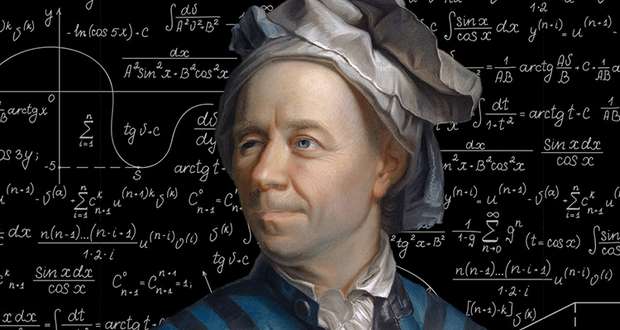
In 1736, Swiss mathematician Leonhard Euler set out to determine whether it was possible to cross each of the seven bridges of Königsberg exactly once without retracing any steps. Instead of finding a route, Euler proved that the task was mathematically impossible because of the arrangement of the bridges and landmasses. His solution transformed the puzzle into an abstract mathematical problem and laid the foundations of graph theory, a branch of mathematics that later became fundamental to computer science and network analysis.
42. American astronomer Carl Sagan coined the term “carbon chauvinism” to criticize the assumption that all extraterrestrial life must be carbon-based simply because life on Earth is. He argued that humans often project their own biology onto the rest of the universe and may fail to imagine organisms built from radically different biochemistries. The concept has since become a common caution in discussions about astrobiology and the search for extraterrestrial life.
43. In 1668, Italian physician and scientist Francesco Redi proved that maggots come from the eggs of flies rather than arising spontaneously from rotting meat. He placed meat in both sealed and open containers and found that maggots appeared only where flies could reach the meat and lay their eggs.
44. During World War II, Hungarian chemist George de Hevesy protected the Nobel Prize medals of German physicists Max von Laue and James Franck from the Nazis by dissolving them in aqua regia, a mixture of nitric and hydrochloric acids. Because Nazi Germany had forbidden its citizens from accepting Nobel Prizes, possession of the medals could have led to their confiscation. After the war, de Hevesy recovered the gold from the solution, sent it to the Royal Swedish Academy of Sciences, and the Nobel Foundation recast the medals for their rightful owners.
45. In 1947, American computer scientist Grace Hopper and her team traced a malfunction in the Harvard Mark II computer to an actual moth stuck inside the machine. They removed the insect and taped it into the computer’s logbook with the note “first actual case of bug being found.” The incident helped popularize the terms “bug” and “debugging” in computer science.
15 Most Controversial & Costly Blunders in History
46 Coat Hangers Smuggled Platinum Successfully

In 1938, after Nazi Germany annexed Austria, Austrian chemist Herman Francis Mark, whose father was Jewish, decided to flee the country. Before leaving, he secretly purchased valuable platinum wire, worth about $50,000, bent it into coat hangers, and had his wife knit covers over them so they could be carried out of Austria without attracting attention. The ingenious disguise allowed the family to smuggle the platinum to safety, helping Mark rebuild his scientific career after emigrating to the United States.
47. Russian scientist Anatoli Brouchkov injected himself with a 3.5-million-year-old strain of bacteria that researchers had found preserved in Siberian permafrost. He said he wanted to see what would happen after observing that the bacteria appeared unusually resilient in laboratory studies. Brouchkov later claimed he felt healthier afterward.
48. British astrophysicist Dame Jocelyn Bell Burnell discovered the first pulsars in 1967 while she was still a graduate student. She later credited the discovery in part to impostor syndrome and a fear of being thrown out of college, saying, “I’m a bit of a fighter, so I decided until they threw me out I would work my very hardest.”
49. Japanese stem cell researcher Shinya Yamanaka, who won the 2012 Nobel Prize in Physiology or Medicine for his work on induced pluripotent stem (iPS) cells, revealed that he had been repairing his washing machine when he learned he had won the prize. During an interview, Yamanaka remarked, “I was in the middle of repairing my washing machine when I heard the news.” The Japanese government responded by giving him 160,000 yen so he could purchase a new washing machine.
50. During World War II, French mathematician Jean Leray deliberately concealed his expertise in differential equations after being captured by the Germans, fearing the Nazis might force him to work on military problems. While imprisoned in a German prisoner-of-war camp from 1940 to 1945, he turned his attention to purely abstract mathematics instead. There, Leray developed the concepts of sheaves, sheaf cohomology, and spectral sequences, foundational tools that later became central to modern algebraic geometry and algebraic topology.


RE: Fact #47 (Scientist Injected Ancient Bacteria Experiment) – Bacillus cereus is common soil bacteria and usually considered normal. He just found a specific strain in the permafrost. I’m a microbiologist, and he’s talking about finding weird enzymes. If he injected it into his blood, that’s just foolish; he likely drank it, similar to the guy who did it with H. pylori. There’s no reason to assume this grants flu immunity. I’m also generally skeptical of scientific claims coming out of Russia. They can be a bit loose with their analysis sometimes.
RE: Fact #3 (Voyager Record Lost Beatles Song) – That is some short-sighted corporate thinking. We could have been part of first contact, cementing that song in human history forever. But instead, they wanted 100k.
Yeah, and they could have gotten so much PR value out of it if they had just marketed it.
Exactly, it was a massive PR blunder. It is ridiculous that they asked for more money than the cost of a single record. Essentially, Sagan was trying to buy one copy just to make sure it was preserved.
Stockholders do not care about history. That has been made pretty clear by how things are going.
RE: Fact #8 (Blue LED Won Nobel Prize) – Interesting bit of history: Nakamura actually had to develop the blue LED on his own because his company, Nichia, ordered him to stop his research to save money. He eventually succeeded in 1993 and later sued the company to get his share of the profits.
RE: Fact #40 (Raman Booked Nobel Prize Journey) – I have used Raman spectroscopy quite a few times! Normally, when light hits a material, the reflected light has the same wavelength because electrons absorb photons, move to a higher energy state, and then drop back down, releasing a photon of the same wavelength. That is elastic scattering, because the energy going in and out is the same. Since quantum mechanics dictates that there aren’t states in between, not all light can be absorbed and released. However, what Raman discovered is that there are additional “meta-stable” states. This is because atoms are chemically bonded. An electron can move between the ground, excited, and meta-stable states, releasing photons with different wavelengths. This is inelastic scattering. Those meta-stable states depend on the types of bonds and how the atoms vibrate. So, if we measure the reflected light wavelengths, we can identify the types of bonds, sample purity, and whether bonds are strained. It is incredibly useful and usually quick to do.
RE: Fact #43 (Redi Defeated Spontaneous Generation Theory) – Spontaneous bugs! It’s scary to imagine living without scientific explanations for basic daily things. No wonder superstitions are still so popular!
People still cling to superstitions over actual explanations because those myths are easier to digest and provide a false sense of control.
RE: Fact #4 (Wotan Name Revealed Hidden Weakness) – This is why the British use random names for military operations. For example, the US went with Operations Desert Shield and Desert Storm for the Gulf War, while the British chose Operation Granby.
Desert Shield was a bit of a misnomer, though. You cannot hide a million troops in Saudi Arabia, but you can pick a name that makes the mission sound purely defensive.
Op Telic, Op Mutay… I think they use a computer to generate random, apolitical words that have nothing to do with the actual mission.
RE: Fact #50 (POW Camp Created Mathematics Community) – The guy is in one of the worst places imaginable and he’s still cranking out math. I spent $900 on Business Calc in an air-conditioned classroom and felt like dying the whole time.
RE: Fact #48 (Impostor Syndrome Sparked Scientific Discovery) – Damn, that is one hell of a mantra: “Just work hard until they throw you out.”
RE: Fact #23 (Lise Meitner’s Nobel Prize Snub) – It was a mix of factors. She was Jewish, in exile, and a woman. Even then, people were annoyed when Hahn got the prize alone, which obviously reeked of bias. Vera Rubin and Jocelyn Bell are even clearer examples of the anti-woman bias in the Nobel process.
Between 1924 and 1967, 17 Nobel winners in physics were Jewish or had Jewish heritage. I don’t think it was her race that held her back; I think it was her gender.
RE: Fact #28 (Lab Accident Created Safety Glass Discovery) – It feels like half of all inventions were just discovered by total accident while someone was messing up their actual experiment.
RE: Fact #27 (Bohr Helped Save Jewish Scientists) – This makes it sound like Bohr did it all himself. While his actions were definitely admirable, it feels a bit unfair to the rest of the Danish Resistance, who played a huge role in the rescue effort.
RE: Fact #14 (Surtsey’s Unexpected Tomato Plant Growth) – I struggle to grow anything in my garden with premium soil and fertilizer, yet here’s a tomato plant sprouting on a volcano because someone just wandered by. Makes me feel like a pretty lousy gardener.
Tomatoes actually originate from the Andes, which is part of the Ring of Fire with about 150 active volcanoes. It makes sense that they’d do well in a volcanic landscape.
RE: Fact #32 (Bragg’s Student Nobel Breakthrough Discovery) – Actually, both he and his father were awarded the Nobel Prize! The effect is known as Bragg scattering, which happens when radiation hits a material with a wavelength similar to the gaps between atoms. The waves bounce off the atomic planes, and the constructive interference creates a diffraction pattern that perfectly maps the material’s structure.
RE: Fact #25 (Hydrogen Burned Rozier’s Eyebrows Accident) – It can’t be easy to keep your cool after sticking your face into a hydrogen explosion.
18th and 19th-century scientists were absolutely hardcore. An early investigator looking into extreme pressure changes once said that bursting your eardrums wasn’t so bad because they’d heal, and if they didn’t, you could blow smoke out of your ears, which was a great party trick.
Actually, that was JBS Haldane. The guy was legendary for being completely unhinged, even by the standards of his own time. Not to nitpick, but he was a 20th-century figure, and the quote is even better: “the drum generally heals up; and if a hole remains in it, although one is somewhat deaf, one can blow tobacco smoke out of the ear in question, which is a social accomplishment.”
Regarding the bit about testing on himself, family, and pets: “October 20th: Cat blew up, wife is deaf, little Timmy seems to have started healing.”
RE: Fact #44 (Acid Saved Nobel Medals During War) – That is a fascinating story. It’s amazing how they kept the medals hidden in plain sight.
What is even crazier is that the Nazis actually saw the brown liquid and never bothered to ask what it was. They just assumed it was some ordinary chemical.
RE: Fact #40 (Raman Booked Nobel Prize Journey) – To give everyone an idea of how useful his discovery is, it allows researchers to shine a laser on a chemical reaction and identify what is in it based on the structure and energy distribution. It doesn’t destroy the material, so you can test precious items. You can measure things in real-time without needing room temperature or ambient pressure, as long as you can shine light through it. That means you can test materials under conditions like those in the Earth’s interior, where some things aren’t stable otherwise. It was a tough nut to crack, but definitely Nobel-worthy.
That has allowed us to do everything from identifying chemicals here on Earth to measuring the atmosphere of planets light-years away.
He didn’t use lasers, just incident light. The first laser wasn’t built until 1960.
RE: Fact #16 (Plutonium Spill Saved Lives Scientifically) – That is an impressive save, but destroying 5% of your entire country’s plutonium supply is wild. It is hard to wrap my head around losing that much of any national resource.
I bet he just rounded the 9.5mg up to 10mg on the inventory sheet and nobody was the wiser.
RE: Fact #24 (Feynman’s Calculus Divorce Complaint Story) – So Richard Feynman’s wife was annoyed that she married a physicist…
I’m a neuroscientist, and my wife gets frustrated when I work for weeks without a break or stay up all night working. I try to do better, but I feel a compulsion to keep at these problems. She is very patient to put up with it.
I think this happens in a lot of careers. I work in rescue and am on call 24/7. I’m constantly reviewing procedures, checking new tech, and repacking my gear. My whole life feels like a constant fear of failing. It’s tough to clock off when you’re never really off the clock. I imagine your career is similar.
RE: Fact #20 (Archimedes Manuscript Recovered After Centuries) – Plot twist: maybe another monk was trying to destroy all the math texts he thought were dangerous, so this guy saved it, hoping someone would be able to restore it in the future.
That is unlikely. Recycling old parchment was just common back then because it was incredibly expensive. The monk probably had no idea the original text was valuable and just used the surface for something they actually needed.
RE: Fact #45 (Moth Became First Computer Bug) – She was also a Rear Admiral in the U.S. Navy and joined the reserves during WWII after finishing her Ph.D. at Yale. She was an incredible woman.
RE: Fact #13 (Newton Invented Calculus Before Others) – Newton was heavily into alchemy, the pursuit of turning base metals into gold. He wrote 169 books on it, none of which were published during his life because making precious metals was a felony under the act of 1404. He was clearly a genius, but he had so many other weird, fascinating interests outside of his famous work.
RE: Fact #46 (Coat Hangers Smuggled Platinum Successfully) – That is seriously cool. It reminds me of George de Hevesy dissolving Nobel medals in acid to keep them away from the Nazis.
Exactly. He melted them into acid and left the beaker on a back shelf for the whole war. He returned later, found the container untouched, precipitated the gold out, and had the medals reforged.
RE: Fact #36 (Cavendish Lost Scientific Credit Recognition) – People were always trying to pick his brain about physics, but if you tried to approach him directly, he’d just run away. The only trick was to find him at a social event, stand behind the chair he was hiding in, and start talking to yourself about a problem. He’d still bolt, but if the issue was interesting enough, you’d get a letter with the solution a few days later.
You’d basically have to chase him through the streets, shouting math equations and throwing your notes at him.
He once ran into his housekeeper on the stairs, so he had a completely separate staircase built just to ensure it never happened again.
Why would he even be interested in going to a social event in the first place?
RE: Fact #46 (Coat Hangers Smuggled Platinum Successfully) – Oh my god, my husband’s Austrian grandmother left behind a bunch of these yarn-covered coat hangers. I’m not kidding, should I look into them?
I mean, she probably covered them to make them look like normal hangers for the time so nobody would question the shiny metal underneath. Don’t be too bummed if yours turn out to be just brass or some other basic metal, though.
RE: Fact #35 (Tesla Solved Mental Calculus Problems) – Exactly. I can do it too, integrating x^2 is pretty trivial.
The tricky part is segregating them again. Anyway, pass the integers, let’s race for Tau!
RE: Fact #24 (Feynman’s Calculus Divorce Complaint Story) – I bet he acted all casual about the math until they were married, so there was no way she could have known what she was getting into.
Sometimes people get even worse, especially if they fake being someone else to win someone over.
RE: Fact #26 (Hubble Found Hidden Galaxies Evidence) – I don’t know how anyone could look at that image and seriously think we’re the only intelligent life out there.
RE: Fact #10 (Poison Squad Tested Food Preservatives) – there has to be a better way to do this.
Exactly. “We need at least fifty people to eat porcupine quills! This sample size is too small!” And that is basically how the FDA started.
RE: Fact #44 (Acid Saved Nobel Medals During War) – It is interesting because Hitler was actually nominated for the Nobel Peace Prize at one point. Maybe he was just bitter that he didn’t win.
RE: Fact #12 (Jocelyn Bell Missed Nobel Prize) – In 2018, she received the Special Breakthrough Prize in Fundamental Physics and donated the entire £2.3 million to the Institute of Physics to support female, minority, and refugee researchers through the “Bell Burnell Graduate Scholarship Fund.” She’s a legend.
It’s great she finally got her due. I really wonder how many other people have been in a similar situation.
This actually happens in science quite a bit. Usually, the head of the lab gets all the media credit for discoveries, even if they barely had a hand in it. Take the discovery of insulin for instance, Banting found it while his principal investigator was away on a months-long vacation in Scotland. Also, Janet Mertz developed a key laboratory technique for DNA ligation, but her supervisor took the Nobel for the work instead. Correction: It was Best, not Banting, who got snubbed for the insulin work.
RE: Fact #28 (Lab Accident Created Safety Glass Discovery) – Back when I worked in a lab, I was told those acid bottles were laminated, but I never really paid much attention. Then a coworker wanted to show me, he waited until we finished a bottle, made a big scene out of it, and dropped it into a cardboard box. It did exactly what it was supposed to and shattered inside the coating. It wasn’t as cool as he made it sound, but it’s nice to know they’re looking out for our safety.
RE: Fact #39 (Thomson Mentored Future Nobel Legends) – He got the Nobel Prize for proving electrons are particles, and his son got it for proving they’re waves. Uncomfortably, they’re both right. Quantum physics is wild.
RE: Fact #14 (Surtsey’s Unexpected Tomato Plant Growth) – I love stuff like this. There’s a similar story about a British Antarctic Survey pilot who found a frozen, dead penguin that looked like it was saluting. He took it aboard and flew around with it in the co-pilot seat just for laughs. Later, he tossed the carcass out over the interior of the continent. Years afterward, scientists found it and it caused a huge stir as they tried to figure out why a penguin was so far from the ocean.
The guy was flying hundreds of miles per hour in freezing conditions and still decided to roll the window down. The human urge to litter from moving vehicles is clearly unstoppable.
RE: Fact #33 (Darwin Studied Cousin Marriage Effects) – I learned about this in a family law class. Many states actually allow marriage between first cousins because the risk of birth defects only jumps from about 1% to 1.2%, which isn’t considered a massive increase. It’s when you get into direct incest that the risks really skyrocket. Usually, the laws exist more because states don’t want to deal with the costs of supporting babies with severe birth defects.
RE: Fact #35 (Tesla Solved Mental Calculus Problems) – If I had a nickel for every BS myth the internet invents about Tesla, mostly because people love that ‘misunderstood loner genius’ trope to project their own insecurities onto, I’d be wealthier than the five richest kings in Europe combined.
RE: Fact #19 (Turing Became Theoretical Computer Pioneer) – I already hate losing to a computer as it is. Imagine losing to a literal piece of paper. What am I, Dwayne Johnson?
If it makes you feel any better, you probably would have beaten that one. Chess computers were pretty terrible for a long time.
RE: Fact #13 (Newton Invented Calculus Before Others) – How do you even come up with entirely new branches of math? As someone who isn’t great at math, this has always fascinated me.
It’s a bit like inventing new words to describe things you observe. But with math, you have to be super strict with your definitions so that everything stays consistent and functional. As for the symbols, you can pretty much invent those, there are actually at least three common ways to write out calculus.
This is still wild to me. So you invent the math, define everything, and make up your own notation. You test it to make sure it works, but at first, you’re the only one who knows what’s going on. Then you show your peer and say, “I invented this to explain this mystery, you’ll have to trust me.” And they just… do? Then other people test it and agree it works, but we’re basically assuming it’s correct because nobody has proven otherwise yet. I know this is how progress works, but it still feels strange.
RE: Fact #4 (Wotan Name Revealed Hidden Weakness) – This is exactly why code names should be random instead of clever.
It is like Edge and Christian back in their wrestling days: Operation Get E&C their tag titles back is a go!
They used a similar approach to figure out the intent behind secret projects like the rocket development at Peenemünde.
Scientist: The project is moving fast, and we should be able to hit a target the size of England reliably soon. Officer: Great, the Fuhrer will be pleased. But the name needs work. Aggregate is too generic. It needs to sound like a weapon of revenge against the English. How about Vengeance Weapon? Re-type all the documents immediately!
The worst example is when the Pentagon was planning a potential invasion of Cuba during the missile crisis and called it Operation Ortsac, which is just Castro spelled backward.
When I create code names, I make them as obvious as possible, like Operation Kill Castro. People just assume it must mean something else because it is too blunt to be real.
RE: Fact #45 (Moth Became First Computer Bug) – Mothman changing history once again.
RE: Fact #37 (Jack Parsons’ Extraordinary Life Story) – Good grief, that is just a tragedy all around.
His mother didn’t waste any time with those barbiturates. Like, what, my son blew himself up? Time to check out.
RE: Fact #15 (Cats Behaved Like Liquids Experiment) – The Annals of Improbable Research is a fantastic peer-reviewed journal. They are the ones who run the Ig Nobel Awards. I had a subscription to them for years.
RE: Fact #11 (Darwin’s Rolling Office Chair Invention) – So Jefferson came up with the swivel chair and Darwin added wheels. Who actually thought to combine them? Was it Twain?
Actually, it was Thomas E. Warren who invented the Centripetal Spring Armchair in 1849. It was one of the first office chairs to feature a revolving seat, tilting, and caster wheels.
“You got your peanut butter in my chocolate, Darwin.” “You got your chocolate in my peanut butter, Jefferson.”
RE: Fact #11 (Darwin’s Rolling Office Chair Invention) – Rolling chairs were clearly better adapted for their office environment, so they stuck around.
RE: Fact #4 (Wotan Name Revealed Hidden Weakness) – It is like how they cracked the German code by guessing that all their messages ended with Heil Hitler.
RE: Fact #1 (Lorenz Equation Shared Discovery Story) – Nine years is wild. The window for researchers to claim they were the first to find something used to be so large. These days, you can get scooped by work that hasn’t even hit a journal yet.
RE: Fact #35 (Tesla Solved Mental Calculus Problems) – I hate when this gets shared because it’s so misleading. If you’ve actually studied calculus, the term ‘integral calculus’ is super vague. I can do basic integrals in my head all day, and so can most people who have studied it. They just make it sound like some mystical talent.
RE: Fact #25 (Hydrogen Burned Rozier’s Eyebrows Accident) – That quote about eyebrows not being permanent features? I think I’ll pass, I’d really like to keep mine on my face.
RE: Fact #7 (American Women Funded Curie’s Research) – Is this the same stuff that caused massive health crises because people foolishly thought it could cure cancer?
Yeah, you could even buy radium-infused water as a miracle cure for a while.
RE: Fact #9 (Pale Blue Dot Space Mission) – “Look again at that dot. That’s here. That’s home. That’s us. On it everyone you love, everyone you know, everyone you ever heard of, every human being who ever was, lived out their lives. The aggregate of our joy and suffering, thousands of confident religions, ideologies, and economic doctrines, every hunter and forager, every hero and coward, every creator and destroyer of civilization, every king and peasant, every young couple in love, every mother and father, hopeful child, inventor and explorer, every teacher of morals, every corrupt politician, every “superstar, ” every “supreme leader, ” every saint and sinner in the history of our species lived there–on a mote of dust suspended in a sunbeam. The Earth is a very small stage in a vast cosmic arena. Think of the rivers of blood spilled by all those generals and emperors so that, in glory and triumph, they could become the momentary masters of a fraction of a dot. Think of the endless cruelties visited by the inhabitants of one corner of this pixel on the scarcely distinguishable inhabitants of some other corner, how frequent their misunderstandings, how eager they are to kill one another, how fervent their hatreds. Our posturings, our imagined self-importance, the delusion that we have some privileged position in the Universe, are challenged by this point of pale light. Our planet is a lonely speck in the great enveloping cosmic dark. In our obscurity, in all this vastness, there is no hint that help will come from elsewhere to save us from ourselves. The Earth is the only world known so far to harbor life. There is nowhere else, at least in the near future, to which our species could migrate. Visit, yes. Settle, not yet. Like it or not, for the moment the Earth is where we make our stand. It has been said that astronomy is a humbling and character-building experience. There is perhaps no better demonstration of the folly of human conceits than this distant image of our tiny world. To me, it underscores our responsibility to deal more kindly with one another, and to preserve and cherish the pale blue dot, the only home we’ve ever known.” — Carl Sagan, Pale Blue Dot, 1994
His words are exactly what turned that into such an iconic photo. Sagan had a way of making a scientifically plain image feel deeply profound.
Sagan was incredible. He had this rare ability to blend cold hard science with genuine passion and poetry. He was just the best.
RE: Fact #2 (Leopard Seal’s Fatal Attack Incident) – For anyone imagining a cute, fluffy creature like a harbor seal, it is not
Exactly the creature chasing Mumble around the ice in Happy Feet with a Russian accent.
Right. Those are basically the go-to villains for every penguin movie like Happy Feet or The Pebble and the Penguin.
RE: Fact #30 (Qian Built China’s Rocket Program) – USA: So scared of every secret communist trying to destroy the country. Also USA: Let’s deport the guy who knows how to build ballistic missiles to a communist state.
Nobody ever accused the US government of being rational, especially during the Red Scare.
Also USA: Gotta love how we welcomed all those German scientists who happened to be unemployed after 1945. As long as they aren’t communists, right?
RE: Fact #2 (Leopard Seal’s Fatal Attack Incident) – As a scuba diver, this really sticks out to me. The pain from reaching 70 meters would be incredible. I have seen experienced divers give up 15 minutes into a dive just because they couldn’t get their equalization right, and we don’t even go below 30 meters. At 70 meters, the air in your lungs shrinks to a tenth of its size, putting massive pressure on your entire body. Even setting aside the dangerous seal, this is easily one of the worst ways to go.
RE: Fact #12 (Jocelyn Bell Missed Nobel Prize) – Back in 1977, she downplayed the controversy, saying: “I believe it would demean Nobel Prizes if they were awarded to research students, except in very exceptional cases, and I do not believe this is one of them.” She was a grad student, and her “boss” was her thesis supervisor.
Why would it demean the prize to give it to the student who actually did the work and made the discovery? It feels more like it demeans the prize to hand it to someone just because they were the boss. I mean, if the supervisor put in a massive amount of effort, they should both be recognized together.
I don’t know the specifics of her work, but generally, a grad student’s research is heavily driven by their thesis professor. The subject, methodology, and even the grant money often come directly from the professor. So, even if the findings are unique, the groundwork wasn’t necessarily original to the student. PhD theses are meant to advance a field, but that usually means doing the heavy lifting for a larger project. For instance, my dad got his PhD by doing a study on the heat wear of reactor composites. He was just one person in a massive international team. If a breakthrough had happened, it would have been because dozens of people in leadership roles had paved the way.
So, is that like a teacher taking credit for your scholarship because a student winning it sounds wrong?
That’s just “avoiding career suicide.” If she had been vocal about her frustration, she would have been labeled difficult to work with. So she stayed humble, kept grinding, and 40 years later, she got the last laugh, just not the prize. They really should footnote that 1977 prize to give her more credit.
RE: Fact #18 (Perelman Rejected Million-Dollar Prize Offer) – These are the Millennium Prize problems, a set of major mathematical challenges that are still waiting for a solution. Perelman solved the Poincaré Conjecture, but he has argued that someone else actually found the solution first but didn’t finish the work.
I think he claimed his own proof relied on some unpublished work by someone else, so he turned down the prize money until they got credit, too.
RE: Fact #5 (Galois Solved Equations Then Died) – It is wild that an entire branch of mathematics, Galois theory, is named after him. It’s all based on his work on that equation.
Just for anyone new to this: Galois theory isn’t just some niche math topic. It is one of the foundational pillars of abstract algebra.
RE: Fact #3 (Voyager Record Lost Beatles Song) – So we want to put your song on a historic record to travel the cosmos forever, and it’s great publicity. But give us $100, 000 first. Never mind then.
RE: Fact #22 (Terence Tao’s Extraordinary IQ Story) – Terence also has a brother who is a talented musician and an international master chess player.
RE: Fact #29 (Planck Doubted Quantum Theory Initially) – That interpretation by Einstein is actually what won him the 1921 Nobel Prize. His paper on the photoelectric effect leaned heavily on Planck’s research to explain why light forces certain metals to emit electrons at specific frequencies. It was a massive milestone for quantum mechanics.
Also, even though Einstein developed both special and general relativity, which are way more significant to physics than just the photoelectric effect, the Nobel committee essentially ignored those because a well-known French philosopher decided that measuring time with clocks didn’t make logical sense.
RE: Fact #17 (Tycho Brahe’s Drunken Moose Story) – My astronomy professor said his nose was silver, but Google says brass. Let’s just agree it was made of metal.
He probably had several. I can only imagine how many people pulled the “got your nose” joke and then regretted it once they saw what it was actually made of.
RE: Fact #37 (Jack Parsons’ Extraordinary Life Story) – Guys, the full story is even crazier. He studied rocket science at Caltech, and one of his lab partners was Qian Xuesen. Their group was called “The Suicide Squad” because of all the explosions they caused around campus. Qian Xuesen actually became the father of the Chinese space program. “Strange Angel” is an incredible read; it’s hard to believe how wild his world really was.
RE: Fact #8 (Blue LED Won Nobel Prize) – Blue is such a nightmare of a color. It’s rare in nature and incredibly difficult to reproduce. Even the blue morpho butterfly doesn’t use blue pigment; it just manipulates light to reflect blue. If you try to grind one up, you just get black and gray. True blue pigments in nature are basically non-existent.
RE: Fact #42 (Sagan Coined Carbon Chauvinism Term) – Carl Sagan obviously never watched the David Duchovny movie “Evolution, ” where the planet was saved by Head & Shoulders because the selenium is toxic to nitrogen-based aliens due to “science.”
Or “Mars Attacks, ” where the nitrogen-breathing aliens needed helmets on Earth for some reason. Even though our atmosphere is made of nitrogen. And they were defeated by country music or something equally dumb.
I mean, wouldn’t we need helmets on a planet with 70% oxygen in the atmosphere?
RE: Fact #5 (Galois Solved Equations Then Died) – >On the following Bastille Day, Galois was at the head of a protest, wearing the uniform of the disbanded artillery, and came heavily armed with several pistols, a loaded rifle, and a dagger. He was again arrested. During his stay in prison, Galois at one point drank alcohol for the first time at the goading of his fellow inmates. One of these inmates, François-Vincent Raspail, recorded what Galois said while drunk in a letter from 25 July. Excerpted from the letter: “And I tell you, I will die in a duel on the occasion of some coquette de bas étage. Why? Because she will invite me to avenge her honor which another has compromised. Do you know what I lack, my friend? I can confide it only to you: it is someone whom I can love and love only in spirit. I’ve lost my father and no one has ever replaced him, do you hear me…?” Raspail continues that Galois, still in a delirium, attempted suicide, and that he would have succeeded if his fellow inmates had not forcibly stopped him. Months later, when Galois’s trial occurred on 23 October, he was sentenced to six months in prison for illegally wearing a uniform. While in prison, he continued to develop his mathematical ideas. He was released on 29 April 1832.
RE: Fact #41 (Euler Created Graph Theory Field) – It feels like every time I learn a new math concept and look into the history, Euler was involved somehow.
RE: Fact #42 (Sagan Coined Carbon Chauvinism Term) – It’s not impossible to imagine, just unlikely based on what we know. I’ve read sci-fi where aliens are silicon-based. Most people would be surprised by life based on other elements, but it’s not totally out of the question.
RE: Fact #17 (Tycho Brahe’s Drunken Moose Story) – “Sorry I cannot make it to your party on Saturday, but don’t worry, I’m sending my pet moose instead.” “I would really prefer you didn’t…”
RE: Fact #2 (Leopard Seal’s Fatal Attack Incident) – This happened at Rothera station, which is part of the British Antarctic Survey. We still keep a memorial for Kirsty on site, and now we have a predator watch system whenever our dive team is working.
RE: Fact #32 (Bragg’s Student Nobel Breakthrough Discovery) – Can you imagine the pressure on his brother at Thanksgiving? ‘So, Lawrence just used X-rays to map atomic structure and won a Nobel Prize, and you, Mortimer, what have you been up to?’ ‘Well, I found this leaf that looks a bit like West Virginia. At least it did, before I ate it.’
RE: Fact #13 (Newton Invented Calculus Before Others) – The craziest part is that Leibniz was developing calculus at the exact same time for different reasons. Neither of them knew what the other was doing until much later.
If I’m not mistaken, Leibniz was working on integrals and Newton was working on derivatives. They were tackling opposite sides of calculus, like if I invented multiplication and you invented division without ever meeting.
Almost, Leibniz actually worked on integrals first and then moved to derivatives, and Newton did it the other way around. Both of them independently developed the Fundamental Theorem.
RE: Fact #49 (Nobel Won Washing Machine Prize) – That’s about £800. It’s not a fortune, but it’s enough for a really good washing machine.
Too bad it wasn’t a Miele. A Nobel Prize winner definitely deserves a Miele machine.
RE: Fact #15 (Cats Behaved Like Liquids Experiment) – This physics theory definitely doesn’t apply to my cat. He is strictly a solid state kind of guy.
RE: Fact #34 (Le Verrier Predicted Neptune Successfully) – I’m constantly amazed by what astronomers managed to figure out with such limited technology throughout history.
RE: Fact #26 (Hubble Found Hidden Galaxies Evidence) – It’s ridiculous that anyone criticized that project. Even if the space had turned out to be empty, that would have been a massive discovery in itself.
I agree with being skeptical of those critics. If the area was actually empty, that would have been a much bigger deal than just finding more of what we expected.
Keep in mind that getting time on the Hubble is extremely competitive. It isn’t just an image machine, it’s a massive scientific resource. There was a real opportunity cost to staring at one spot for 100 hours. If it had come back empty, it would have been a major professional setback for those who lost their turn to use the telescope. An empty field is scientifically interesting, but it wouldn’t have been worth 100 hours of lost research time for other projects.
You have to consider the backlog of projects waiting to use the Hubble. Thousands of scientists are competing for that time, and then someone decides to point it at a blank patch of sky for four days straight.
RE: Fact #18 (Perelman Rejected Million-Dollar Prize Offer) – There was a story a few years back about what Perelman is up to these days. Apparently, he is back in Russia living with his mother and working on another Millennium Prize problem.
RE: Fact #24 (Feynman’s Calculus Divorce Complaint Story) – He had two other, more successful marriages. His first wife passed away from tuberculosis, which was diagnosed before they married. His third wife was even tolerant of him eating lunch at a topless place.
RE: Fact #47 (Scientist Injected Ancient Bacteria Experiment) – The headline makes him sound crazy, but he analyzed the bacteria and saw it lasted longer than others and had positive effects on mice. He clearly wanted those same results.
So… super soldier serum because it’s Russia?
RE: Fact #6 (Darwin’s Lunar Cycle Theory Explained) – Turtles have 13 large shell segments and 28 small ones, matching the 13 full moons a year and the 28-day cycle.
I wonder if there is any real mathematical connection between those numbers, aside from the moon link?
RE: Fact #33 (Darwin Studied Cousin Marriage Effects) – It’s worth noting that Queen Victoria was also married to her first cousin and had children who dealt with genetic health issues, so the irony is definitely there.
RE: Fact #3 (Voyager Record Lost Beatles Song) – Imagine being asked to immortalize a song on a gold disc sent into space as a defining work of human culture. This project will be known for generations, and having a song on it would be such a cool piece of trivia. Turning that down for cash when it could have been free positive PR is just wild.
RE: Fact #6 (Darwin’s Lunar Cycle Theory Explained) – For a guy in the 1800s, that is a surprisingly measured theory about menstruation.
If you grasp the underlying logic, it’s not hard to make educated guesses. Since our sleep cycles evolved with the earth’s rotation, I assume he just extrapolated from that.
It makes total sense evolutionarily. Syncing with the moon cycle keeps humans safe from werewolf pregnancies.
I was actually intrigued until the second half of that comment hit me. Hilarious.
RE: Fact #22 (Terence Tao’s Extraordinary IQ Story) – Terence is definitely one of the best mathematicians alive, but the modern standard is to cap scores at 160. Once you get that many standard deviations out, those scores get pretty hazy regarding what they actually mean.
Pure coincidence, but it was actually Terence’s brother who did the math to prove that and suggest the 160 cap.
RE: Fact #23 (Lise Meitner’s Nobel Prize Snub) – It’s worth mentioning she had an element named after her. It doesn’t make up for the blatant sexism, but it’s not nothing! There are way fewer people with elements named after them than there are Nobel Prize winners.
It is funny how people act like the Nobel Peace Prize is the gold standard of prestige. The whole thing is managed by a five-person committee for Alfred Nobel’s estate, and Nobel was an industrialist, chemist, and weapons manufacturer who invented dynamite. The only reason the prize exists is because a rich guy wrote it into his will.
My local high school is named after her, so that’s something!
RE: Fact #31 (Franklin’s DNA Photo Legacy Story) – I remember covering this in school, and it’s genuinely heartbreaking. She passed away from cancer, and there’s a good chance her own research contributed to that. Her work really didn’t get the credit it deserved until long after she was gone.
Actually, Watson and Crick didn’t receive the Nobel until after she had already passed away.
I know, it’s still just sad that she died before receiving any recognition.