


Some discoveries arrive through years of careful research, while others show up in fogged camera film, moldy fruit, forgotten archives, ancient caves, or a random page of search results. This second collection looks at the strange moments when scientists, explorers, workers, and even accidental witnesses uncovered things that changed what we know about nature, history, medicine, and the universe. From hidden cities and ancient seeds to impossible organisms and scientific ideas that were mocked before they won Nobel Prizes, these discoveries prove that knowledge often appears in the weirdest places.
If you missed the earlier collection, read Part 1 of this series.
1 Williamina Fleming Classified Star Secrets

In the 1880s, Harvard College Observatory director Edward Charles Pickering hired Scottish astronomer Williamina Fleming after she had worked as a maid in his household. Pickering reportedly complained about his staff by saying, “My Scottish maid could do better,” and Fleming soon proved the point by helping classify more than 10,000 stars. In 1888, she discovered the Horsehead Nebula on a Harvard photographic plate, and during her career she cataloged 59 gaseous nebulae, more than 310 variable stars, and 10 novae.
2. In 1878, German physicist Philipp von Jolly advised German physicist Max Planck not to enter theoretical physics, saying the field had nearly reached its final form after the discovery of the principle of conservation of energy. Planck said he did not want to discover anything new and only wanted to understand the fundamentals. His later work, however, led to the discovery of quantum mechanics. Planck went on to originate quantum theory and win the Nobel Prize in Physics.
3. In 2024, a PhD student named Luke Auld-Thomas found the hidden Maya city of Valeriana in Campeche, Mexico, while searching online for lidar data. He said he was around page 16 of Google results when he found a laser survey that a Mexican organization had made for environmental monitoring. When researchers analyzed the data, they identified more than 6,500 pre-Hispanic structures, including pyramids, plazas, a ball court, and a reservoir. The discovery revealed the presence of a significant Maya city, previously concealed near a highway and farmland.
4. In the late 1880s, German physicist Heinrich Hertz proved the existence of radio waves by generating and detecting electromagnetic waves in his laboratory. His experiments confirmed a major prediction of Scottish physicist James Clerk Maxwell’s electromagnetic theory. When people asked Hertz about the practical use of his discovery, he reportedly said, “Nothing, I guess,” and described it as having “no use whatsoever.” The discovery later became foundational to radio, television, radar, and wireless communication, even though Hertz himself did not see that future.
5. In 2011, scientists in Japan found that the common soil bacterium Paracoccus denitrificans could survive, grow, and reproduce inside an ultracentrifuge at up to 403,627 times Earth’s gravity. The team spun several bacteria at extreme speeds and found that small prokaryotic cells handled hypergravity better than larger organisms. Paracoccus denitrificans showed robust growth under forces usually associated with cosmic environments such as massive stars or supernova shock waves.
6 YInMn Blue Stunned Oregon Chemists

In 2009, YInMn Blue, a vivid near-perfect blue color, was accidentally discovered in an Oregon State University lab by Indian American chemist Mas Subramanian and graduate student Andrew E. Smith. Smith had heated a mixture of yttrium, indium, and manganese oxides to about 1,200°C, expecting to study materials for electronics, but the result was an intense blue pigment. The color became notable for its vibrance, chemical stability, and unusually high near-infrared reflectance. Because it reflects heat while staying bright blue, the pigment drew attention for possible use in cool coatings and energy-saving materials.
7. In 1945, Kodak accidentally discovered that the United States had secretly tested an atomic bomb after radioactive fallout fogged its sensitive X-ray film. At Kodak’s Rochester, New York headquarters, physicist Julian H. Webb traced the ruined film to strawboard packaging made in Vincennes, Indiana, more than 1,900 miles from the Trinity test site in New Mexico. Webb found that the contamination was not radium but artificial radioactive material later identified as Cerium-141, a fission product from the July 16, 1945 Trinity detonation.
8. In 2015, Canadian heavy equipment operator Edgar Nernberg, a board member of Alberta’s Big Valley Creation Science Museum, discovered five fish fossils while excavating a basement in Calgary. Nernberg believes the Earth is only about 6,000 years old and has a creationist view, but University of Calgary paleontologist Darla Zelenitsky identified the fossils as rare complete fish from about 60 million years ago. He spotted black outlines in sandstone inside his trackhoe bucket and called a paleontologist instead of letting the fossils become rubble.
9. In 2011, a man named Clifford Coulthard accidentally found the ancient Warratyi rock shelter in South Australia’s Flinders Ranges while looking for a toilet. He was surveying the area with archaeologist Giles Hamm when he walked into a gorge and noticed a spring, rock art, and signs of ancient human use. Researchers dated the site to about 49,000 years ago, making it the oldest known evidence of human habitation in inland Australia. The discovery pushed back the known settlement of Australia’s arid interior by about 10,000 years and revealed early evidence of tools, ochre use, and interaction with megafauna.
10. After Japan’s 2011 tsunami damaged strawberry crops, scientists trying to help farmers salvage the fruit accidentally discovered that liquid polyphenol extracted from strawberries could make cream solidify. The finding led to Kanazawa Ice, a line of popsicles designed to resist melting longer than normal frozen treats. The ice pops reportedly kept their shape for up to one hour, even in warm conditions.
11 Roy Plunkett Found Slippery Teflon

In 1938, 27-year-old American chemist Roy J. Plunkett accidentally discovered Teflon while researching new refrigerants at DuPont’s Jackson Laboratory in New Jersey. He opened a cylinder of tetrafluoroethylene gas and found that the gas had vanished, leaving behind a slippery white solid. DuPont later identified the material as polytetrafluoroethylene, or PTFE, which resisted heat, chemicals, water, and sticking. The discovery eventually led to Teflon’s use in products such as non-stick cookware.
12. Around 850 CE, Chinese alchemists accidentally discovered gunpowder while trying to create a “fountain of youth” potion. They mixed charcoal, saltpeter, and sulfur, producing a black powder called huo yao. The discovery later moved from alchemy into warfare, and the Song Dynasty used gunpowder weapons against Mongol invasions. Over time, the same accidental discovery led to fire lances, cannons, grenades, and early guns.
13. In 1943, Swiss chemist Albert Hofmann accidentally discovered LSD’s hallucinogenic effects five years after he first synthesized it in 1938. Hofmann had been studying lysergic acid compounds from ergot when he apparently absorbed a small amount of LSD and began feeling restless, dizzy, and slightly drunk. When he went home and closed his eyes, he saw vivid images, shapes, and colors moving through his mind. The experience led him to deliberately test the compound again, confirming that LSD had powerful psychoactive effects.
14. In 2015, scientists on a National Geographic expedition found sharks living inside Kavachi, an active underwater volcano near the Solomon Islands. The team dropped camera equipment into the crater and filmed hammerhead and silky sharks moving through hot, acidic water. Divers could not safely investigate the crater because the heat and acidity could burn their skin.
15. In 2003, a young Aboriginal woman named Mary Pappen Jr. discovered ancient human footprints near the dried-up Willandra Lakes in New South Wales, Australia. Researchers later identified about 700 footprints, some made roughly 20,000 years ago by early Aboriginal people moving across soft clay near a wetland. One track appeared to show a hunter running at about 23 miles per hour or 37 kilometers per hour, close to the speed of a modern Olympic sprinter.
16 Rita Levi-Montalcini Built Bedroom Laboratory

In 1938, Italian scientist Rita Levi-Montalcini lost her university anatomy position after anti-Jewish laws forced her out of academic work. She set up a small laboratory in her bedroom and continued studying nerve fiber growth in chicken embryos. That research helped lead to her discovery of nerve growth factor, a protein involved in the growth and survival of nerve cells. In 1986, Levi-Montalcini shared the Nobel Prize in Physiology or Medicine for the discovery.
17. In 1902, workers accidentally discovered the Hal Saflieni Hypogeum in Paola, Malta, while cutting cisterns for a housing development. The underground Neolithic burial complex dates to around 4000 to 2500 BC, making it older than Egypt’s pyramids by up to about 1,000 years. Archaeologists found the remains of more than 7,000 people inside its rock-cut chambers. The discovery revealed one of Malta’s most important prehistoric sites, linked to a Neolithic temple-building culture that faded around 2500 BC.
18. In 1903, German coffee merchant Ludwig Roselius accidentally discovered a path to decaf coffee after a shipment of coffee beans was soaked in seawater during transit. The beans lost much of their caffeine but kept enough flavor to suggest that caffeine could be removed before roasting. Roselius later developed a commercial decaffeination method that steamed coffee beans with acids or bases and then used benzene as a solvent. The discovery led to the first commercially successful decaffeinated coffee, later sold under brands such as Kaffee HAG and Sanka.
19. In 2008, archaeologists found a roughly 40,000-year-old polished stone bracelet in Denisova Cave in Siberia. The bracelet was linked to the Denisovans, an extinct human group. Its drilling, polishing, and shaping showed a level of technical sophistication not usually associated with such an ancient artifact. The discovery made the bracelet one of the oldest known pieces of jewelry ever found.
20. After the Taliban destroyed the Bamiyan Buddhas in Afghanistan in 2001, excavators found that the damage had exposed about 50 previously hidden caves. Researchers discovered wall paintings inside 12 of them and later dated some of the artwork to between the 5th and 9th centuries. In 2008, archaeologist Zemaryalai Tarzi also found the remains of a previously unknown 19-meter reclining Buddha near the site.
15 Most Controversial & Costly Blunders in History
21 Challenger Deep Shocked Oceanographers First
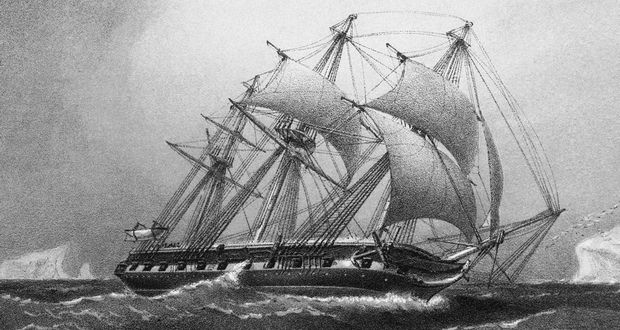
In 1875, the crew of HMS Challenger accidentally discovered what became known as Challenger Deep, the deepest known point on Earth, during the very first major scientific expedition devoted to oceanography. Baffling winds pushed the ship off its intended route near the Mariana Islands, and that altered path carried it over the undersea canyon. On March 23, 1875, the crew used marked rope to record a depth of 4,475 fathoms, or about 8,184 meters. Later surveys confirmed the area as the deepest known part of the ocean, and it was named after the Challenger expedition.
22. In 1963, archaeologists discovered 2,000-year-old date palm seeds inside an ancient jar at Masada in Israel. The seeds stayed in storage for decades until researchers planted some of them in 2005. One seed sprouted into a Judean date palm later nicknamed Methuselah, a type of tree that had disappeared from the region for about 1,800 years. The discovery showed that an ancient seed could survive for millennia and still grow when given the right conditions.
23. In 2014, scientists found a giant 30,000-year-old virus preserved in Siberian permafrost. The virus, Pithovirus sibericum, remained infectious after tens of thousands of years and began killing amoebas in laboratory tests. Researchers said it did not infect humans or animals, but the discovery raised concerns about what melting permafrost could expose.
24. In 1868, scientists discovered helium by analyzing the Sun’s spectrum, making it the only element on the periodic table first found somewhere other than Earth. French astronomer Pierre Janssen noticed a bright yellow spectral line during a solar eclipse, and British astronomer Norman Lockyer later identified it as evidence of a new element. Lockyer named it helium after Helios, the Greek god of the Sun. Scientists did not find helium on Earth until 1895, when Scottish chemist William Ramsay detected it in a uranium mineral.
25. In 1958, American physicist James Van Allen announced the discovery of radiation belts around Earth using data from the early U.S. satellites Explorer 1 and Explorer 3. Van Allen then agreed on that same day to help the U.S. military test whether atomic explosions in the magnetosphere could disrupt those belts. The plan became part of Cold War high-altitude nuclear testing, including Operation Argus in 1958. Historian James Fleming later described it as the first case he had found where “someone discovered something and immediately decided to blow it up.”


RE: Fact #48 (Great Barrier Reef Heard Recovery) – “Oh my god! It’s a miracle! Just like the legends. I never thought I’d see the homeland in its glory again.” “Turns corner” “Oh. It’s just those humans again.”
RE: Fact #32 (Gibraltar City Status Was Forgotten) – That’s still better than Rochester in Kent, which lost its city status after 800 years because of an administrative mistake and has been trying to get it back ever since.
RE: Fact #50 (Gut Bacteria May Transform Blood) – Damn, being O- was the only thing that made me special, and now it feels like it doesn’t even matter anymore.
Look at the bright side: if you ever end up needing a transfusion, it’ll be way easier for you to survive.
It definitely still matters. Blood donations are always in short supply, and not having to convert other blood types to O- is just going to make the whole system run better.
Can you just show up at a hospital to donate, or is there a whole sign-up and paperwork process? I’ve been wanting to donate for a while, but I don’t know my type, and I’m not sure if the screening checks for nicotine.
RE: Fact #37 (Johann Burckhardt Rediscovered Hidden Petra) – The Bedouin knew about it for ages and actually used the site for target practice. When you visit Petra, you can see the urns on top of the structures that were used for shooting practice. Also, recent excavations there uncovered some well-preserved Roman mosaics that are similar in quality to what you’d find at Herculaneum.
People were doing that in Al-Ula a decade ago too. I remember seeing photos before it was cleaned up and turned into a major tourist destination, and there was even graffiti all over one of the big tombs.
It’s the year 2133. The landing pod is descending onto the surface of Mars. The first human to ever step foot there takes that historic first step. Crunch. Under their boot is a cracked Roman artifact.
He walks off in frustration, but then sees something shimmering in the distance. As he approaches, it finally comes into focus: a Dollar General.
Petra is super cool. I was lucky enough to visit twice. The second time, I found an old Roman tunnel that led to a tiny slot canyon with a bunch of mini Petra-style carvings in the walls. They looked more like small altars than anything else, which was amazing. It reminded me of southern Utah mixed with Indiana Jones. When we came out the back side of the canyon, we were away from all the tourists and found some Bedouin families. We met a family who invited us for mint tea in the shade. My Arabic was pretty rough, but they were very kind, and the tea was incredible. If you go, definitely spend time exploring the spots people usually skip, like the monastery. If you’re in decent shape and bring plenty of water, it’s a great experience.
Good grief, it was so unbelievably dry there. One of my most vivid memories is how the sweat would just dry on my neck, and I’d have to periodically peel off layers of salt.
RE: Fact #15 (Mary Pappen Found Ancient Sprinter) – To put that in perspective, researchers estimated that ancient human’s speed at 37km/h. For comparison, Usain Bolt hit 44.72 km/h during his 100-meter world record run. So, that ancient human was running at about the same average speed as a modern world-class sprinter during a race.
That average speed would include the time spent accelerating from a standstill. If you gave him a flying start, he’d be closer to Bolt’s speed but still around 20% slower. Also, they don’t explain how they calculated that number. If they just used stride length without knowing his height, it could easily just be a tall person loping through the mud.
RE: Fact #25 (Van Allen Belts Got Nuked) – It says he agreed with the military to get involved in a project setting off atomic bombs in the magnetosphere to see if they could disrupt it. I know we learned a lot during that time, but people really seemed to lack an ethical compass back then.
Back when people were tougher. No participation trophies; we saw a challenge and hit it with everything we had. I remember when a grapefruit only cost 5 cents. Of course, that was also when they put sassafras in soda and cocaine in the water. Simpler times, though who knew where we were heading? Now you’ve got women wearing pants and men in dresses. In my day, we’d wear dresses and wigs in private and we didn’t tell our wives. Anyway, I have to go call someone and hang up.
Back when men were men, the boys were men, and the babies slung coal for six grapes an afternoon, and they were proud to do it.
RE: Fact #12 (Chinese Alchemists Accidentally Found Gunpowder) – Well, gunpowder has certainly stopped millions of youths from growing old. So, mission accomplished.
RE: Fact #16 (Rita Levi-Montalcini Built Bedroom Laboratory) – I met her back in 1982. She was a small, silver-haired woman who wore a lot of big jewelry. She was incredibly kind and took her research very seriously.
She was forced into hiding during the Nazi occupation of Italy. She lived to be over 100 and once said, “At 100, I have a mind that is superior, thanks to experience, than when I was 20.” What an absolute legend.
RE: Fact #29 (James Schlatter Found Aspartame Sweetness) – A chemist working without gloves? I know this was back in the day, but with all the solvents and reagents involved, you’d think he’d at least have some protection on.
RE: Fact #40 (Henneguya Zschokkei Needs No Oxygen) – This is genuinely one of the coolest things I’ve read on factrepublic. That detail about the name being an acronym for a ‘scandal’ made me chuckle, it feels like someone really pushed hard to force that acronym to happen.
Biologists have a talent for naming things the most ridiculous stuff. There is a protein called Sonic Hedgehog, and the signal a tumor uses to stop the immune system from attacking it is literally called the ‘Don’t eat me’ signal. It really is the Wild West when it comes to scientific naming.
I am fairly certain that protein is actually involved in a devastating mutation in developing children. It just makes it feel worse to announce that it’s all ‘Sonic’s’ fault.
Regarding that theme, a researcher named a wasp after the Finnish goalie Tuukka Rask. They christened it ‘Thaumatodryinus tuukkaraski’, noting in their paper that the name honors the goalie’s glove hand, which is as ‘tenacious as the raptorial fore tarsus of this dryinid species.’
You say that, but how many students actually learned and remembered that gene specifically because of the name? These weird, non-sequitur naming conventions actually help people memorize some really esoteric details.
I can’t recall the specific one now, but back in med school, we definitely had an acronym where one of the letters actually stood for a completely different acronym.
It is such a fascinating theory! The idea that these organisms were essentially cancerous tumors that broke away and evolved into their own distinct parasites is wild.
RE: Fact #20 (Bamiyan Caves Emerged After Destruction) – As an archaeologist, let me tell you, a lot of us aren’t thrilled about this. Those sites could have been found and protected using modern methods if someone had just taken the initiative.
RE: Fact #10 (Kanazawa Ice Began With Strawberries) – Do they actually not melt at all, or do they just hold their shape for an hour? Surely they melt eventually after that hour passes, right?
RE: Fact #48 (Great Barrier Reef Heard Recovery) – Did those fish just end up starving? As a fish, that would seriously tick me off. It’s like showing up to a grocery store only to find the shelves completely empty.
RE: Fact #41 (Titanoboa Fossils Revealed Monster Snake) – Titanoboa sounds like a low-budget, direct-to-DVD horror flick. I hate how much I want to watch that already.
That movie actually was made back in the 2000s. It was terrible, but it was that specific kind of ‘so bad it’s good’ movie.
RE: Fact #29 (James Schlatter Found Aspartame Sweetness) – I wonder how many scientists actually died from stuff like this without ever stumbling onto a discovery.
RE: Fact #37 (Johann Burckhardt Rediscovered Hidden Petra) – He played the long game, and it really paid off. I probably would have just hired someone else to do the heavy lifting for me.
The respect is what gets me. He put in the real work to do it right. We have so many stories of explorers just showing up and going on a rampage, but he did it the most subtle way humanly possible. Plus, Arabic is such a tough language to master.
A lot of these explorers were just the private equity guys of their era. Find something unique or a huge supply of something for cheap, flip it to buyers back home, and repeat. It’s the same game, just different players.
Have you seen the book ‘I Married a Bedouin’? It’s by a woman from New Zealand who traveled there, fell in love with a Bedouin man, married him, and lived in his cave home in Petra. It’s a fascinating read with some really interesting descriptions of life in the area.
RE: Fact #35 (Botulinum Donkey Test Misled Officials) – I love the logic there. ‘Let’s use this as a poison. Oh, it doesn’t actually kill donkeys? Let’s go ahead and inject it into our faces.’
RE: Fact #30 (Leonhard Euler Overwhelmed Mathematical Naming) – Two quick things about Euler: 1. It’s pronounced “Oiler, ” not “Yooler.” 2. A lot of brilliant historical figures are remembered for being totally eccentric or even unstable. Newton and Tesla are the usual examples, but Euler was the opposite. By all accounts, he was just a nice, normal guy with a great family and a solid group of friends. I love that the smartest person in history was actually grounded.
RE: Fact #3 (Valeriana Hid On Google Results) – I was visiting ruins in Belize once and our guide walked us past this steep hill covered in trees. It turned out to be a massive, unexcavated temple. When I asked why they didn’t clear it, she said, ‘You don’t understand. If you clear any section of jungle, you find ruins. These buildings are everywhere; there are more than can ever be excavated.’ Think about it: if the US population vanished and centuries later a grad student ‘discovered’ some random mansion in the suburbs.
This happens all the time in Orkney. There are so many Neolithic burial mounds and the area is so remote that there aren’t enough teams to investigate them all. A cafe owner there once told us about a hollow he found while digging a parking lot. He peered inside and saw a row of skulls staring back at him, it was a 5, 000-year-old tomb.
Surely they aren’t just plowing over Neolithic tombs with human remains in them? Did they at least stop to preserve it? There is a ton of archaeology happening in that region.
It’s exactly the same in Egypt. You can just stumble across temple roofs poking out of the sand on some random stretch of the Nile or right next to a modern road.
They are literally everywhere in Central America. Those aren’t just hills; they are buried cities. The reason they aren’t excavated is purely money. The amount of labor required compared to the available manpower is just not balanced. Plus, you can’t just use bulldozers; it requires very slow, careful work. I’ve been to nine ancient Mayan cities across four countries and most of them were still being actively dug up.
Exactly, it always comes down to money. Nobody wants to fund big archaeological projects. We really need some billionaire to get obsessed with finding an ancient secret or something so they’ll actually dump money into these digs instead of just hoarding it.
RE: Fact #1 (Williamina Fleming Classified Star Secrets) – A few other interesting points: – It was actually the director’s wife who pushed him to actually hire the person he made a joke about. – Fleming led a team of female ‘computers’ at a time when people wrongly thought women were less capable than men. – These women were celebrated back then but were mostly forgotten later on. – Most of the credit for the Horsehead Nebula discovery went to the director, not her.
It is worth mentioning that he also hired a team of women because he could pay them half of what he would have paid men, so he could afford a much larger staff.
RE: Fact #19 (Denisova Bracelet Revealed Ancient Skill) – I’m totally new to this, but if Denisovans were widespread and we only have a tiny bit of physical evidence, is it possible, or even likely, that there were other early human groups we just haven’t found evidence for yet? Also, we can’t really isolate DNA from an unknown source without having a physical sample to compare it to first, right? Like, without those actual Denisovan remains, we wouldn’t have known they existed just from looking at DNA alone.
RE: Fact #35 (Botulinum Donkey Test Misled Officials) – What are the odds that the one random animal they picked to test it on happens to be immune?
Funny how coincidence works. I was trying to convert my FLAC music collection to Opus for my phone, and out of over 100 albums, I somehow picked the only one with a bug in it to test the bitrate. The resulting lossy file ended up being twice the size of the original lossless one.
Probably the same odds as discovering Vitamin C by accidentally testing it on the only other mammal that can’t produce it. Nobody realized guinea pigs needed it in their diet until they got scurvy from being on a grain-only ration.
RE: Fact #3 (Valeriana Hid On Google Results) – ‘Browsing for data on the internet.’ That sounds like a casual afternoon. ‘Honey, what are you doing?’ ‘Just locating some data!’ ‘Great! Have fun!’
RE: Fact #6 (YInMn Blue Stunned Oregon Chemists) – Oregon State has been behind some great discoveries, from the computer mouse to wrinkle-free cotton. They’ve also bred some amazing fruits, like the marionberry. If you’ve never had one, you’re missing out; it’s like a juicier blackberry with a hint of raspberry tartness. They’re incredible in pies, jam, or ice cream. Plus, they produce a really vibrant purple pigment. I’m honestly a bit obsessed.
RE: Fact #10 (Kanazawa Ice Began With Strawberries) – When I was growing up, popsicles melted fast and tasted great. At some point, parents complained, so companies started adding gelatin to slow down the melting. Now they just taste okay and feel kind of slimy. Does anyone else remember those orange twin pops? They were so good.
I would honestly consider doing something drastic for a box of those Timon and Pumbaa gummy bug pops from my childhood.
RE: Fact #17 (Hal Saflieni Hypogeum Hid Thousands) – >The Neolithic decline was a rapid collapse in populations between five and six thousand years agoduring the Neolithic period in western Eurasia. The specific causes of that broad population decline are still debated. >While heavily-populated settlements were regularly created, abandoned, and resettled during the Neolithic, after around 5400 years ago, a great number of those settlements were permanently abandoned.[1] The population decline is associated with worsening agricultural conditions and a decrease in cereal production.[2] Other suggested causes include the emergence of communicable diseases spread from animals living in close quarters with humans.[1]
RE: Fact #46 (St Bees Man Stayed Preserved) – I haven’t done a deep dive, but I’m curious how the lead wrapping helped preserve the body so well. I can’t find much on lead having significant antibacterial properties.
RE: Fact #28 (Constantin Fahlberg Tasted Saccharin Accidentally) – Some of the greatest scientific breakthroughs happen because some scientists are just slobs. So no, Mom, I won’t clean my refrigerator, I’m doing science.
Alexander Fleming basically pulled off the same trick by leaving a Petri dish sitting out by an open window.
RE: Fact #27 (John Draper Hacked Phone Tones) – I wonder what he’s up to now. He helped Jobs and Wozniak build a blue box and the rest is history for them. I hope they helped him out, too.
I’ve known a few people who either lived with him or spent time around him, and they all say he’s a huge jerk.
RE: Fact #18 (Ludwig Roselius Found Decaf Coffee) – I’m having a hard time picturing how trains and seawater ended up working together to create decaf coffee.
RE: Fact #36 (Giraffes Secretly Hum At Night) – This reminds me of a funny moment. My nephew was learning animal sounds and showing off for his grandfather. ‘What does the lion say?’ “Rawrrrrrr!” ‘What does the monkey say?’ “Eep eep eep!” ‘What does the giraffe say?’ He thought for a few seconds and replied, ‘Hello, I am very tall.’
RE: Fact #29 (James Schlatter Found Aspartame Sweetness) – It seems like a huge chunk of artificial sweetener history comes down to someone ignoring basic lab safety. Saccharin was discovered in 1879 when Constantin Fahlberg skipped out on work to grab dinner and realized his food tasted super sweet. He went back to the lab and started tasting everything he’d been working with, which were coal tar derivatives, and managed to find it without accidentally killing himself. Then there’s sucralose, which was being developed on purpose. A lab assistant was told to test a compound, misheard the instruction as “taste” it, and the rest is history. It worked out, but at the time, nobody was entirely sure if they were just dosing themselves with a deadly poison.
So, the takeaway here is that if you’re trying to invent a new sweetener, stop washing your hands?
RE: Fact #26 (AIDS Cocktail Changed HIV Treatment) – I remember when some investors would buy AIDS patients’ life insurance policies for half their value, hoping to profit on their early deaths. When the drug cocktails arrived and people stopped dying so quickly, the investors got upset.
Some important detail: In a viatical settlement, someone names an unrelated third party as the beneficiary of their life insurance policy in exchange for cash. So, let’s say Bob has a policy and gets a terminal diagnosis. Maybe he asks his family for help and they turn him away. Since he needs resources and is disillusioned with his family, he can use a viatical settlement. A company pays him cash for a portion of the policy’s value in exchange for becoming the beneficiary. It’s not actually as bad as it sounds at first glance.
Someone mentioned that while it has its place, it often ends up being predatory.
There’s an insurance principle called insurable interest, which is the reason for this. It states that to take out a policy on something or someone, their loss must cause you financial hardship. This is why term policies aren’t used for these settlements. Usually, it involves old whole-life policies where the cash value is lower than the death benefit, and older people need the cash for living expenses.
RE: Fact #16 (Rita Levi-Montalcini Built Bedroom Laboratory) – She was an amazing person. She lived to be 103 and remained sharp until the very end. She even served in the Italian parliament later in life. She reportedly used nerve growth factor eye drops, which might be why she stayed so mentally alert at such an advanced age.
RE: Fact #8 (Edgar Nernberg Found Ancient Fish) – He doesn’t believe the fossils are actually that old; he thinks the dating methods scientists use are flawed.
But he apparently spends enough time trying to debunk radiocarbon dating that he was able to recognize a fossil on sight.
Radiocarbon dating wouldn’t even work on a fossil that old anyway. To get around these dates, he’d have to discredit the entire field of chemistry, specifically potassium-argon dating.
RE: Fact #40 (Henneguya Zschokkei Needs No Oxygen) – How is the fact not centered on the theory that this parasite evolved from a cancer in jellyfish, gaining the ability to live outside the host and parasitize other species? This creature is honestly incredibly interesting.
There is a transmissible cancer that spreads in dogs like a parasite, which originally started as a tumor in a single dog thousands of years ago. When you think about it, cancer is just a cell in a multicellular organism that decides it is no longer part of the whole and starts living for itself at the host’s expense. It really shows why that disease is so tough to beat.
Oh great, just what we need: another zombie apocalypse genre. First viruses, then fungi, and now cancer parasites.
This also happens in Tasmanian Devils.
Everyone already knows about tumors breaking off and forming new species. Geez. Next you’ll tell me you’ve never heard of the HeLa immortals.
RE: Fact #47 (Conrad Reed Found Doorstop Gold) – This is also why Charlotte is the biggest city in North Carolina and a banking hub. Most big cities grew near waterways, but Charlotte’s growth was driven by its proximity to gold.
RE: Fact #11 (Roy Plunkett Found Slippery Teflon) – Sigh… another failure. It goes on the shelf for failed ideas right next to anti-gravity paint.
RE: Fact #1 (Williamina Fleming Classified Star Secrets) – She started around her early twenties. Pickering initially hired her as a manager, and she quickly realized how disorganized things were. After she fixed the messy filing and duplicate records, Pickering began teaching her astronomy. She also revolutionized how they worked by organizing thousands of photographs by telescope and other key markers.
RE: Fact #31 (Mogao Library Cave Hid Scrolls) – This place is well worth a visit. It’s just cave after cave filled with massive ancient Buddhist statues and shrines. I’d definitely recommend checking it out if you’re traveling through western China.
Do you speak Mandarin? I’d love to go eventually, but I’m worried about getting around if I only speak English.
If you’re backpacking, translators are super easy to find. That’s pretty much the case for any major tourist spot in China.
RE: Fact #17 (Hal Saflieni Hypogeum Hid Thousands) – Thanks for sharing! Malta has such a fascinating history that more people really should know about.
It really does. The oldest human buildings are a bit of an obscure part of Malta’s history because it gets overshadowed by the more recent stuff. People talk a lot about the Arab occupation, the Great Siege, the Catholic culture, and the WWII history. Most tourists go just for the sun, but it’s honestly one of the most culturally rich places in Europe.
RE: Fact #34 (Darwin Orchid Predicted Giant Moth) – That’s outrageous! It’s totally unfair. I once found a flower with a deep crevasse, and nobody gave me an award or named anything after me for reaching the bottom with my long tongue. Evolution, indeed! Good day, sir! I said good day!
RE: Fact #26 (AIDS Cocktail Changed HIV Treatment) – I lived in the Castro neighborhood of San Francisco from 1996-1998. It was incredibly gay at the time. I’ll never forget filling a prescription at Walgreens and seeing rows of brown paper grocery bags behind the counter, each with a stack of instructions stapled to it. I asked about it and was told every bag held the monthly meds for a single AIDS patient. Those cocktails meant taking handfuls of pills multiple times a day. It made me sad to see, but I was hopeful that there would be a cure someday.
We’ve definitely come a long way. The drug regimens are much smaller and easier to manage now. Also, the Castro is still just as gay as ever.
I diagnose people with HIV from time to time. The first thing I tell them after the diagnosis is that it isn’t a death sentence anymore. Our regimens are now sometimes just a single daily pill containing two or three drugs. If people take their meds as prescribed, keep up with doctor visits, and take precautions, living with HIV is manageable and we can stop the spread.
RE: Fact #31 (Mogao Library Cave Hid Scrolls) – I’m really curious to see what’s inside the main chamber of Qin Shi Huang’s mausoleum. It’s been intact for over 2, 000 years. I’m hoping they open it while I’m still around to see it.
If I recall correctly, there’s supposed to be a massive amount of liquid mercury in there. That would make sense, given he supposedly drank tons of the stuff trying to become immortal. The guy was totally off his rocker.
Imagine them opening the chamber and he’s just sitting in there eating mercury-covered noodles.
RE: Fact #13 (Albert Hofmann Discovered LSD Visions) – April 19th, 1943, is also known as Bicycle Day because of how Hofmann got home. Even though he actually took the drug on April 16th, a professor in 1985 dubbed it Bicycle Day. Unfortunately, the 16th was a Tuesday, so the date was shifted to a Friday for convenience.
RE: Fact #33 (Alexander Shulgin Rediscovered MDMA’s Power) – Dirty Pictures is a great documentary about him. He was a brilliant chemist and led such a fascinating life. His basement lab looks exactly like the stereotypical mad scientist’s setup. He made his fortune developing a garden insecticide and then moved on to MDMA after finding some old research reports from a German company after WWII.
Wait, does that mean MDMA was based on Nazi experiment data?
Yeah, the Germans invented MDMA and it basically led to them discovering Kraftwerk a few hours later.
I dug into it a bit more and I was slightly off, I can’t find anything confirming that data was handed to the U.S. All I can see is that it was synthesized in 1912 by a chemist at Merck in Germany while they were looking for blood-clotting research. Shulgin rediscovered it in 1965 after finding some papers on it. So, no, it wasn’t from the Nazis and it actually predates them.
RE: Fact #7 (Kodak Film Exposed Nuclear Fallout) – How did they even know what the fogged film implied if the U.S. hadn’t publicly announced the nukes yet?
RE: Fact #11 (Roy Plunkett Found Slippery Teflon) – Teflon and that whole class of chemicals are going to be the “I can’t believe people actually used those for cooking” items of the next generation. It won’t be any different than how we look back at lead or asbestos.
Teflon itself is fairly safe as far as I know, but the production process is a completely different story.
RE: Fact #5 (Paracoccus Denitrificans Survived Crushing Gravity) – Researchers in Japan were initially just trying to measure E. coli density with a centrifuge. When they cranked up the speed, the bacteria didn’t die, they just kept growing, so the team decided to push further. A common soil microbe, Paracoccus denitrificans, was spun at 403, 627 G’s for over 140 hours straight and reproduced the whole time. To put that in perspective, the gravity inside a supernova shockwave reaches those levels. This completely caught the researchers off guard. The implications are massive, especially for the theory of panspermia: the idea that life can survive being blasted off a planet by an asteroid, travel through space, and seed another world. Since planetary ejection involves tens of thousands of G’s, these results suggest that force isn’t a dealbreaker for life.
I’m curious about the centrifuges that can handle 400k G’s. That must be an insane piece of machinery.
I was surprised too, but they exist. Thermo Fisher actually sells models that can sustain 1 million G’s.
That only accounts for extreme gravity, though. Panspermia also has to deal with vacuum exposure, extreme temperature swings, solar radiation, and physical shock.
We already know of microbial life that can survive each of those individual stressors. While I don’t think any single species can survive everything at once, we probably haven’t even begun to study most of the microbial life on this planet.
I don’t know why you’re being so pedantic; you aren’t contradicting anything, you’re just showing you missed the point.
RE: Fact #23 (Pithovirus Sibericum Awoke From Permafrost) – You guys have this all wrong. Those are Earth’s antibodies. It’s basically a ‘break in case of overpopulation’ alarm.
RE: Fact #23 (Pithovirus Sibericum Awoke From Permafrost) – Don’t worry, we’re a cultured society, we can definitely handle a pandemic together.
RE: Fact #23 (Pithovirus Sibericum Awoke From Permafrost) – There’s a movie you might want to check out
There’s an X-Files episode about this. It’s about a parasite that thaws out. It basically turns into a version of The Thing, but it’s cool how they deal with it, since they just reinfect someone so the parasites kill each other in competition.
RE: Fact #21 (Challenger Deep Shocked Oceanographers First) – I was curious how they had over 8 km of rope. Turns out they actually had 181 miles of Italian hemp for sounding. They were definitely prepared.
RE: Fact #4 (Heinrich Hertz Found Radio Waves) – There is something very relatable about him saying ‘Nothing, I guess.’ I can just picture him shrugging and getting back to his actual work.
I imagine he was basically thinking, ‘I’m not going to waste my time explaining this to these simple-minded people.’
RE: Fact #49 (Menander Play Returned From Egypt) – One time I was snacking on olives with a woman and I said ‘olive, you?’ She thought I said ‘I love you!’ Four kids later, and I honestly can’t stand the sight of olives.
It’s wild how relatable Ancient Greek humor is. There’s plenty of crude jokes, jabs at people from ‘stupid’ towns, and class-based mockery where the rich are uptight and the poor are slobs. Plus, lots of calling out religious hypocrisy.
RE: Fact #49 (Menander Play Returned From Egypt) – I did some digging: The Bodmer Papyri, found in Egypt in 1952, includes texts from the Bible, Homer, and three Menander plays including Samia and Aspis. Most of it is kept in Switzerland.
I was checking out his comedy style, and while a couple of the one-liners got a chuckle out of me, thanks for doing the digging. Based on what you linked, the plot of Aspis sounds like this: A scheming guy tries to snag a dead soldier’s fortune by marrying his sister, then gets roped into pursuing her niece after the soldier’s brother fakes his own death. The whole plan falls apart once the soldier shows up, having just been captured instead of killed. It ends in a double wedding, the soldier marries his cousin, and the guy gets the sister. You can definitely see how that kind of structure probably influenced Shakespeare.
RE: Fact #2 (Max Planck Ignored Physics Warning) – Something similar happened to me in eighth grade. My teacher told me not to bother with physics because I was bad at it. Sometimes teachers are actually right.
RE: Fact #14 (Kavachi Volcano Hid Living Sharks) – Alright, everyone get your scanners out. We need prawn suit fragments and a ton of titanium.
Just for context, the Prawn Suit is the final vehicle unlock in the game Subnautica that lets the player navigate volcanic geysers near the ocean floor. To get it, you have to find broken fragments to analyze, which then lets you craft the blueprint using a large amount of titanium.
You can just head to the Aurora. There are plenty of PRAWN fragments there. I actually managed to get mine before I even had a Cyclops.
Multiple leviathan-class creatures detected in the region. Are you sure what you’re doing is worth it?
RE: Fact #4 (Heinrich Hertz Found Radio Waves) – This is exactly why funding basic research is so vital. Sometimes following pure curiosity ends up changing the world in ways no one could have expected.
Thanks for the heads-up, but unfortunately, funding for my research into flatulence has completely dried up.
Concrete came from studying dirt, penicillin from moldy melons, aspirin from willow bark, and plastic from oil. You can find useful data in just about anything if you study it long enough.
True, though sometimes you get experiments like the Pitch Drop. Maybe someone will eventually find a real-world use for that one, too.
RE: Fact #39 (Moldy Mary Found Penicillin Cantaloupe) – It wasn’t just the grocery store that connected Peoria, Illinois to penicillin. A local microbiologist named Andrew Moyer developed a method to mass-produce it using corn syrup. That technique, combined with the ‘mutated melon’ strain, is what allowed the Allies to produce penicillin in workable quantities during WWII.
RE: Fact #20 (Bamiyan Caves Emerged After Destruction) – I’ve heard it said that there is way more buried in that part of the world, but it’s going to be years before it can be properly uncovered.
RE: Fact #43 (Redwood Canopies Hid Sky Ecosystems) – Just imagine walking through the forest when a massive lobster falls out of a redwood, hits you on the head, and kills you instantly.
Who lives in a pine arbor atop the trees? EUGENE H. KRABS!! Greedy and carmine and selfish is he EUGENE H. KRABS!! If canopy claptrap be something you wish EUGENE H. KRABS!! Then drop on the dirt and squirm like a fish!! EUGENE H. KRABS!! EUGENE H. KRABS!! EUGENE H. KRABS!! EUGENE H. KRABS!!
Guy wakes up in the afterlife. Saint Peter: ‘Welcome to heaven.’ Guy: ‘Wait, how did I get here? Was it a mountain lion?’ Saint Peter: ‘No. A lobster fell on your head.’ Guy: ‘A lobster? In the redwoods?’ Saint Peter: ‘Yes. It lived in a tree.’ Guy: ‘You’re pulling my leg.’ Saint Peter: ‘I assure you, it fell out of the canopy.’ Guy: ‘This has to be the most ridiculous way to die.’ Lobster: ‘Speak for yourself, that was the most badass exit possible!’
I like the idea that the guy and the lobster share the same faith. He’s a Christian crustacean.
RE: Fact #47 (Conrad Reed Found Doorstop Gold) – They didn’t end up paupers, though, they walked away with a functional gold mine. Plus, Charlotte actually hosted a US currency mint for a while.
RE: Fact #33 (Alexander Shulgin Rediscovered MDMA’s Power) – He was the first private citizen to ever get that kind of DEA license. Usually, those are strictly for pharmaceutical companies.
Was, and still is, the only one, right? I guess it’s true… we really did end up in a different timeline.
RE: Fact #50 (Gut Bacteria May Transform Blood) – I’m A-negative and they’re constantly hounding me to donate. They definitely want more than just O-negative, but this is still a positive development.
RE: Fact #14 (Kavachi Volcano Hid Living Sharks) – Would people really be lining up for this? If you manage not to get roasted alive, there’s a pretty good chance you’ll be eaten by a lava-resistant shark.
Either way, that would be a legendary way to go. Imagine having “Died because of an underwater volcano full of lava sharks” on your tombstone. Can you beat that?
RE: Fact #24 (Helium Was Discovered In Sunlight) – If I remember my Percy Jackson knowledge correctly, Helios was then overthrown by Apollo.
RE: Fact #39 (Moldy Mary Found Penicillin Cantaloupe) – My mother would have passed away back in the fifties if not for penicillin, so I suppose I owe a debt of gratitude to this discovery.
RE: Fact #22 (Methuselah Seed Revived Ancient Palm) – I want a movie where they do this, but it turns out to be the actual tree from the Garden of Eden and it grows back complete with a serpent. Seth Rogen should definitely play the snake.
RE: Fact #17 (Hal Saflieni Hypogeum Hid Thousands) – I’ve been there twice, and it’s incredible. It’s four levels of architecture carved right into the limestone. The ‘Holy of Holies’ room has these wild acoustic properties where just humming makes the whole room reverberate. It’s pretty eerie.
RE: Fact #20 (Bamiyan Caves Emerged After Destruction) – There’s something ironic about a destructive act leading to a positive discovery. I wonder if the Buddhist community is actually thanking the Taliban on some level.
Buddhists are pretty accepting of change. They don’t really fret over the destruction of statues because they know things just take on new forms. Instead of being sad, they might see it as the material returning to dust to travel the world, maybe becoming a brick in a house or sand on a beach.
This reminds me of the Golden Buddha story. They were moving a large statue, the ropes snapped, and it cracked open when it hit the ground. It turned out there was a solid gold Buddha inside that had been covered in plaster centuries ago to hide it from thieves. Everyone had just forgotten it was there.
RE: Fact #9 (Warratyi Shelter Hid Ancient Footprints) – He was an archaeologist surveying the area, so it wasn’t quite as random as it sounds.
I can picture the student running over to the professor, all excited. The professor takes a look and says, “That’s the discovery of the century… wait… did you… “rubs forehead”… did you take a dump on it?”
He actually just pulled over on the side of the road to use the bathroom, he wasn’t intentionally surveying that specific area. Also, unless you’re an archaeologist, it’s easy to miss just how significant a spot like that really is.
RE: Fact #30 (Leonhard Euler Overwhelmed Mathematical Naming) – I can’t seem to find one, but is there a list of discoveries that are credited to other people even though they were actually Euler’s work?
RE: Fact #42 (Dan Shechtman Proved Quasicrystals Existed) – >Clarke’s First Law: >When a distinguished but elderly scientist states that something is possible, he is almost certainly right. When he states that something is impossible, he is very probably wrong.
Lord Kelvin also thought the Earth was only about 20 million years old and dismissed anyone who said otherwise.
RE: Fact #46 (St Bees Man Stayed Preserved) – Adipocere, where body fat turns into a waxy substance, is well known. It’s actually a nuisance in modern cemeteries because we generally want bodies to break down quickly rather than turning into something that lingers for millennia. In places like the Netherlands with high soil moisture, it’s a common issue that has to be checked before building new burial grounds.
Why does that matter? Since so many people use sealed vaults and metal caskets nowadays, wouldn’t the rate of decay be pretty much irrelevant?
RE: Fact #5 (Paracoccus Denitrificans Survived Crushing Gravity) – How is that even possible? You would think their cellular structures would just be torn apart at that force. It doesn’t seem like the enzymes or biological processes could function at all.
RE: Fact #32 (Gibraltar City Status Was Forgotten) – I can picture the politics behind the scenes, with other cities trying to keep Gibraltar from being named a city to disqualify them from the competition. “That’s not a city, that’s just a rock!”
RE: Fact #44 (Suzanne Simard Found Forest Networks) – I wonder if humans could tap into a complex fungal network someday? That feels like some incredible ‘nature technology’, though I’m not sure what the term for it would be.
It turns out fungi have electrical signals that act like a basic nervous system, firing off simple messages like finding food or noting when an area is too dry.
RE: Fact #37 (Johann Burckhardt Rediscovered Hidden Petra) – Was it truly ‘lost’ if the local Bedouins knew exactly where it was but just kept people away? ‘Hidden city of Petra’ feels a lot more accurate.
Yeah, when I think of a ‘lost city, ‘ I think of Pompeii, where 50 years later, nobody even remembered where it was.
RE: Fact #21 (Challenger Deep Shocked Oceanographers First) – It wasn’t really an accident, though. They were actively sounding to find the bottom of the ocean.
RE: Fact #22 (Methuselah Seed Revived Ancient Palm) – Can someone with a biology background explain how a seed stays dormant for 2, 000 years? Are they still technically alive?
I actually wrote a college paper on this! Seeds have molecules called LEA proteins that act like a support system. When conditions get harsh, like high salt or low moisture, genes turn these proteins on to reinforce the seed’s structure and prevent it from degrading without using up all its energy. It just stays dormant until the conditions improve. These are the same genes that help tardigrades survive in space for years without water. It’s fascinating stuff.
Yeah, they wait for specific triggers like moisture or temperature. Once they sprout, that’s their one shot at growing.
RE: Fact #28 (Constantin Fahlberg Tasted Saccharin Accidentally) – “Most people wash their hands after using the bathroom; chemists wash their hands before.”
RE: Fact #39 (Moldy Mary Found Penicillin Cantaloupe) – Back when penicillin was rare and incredibly valuable, hospitals would actually collect the urine of patients taking it so they could recover and reuse the medicine.
RE: Fact #6 (YInMn Blue Stunned Oregon Chemists) – I’m an artist, and I’ve worked with YInMn Blue. It is truly a beautiful color. My daughter is a biology student at Oregon State, so I was able to get my hands on some. It’s non-toxic and absolutely stunning. Blue has always been a tough color because of fading; Renaissance masters used Lapis Lazuli, which was mined in Afghanistan and worth more than gold, but it was incredibly expensive. Most modern blues are synthetic and often not environmentally friendly, but YInMn Blue is something special.