


Scientists are usually remembered for the big discoveries, but the stories behind those breakthroughs can be even stranger. This list goes from Stephen Hawking’s voice being sent toward a black hole and Marie Curie’s secret education to Charles Darwin’s marriage list, Alan Turing’s odd bike habit, and Nikola Tesla’s wild ideas about longevity. Here are 50 more weird facts about famous scientists, inventors, mathematicians, and researchers who changed the world in ways that were brilliant, messy, surprising, and sometimes just plain bizarre.
For previous facts, click here to read Part 1 | Part 2.
1 Stephen Hawking’s Voice Reached Space

In 2018, British physicist Stephen Hawking’s ashes were buried in Westminster Abbey’s Scientists’ Corner, between the graves of Isaac Newton and Charles Darwin. During the memorial tribute, the European Space Agency beamed a recording of Hawking’s voice into space toward the nearest black hole.
2. German physicist Max Planck was told by German physicist Philipp von Jolly not to study physics because almost everything had already been discovered. Planck replied that he did not want to discover anything new and only wanted to learn the fundamentals. He went on to originate quantum theory and later won the Nobel Prize in Physics.
3. American astronomer Harlow Shapley firmly believed there was only one galaxy in the universe. When evidence disproved that view, he said it “destroyed his universe,” but he did not cling to the old idea. He changed his position completely and spent his later career mapping 76,000 galaxies.
4. The Nazis branded Albert Einstein’s theory of relativity as “Jewish physics” and attacked it in a book called “One Hundred Authors Against Einstein.” When someone asked how he could win an argument against so many scientists, Einstein rejected the idea that truth depended on numbers. He replied that one fact was more powerful than 100 scientists.
5. Nikola Tesla sold his AC motor and power-system patents to American industrialist George Westinghouse for $60,000 in stocks, cash, and royalties tied to electricity sales. When Westinghouse later feared financial ruin and asked Tesla for relief, Tesla tore up the royalty contract. The decision cost Tesla millions he was already owed and far more that could have followed, but it helped save the Westinghouse Company.
6 Millikan Confirmed Einstein’s Light Theory

American physicist Robert Millikan disliked Albert Einstein’s idea that light could behave like particles, so he subjected Einstein’s photoelectric equation to careful experimental tests. In 1916, Millikan used high-vacuum experiments, optical filters, and multiple metals to remove earlier sources of error. Instead of disproving Einstein, he confirmed the particle nature of light, and the work helped earn Millikan the 1923 Nobel Prize in Physics.
7. In 1922, Canadian physician Frederick Banting, medical student Charles Best, and biochemist James Collip helped turn insulin into a treatment for children dying from diabetes. A famous retelling describes how they went from bed to bed in a Toronto hospital ward, injecting comatose children with the new extract, and the first child began to wake as they reached the last one.
8. Marie Curie became the first woman to win a Nobel Prize, the first person to win it twice, and the only person to win Nobel Prizes in two different sciences. Before that, she could not legally attend a regular university in Russian-controlled Poland, so she studied through the Flying University, a secret underground school.
9. In 1938, Italian neurobiologist Rita Levi-Montalcini lost her position at the University of Turin after Mussolini’s racial laws barred Jews from academic careers. Instead of stopping her research, she set up a laboratory in her bedroom in Turin and studied the growth of nerve fibers in chicken embryos. That work helped lead to her discovery of nerve growth factor, and in 1986, she won the Nobel Prize in Physiology or Medicine.
10. In 1964, American astronomers Arno Penzias and Robert Wilson tested Bell Labs’ 20-foot horn antenna in Holmdel, New Jersey, and found a steady noise they could not remove. They ruled out radar, radio broadcasts, receiver heat, and even cleaned pigeon droppings from the antenna, but the hum stayed. The “interference” turned out to be cosmic microwave background radiation, a leftover signal from the Big Bang, and the discovery won them the 1978 Nobel Prize in Physics.
11 John Goodenough Powered Modern Batteries

American materials scientist John B. Goodenough helped develop random-access memory and later created the lithium cobalt oxide cathode that made modern lithium-ion batteries possible. In 2019, he shared the Nobel Prize in Chemistry. He was still conducting research on solid-state batteries when he passed away in 2023 at the age of 100.
12. In 1917, Austrian psychiatrist Julius Wagner-Jauregg began treating syphilis by injecting patients with malaria-infected blood. The malaria triggered intense fevers, which doctors believed could weaken the syphilis infection, and they could later treat the malaria with quinine. Wagner-Jauregg won the 1927 Nobel Prize in Physiology or Medicine for the treatment, and doctors kept using malariotherapy until penicillin replaced it.
13. Stephen Hawking began studying at University College, Oxford, in 1959, when he was 17. He found the work “ridiculously easy,” and his physics tutor, Robert Berman, said Hawking only needed to know that something could be done before he solved it without checking how others approached it. His final result sat on the border between a first- and second-class degree, but after his oral exam, Berman said the examiners realized they were speaking to someone far cleverer than most of themselves.
14. For the movie “Interstellar,” American theoretical physicist Kip Thorne wrote pages of equations so the visual effects team could create a scientifically grounded black hole. The team used that math to build the film’s striking depiction of Gargantua, where gravity bends light around the black hole. The process gave Thorne new scientific insights, and the work eventually helped produce three scientific papers.
15. In 1557, Welsh mathematician Robert Recorde introduced the equals sign (=) because he was tired of repeatedly writing “is equal to” in mathematical work. He chose two parallel lines because he believed no two things could be more equal. The simple symbol survived and became one of the most recognizable marks in mathematics.
16 Isaac Newton’s Plague Breakthroughs Began

In 1665, English physicist Isaac Newton left Cambridge when the Great Plague forced the university to close. During his time away, while still in his early 20s, he worked on ideas that shaped calculus, optics, and gravity. That forced isolation later became known as his “year of wonders.”
17. In 1676, Danish astronomer Ole Romer estimated the speed of light by timing the eclipses of Io, one of Jupiter’s moons. He noticed that the eclipses appeared later when Earth was farther from Jupiter and earlier when Earth was closer. Romer concluded that light did not travel instantly because it needed more time to cross the extra distance between the two planets.
18. In the 1950s, Soviet rocket engineer Sergei Korolev wanted approval for a Soviet space program, but the Communist Party rejected the idea. He planted newspaper articles falsely suggesting that the USSR had already approved one, and American President Dwight D. Eisenhower responded by backing a US space program. That move embarrassed Soviet leaders into approving the very space program they had previously denied.
19. American physicist Richard Feynman taught himself trigonometry, advanced algebra, infinite series, analytic geometry, and both differential and integral calculus by the age of 15. During World War II, he later worked at Los Alamos on the Manhattan Project, where scientists handled atomic secrets under tight security. While there, Feynman jokingly cracked safes by trying numbers he thought a physicist might use.
20. American computer scientist Dennis H. Klatt programmed the voice system that became associated with British physicist Stephen Hawking. Klatt worked on the code while undergoing cancer treatment, and the disease eventually took both his own voice and his life. Hawking never changed the program, saying, “My friend Dennis’ voice is my voice.”
15 Most Controversial & Costly Blunders in History
21 Bertrand Russell Proved One Plus
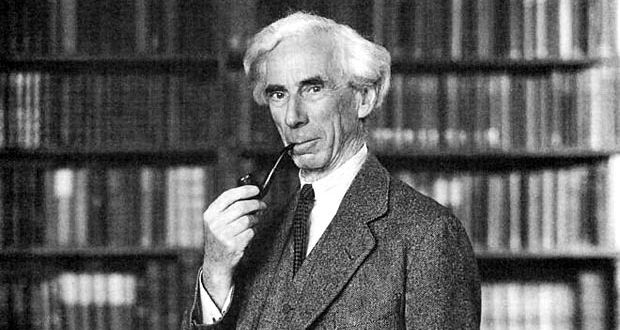
British philosopher and mathematician Bertrand Russell helped write “Principia Mathematica,” a massive work on the foundations of mathematics with Alfred North Whitehead. The book famously took hundreds of pages before reaching the proof that 1+1=2 because it built arithmetic from formal logic step by step. Despite its importance, the work became so complex and difficult that mathematicians rarely use it directly today.
22. Charles Darwin spent 6 months in South America searching for a lesser rhea, an ostrich-like bird. Then one was served to him for dinner, and halfway through the meal, Darwin realized he was eating the very bird he had been trying to find. He gathered the remaining parts and sent them to England, where the specimen was preserved and formally classified.
23. Portuguese neurologist António Egas Moniz developed the lobotomy, a highly invasive brain procedure later viewed as one of modern medicine’s worst mistakes. At the time, doctors used it to treat serious psychiatric conditions, and Moniz’s work gained major institutional approval. He was awarded the Nobel Prize in Physiology or Medicine in 1949 for the procedure, despite its reputation collapsing as its harm became more apparent.
24. In 1962, NASA used electronic computers to calculate the orbit of American astronaut John Glenn around Earth for the first time. Before the flight, Glenn specifically asked American mathematician Katherine Johnson to verify the machine’s numbers by hand. He refused to fly unless Johnson confirmed the calculations, and her work helped clear the way for his historic mission.
25. American nuclear physicist Alvin Weinberg worked on the Manhattan Project and later directed Oak Ridge National Laboratory, where his team developed molten-salt reactor technology. He pushed for a safer civilian reactor path, including thorium-based molten-salt designs, while US nuclear policy favored other reactor programs. In 1973, officials removed him as Oak Ridge director, partly because he kept pressing reactor safety questions that powerful backers did not want prioritized.


RE: Fact #7 (Insulin Woke Dying Diabetic Children) – As someone who has lived with Type 1 diabetes for 28 years and takes 6 shots a day, I am incredibly grateful for their work.
RE: Fact #34 (Marie Curie Carried Radium Vials) – I’ve got one of those tritium keychain vials on the lamp switch next to my bed. It’s given off a subtle white glow for 13 years now, which is perfect for seeing what’s on the nightstand at night without being too bright. It really only shows up when my eyes are adjusted to the dark. I do wonder when it’ll finally fade out.
Luckily, the radiation from tritium is blocked by something as simple as glass or paper. It’s only a danger if you breathe or ingest it. I wouldn’t want to work in a factory making them, but as a sealed vial, it’s perfectly safe.
RE: Fact #48 (Tyrone Hayes Challenged Atrazine Maker) – And this is exactly why it’s so concerning that universities are getting more and more corporate funding.
RE: Fact #36 (Einstein’s Miracle Year Changed Physics) – I was about to feel bad about my own age and accomplishments, then I remembered I’m comparing myself to Einstein.
I still feel pretty bad about myself. By age 26, the only discovery I had made was that I had cancer.
Man, screw cancer. From one stranger to another, I really hope you’re holding up okay.
Totally agree. He’s a once-in-a-generation genius, so measuring yourself against him is a waste of time. We should only really compare ourselves to who we were in the past. Although, I feel like I’m losing on that front too.
RE: Fact #22 (Charles Darwin Ate His Discovery) – Fun fact: they salvaged enough of the bird to make a full taxidermied specimen. I have to salute whoever had the job of turning dinner leftovers back into a complete bird.
What amazes me is how this even happened. I live in South America where rheas are native, and I see them all the time near roads and fields. They are not rare at all.
There are two types, the greater and the lesser, which live in overlapping areas. The greater rhea was well known and abundant. Darwin heard locals talk about a rarer, smaller species with distinct features. Later, someone shot a rhea for food, and Darwin initially assumed it was just a small greater rhea. He realized halfway through eating it that it was likely the lesser species. He wasn’t an idiot; he was a patient, careful naturalist doing tedious work in a wild environment. He was actually one of the first people to look at how small observations fit into a big picture, which is why his work on evolution was so convincing.
RE: Fact #49 (Charles Darwin Listed Marriage Pros) – It’s fascinating to get this peek into Darwin’s mind. It’s written in such a scattered way. > “Marry” > Children, , Constant companion, who will feel interested in one, , object to be beloved & played with., , better than a dog anyhow., Home, & someone to take care of house, Charms of music & female chit-chat., These things good for one’s health., but terrible loss of time. , > My God, it is intolerable to think of spending ones whole life, like a neuter bee, working, working, & nothing after all., No, no won’t do., Imagine living all one’s day solitarily in smoky dirty London House., Only picture to yourself a nice soft wife on a sofa with good fire, & books & music perhaps, Compare this vision with the dingy reality of Grt. Marlbro’ St. > “Not Marry” > Freedom to go where one liked, choice of Society & little of it. , Conversation of clever men at clubs, Not forced to visit relatives, & to bend in every trifle., to have the expense & anxiety of children, perhaps quarelling, Loss of time. , cannot read in the Evenings, fatness & idleness, Anxiety & responsibility, less money for books &c, if many children forced to gain one’s bread., In any case, the marriage lasted for the rest of his life and seems to have been a happy one.
RE: Fact #29 (John Gurdon Defied Biology Report) – I really hope that teacher lived long enough to see how wrong they were.
I’m a teacher. I had a student in year 10 who was failing and obsessed with looking ‘cool.’ I told them they needed to step up or they wouldn’t graduate, and I explained how an education is the best way to escape poverty. They turned it around and became our best student. I was so proud when they finally graduated. Who knows the real context behind the quote?
I wonder if John Gurdon was dealing with something difficult in his personal life at the time.
Who knows? Maybe his teacher being a jerk is exactly what motivated him to work harder and win that award. Maybe the teacher did him a favor, haha.
He actually says that his old school report is the only document he has ever framed.
RE: Fact #26 (Alexander Shulgin Tested Psychedelic Compounds) – I read Pihkal and Tihkal when I was 18, and I still have them. They completely changed my perspective on life. I’m actually a chemical engineer in the pharma industry now, and I credit him for that.
RE: Fact #7 (Insulin Woke Dying Diabetic Children) – A quick side note on the discovery of insulin: Frederick Banting got to pick between two medical students, Charles Best and Clark Noble. They flipped a coin to decide who would work with him. Best won, helped discover insulin, and became rich and famous. Noble lost, and his career took a different path. About 20 years later, Noble was sent some leaves from Jamaica with potential medicinal uses. He didn’t have the resources to study them, so he gave them to his brother, Robert. Robert discovered vinca alkaloids in those leaves, one of our most important chemotherapy agents, and became famous himself. Clark Noble died in 1978 as a footnote in history, with an obituary titled “Almost Famous.”
Charles Best beat out Clark Noble? And both were great medical students? This sounds like lazy writing.
That is heartbreaking. It really makes you wonder if any one person truly “deserves” credit for their achievements. Hard work matters, but a lot of it seems to be pure luck.
If he had put in zero effort with those leaves, a discovery might never have happened, so he deserves some credit for being willing to let others take the lead.
Banting and Best teamed up in the summer of 1921 and finished their testing by early 1922. By that spring, Banting was already treating patients. By the fall, they were mass-producing insulin from cattle, and by 1923, they had a Nobel Prize. It is hard to say if that pace of discovery would have been possible with anyone else.
Clark Noble might have had plenty of fulfilling moments and a good life despite the setbacks. He may have died without any regrets about not being rich or famous.
Yet here we are, talking about him 40 years later on the internet. He is definitely more famous than I am.
The guy is famous for being “almost” famous. It is not even infamy, just a sort of pity-fame.
RE: Fact #19 (Richard Feynman Cracked Atomic Safes) – I always loved his story about the patents at Los Alamos. The powers that be asked for crazy ideas, so he suggested several for nuclear propulsion. Later, a patent guy told him he had to sign over the rights for ‘$1 and other valuable consideration.’ Feynman demanded his dollar, which confused the guy. He caused such a fuss that the patent agent eventually paid him out of his own pocket. Feynman then bought snacks, which were hard to get at the secure facility. When the other engineers saw his snacks and found out how he got them, they all marched to the patent office to demand their own dollars. That is how the whole team got snacks thanks to Feynman. His cafeteria plate-spinning also eventually led to his Nobel Prize.
RE: Fact #9 (Rita Levi-Montalcini Built Bedroom Lab) – This is yet another instance where prejudice and political regimes stifled scientific breakthroughs that could have helped everyone.
RE: Fact #28 (Sugar Industry Shifted Heart Blame) – Some people still refuse to accept that studies can be designed within specific limits just to ‘prove’ whatever the person paying for them wants.
RE: Fact #32 (Natalie Mangini Broke Westinghouse Barrier) – She was already bored working in the Mica division at Westinghouse when she applied for a spot at the Bettis Atomic Power Lab. The interviewers were shocked to see a woman show up, but they went ahead with the meeting and offered her an analytical chemistry job. She actually turned it down to hold out for a role in radiochemistry instead, which she landed two days later. She later mentioned she didn’t know anything about the field at the time but figured she could learn as she went while taking classes at Carnegie.
RE: Fact #48 (Tyrone Hayes Challenged Atrazine Maker) – THEY’RE PUTTING CHEMICALS IN THE WATER THAT ARE TURNING THE FRICKING FROGS GAY!
RE: Fact #2 (Max Planck Ignored Physics Warning) – The guy actually has a constant named after him. How many of us can say we’ve pulled that off?
Boltzmann has two constants, an equation, a law, a distribution, and a brilliant mind.
RE: Fact #25 (Alvin Weinberg Pushed Thorium Reactors) – Thorium reactors aren’t actually that easy to run. They require a liquid sodium moderator and coolant, which likely needs water for cooling. Plus, building a perfectly sealed pump or valve for that is incredibly difficult.
Don’t forget the negative cooling coefficient. Regardless, we should try to improve our reactor designs, and thorium breeder reactors are one way to do it. It’s worth checking out his work from the 60s, especially before India and China own the entire modular reactor market.
RE: Fact #40 (Mary Somerville Inspired Word Scientist) – They didn’t go with the obvious choice? Given the context, ‘Woman of Science’ seems like it would have made more sense than ‘Scientist.’
It was supposed to be ‘scientits, ‘ but the person sent to Oxford to propose the term had dyslexia.
RE: Fact #23 (Egas Moniz Won Lobotomy Nobel) – It was used to calm people with schizophrenia or those who had lost touch with reality, but it quickly devolved into a way to suppress anyone deemed “uppity, ” like women who didn’t obey their parents.
I have heard it had some legitimate uses, but it was definitely horrifically abused back then.
That is exactly what I was wondering. Was it like ECT, where it had a valid medical use for extreme cases before it got abused by the medical establishment and went off the rails?
I went down a rabbit hole on this. Moniz invented the leucotomy as a legitimate surgical procedure, and there were reports of genuine success early on. Walter Freeman later modified it into the “ice-pick” lobotomy. Freeman wasn’t trying to help people as much as he wanted fame; his version was “quick and easy, ” leading to doctors performing them everywhere, even in hotel rooms.
RE: Fact #47 (Alan Turing Counted Bike Pedals) – As someone who deals with awful seasonal hay fever, I completely get why he’d cycle in a gas mask.
Guess I’m eccentric, because that’s exactly the kind of stuff I’d do. I’ve put off fixing my own bike chain for months too. I just replaced my windshield wipers after a whole year of complaining every time it rained and manually timing the wipes to keep from smearing the water and making it even harder to see.
I remember driving to get pizza with my roommate a while back. He saw a guy wearing a mask while mowing his lawn alone and made a snarky comment about how stupid it was. I just turned to him and said, “Pollen.” He just went, “Oh.” People often have perfectly good reasons for doing weird things.
After things opened up, I posted a photo of myself in a mask with my parrot and joked about having to wear it to clean her room. I was shocked by the number of people who jumped down my throat, calling me an idiot for wearing a mask in my own home. I was like, you can literally catch pneumonia from parrot dust. Some people are so self-righteous they can’t even think through a situation before talking.
RE: Fact #6 (Millikan Confirmed Einstein’s Light Theory) – That is how science is done, as long as you aren’t rigging your experiments. If you think light is a particle, figure out how to test the opposite. Hate dark matter? Try to design an experiment to prove it isn’t real. Science grows regardless of what you find.
RE: Fact #30 (Charles Darwin’s Four-Hour Workday) – He was a very ill man for much of his life, if I recall correctly.
His illness might have been chronic anxiety caused by knowing his theory would effectively destroy the Victorian concept of God.
Nah, I think it was just being stuck on a ship in the middle of nowhere for five years in the 1830s with no access to modern medicine.
RE: Fact #3 (Harlow Shapley Mapped Bigger Universe) – You have to respect a person who can change their mind when they see the facts.
No! My fragile ego and entire sense of self depend on me being right every single time! How dare you question my authority? /s
It’s a great trait, and honestly, we need more of it.
RE: Fact #19 (Richard Feynman Cracked Atomic Safes) – His sister was also an astrophysicist. She calculated sunspot cycles and almost went mad because nobody would hire her.
RE: Fact #36 (Einstein’s Miracle Year Changed Physics) – Yeah? Well, I bet he didn’t have a maxed-out Hunter, Druid, AND Warlock in WoW by 26, did he?
RE: Fact #43 (Dicran Kabakjian Made Radioactive Home) – For anyone curious, here is some anecdotal info on the health outcomes for people connected to that house: Anna Tallant lived there from 1949 to 1961 and died of breast cancer at 54. The scientist’s son, Raymond, spent his childhood there and died of abdominal cancer at 65. The grandson, Raymond Jr., died of bladder cancer at 37. Finally, William Dooner, who delivered the ore to the home for twenty years, died of lung cancer at 71.
RE: Fact #10 (Bell Labs Heard Big Bang) – We really need a modern version of Bell Labs. They had the freedom to experiment, chase thousands of dead ends, and stumble upon world-changing inventions like the transistor, lasers, and fiber optics. It is amazing that they won nine Nobel Prizes and were funded by a small portion of every phone bill in the country. They weren’t even allowed to profit from their patents, so their work was a genuine gift to the world. Once AT&T was broken up, all that focus on big-picture innovation basically disappeared. If I were president, I would prioritize creating a new institution like that because you never know what discoveries are waiting to be made.
Bell Labs wasn’t quite the unified dream people imagine. When I interviewed there as a fresh graduate in the 80s, I found three different teams working on speech recognition that didn’t even know each other existed. It was a massive place, and while some work was brilliant, a lot of it was just mundane, like refining telephone handsets. Penzias and Wilson only got the Nobel because they were trying to scrub ‘noise’ from an antenna they didn’t even build. Robert Dicke was the one who actually figured out they were looking at the Big Bang, and plenty of people feel he should have been included in that prize.
RE: Fact #23 (Egas Moniz Won Lobotomy Nobel) – Freeman, who popularized it, was essentially a psychopath. There is a documented story about him chasing a patient who got cold feet, knocking him out with an electroshock machine in a hotel room, and performing the lobotomy right there on the floor. It was completely unsterilized and forced.
RE: Fact #37 (William Dampier Mixed Piracy Science) – At one point, Dampier’s crew stole a stash of cocoa, then started raiding local farms for sugar just so they could whip up some chocolate treats. He’s also credited with contributing nearly a thousand entries to the Oxford English Dictionary, including words like banana, posse, smuggler, tortilla, avocado, cashew, and chopsticks. He actually went on trial and was found guilty, not for piracy, but for beating his second-in-command with a cane while on a legitimate scientific expedition. He ended up losing his commissions and paying a massive fine.
I’m surprised there wasn’t already a word for smugglers. We’ve had other terms for ‘posse’ forever, and the rest are just things Europeans hadn’t encountered yet, but people have been sneaking goods into places for as long as there have been borders.
RE: Fact #5 (Tesla Tore Up Royalty Fortune) – And that left Westinghouse a millionaire while Tesla died alone, falling in love with a pigeon.
I mean, Tesla was a pretty strange guy; he probably would have ended up alone regardless, just in a much bigger house.
RE: Fact #35 (Ettore Majorana Predicted Then Vanished) – He sent a strange final note to the director of the Naples Physics Institute the day he vanished. Most of it reads like a suicide letter, but the last few lines raise questions. And the fact that he was never found makes it even weirder: > Dear Carrelli, I made a decision that has become unavoidable. There isn’t a bit of selfishness in it, but I realize what trouble my sudden disappearance will cause you and the students. For this as well, I beg your forgiveness, but especially for betraying the trust, the sincere friendship, and the sympathy you gave me over the past months. I ask you to remember me to all those I learned to know and appreciate in your Institute, especially Sciuti: I will keep a fond memory of them all at least until 11 pm tonight, possibly later too. , E. Majorana
Seems like he probably ended his own life. I suspect he jumped into the water or tried something that takes a little longer to fully process.
Legend says Majorana realized his research could be weaponized and talked about his fears with colleagues. Apparently, that guilt weighed on him so heavily it drove him to vanish.
To me, the end of that note reads like he was planning to kill himself at 11pm, and he was questioning whether he’d even be around in an afterlife to remember his friends.
Or could he have just been trying to escape the Italian fascist government and decided he had to disappear that night?
RE: Fact #44 (Paul Erdos Quit And Blamed) – It’s awesome that he’d just show up at a colleague’s place, announce “my brain is open, ” and crash there for a few days to work on papers.
This is why he’s the Kevin Bacon of the science world. An “Erdős number” tracks how many degrees of separation you have from him through research collaborations. If you add in a “Bacon number” for acting, you get an “Erdős-Bacon” number. People like Carl Sagan, Richard Feynman, and Stephen Hawking hit a 6, while Mayim Bialik and Natalie Portman are 7s. If you add in a “Sabbath” number for being connected to Black Sabbath’s music, things get even wilder, Feynman and Portman are at 10, Brian May is a 9, and Hawking is an 8.
RE: Fact #41 (Tesla Chased Longevity With Electricity) – What was his reasoning for thinking quitting alcohol would cost him 15 years off his lifespan estimate?
RE: Fact #21 (Bertrand Russell Proved One Plus) – It was published back when people were really digging into the foundations of math, so it definitely served a purpose at the time.
To paraphrase David Mitchell, the 20th century is a pretty late time to start questioning if 1+1=2. Since we have so much depending on that being true, we are probably better off not looking too closely.
The goal was to establish a rock-solid foundation. Russell didn’t spend 360 pages proving 1+1=2; he spent that time building the framework so he could even ask the question. Showing it equals two was just a way to prove his foundation wouldn’t immediately collapse. This is actually standard practice, which is part of the controversy surrounding Mochizuki’s ABC conjecture proof.
They actually hit the proof about 80 pages into volume II, and contrary to the fact, that definitely wasn’t the sole purpose of the book.
RE: Fact #34 (Marie Curie Carried Radium Vials) – I also learned that Pierre Curie did the same thing. He’d demonstrate the glow and heat to curious people, and he even strapped a vial to his bare arm for ten hours once because he was fascinated by how it burned his skin without causing pain.
A fun fact about Pierre Curie: he was a direct descendant of Johann Bernoulli, I believe his great-great-great-great-great grandson.
RE: Fact #19 (Richard Feynman Cracked Atomic Safes) – If you have not checked them out yet, he has six accessible science books that are all fantastic. These stories usually come from those, so you are probably already onto him, but I wanted to mention it for others. His storytelling and teaching style are incredible. He is one of my personal icons. Glad you found his work. One of the books even includes the appendix he wrote for the Challenger disaster report, which is a great read.
He was definitely an out-of-the-box thinker who loved finding loopholes. For instance, the primitive wooden filing cabinets in the camp had locks, but you could sometimes just pry off the back or reach through gaps to get the papers. My favorite story is the one about the hole in the camp fence he discovered.
Actually, this fact is a bit off. He didn’t guess the combinations; back then, people often left the lock dialed so only the last number was needed to open it because they had to store their work constantly. It was tedious, so they just left the safe partially unlocked. Feynman would just turn the dial until he heard the click. Instead of buying better safes, the government just banned him from the building. That is why he was my childhood hero; he constantly thumbed his nose at authority. Later, he spotted a reversed coolant pump on a complex blueprint for a reactor within seconds, despite not even knowing the symbols. He was not a genius in the traditional sense, he actually disliked the arrogance of many in his field, but he was exceptionally creative. His work on the Challenger report was crucial because he focused on NASA’s culture when others just looked at the technical side. That appendix is why Congress eventually held them accountable for the mismanagement that led to the tragedy.
RE: Fact #2 (Max Planck Ignored Physics Warning) – “Just learn the fundamentals.” Wow, Planck really wasn’t playing around.
RE: Fact #15 (Robert Recorde Invented Equals Sign) – It is kind of ironic that he complained about the tedious repetition of the words ‘is equal to’ when he used so many extra vowels in his explanation.
I never actually considered that the sign represents ‘equal’ because the two lines themselves are equal in length.
RE: Fact #8 (Marie Curie Joined Flying University) – On top of that, her daughter Irène Joliot-Curie won a Nobel Prize in Chemistry in 1935 for discovering artificial radioactivity, and her other daughter, Ève Curie, worked for UNICEF when they won the Nobel Peace Prize. Her grandchildren are also prominent scientists. Definitely a family of role models.
This reminds me of the Huxley family. They were a dynasty of high-achieving scientists, artists, and public servants. Thomas Henry Huxley was a zoologist and a key supporter of Darwin. His grandsons included the author Aldous Huxley, the biologist and UNESCO director Julian Huxley, and the Nobel-winning physiologist Andrew Huxley. Thomas and Andrew both served as President of the Royal Society, a century apart.
Don’t forget Norbert Huxley, the youngest brother, who earned his 20m swimming badge and made groundbreaking contributions to the field of crayon consumption.
RE: Fact #37 (William Dampier Mixed Piracy Science) – He definitely wasn’t the first European to smoke marijuana. Europeans have been traveling for ages, and cannabis is a hardy plant that had already been grown for hemp across Europe for centuries. It can certainly produce high THC content when grown in warmer climates.
RE: Fact #12 (Dr. Wagner von Jauregg’s Syphilis Treatment) – Talk about fighting fire with fire. Using malaria to cure syphilis was a wild, desperate move, but it actually worked until penicillin came along.
If we still relied on malaria to treat syphilis, would we have even bothered to develop anti-malaria drugs?
RE: Fact #50 (Clair Patterson Exposed Lead Poisoning) – It seems like he mostly just dealt with hardship his whole life. It is sad that making massive breakthroughs and protecting public health is often a thankless endeavor.
RE: Fact #31 (Eratosthenes Measured Earth With Shadows) – People used to call him “Beta” because they thought he was second-best at philosophy. Yet here we are, talking about him on the internet thousands of years later. Who’s the beta now?
RE: Fact #33 (John Neumann Frightened His Lecturer) – He’s arguably one of the most influential people that the general public knows the least about.
No kidding. I’d never heard of him either, but looking at his known work is wild, did the guy ever sleep? It really puts things into perspective regarding how much one person can actually accomplish. Even if it wasn’t just him, the point stands.
Plenty of his peers who were at the top of their own fields used to comment on how fast his mind worked. I’d say he definitely had a head start on what he could get done in a day.
Claude Shannon is another one. So is Alan Turing. But honestly, who actually remembers the person who first designed the MOS transistor back in the 1920s?
Alan Turing has had biopics made about his life and the persecution he faced under anti-gay laws, which the British government later apologized for and addressed publicly.
RE: Fact #6 (Millikan Confirmed Einstein’s Light Theory) – That is how science works. If you doubt something, find a way to test if it’s wrong. If you end up being wrong, that is great, we still learned something new.
If it turns out you were wrong, cool – at least we know more than before. That is the hard part, though. You have to be a real scientist to admit you were wrong. Usually, you just have to wait for the naysayers to die out.
RE: Fact #8 (Marie Curie Joined Flying University) – Can you imagine how much more could have been achieved in a free and open society? It is ridiculous that she was legally barred from attending university.
RE: Fact #3 (Harlow Shapley Mapped Bigger Universe) – It’s wild to call something “junk science” and then realize you were the one who got it wrong. To not only accept it but to actively push for that knowledge to be shared so everyone can learn is rare. This was a man who definitely didn’t let his ego stand in the way of progress.
RE: Fact #29 (John Gurdon Defied Biology Report) – The focus in schools is shifting away from equating rote memorization of math or biological facts with intelligence. Instead, there’s more acceptance for different learning speeds and executive functioning skills. Progressive schools should aim to leave kids with a real passion for learning and the actual tools to pursue what they care about.
It’s sad. My son’s kindergarten assessments were mostly about reciting things as fast as possible while being timed. Any pause to actually think was discouraged. It’s completely idiotic.
Blame politicians for obsessing over the test scores in China and India. Everyone talks about how they produce so many ‘graduates, ‘ but most of them just memorized answers from old tests. That’s useless for an actual engineer. Nobody cares if you can recite data that Google provides in five seconds. Understanding the data, applying it, and knowing when not to apply it is what matters. It’s about root cause analysis, not just regurgitating textbook answers.
RE: Fact #14 (Interstellar Black Hole Produced Papers) – Actually, they didn’t use the perfectly accurate scientific model in the final film because it just didn’t look visually striking enough.
I’m sure Neil deGrasse Tyson had a lot to say about all that on Twitter afterward.
I remember him actually praising the film for its scientific accuracy and realistic effects.
RE: Fact #4 (Einstein Defied Nazi Physics Critics) – “If my theory of relativity is proven successful, Germany will claim me as a German and France will declare me a citizen of the world. Should my theory prove untrue, France will say that I am a German, and Germany will declare that I am a Jew.” Another classic Einstein quote.
It’s wild how even that quote gives the Nazis too much credit. Werner Heisenberg was blacklisted just for acknowledging that Einstein’s theories were correct. He was nearly persecuted by the SS and only escaped thanks to his mother personally appealing to Himmler’s mother.
Wasn’t he the one leading the Nazi atomic bomb project? People wonder if he might have sabotaged it on purpose.
I think Mbappé once said something similar about how when they win, people treat them as French, but when they lose, they’re treated as African.
RE: Fact #39 (Dan Shechtman Proved Quasicrystal Critics) – The irony is that Linus Pauling ended up pursuing some pretty fringe beliefs of his own, like megavitamin therapy. But then again, he’s a two-time Nobel Prize-winning chemist and physicist who completely changed the field, whereas I’m just some person sitting at the Linus Pauling institute studying the very science he created.
RE: Fact #14 (Interstellar Black Hole Produced Papers) – That movie was worth every penny of the admission fee. It is rare to see films of that caliber these days.
Seeing it in the theater was an incredible experience. It holds up well at home, but nothing beats that massive screen and the organs blasting through the sound system.
RE: Fact #13 (Stephen Hawking Outsmarted Oxford Examiners) – Sometimes I’ll see a complex equation on a board and just figure out the rest of it intuitively.
RE: Fact #47 (Alan Turing Counted Bike Pedals) – “So he was eccentric, right? That means an autistic a-hole, right? We need more of that” I’ll never get over how the movie “The Imitation Game” turned him into a knock-off Sheldon Cooper.
RE: Fact #8 (Marie Curie Joined Flying University) – Stuff like this makes me wonder about all the untapped potential in the world. Some kid forced to drop out of school to support their family could have been the next genius to figure out the theory of everything. We are lucky Marie Curie beat the barriers in her way, but I bet there are countless others who never got the chance.
This is why it bothers me when men brag about how “men” invented most things. I have had to explain to so many guys that women aren’t less intelligent; they were held back. Many women still accomplished incredible things, only for their work to be hidden or stolen.
RE: Fact #15 (Robert Recorde Invented Equals Sign) – It seems like a lot of modern math exists simply because mathematicians couldn’t be bothered to write everything out the long way.
Just like in programming, learning how to shrink down repeating patterns is the foundation for moving any field of study forward.
Basically, the whole field of algebraic number theory started because Fermat didn’t want to write out his full proof.
You would be shocked at how much cleaner proofs look when you use good Fermatting.
RE: Fact #18 (Sergei Korolev Forced Space Approval) – Holy hell. Sputnik was designed and built in under a month? Those guys really weren’t messing around.
The hard labor was originally for the missiles designed to carry nukes. All they had to do was swap out the heavy bomb for a light satellite.
Sputnik I was basically just a metal ball with a battery and a radio transmitter. The real story was the rocket itself. The satellite was mostly there to prove the rocket worked. Sputnik II was much more complicated, but it was rushed and killed its passenger immediately, which they then lied about for decades. Can’t win them all.
RE: Fact #45 (Kurt Godel Found Dictatorship Loophole) – Looks like the basic idea is that there’s a loophole allowing you to amend the Constitution to make future amendments even easier, eventually stripping away all the protections.
RE: Fact #22 (Charles Darwin Ate His Discovery) – He ate almost every animal he documented. On the trip back from the Galapagos, he ate about 20 tortoises.
RE: Fact #42 (Georgy Flyorov Noticed Missing Papers) – I was watching a documentary called ‘After Hitler’ that explained this. At the Potsdam conference, Truman was secretly informed that the Trinity nuclear test was a success. He later dropped a vague hint to Stalin about a powerful new bomb, but Stalin didn’t react because his intelligence networks already knew exactly what was going on. Stalin then ordered his aides to make the bomb project their top priority. Once Japan refused to surrender, the rest of the world saw the true power of that weapon, and the Soviets went all-in on their own research.
RE: Fact #39 (Dan Shechtman Proved Quasicrystal Critics) – >Clarke’s First Law: >When a distinguished but elderly scientist states that something is possible, he is almost certainly right. When he states that something is impossible, he is very probably wrong.
Ooh, one of my favorite quotes! Here’s another one I always pair with that: “A new scientific truth does not triumph by convincing its opponents and making them see the light, but rather because its opponents eventually die, and a new generation grows up that is familiar with it.” – Max Planck Planck seemed like a bit of a cynic.
Lord Kelvin was convinced the Earth was only around 20 million years old and outright dismissed any claims that suggested it was older.
RE: Fact #21 (Bertrand Russell Proved One Plus) – all that work also allows for proving plenty of other things. It is not as if you would need another 360 pages for every single basic math fact.
I think that was a separate thesis proposed by the Jackson 5.
RE: Fact #38 (Newton’s Dog Burned Research Papers) – I mean, it’s not quite “I can’t believe you’ve done this, ” but we have had centuries to get better at these types of reactions.
RE: Fact #24 (Katherine Johnson Verified Glenn’s Orbit) – Looking at her story makes me wonder. It used to be assumed that programming was easy and “secretary work, ” so women did it and excelled. Once men realized it was actually a brilliant and difficult feat, they decided it should be a “men’s job” and ignored the fact that women had been doing it perfectly the whole time. It is sad that it shifted from a female-led field to one dominated by men because of those biases.
It was also because women with math degrees were cheaper to hire back then. It only became an engineering field later, which brought in the macho, male-dominated culture you mentioned.
RE: Fact #4 (Einstein Defied Nazi Physics Critics) – “You can beat forty scholars with one fact, but you can’t beat one idiot with forty facts.” – Rumi
RE: Fact #13 (Stephen Hawking Outsmarted Oxford Examiners) – I find that hard to believe. Professors admitting a student was smarter than them? That sounds impossible.
RE: Fact #17 (Ole Romer Timed Light’s Speed) – Could someone break down how to calculate the distance to Jupiter from scratch using only 1676 technology? What kind of measurements and math would I need in my backyard?
Look up ‘parallax.’ It’s the same effect you see when driving on a highway, trees right next to the road zip by, while distant hills barely move. Astronomers use this to measure distance by looking at how a star shifts against the background as Earth orbits the sun. If you measure the angle of that shift in January and again in July, you can use trigonometry to build a triangle and solve for the distance. That’s actually where the unit ‘parsec’ comes from.
Once you get that, you realize Han Solo’s line about the Kessel Run was even more impressive since he was mixing up distance and time.
RE: Fact #11 (John Goodenough Powered Modern Batteries) – It is great to see that someone named Goodenough could actually make such a positive impact on the world.
I like to think he went against his name, never settled for just being ‘good enough’, and kept improving things.
Thankfully he didn’t listen to the ‘be good enough’ advice and decided to be the best instead.
RE: Fact #25 (Alvin Weinberg Pushed Thorium Reactors) – The US didn’t care about safety back then. Just look at the massive mess at the Hanford Site, it’s going to take until at least 2046 to clean up the damage caused between 1943 and the 90s, and it’ll cost over 115 billion dollars. Nuclear power was really just a side effect of weapons production anyway. Constant talk about a reactor that generated safe power but no weapons-grade plutonium was a total nonstarter for General Leslie Groves. He was such a calculating hardass that I’m not even surprised he had Weinberg fired.
RE: Fact #1 (Stephen Hawking’s Voice Reached Space) – So now he is out there listening to his own voice in some other dimension.
Imagine a young Hawking hearing a robotic voice whispering secrets of the universe, only to realize years later, as his health declined, that it was actually his own voice all along. That is basically Interstellar right there.
“It’s not possible!” “No, it’s necessary.” Man, that movie gave me goosebumps.
RE: Fact #17 (Ole Romer Timed Light’s Speed) – Fun fact: he was actually working on timing those moons to help sailors figure out longitude. The idea was to use a lunar eclipse as a universal clock; if you knew what time the eclipse happened at a fixed location like Amsterdam, you could compare it to your local time and figure out how far you’d traveled. Latitude was easy to spot using the stars, but longitude was the real challenge. It sounded great on paper, but it wasn’t practical on a rocking ship. Eventually, they just switched to using precise chronometers.
Dava Sobel wrote a fantastic book called ‘Longitude’ about the struggle to build oceangoing clocks. Pendulum clocks worked great on land, but they were useless on a pitching ship.
He was voted the 39th greatest Briton in a poll.
Actually, that isn’t quite right. The issue wasn’t the math; it was the logistics. Eclipses are rare, hard to see on a clear night, and spotting them from the deck of a moving boat is nearly impossible. The system worked fine in theory, just not in practice.
RE: Fact #1 (Stephen Hawking’s Voice Reached Space) – Beaming a recording into a black hole sounds like throwing it in the trash, but the time dilation from that intense gravity is fascinating. Once it crosses the event horizon, it would slow down indefinitely. In a way, those recordings are now preserved forever.
RE: Fact #24 (Katherine Johnson Verified Glenn’s Orbit) – She was an amazing person. In my opinion, she is exactly the kind of person the Presidential Medal of Freedom was created for.
RE: Fact #48 (Tyrone Hayes Challenged Atrazine Maker) – He came to speak at my university last year. He’s an incredible guy and a really passionate researcher.
RE: Fact #32 (Natalie Mangini Broke Westinghouse Barrier) – That’s a cool story. My mom was an engineer back in the ’50s and didn’t have that same luck. She got frustrated because her male colleagues kept pushing her aside and wouldn’t give her any real work. Eventually, she taught herself computer programming and became one of the few women in that field when it was just starting out. She ended up having a long career, so maybe she got lucky after all.
I’m sure she loved her new path, but it’s a shame she had to quit to find it.
“Avoid giving her meaningful work” really hit home for me. I’ve been through that, and it really makes you start doubting yourself. I’m so happy your mom moved past it and had such a successful career. Bravo to her!
RE: Fact #6 (Millikan Confirmed Einstein’s Light Theory) – It is fascinating how many major scientific breakthroughs came from someone trying to disprove a different theory.
That is just how science works. You don’t really prove things; you just keep disproving alternatives until the remaining theory is the most likely answer.
It is wild that research papers over a century old are still hidden behind paywalls.
RE: Fact #17 (Ole Romer Timed Light’s Speed) – It is wild that people were theorizing about black holes back in 1783, long before we had modern physics for it.
Back then, light wasn’t seen as anything special, people thought it was just like sound. There wasn’t really a theory preventing something from moving faster than light. It really took Einstein to show us how unique the speed of light actually is.
He definitely didn’t have E=mc2, but he understood that if a star’s gravity was strong enough, light wouldn’t be able to escape it. He calculated that a star 500 times the size of our sun would essentially be invisible. That is pretty incredible for a time when most people didn’t even believe meteorites existed.
RE: Fact #36 (Einstein’s Miracle Year Changed Physics) – I’ve always wondered how long it would have taken to figure those theories out if Einstein hadn’t existed. Maybe we’re stuck in the boring reality where a super-genius Einstein just hung out in a toga, and we were supposed to be driving flying cars by the year 2000.
Einstein definitely built on the work of Hendrik Lorentz and Henri Poincare. Poincare actually nearly solved the E=mc^2 puzzle by 1900, but he ended up rejecting his own findings because of some assumptions he made. > Another way of deriving a type of electromagnetic mass was based on the concept of radiation pressure. In 1900, Henri Poincaré associated electromagnetic radiation energy with a “fictitious fluid” having momentum and mass: > m_em = E_em/c^2
We shouldn’t forget Oliver Heaviside’s contribution, in 1889, he published a correct derivation of the magnetic force on a moving charged particle, which became part of what we now call the Lorentz Force. He also started looking into electromagnetic mass around that time, treating it as material mass. That really laid the groundwork for Einstein’s discovery that mass and energy are equivalent.
RE: Fact #49 (Charles Darwin Listed Marriage Pros) – I actually made a pros and cons list before I got serious with the guy who’s now my husband. Pros: he’s smart, very kind, and has a stable job. Cons: he’s ugly and not really ambitious. Turns out, his looks just kind of grew on me.
You should definitely make sure he never sees that list. I’d be pretty devastated if I found out my girlfriend thought I was ugly and unambitious, I’d honestly rather just be single.
RE: Fact #39 (Dan Shechtman Proved Quasicrystal Critics) – I recall that the asteroid theory for the dinosaur extinction was mocked for ages, too, right up until they actually found the sedimentary proof and that massive crater in Mexico.
Plate tectonics were also widely dismissed for a really long time. It feels like one of those things that should have been accepted back in the 1700s, but it didn’t really take hold until the 1950s. It’s wild.
That is genuinely surprising. We managed to split the atom before we even understood how mountains were formed?
Nobody really knew for sure until we started using submarines to map the ocean floors. That’s when all the pieces finally clicked together.
RE: Fact #20 (Dennis Klatt Gave Hawking Voice) – I feel so inspired by stories of people who keep creating and helping others even while battling terminal illness. It makes me reflect on how I can be of service.
Even the smallest kindness from a stranger can make a huge difference.
It is not quite the same, but J Dilla’s album Donuts was basically recorded on his deathbed. It is a fantastic, life-affirming album.
RE: Fact #4 (Einstein Defied Nazi Physics Critics) – That point is a bit misinterpreted; Einstein wasn’t saying his one fact beats a hundred scientists. He was saying that to disprove his theory, you don’t need a hundred people, you only need one single fact that proves it wrong. That’s a core rule in science: theories aren’t fully proven, just reinforced, but one piece of contradictory evidence is all it takes to break them.
RE: Fact #44 (Paul Erdos Quit And Blamed) – Mathematics is the one field where it doesn’t matter if you’re on performance-enhancing drugs, as long as you get the right answer. I’ve known mathematicians who swore the big breakthroughs in their PhDs happened while they were up a mountain on mushrooms, and I’ve been around others hashing out measure theory on acid. I’d highly recommend it.
And that’s not even mentioning Francis Crick, who credited LSD with helping him discover the DNA double helix. Imagine winning a Nobel Prize and changing science forever based on what you saw while tripping your face off.
It’s not super clear how verified the story is about Crick and LSD, but Kary Mullis was definitely on it when he came up with the Polymerase Chain Reaction. That one is also a bit murky though, since others had similar ideas around the same time.
RE: Fact #1 (Stephen Hawking’s Voice Reached Space) – It is pretty cool that Westminster Abbey has a section for the greatest minds who have shaped humanity. I just wonder if they’ll save a spot in that section for Paris Hilton.
I’ve always wondered where they’d bury Chuck Norris.
RE: Fact #41 (Tesla Chased Longevity With Electricity) – Nikola Tesla was kind of a crackpot who inflated his achievements and made wild claims about impossible things, like wireless infinite energy. He wasn’t useless, but it’s annoying seeing so many people online treat him like he’s a bigger scientific figure than someone like Isaac Newton. That’s just wrong.
RE: Fact #20 (Dennis Klatt Gave Hawking Voice) – I worked at Intel years ago, and a colleague was working on a project to move Hawking’s voice synthesizer to software. The original voice ran on hardware boards that were no longer being manufactured, and they needed a software backup before the parts ran out. It was a tough problem because the voice had to sound identical, so they had to reverse-engineer decades-old tech.
And here I am having to YouTube how to change the clock in my car every time daylight savings hits.
Don’t leave us hanging! What happened with the project? I wonder if it was similar to extracting ROMs from old arcade machines?
The hardware was called DECTalk. You can look it up.
RE: Fact #43 (Dicran Kabakjian Made Radioactive Home) – The craziest part is that they actually sold the contaminated sand to be used in neighborhood mortar and plaster. Can you imagine having someone in a van show up to check your walls for radiation?
San Francisco had playgrounds built with concrete made from radioactive sand that was salvaged from ships used as test targets during the Bikini Atoll nuclear tests.
Didn’t they actually conduct secret radioactive fallout tests on San Francisco?
There is an island off the coast of San Francisco where they used to dump barrels of nuclear waste. If the barrels didn’t sink on their own, they would just shoot holes in them until they did.
A quarry once lost a radioactive source, and it somehow ended up inside the wall of someone’s bedroom in an apartment complex.
RE: Fact #45 (Kurt Godel Found Dictatorship Loophole) – This is Kurt Godel we’re talking about. Good luck getting him to agree that any system is perfectly consistent.
In case anyone’s lost, Godel’s incompleteness theorem basically states that a system can’t be both complete and consistent at the same time.
Yeah, he basically destroyed everyone’s hope for a unified theory of math.
RE: Fact #5 (Tesla Tore Up Royalty Fortune) – >Tesla patented his AC motors and power systems, which were said to be the most valuable inventions since the telephone. Soon, George Westinghouse, recognizing that Tesla’s designs might be just what he needed in his efforts to unseat Edison’s DC current, licensed his patents for $60, 000 in stocks and cash and royalties based on how much electricity Westinghouse could sell. Ultimately, he won the “War of the Currents, ” but at a steep cost in litigation and competition for both Westinghouse and Edison’s General Electric Company. >Fearing ruin, Westinghouse begged Tesla for relief from the royalties Westinghouse agreed to. “Your decision determines the fate of the Westinghouse Company, ” he said. Tesla, grateful to the man who had never tried to swindle him, tore up the royalty contract, walking away from millions in royalties that he was already owed and billions that would have accrued in the future. He would have been one of the wealthiest men in the world, a titan of the Gilded Age.
RE: Fact #27 (Edmond Halley Funded Newton’s Principia) – The book is basically just a bunch of fish drawings with a few lines of text. Hilarious that after Halley personally funded the Principia, the society told him they couldn’t afford his £50 salary, so they paid him in leftover copies of ‘De Historia Piscium’ instead.
We’re broke, but can I interest you in a book about fish? We’ve got plenty.
It’s even funnier when you realize Newton had plenty of money to pay for it himself, the guy was just a jerk who preferred spending his cash on books about magic and alchemy. Then again, when his remains were analyzed, his hair showed extremely high levels of lead, arsenic, and antimony, so his eccentricity makes a lot of sense.
When Halley finally left the society, he supposedly wrote to the board: ‘So long, and thanks for all the fish.’
Illustrated books were incredibly expensive back then, but they were much more appealing to wealthy patrons than math-heavy texts. For instance, Hooke’s ‘Micrographia’ was a much easier sell to the public, especially since it was written in English rather than Latin. This stuff was crucial in the early days of science; without funding and support from the people in charge, you don’t really have scientific institutions.