


Ancient civilizations were far more complex, inventive, and sometimes stranger than the ruins they left behind suggest. From Roman gladiators who refused freedom and Egyptian workers staging history’s earliest recorded strike to forgotten cities, advanced engineering, unusual laws, and customs that survived for thousands of years, the ancient world still has plenty of surprises waiting to be uncovered.
For more stories from the distant past, check out Part 1 of our fascinating facts about ancient civilizations.
1 Libations Connected Ancient Worlds Ritually
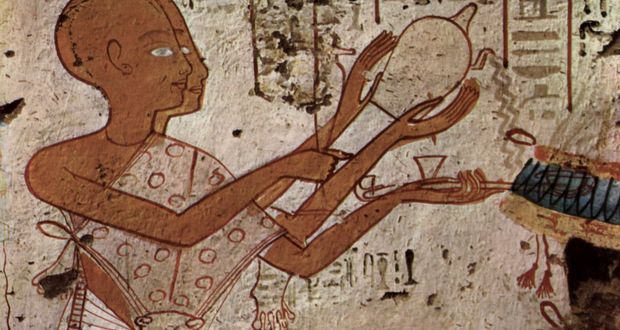
Libations, the practice of pouring out alcohol for the dead, were common in ancient Egypt, Greece, and Rome more than 3,000 years ago. Versions of the custom appear in the Bible, the Iliad, and the Odyssey, making the modern act of “pouring one out” part of an extremely old tradition.
2. Nabta Playa in southern Egypt is more than 7,000 years old, making it older than Stonehenge and one of the oldest known astronomical sites. Its stone circle marked the summer solstice and the arrival of monsoon rains, and archaeologists encountered the largely sand-buried site in the 1970s.
3. Classical Greek statues and buildings were not originally plain white marble. Artists painted them in vivid colors, but centuries of weathering stripped away most of the pigment and left the pale surfaces seen today.
4. Pyramids did not belong only to ancient Egypt, as the ancient Kingdom of Kush also built them at Meroe in modern-day Sudan. In 1833, Italian physician and treasure hunter Giuseppe Ferlini obtained permission from Sudan’s governor-general, Ali Kurshid Pasha, to excavate the ruins after hearing stories of hidden gold. During his 1834 expedition, Ferlini demolished several pyramids with explosives and dismantled the 28-meter-high pyramid of Queen Amanishakheto from the top, uncovering dozens of pieces of gold and silver jewelry. His destructive methods badly damaged Meroe’s monuments.
5. Ancient Babylon had suburbs, as revealed by a cuneiform clay tablet from 539 B.C. In a letter to the king of Persia, the writer stated, “Our property seems to me the most beautiful in the world. It is so close to Babylon that we enjoy all the advantages of the city, and yet when we come home we are away from the noise and dust.”
6 Alexandria Library Confiscated Visiting Books
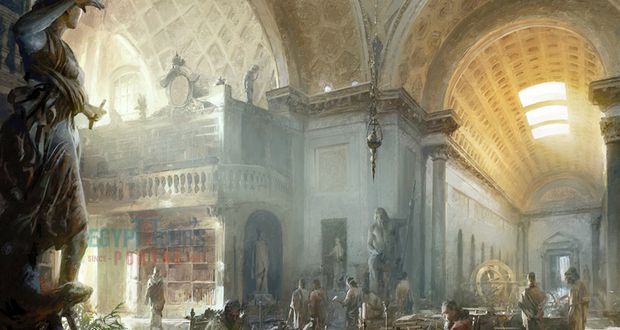
According to Greek medical writer Galen, Egyptian king Ptolemy II decreed that every ship visiting ancient Alexandria had to surrender any books found aboard. Official scribes took the texts to the Library of Alexandria and copied them. The library kept the originals and returned the copies to their owners.
7. Nearly 2,000-year-old graffiti discovered across the ancient city of Pompeii preserved the ordinary thoughts of its residents. Someone at the gladiator barracks recorded the simple achievement, “On April 19th, I made bread.” In the atrium of the House of Pinarius, another resident boasted about his partner by writing, “If anyone does not believe in Venus, they should gaze at my girlfriend.”
8. Mexico’s Great Pyramid of Cholula is the world’s largest known pyramid by volume and, according to Guinness World Records, the largest monument ever constructed. Its estimated volume exceeds 4.45 million cubic meters, nearly twice the Great Pyramid of Giza’s 2.5 million cubic meters. Beginning in the Preclassic Period, builders repeatedly expanded it into six superimposed structures with a final base measuring 300 by 315 meters. Archaeologists later cut approximately 8 kilometers of tunnels through the pyramid, revealing successive temples, altars, floors, walls, human remains, and parts of a much larger ceremonial complex.
9. Tomato sauce existed in Mexico before it became associated with Italian cooking. When the Spaniards reached Tenochtitlan, its markets already sold sauces containing tomatoes, peppers, and chilies, ingredients that appeared in Italian tomato sauces roughly 200 years later.
10. Around 50 to 60 blue faience hippopotamus statuettes have survived from ancient Egypt. Although Egyptians associated hippos with fertility and rebirth, they also feared the dangerous animals and linked them with chaotic forces. Before placing the statuettes in tombs, they often snapped off their legs so the hippos could not eat the deceased person’s soul. One famous example, William at the Metropolitan Museum of Art, has three restored legs that ancient Egyptians deliberately broke before burying it near the tomb chapel of the steward Senbi II at Meir.
11 Newgrange Captured Winter Solstice Sunlight

Every December 21, the rising sun illuminates the inner chamber of Newgrange, a prehistoric Irish monument that predates Stonehenge, for around 17 minutes. Built around 3200 B.C., the passage tomb is approximately 700 years older than Stonehenge and 600 years older than Egypt’s oldest pyramid. Sunlight enters through a small aperture called the roof-box and travels 18 meters into the main chamber. In 1967, Irish archaeologist Michael O’Kelly rediscovered the roof-box and became the first person in roughly 5,000 years to witness the illumination, which a 1989 study concluded was a deliberate part of Newgrange’s design.
12. Ancient Egyptians developed brick-and-mud egg incubators during the Ptolemaic period, after chickens became a staple of the Egyptian diet in the fourth century B.C. By controlling heat and moisture and regularly turning the eggs, workers could hatch as many as 4,500 fertilized eggs in just two to three weeks. In 2006, experts from the United Nations Food and Agriculture Organization found farmers in three Egyptian governorates still using the ancient system, with an estimated 200 ovens operating according to the survey. Hatchery workers passed the technique down orally for more than 2,000 years and continued checking egg temperatures by pressing them against their eyelids, although petrol lamps had replaced burning animal dung.
13. In ancient Athens, the 300 wealthiest citizens paid annual public-service taxes called leitourgiai, meaning “work for the people.” Instead of simply handing money to the state, they funded dramatic festivals, public celebrations, religious processions, gymnasiums, and the maintenance of trireme warships. Athenians considered this responsibility a high honor, and wealthy taxpayers competed to spend beyond the minimum requirement and provide the greatest public benefit.
14. When Egyptian pharaoh Tutankhamun died around 1323 BC, China’s first imperial dynasty was still roughly 1,000 years away, the traditional date of the Trojan War lay about 200 years ahead, and Rome would not be founded for nearly 600 years. The Great Pyramid of Giza, however, was already more than 1,000 years old.
15. For nearly 1,000 years, Greek playwright Menander of Athens ranked among the ancient world’s most popular and admired comic writers. He wrote 108 comedies and won Athens’s Lenaia festival eight times, yet nearly all his original work disappeared during the Middle Ages, leaving only quotations, fragments, and Roman adaptations. In 1952, researchers recovered a papyrus manuscript of his comedy Dyskolos in Egypt, making it the only Menander play to survive nearly complete and intact enough for performance. Scholars published it in 1958, and the University of Sydney Classical Society staged its first major modern performance on July 4, 1959.
16 Athenian Lovers Became Democratic Symbols

In 514 B.C., Athenian homosexual lovers Harmodius and Aristogeiton assassinated Hipparchus, the brother of Athens’s ruling tyrant Hippias. After Hipparchus pursued Harmodius romantically and publicly humiliated his sister following his rejection, the lovers plotted to kill both brothers during the Panathenaic festival but reached only Hipparchus. Guards killed Harmodius immediately, while authorities captured and executed Aristogeiton, and Hippias imposed a harsher tyranny until Spartan king Cleomenes I forced him into exile in 510 B.C., clearing the way for Cleisthenes’s democratic reforms. Later Athenians celebrated the lovers as the Tyrannicides and the preeminent symbols of democratic freedom, partly to obscure Sparta’s role in ending the tyranny.
17. Machu Picchu is earthquake resistant because Inca builders used ashlar masonry, cutting stone blocks to fit tightly together without mortar. During an earthquake, the joints allow the stones to move slightly before settling back into their original positions instead of forcing the wall to crack. A magnitude 6.5 or stronger earthquake struck during the site’s construction around 1450, loosening blocks in the Temple of the Sun and damaging other ceremonial structures. Afterward, the Inca improved their seismic engineering with massive foundation stones, narrower inward-sloping upper walls, and trapezoidal structures that remain standing across the Cusco region.
18. The Parthenon in Athens remained basically intact for more than 2,000 years after its completion in 432 B.C., despite becoming first a Christian church and later an Ottoman mosque. Much of the heavily damaged structure seen today resulted not from natural decay but from a massive explosion during the Morean War. On September 26, 1687, a Venetian mortar round struck gunpowder that Ottoman forces had stored inside the building, blowing out its central section, collapsing most of its walls and roof, and toppling 14 columns. The explosion killed approximately 300 people, scattered marble across the Acropolis, and left the ancient temple in ruins.
19. The oldest known written customer complaint comes from the Old Babylonian city of Ur and dates to around 1750 B.C. On the cuneiform clay tablet, a man named Nanni accused a copper merchant named Ea-Nasir of supplying poor-quality ingots and treating his servant rudely. Nanni complained that the servant had crossed enemy territory with his payment, only for Ea-Nasir to send him away, leaving Nanni without acceptable copper or a refund. British archaeologist Leonard Woolley later discovered the tablet at Ur, and Guinness World Records recognizes it as the world’s oldest written customer complaint.
20. In 2007, researchers searching for shipwrecks discovered a Stonehenge-like line of stones approximately 40 feet beneath Lake Michigan’s Grand Traverse Bay. Underwater archaeology professor Mark Holley also found a boulder measuring about 5 feet long with markings that appeared to outline a mastodon’s hump, head, trunk, tusk, ears, and legs. Some fissures looked natural while others appeared human-made, raising the possibility that the boulder carried a prehistoric petroglyph.
15 Most Controversial & Costly Blunders in History
21 Hatshepsut Statues Survived Deliberate Erasure

Hatshepsut ruled Egypt from approximately 1479 to 1458 B.C. and became ancient Egypt’s most successful female pharaoh. After her death, her successor and former co-ruler, Pharaoh Thutmose III, destroyed her statues in an attempt to obliterate her memory. During excavations at Hatshepsut’s funerary temple in Deir el-Bahri in the late 1920s, the Metropolitan Museum of Art recovered numerous fragments of one shattered seated statue. The museum reunited those pieces with fragments held in Berlin in 1929 and restored the sculpture three times, most recently in 1993.
22. The Mexica, founders and dominant group of the Aztec Empire, were among the first people in the world to make education mandatory for nearly all children, regardless of gender, rank, or social position. Parents taught children until around age 14 under the supervision of local calpulli authorities, after which boys and girls were expected to attend school. The telpochcalli taught practical subjects, military skills, history, religion, and trades such as agriculture and handicrafts. The calmecac, attended mainly by noble children, provided advanced instruction in writing, astronomy, statesmanship, theology, history, calendars, geometry, and poetry to prepare future rulers, priests, scholars, healers, and codex painters.
23. At its peak in the early 16th century, the Inca Empire governed upward of 10 million people across about 2 million square kilometers despite lacking a conventional writing system, money, draft animals, iron, steel, and wheeled transport. Administrators used knotted quipu cords to record information, while the economy relied largely on reciprocal exchange and labor taxes. Llamas carried loads, but no animals pulled wagons or plows, so the Incas moved people, messages, and goods along the vast Qhapaq Nan road network. From Cusco, they controlled territory across six modern countries and built the largest empire in pre-Columbian America.
24. When mummification became accessible to Egypt’s middle and lower classes, some embalmers removed the hearts from commoners’ bodies, possibly preventing them from reaching the afterlife. Ancient Egyptians considered the heart essential to a person’s identity and judgment after death, and it was usually preserved for the ritual weighing of the heart. Researchers have suggested that removing it may have been a way of spiritually disadvantaging commoners and preserving a privileged position for the elite in the afterlife.
25. Agnodice was a legendary Greek female physician who, according to an ancient account, disguised herself as a man because women were forbidden from practicing medicine in Athens. She became so popular with female patients that rival male physicians accused her of seducing them, forcing her to reveal that she was actually a woman during her trial. The women she had treated came to her defense, and the story says the law was changed to allow women to practice medicine. Modern scholars generally consider Agnodice a legendary rather than securely historical figure, since her story survives from a single ancient source attributed to Hyginus.


RE: Fact #33 (Spartans Offered Lives For Envoys) – The Persian king actually refused their atonement, sent the messengers back alive, and kept the war going.
They eventually lost that war in 479 BCE at the Battle of Plataea, where the Persian forces were annihilated by a coalition led by Sparta and Athens.
A Persian perspective would frame the events as a punitive campaign against Greece and Athens for aiding Ionian rebels, killing the Spartan king, and burning Athens. They also maintained influence in Greece after the war.
That was only after they had conquered most of the Greek mainland and burned Athens to the ground.
It would be funny if the messengers had just said, screw that, let’s just tell them we went to Persia and they were too generous to kill us, so they set us free.
I like to think most of history’s biggest moments are just exaggerated versions of that.
Persia’s involvement in Greece was much more complicated than the movie suggests. At different times, both Athens and Sparta allied with Persia against one another.
RE: Fact #8 (Cholula Pyramid Exceeded Giza’s Volume) – You can actually walk through quite a bit of it. I don’t remember the exact amount, but it is super cool and worth stopping by if you’re in the Puebla area.
Not as much as you’d probably like, unfortunately. There are dozens of gated-off tunnels that go really deep, which is super interesting.
RE: Fact #2 (Nabta Playa Tracked Solstice Rains) – This is a massive megalithic site. I’d bet solstice calculators are at least as old as agriculture itself. Göbekli Tepe might have had calendar functions too, and it’s 5, 000 years older than this.
RE: Fact #10 (Egyptian Hippos Entered Tombs Legless) – I picked up a replica of that statue at the Smithsonian back in 2001 when I was a kid because blue was my favorite color. Years later in college, my cat knocked it off a shelf and broke a leg. I tried to epoxy it back on, but it turns out my buddy was actually trying to do me a favor by breaking it.
RE: Fact #10 (Egyptian Hippos Entered Tombs Legless) – “Welcome to the afterlife, great Pharaoh! Here are your treasures to keep you comfy, and your servants to help out. And here is a legless meatball of death and blubber. No idea what the deal with that is.”
It’s going to ask you to pet its back. Don’t do it, I can’t stress that enough.
Look, I’m going to tell you the same thing I told that park ranger: If that bear is so dangerous, why is it shaped like a friend?
Am I the only one who read this in the voice of the hippo goddess from Moon Knight?
RE: Fact #41 (Egyptian Workers Staged First Strike) – Management handled that exactly right by actually paying the workers what they were owed. Why would anyone call that ‘caving’? That’s just called paying your employees on time. Don’t workers deserve that?
They definitely deserve to be paid on time, but chill out. You can use ‘caving’ to mean giving in under pressure without being some kind of political zealot. The original post didn’t even say if the workers deserved it or not.
It kind of reads like: ‘management didn’t know what to do, and largely caved to demands.’ I get that it doesn’t say that, but it definitely feels like that’s the implication.
Calling it ‘caving’ just shows how we’ve been conditioned to view boss mistreatment as the default. Our language really shapes how we value labor.
RE: Fact #5 (Babylon Suburbs Offered Peace Nearby) – Ancient cities were often super cramped. You had to fit everything behind defensible walls, and if it was the only major city for hundreds of miles, everyone from the surrounding farms would flock there.
If you trust ancient historians, Carthage supposedly had apartment blocks several stories high. During the final siege, Romans had to fight their way through them level by level before setting them on fire to clear them out.
Actually, before modern sanitation, most cities had a negative birth rate. If people weren’t constantly moving in from the countryside, they would have literally died out because conditions were so grim. Life was miserable before the mid-1800s.
Didn’t Rome have those public bathhouses and sewers? That felt like a huge leap forward, until that knowledge was lost and cities went back to being sewer-free.
RE: Fact #43 (Angamuco Rivaled Manhattan Building Count) – People always assume the Aztecs were the only major power in the valley, but there were plenty of other civilizations there.
I’ve thought about this before, streaming services could make a fortune with a political drama set during the Triple Alliance, leading into the arrival of Cortes. The story of the Aztec conquest is wild. A huge reason the Spanish succeeded was that the Aztecs had made so many local enemies who were eager to help take them down. Then, incidents like the Noche Triste show how tenuous the Spanish grip on the region really was at first.
If they gave that to Telemundo, they would just turn it into a La Malinche and Cortes love story and frame Cortes as the hero.
RE: Fact #34 (Marshmallows Began With Mallow Sap) – If this is the case, what is baby oil made from? What is it actually made from?
Baby oil is ethically sourced from healthy adults who act like babies.
What if I told you a cheeseburger is just cow remains covered in its mother’s lactation?
RE: Fact #40 (Spartan Agoge Extended Beyond Warfare) – So that’s why Grandma kept calling me a little bitch.
Why does everything about Sparta sound like a bunch of weird fetishes?
Wait, that sounds exactly like my middle school, not Sparta.
RE: Fact #50 (Great Zimbabwe Joined Global Trade) – The 13th-century Konark Sun Temple ruins on the east coast of India feature carvings of giraffes, ostriches, and African men, which point to historical trade connections.
That makes sense. By 1200, the Islamic world spanned from Morocco to Indonesia, and trade routes through the Middle East linked Africa and India. It is not surprising that people traded exotic animals or even enslaved individuals along those paths.
RE: Fact #7 (Pompeii Graffiti Preserved Everyday Thoughts) – “Let everyone one in love come and see. I want to break Venus’ ribs with clubs and cripple the goddess’ loins. If she can strike through my soft chest, then why can’t I smash her head with a club?”
Seriously though, who hurt this guy?
It’s wild to think this was their actual religion. Like, people really believed Zeus might turn into a goose and go after their wife just because he was bored.
Yeah, and now if you’ll excuse me, I’m heading out to eat bread that turns into the flesh of a god so I can be forgiven for everything I’ve done.
RE: Fact #42 (Pompeii Preserved Woman’s Love Poem) – “O utinam liceat collo complexa tenere braciola et teneris oscula ferre labellis i nunc ventis tua gaudia pupula crede crede mihi levis est natura virorum saepe ego cumedia vigilareperdita nocte haec mecum meditas multos Fortuna quos supstulit alte hos modo proiectos subito praecipitesque premit sic Venus ut subito coiunxit corpora amantum dividit lux et se …”
“Oh, if only I could hold your sweet arms around my neck in an embrace and kiss your tender lips. Go now, entrust your joys to the winds, my darling. Believe me, the nature of men is fickle. Often I have lain awake in the middle of a wasted night, thinking to myself: many men whom Fortune has raised up on high, she now suddenly rushes headlong, overwhelming them. In this way, when Venus has suddenly joined lovers’ bodies, the light parts them and …” The people of Pompeii had a special connection to Venus, the goddess of love. The female voice in this graffiti is evident in the Latin grammar. Researchers aren’t sure if the author wrote this poem herself or if she was just misremembering it.
Regarding the female perspective: were there specific grammatical forms in the language that changed depending on the writer’s gender?
Exactly. For instance, in the fifth line, the word ‘perdita’ confirms the writer was female. The gender identification is found there rather than in the word for ‘I’.
RE: Fact #6 (Alexandria Library Confiscated Visiting Books) – That’s actually genius. The library gets copies of every book, the ships get clean new copies in exchange for their worn-out ones, the scribes get to study new knowledge, and the ships have to stay in port longer, which is great for local tourist revenue.
It gave them a pretty good look at shipping patterns across the Mediterranean, too, which meant they could keep tabs on the movements of both allies and rivals.
It still blows my mind that the Greeks, Romans, and Egyptians never came up with something like a printing press. Gutenberg shouldn’t have been the one to get there first.
RE: Fact #4 (Meroe Pyramids Suffered Treasure Destruction) – Pyramids are actually found all over the map. Mexico is packed with them because multiple cultures built them. In fact, the world’s largest pyramid by volume is in Mexico.
It’s almost as if a pyramid is a really stable structure and societies worldwide eventually figured that out on their own. Or, you know, aliens.
I think the whole ‘ancient aliens’ narrative is incredibly bigoted toward ancient people. It acts like they were too dim to master masonry over thousands of years. It robs them of their achievements and their descendants of their history. I’m not calling out your comment, just noting that people who seriously believe that stuff are unintentionally trashing human history.
I didn’t explicitly say it, but yes, that’s exactly why. If you want to build a massive structure, have the manpower, and understand the math, the pyramid is the logical choice. It’s not hard to figure out.
It’s wild that they’re still discovering them in South America because nature has completely overtaken them.
RE: Fact #31 (Sparta Honored Warriors And Mothers) – The Aztecs supposedly felt the same way. Both warriors who died in battle and women who died during childbirth received the same rewards in the afterlife.
RE: Fact #10 (Egyptian Hippos Entered Tombs Legless) – I had a gift shop version of this from the Met. I loved that thing for 20 years until it finally broke during a move.
RE: Fact #5 (Babylon Suburbs Offered Peace Nearby) – I’m pretty sure Athens had suburbs back in its day, too. Constantinople also had areas inside its walls that were more rural and basically functioned like suburbs.
Athens was unique because the city-state was more of a collection of surrounding villages across Attica that centered on Athens. As for Constantinople, I’m not sure if those rural areas were always there or if they just popped up during periods of population decline.
Constantinople had multiple walls with about 2km between them. So you had the city center, then suburbs, then another wall, more rural land, and a final outer wall. How urbanized those areas were definitely fluctuated, especially after the plague hit. If no one is using the land outside the first wall, there’s no point in having your shop way out by the second wall where it’s harder to get to and less protected.
RE: Fact #49 (Ancient Egyptians Defied Racial Categories) – Exactly. Middle Easterners display a huge range of complexions, just like every other group.
It is not just that applying modern racial labels to ancient Egypt is anachronistic; the whole idea of these categories feels absurd.
You had Nubian rulers like Piye and Greek influence like Cleopatra, which just shows how diverse the population was.
RE: Fact #32 (Great Wall Failed Against Invaders) – There is a great book called Walls: The History of Civilization in Brick and Mortar that covers this extensively. It takes about 200 pages to make the same point over and over. You can tell it was likely a dissertation turned into a book, but it is still a really fun and interesting read.
When you are trying to hit the word count on your essay.
RE: Fact #1 (Libations Connected Ancient Worlds Ritually) – It always blows my mind that these traditions survive for thousands of years, yet we can’t play a game of ‘telephone’ in a grade school classroom without the message getting completely mangled.
I’m still convinced that game isn’t actually hard and people just mess it up on purpose. Or they’re just terrible at whispering.
RE: Fact #15 (Menander Comedy Survived Two Millennia) – So, I was eating some olives with this woman and said, “Olive, you?” She thought I said “I love you.” Four kids later, and I absolutely despise olives.
It turns out Ancient Greek humor is pretty relatable. There are tons of dick and fart jokes, and they loved making fun of specific towns for being full of idiots. The wealthy poked fun at the poor for being unrefined, and the poor fired back at the wealthy for being stuck-up jerks. Plus, everyone loved roasting the religious establishment.
RE: Fact #50 (Great Zimbabwe Joined Global Trade) – That is a tough Wonder to build, considering you need a Commercial Hub with a market and an adjacent cattle bonus resource.
Great Zimbabwe is honestly underrated. I would put it in the top tier alongside the Mausoleum at Halicarnassus, Kilwa Kisiwani, and Petra.
RE: Fact #16 (Athenian Lovers Became Democratic Symbols) – Or as they called them in ancient Greece, just two guys.
RE: Fact #39 (Alexander Never Personally Attacked Sparta) – I’m pretty sure Sparta was actually taken down later by Alexander’s regent, Antipater, in what was called the ‘battle of mice’ while Alexander was off fighting in Asia.
RE: Fact #24 (Egyptian Embalmers Possibly Removed Hearts) – It’s wild that you can’t even escape the petty country club vibes of ancient Egypt when you die.
It is funny how hard they worked to build an elite society, only for it all to crumble and get lost to history. You would think people would learn by now that prejudice isn’t the key to lasting success.
RE: Fact #44 (Great Pyramid Barely Strained Egypt) – I remember reading that the pyramid construction was partly a way to provide employment when there wasn’t much else to do because of the agricultural surplus.
It’s all because of the Nile floods. The land was fertile due to the flooding, but you couldn’t farm for a large chunk of the year. So, they finished the harvest before the flood season and put people to work on the monument until they could plant again.
I recall something similar. Beyond the surplus, there were clear windows for planting and harvesting. The pyramid work wasn’t constant throughout the year; it was seasonal work for when people had no farming obligations.
RE: Fact #18 (Parthenon Explosion Destroyed Ancient Preservation) – Things like this make me wish it weren’t such a taboo to restore these ruins. They were only destroyed by accidents or war, and I suspect the original builders would prefer them rebuilt rather than left to crumble. The Parthenon has had some work done, but it looks a bit lazy. The Colossus of Rhodes will likely never be rebuilt because Greece can’t afford it, but it would be amazing to see.
RE: Fact #14 (Tutankhamun Predated Many Famous Civilizations) – The Great Pyramid is about 58 stories tall. It’s hard to wrap my head around what that must have been like for the people who built it and saw it for the first time so long ago.
Since it took 20 years to finish, I really feel for the workers who died before it was done. They never got to see the final result.
RE: Fact #29 (Troy Lay Beneath Later Cities) – I have always wondered what kind of ruins might be buried under towns where nobody has ever dug deep enough to find them. There is probably so much undiscovered history sitting under thousands or even millions of years of landscape changes.
I do not think there were any human civilizations millions of years ago.
RE: Fact #25 (Agnodice Legend Challenged Medical Restrictions) – Considering it was ancient Greece, just admitting she was a woman wouldn’t exactly prove she wasn’t hitting on anyone.
Actually, I think it was seen as pretty scandalous for a man to be with a woman in ancient Athens. They were so misogynistic that they preferred other men.
It was more like women were considered property. It would be wrong to make someone else’s ‘cow’ like you and follow you out of the pasture; you should just buy the cow from its owner.
In ancient Greece, women were for having children, while men were for loving.
RE: Fact #7 (Pompeii Graffiti Preserved Everyday Thoughts) – This one is definitely the best: > Weep, you girls. My penis has given you up. Now it penetrates men’s behinds. Goodbye, wondrous femininity!
RE: Fact #21 (Hatshepsut Statues Survived Deliberate Erasure) – Exactly. Historians were confused about her gender for a long time because pharaohs were traditionally depicted with symbols like the beard, regardless of their actual sex.
RE: Fact #29 (Troy Lay Beneath Later Cities) – The discovery of this site is pretty controversial. Heinrich Schliemann not only blew the place apart with dynamite he likely also faked or lied about the age of his finds.
RE: Fact #47 (Flamma Refused Freedom Four Times) – Even for a gladiator, dying at 30 feels young.
Well, there were factors like having no modern medicine or antibiotics, combined with the fact that people were trying to stab you regularly.
RE: Fact #35 (Civilizations Averaged Just 340 Years) – From the source it says it is definitely not normally distributed.
So this is basically nonsense, or at least a useless number to interpret. The way they divide civilizations doesn’t make sense either. Can the Roman Republic and the Roman Empire really be considered separate? Even if there was a slow political shift, it’s clearly the same civilization. And if they include Classical Greece, which was one civilization without a united political structure, why split up Rome? Also, I don’t know where they got that number for the Byzantine Empire. Dividing the Roman Empire from the Byzantines has some merit due to cultural shifts, but how is it only 350 years? Constantinople fell in 1453, so are they claiming it only goes back to 1150? What about the 700 years before that?
The Byzantine figure is very strange. Even using the Fourth Crusade as the end, you would still be in the 600-800 year range. It looks like they essentially treated Byzantine civilization as dying in 600 because the study only counted cultures existing before that date. Han China is another example; they split it into Eastern and Western. Maybe they did it because of the Xin Dynasty, but that was just a usurper who ruled for less than 20 years. Without that split, the Han Dynasty would have reigned for over 400 years.
RE: Fact #46 (Roman Divorce Blamed Evil Demons) – For the curious, here is the text of one of those papyri from 391 AD: > “Since I, Allous, lived with you, Elias, for some time, but we decided for some reason of an evil demon which came upon our common life together to separate, in accordance with this I, Allous, agree that I have no claim against you concerning our life together or any other written or unwritten debt or collection or claim or inquiry at all, and that you Elias have the right to cohabit in another marriage, with you being free of complaint about this.” Some scholars argue that blaming an ‘evil demon’ was a way to avoid legal finger-pointing, while others think it was a genuine reflection of their religious beliefs.
RE: Fact #20 (Lake Michigan Hid Mysterious Stones) – Let’s not get carried away. The rocks are small, and that carving is likely just natural patterns. If you look at clear photos without lines drawn over them, it looks way more organic. It is annoying how much misinformation is pushed here. Real archaeology makes its data available. It’s easy to find quality documentation if you look. Whenever there’s a “mysterious” discovery, it’s always buried behind low-quality documentaries that avoid showing data and focus on their own narrative. If it were real, the data would be open for us to verify ourselves.
RE: Fact #22 (Aztec Children Received Mandatory Education) – >There were also two other opportunities for those few who had talent. Some were chosen for the house of song and dance, and others were chosen for the ball game. Both occupations had high status.
And don’t forget the celebrity school! I bet Aztec stan Twitter would have been wild. I love finding these surprisingly relatable parts of ancient societies.
RE: Fact #23 (Inca Empire Lacked Common Technologies) – They were aware of the wheel, it just didn’t really serve a purpose for them given the terrain and the lack of suitable pack animals.
Exactly. Wheels are only useful if you have draft animals to pull things. The Americas didn’t have oxen or horses, just llamas and dogs. Using boats was much more efficient for them.
Plus, the Andes are full of hills. Anything with wheels would just roll away. Archeologists have actually found small wooden toys with wheels from the Inca era.
RE: Fact #36 (Irene Blinded Son Seized Power) – Ironically, by blinding her son, she lost the legitimacy she wanted and was eventually overthrown by one of her ministers. There is a great podcast called The History of Byzantium that covers these events in detail.
Robin Pierson is doing an incredible job. He took the baton from Mike Duncan after the fall of the West and elevated the History of Rome series with more nuance, while keeping it totally accessible for a general audience. He’s providing a real service to history lovers, and honestly, other content creators should be taking notes on how he builds his shows. This is exactly how you make advanced ideas engaging and reachable.
Byzantine history was wild. People often see medieval history as depraved and cruel, but that is usually an exaggeration. Byzantine history, however, was every bit as crazy as people imagine, if not more. It is full of betrayal and horrific cruelty. Take Leo V, for instance. He became emperor by getting close to the current ruler, then betraying and castrating him and all his sons. He even tried to kill a rival by tying him to an ape and throwing them both into a furnace. That was stopped when he was murdered on Christmas by assassins dressed as a choir, and his rival was crowned instead. Basil I has a similarly wacky story.
I have always thought you could make a really cool Game of Thrones-style epic about the Crusades featuring the Franks, Italians, Byzantines, Arabs, Egyptians, and Turks. There was beef on every side. It is full of betrayals.
RE: Fact #32 (Great Wall Failed Against Invaders) – I was lucky enough to visit one of the well-preserved sections north of Beijing. What struck me first was that the wall was built along the ridges of some incredibly formidable mountains. Your first thought is, “Why would they even need a wall? The mountains should be enough.” Then you realize the true advantage of the Great Wall was not as a barrier, but as a highway for rapidly moving troops.
The wall is wide enough for horse-drawn carriages to pass. It’s like an ancient railroad.
RE: Fact #46 (Roman Divorce Blamed Evil Demons) – It is interesting that the idea of needing a ‘guilty party’ for a divorce persisted long after the Roman Empire. Bolshevik Russia was the first to grant a right to no-fault divorce in 1917. California was the first U.S. state to adopt it in 1970. The UK only implemented it in 2022.
RE: Fact #19 (Ea-Nasir Received Oldest Customer Complaint) – The best part is that we have tablets from two other people mentioning that he sold terrible copper. This wasn’t a one-time thing. Of the few tablets found at that site from that period, about a dozen are complaints about this one guy. It’s fascinating.
The even better part is that all those complaints were found in the same place, which is believed to be Ea-Nasir’s own house. The guy literally kept all his customer complaints.
The earliest historical records prove three ancient truths: 1) the Fertile Crescent was where human society was born, 2) humanity has always been obsessed with cosmic and spiritual truths, and 3) Ea-Nasir sold some garbage copper.
RE: Fact #27 (Mexica Sacrificed Princess Provoking War) – Do what you have to do to keep the sun burning, but I think this crossed a serious line.
Look, the flower wars are strange to us, but they’re pretty interesting. This, however, is just… no.
RE: Fact #50 (Great Zimbabwe Joined Global Trade) – That dry-stone construction is amazing. Indigenous empires in South America used that same method.
This technique definitely deserves more study; it could offer insights we haven’t even thought of yet.
RE: Fact #21 (Hatshepsut Statues Survived Deliberate Erasure) – It is ironic that her temple is still around with its broken statues and defaced walls, while her successor’s own temple has basically turned into a pile of rocks! I visited the site personally.
Was it rebuilt? It looks like it is in such great shape. I recall hearing that it is all thanks to a restoration project.
RE: Fact #33 (Spartans Offered Lives For Envoys) – In Greek culture, emissaries were sacrosanct and protected by the gods. That is why killing Persian emissaries was so abhorrent to the Greeks. Since the Spartans were very religious, they were terrified the gods would curse them for their actions.
Xerxes refused to execute the volunteers because it would have meant mirroring the unacceptable act Sparta had committed.
RE: Fact #14 (Tutankhamun Predated Many Famous Civilizations) – Cleopatra was born closer to the invention of the iPhone than she was to the construction of the Great Pyramid of Giza.
RE: Fact #12 (Egyptian Incubators Hatched Thousands Efficiently) – Exactly. Humans have had these incubators since 400 B.C., and it took us 2, 250 years to start applying that same logic to human babies. And yes, those first human incubators were basically just boxes to keep the infants warm.
It took humanity a very long time to realize we are just animals, not some special creatures distinct from everything else on Earth.
RE: Fact #42 (Pompeii Preserved Woman’s Love Poem) – “Now we know why that volcano erupted.” , the same people who think gay marriage causes hurricanes
They actually offset the gay graffiti with plenty of straight or gender-neutral examples: > Theophilus, don’t perform oral sex on girls against the city wall like a dog >If anyone does not believe in Venus, they should gaze at my girl friend >If anyone sits here, let him read this first of all: if anyone wants a screw, he should look for Attice; she costs 4 sestertii. >I screwed a lot of girls here. Unfortunately, even Theophilus’s sincere dedication to oral sex wasn’t enough to appease the volcano against this message: > Weep, you girls. My penis has given you up. Now it penetrates men’s behinds. Goodbye, wondrous femininity!
RE: Fact #47 (Flamma Refused Freedom Four Times) – most games were about drawing blood rather than fighting to the death. Gladiators were like celebrities, why kill the face of the crowd on a weekly basis?
They had sponsors and advertisers, and they often played to the crowd. It was basically more like WWE than UFC.
True. Gladiators were also encouraged to carry some extra fat, which provided a buffer for cuts and made for a bloodier show without hitting vitals. Penalties for killing a gladiator could be 50 times their hiring fee to cover lost revenue. Unless you were part of the ‘damnatio ad gladium’, you were more likely to die as a chariot racer.
RE: Fact #12 (Egyptian Incubators Hatched Thousands Efficiently) – I tried looking, but I couldn’t find any footage of these in action. I’m really curious about how they manage to turn so many eggs without breaking them. Has anyone else come across a video of the process?
RE: Fact #37 (Golden Age Myth Haunted Antiquity) – I remember when the Golden Age Fallacy was better than it is now. Damn millennials ruining our fallacies!
RE: Fact #9 (Tomato Sauce Predated Italian Cuisine) – It is hard to picture what Italian, Irish, and Thai cuisines were like before they even had tomatoes, potatoes, or hot peppers.
Thinking about Italian food before the arrival of noodles! It just goes to show that nobody should be a snob about staying “authentic.” If everyone stuck to the original ingredients, we wouldn’t have most of these classic dishes.
RE: Fact #38 (Sphinx Needed Excavation Millennia Ago) – It’s like that fact about how we live closer in time to a T-rex than a T-rex did to a Stegosaurus.
RE: Fact #11 (Newgrange Captured Winter Solstice Sunlight) – Going to Newgrange was one of the coolest things I did while I was studying in Ireland. It was seriously impressive.
My wife and I visited Newgrange during our honeymoon in Dublin. It was one of the only things we specifically planned to see. We knew it would be cool, but nothing prepares you for how massive those stones are.
That was such a cool experience! I asked the guide about all the spirals carved on the outside, and he mentioned there’s a theory that the creators were into mushrooms.
RE: Fact #39 (Alexander Never Personally Attacked Sparta) – He didn’t need to attack them. Sparta was way past its prime by then. The real power on the Greek mainland for Philip and Alexander was Thebes, which had already beaten Sparta in the 4th century. When Philip was consolidating Greece, his main rivals were Athens and Thebes. Sparta wasn’t even a threat because Philip had already allied with Messene and Argos, two cities that hated the Spartans and kept them pinned down. Sparta was basically a backwater by that point, arrogant, living in the past, and not even worth the effort to conquer. They were a total distraction from Alexander’s bigger goals in Persia. Eventually, they tried to revolt under Alexander’s rule and got crushed by his general, Antipater, at the Battle of Megalopolis. After that, they joined the League of Corinth. Alexander likely expected them to pull that kind of boneheaded move anyway.
RE: Fact #38 (Sphinx Needed Excavation Millennia Ago) – The pyramids were built between 2550 and 2490 BC, while Cleopatra lived from 69 to 30 BC. The first Pizza Hut opened in Wichita in 1958, which is actually 500 years closer to Cleopatra’s lifetime than it is to the construction of the pyramids. Little Caesars started in 1959.
RE: Fact #23 (Inca Empire Lacked Common Technologies) – They used tripods with clay bowls filled with water and sighting holes to help build their roads and aqueducts. It is essentially the same concept as a modern surveying level.
How exactly did that work? I get that water stays level, but how does that translate into building long structures that are perfectly level?
Picture a round pot with several holes at the same height along its sides. When you fill it with water, gravity keeps the surface flat. If water leaks out of one hole, you adjust the pot until it sits perfectly level. Wherever you are when the water stops spilling, that’s your level mark.
RE: Fact #18 (Parthenon Explosion Destroyed Ancient Preservation) – A German officer named Sobievolski noted that a Turkish deserter told Morosini about the gunpowder stored in the Parthenon. The Turks assumed the Venetians wouldn’t target a site of such historic importance, but Morosini reportedly ordered his artillery to fire on it anyway. Afterward, Morosini tried to loot the sculptures and caused even more damage.
I don’t know how anyone could believe that an enemy wouldn’t attack a site of cultural heritage. It’s war. The only real objectives are to destroy, hurt, and force submission. Anything goes.
RE: Fact #15 (Menander Comedy Survived Two Millennia) – I did some digging: “The Dishna Papers, also known as the Bodmer Papyri, are a group of 22 papyri found in Dishna, Egypt, in 1952. They were later bought by Martin Bodmer and are kept at his library in Switzerland. They contain parts of the Old and New Testaments, early Christian texts, Homer, and Menander. The oldest, P66, dates to around 200 A.D. Most are housed at the Bodmer Library in Cologny, Switzerland. Books V and VI of Homer’s Iliad, and three comedies of Menander, Samia and Aspis, are among these papyri, along with gospel texts like Papyrus 66, a version of the Gospel of John.”
RE: Fact #33 (Spartans Offered Lives For Envoys) – Also, the Spartan rite of passage wasn’t hunting and killing a wolf like in the movie; it was usually killing a slave.
Specifically, you were supposed to kill a helot without being seen. If you got caught, you were punished severely. Since you were technically not supposed to kill them, getting caught proved that you were not only disobedient but also lacked the cunning to get away with it, which was a liability in war.
RE: Fact #45 (Roman Dagger Revealed Spectacular Decoration) – The extent of ancient diplomacy was incredible. Imagine getting gems from Sri Lanka or Indonesia, bringing them to Rome, and having Georgian jewelers combine them with Middle Eastern gold to send as gifts to German tribes. It was like early globalism. Or the Baltic amber found in 10th-15th century BC Egyptian artifacts.
Ancient people were just as smart as we are. We really underestimate them.
They don’t care about getting credit now, obviously. But seriously, we think they were simple, but they were remarkably talented and smart with the resources available to them at the time.
RE: Fact #27 (Mexica Sacrificed Princess Provoking War) – Yeah, the Aztecs weren’t exactly a “nice” empire. There is a reason the Spanish found tens of thousands of allies who were happy to help them fight back.
RE: Fact #48 (Byzantines Still Called Themselves Romans) – Eastern Roman Empire is at least a more accurate description. The label ‘Byzantium’ was specifically invented to distinguish the later Romans from the classical ones.
RE: Fact #30 (Greek Midwives Had Given Birth) – This feels like one of those strange logical laws that is both completely sensible and incredibly weird.
Sounds like the ancient Greeks were really committed to the idea of practicing what you preach.
RE: Fact #27 (Mexica Sacrificed Princess Provoking War) – It makes you understand why so many indigenous groups joined Hernando Cortes to help bring down the Aztec Empire. There is evil, and then there is “evil”.
I had just watched the movie Apocalypto and wanted to learn more about the Aztecs when I stumbled upon this story. It is definitely one of the most messed-up things I have read in a long time.
RE: Fact #37 (Golden Age Myth Haunted Antiquity) – I think the 90s were better, though I was just a skate-boarding kid with zero responsibilities back then.
RE: Fact #7 (Pompeii Graffiti Preserved Everyday Thoughts) – “Defecator, may everything turn out okay so that you can leave this place“ Is this in Canada?
RE: Fact #3 (Greek Statues Once Wore Colors) – My boyfriend went to the Vatican and the tour guide mentioned that some of the statues were bleached ages ago because the Pope at the time wanted them to look pristinely white, stripping away all the original paint.
RE: Fact #26 (Pheidippides Ran Hundreds Of Kilometers) – I love the idea behind the marathon… Person 1: “Did you hear about that guy who ran 42km to share the news of a victory?” Person 2: “Yeah… didn’t he die right after?” Person 1: “Whatever… let’s do that!”
“What are you guys doing?” “Running the distance that guy did before he dropped dead.” “Why?” “We’re just built different.”
They’re nuts. It’s the only time where you can do half of something and people still think you’re a winner.
RE: Fact #41 (Egyptian Workers Staged First Strike) – Are you suggesting they shouldn’t have honored the deal?
RE: Fact #5 (Babylon Suburbs Offered Peace Nearby) – This is interesting, but it always surprises me how we act like people in the past didn’t have the same basic needs and drives we do. We seem to think we’re the only ones with ideas, and act like it’s a huge shock that they were humans who thought the same things.
RE: Fact #13 (Athenian Elites Competed Through Spending) – This is misleading. While the liturgy system did pay for many public projects and carried prestige, it wasn’t the only tax. Merchant taxes were definitely a thing. Also, there’s nothing to suggest there were only 300 of these taxpayers.
Athens also squeezed payments out of other city-states under its control, at least during the time of the short-lived Athenian Empire.
RE: Fact #28 (Athens Reversed A Massacre Overnight) – Pop history likes to paint Athenians as intellectual and democratic while calling Spartans brutal killers. In reality, everyone was pretty brutal, as most people are throughout history. The Melian Dialogue is still taught in schools for a reason.
RE: Fact #40 (Spartan Agoge Extended Beyond Warfare) – All of that was only possible because of slave labor. It’s wild how much free time you have when other people are doing all the daily chores for you.