


Expeditions have taken people across unknown oceans, frozen polar regions, mountain ranges, and distant trade routes, often with plans that collapsed as soon as the journey began. These 50 stories include Robert Ballard’s secret submarine search behind the Titanic hunt, Ernest Shackleton’s fight to save every member of the Endurance crew, and Jeanne Baret’s disguised voyage around the world.
Some missions produced landmark discoveries, while others ended in wrecks, lost crews, icebound vehicles, or extraordinary reversals of fortune. From Magellan and Lewis and Clark to Antarctic scientists and modern deep-sea explorers, these facts show how ambition, accident, and endurance shaped exploration.
1 Titanic Expedition Hid Submarine Hunt

In 1985, American oceanographer and professor Robert Ballard announced an expedition to find the Titanic, but the search served as cover for a classified U.S. Navy mission. The Navy first tasked his team with locating and inspecting the wrecks of the nuclear submarines USS Thresher and USS Scorpion. After finishing early, Ballard used the remaining 12 days to search for the Titanic, applying the debris-field method he had learned from the submarine wrecks. On September 1, 1985, his team followed a trail of debris to the Titanic on the North Atlantic seabed.
2. From 1804 to 1806, the Lewis and Clark Expedition sent American explorers Meriwether Lewis and William Clark across the western United States, officially to seek new commercial opportunities. U.S. President Thomas Jefferson partly organized the expedition because he believed mastodons and other supposedly extinct animals might still roam the unexplored West. He instructed Lewis and Clark to collect bones and search for unfamiliar animals during their journey. After the expedition ended, Jefferson sent Clark to Kentucky’s Big Bone Lick in 1807, and Clark shipped more than 300 bones to the White House the following year.
3. During the 28-month Lewis and Clark Expedition that was launched from Camp Dubois, Missouri, on May 14, 1804, members used Dr. Rush’s Bilious Pills, aka “thunderclappers,” to treat constipation and other ailments. Each dose contained 10 grains of calomel, a mercury compound that acted as a powerful purgative. The travelers deposited the mercury in latrine pits, where it remained in the soil. Centuries later, researchers detected that mercury at Travelers’ Rest near Missoula, Montana, helping them identify one of the more than 600 camps recorded in the expedition’s journals.
4. In 1897, a Swedish engineer named Salomon August Andree led a North Pole expedition with a photographer named Nils Strindberg and an engineer named Knut Fraenkel, hoping to make them the first people to reach the pole. They travelled by their hydrogen balloon, which remained airborne for 65 hours before crashing onto the Arctic pack ice. The three men survived for weeks by trekking across the ice and killing polar bears for food, but they eventually died at their final camp. In 1930, the crew of a Norwegian ship discovered the camp and recovered their bodies, journals, camera, and photographs of the doomed journey.
5. From December 14 to 17, 2024, The Final Experiment brought four flat Earth content creators and four people who accepted a spherical Earth to Union Glacier Camp in West Antarctica. American Christian pastor Will Duffy organized the expedition to test flat Earth claims by observing the midnight sun, which the participants livestreamed continuously for three days. Every participating flat Earth supporter acknowledged that the 24-hour Sun was real, even though their models claimed it could not occur in Antarctica. American YouTuber Jeran Campanella admitted that his flat Earth model was invalid and later announced that he would step away from the flat Earth community.
6 Roosevelt’s Expedition Strengthened Yosemite Protection

In May 1903, U.S. President Theodore Roosevelt set aside official business for four days to explore Yosemite with Scottish-born American naturalist John Muir. Roosevelt left his entourage and security behind, allowing the two men to camp and discuss wilderness preservation largely on their own. Muir urged Roosevelt to bring Yosemite Valley and Mariposa Grove under federal protection, which Roosevelt approved by signing legislation in 1906. The trip strengthened Roosevelt’s conservation efforts and helped lay the groundwork for the National Park Service, which Congress created in 1916.
7. During the 2019 Five Deeps Expedition, American explorer Victor Vescovo piloted the submersible Limiting Factor to Challenger Deep in the Mariana Trench, the deepest known point in the world’s oceans. At approximately 10,927 meters, he encountered a plastic bag and sweet wrappers on the seabed. In 2022, American oceanographer Dawn Wright joined Vescovo on another descent to test deep-sea sonar and map the same area. They found an intact beer bottle resting at Challenger Deep, confirming that human rubbish had reached the deepest point in the ocean.
8. In 1519, Portuguese explorer Ferdinand Magellan led a five-ship Spanish expedition of about 270 sailors westward to reach the Spice Islands, but he never completed its circumnavigation of the globe. On April 27, 1521, Lapulapu and his warriors killed Magellan during the Battle of Mactan in the Philippines. Spanish navigator Juan Sebastian Elcano eventually took command of the ship and continued west across the Indian Ocean and around Africa. When the ship returned to Spain on September 6, 1522, only 18 or 19 of the original sailors remained to complete history’s first recorded circumnavigation.
9. During Magellan’s 1519 to 1522 expedition, his fleet anchored near present-day Argentina and reported encountering 8-foot-tall men on the beaches of Patagonia. Magellan supposedly befriended the men before tricking one aboard his ship and taking him captive. The crew baptized the captive and named him Paul, but he died during the long Pacific crossing. Historians believe the supposed giants were members of the naturally tall Tehuelche people of southern Chile and Argentina, whose height the sailors exaggerated.
10. During the 1804 to 1806 Lewis and Clark Expedition, only one member of their team died despite numerous illnesses and injuries. Sergeant Charles Floyd died near present-day Sioux City, Iowa, and historians believe a ruptured appendix killed him. Over the next two years, the party survived dysentery, snakebites, a dislocated shoulder, and venereal disease. During the return journey, an enlisted man mistook American explorer Meriwether Lewis for an elk and shot him in the buttocks, forcing Lewis to spend weeks lying on his stomach in a canoe.
11 Rae Expedition Exposed Franklin Cannibalism

During an 1854 journey through the Gulf of Boothia in Canada, Scottish surgeon and Arctic explorer John Rae met Inuit families who revealed the fate of Sir John Franklin’s lost Arctic expedition. They reported that ice had crushed the ships, the surviving sailors had starved while walking south, and around 30 bodies showed signs of cannibalism. When the British Admiralty released Rae’s report, the Victorian public refused to believe Royal Navy sailors had resorted to cannibalism, and British writer Charles Dickens ridiculed Rae for trusting Inuit testimony. The backlash likely cost Rae a knighthood, but archaeological investigations in the 20th century later confirmed the reports of cannibalism.
12. From 1914 to 1917, British explorer Ernest Shackleton led the Imperial Trans-Antarctic Expedition in an attempt to make the first land crossing of Antarctica. Weddell Sea pack ice trapped and eventually crushed the Endurance, forcing its 28 men to camp on drifting ice for months before taking lifeboats to Elephant Island. Shackleton and five companions then sailed 800 miles to South Georgia, where Shackleton, New Zealand sea captain Frank Worsley, and Irish sailor Tom Crean crossed 26 miles of unmapped mountains and glaciers to reach help. Shackleton rescued all 28 Endurance crewmen alive. When Shackleton asked if the world war ended, he learned that it still raged: “The war isn’t over. Millions are dead. Europe is mad. The world is mad.”
13. By the late 19th century, hunters seeking blubber oil had reduced the northern elephant seal population to perhaps 20 to 40 animals, and people believed the species extinct by 1884. In 1892, a Smithsonian expedition discovered a remnant group of eight seals on Guadalupe Island, Mexico, then killed several for its collections. The remaining seals survived, and Mexico protected the species in 1922. Later protections helped the population recover beyond 200,000, although the severe bottleneck sharply reduced its genetic diversity.
14. During the 1907-1909 Nimrod Expedition, British explorer Ernest Shackleton led an attempt to become the first person to reach the South Pole from a base at Cape Royds, Antarctica. When his party departed, it left crates of Mackinlay’s whisky and brandy beneath the expedition hut. In 2006, conservators from the New Zealand Antarctic Heritage Trust discovered century-old crates encased in ice, including three whisky crates and two brandy crates. After recovering the whisky in 2010, they found 11 intact bottles in one crate, and a Scottish master blender named Richard Paterson used samples to recreate the lost whisky in 2011.
15. In 1985, a professional expedition leader named Mike Dunn organized a private North Pole journey for men he called the “greatest explorers.” The group included American astronaut Neil Armstrong, New Zealand mountaineers Sir Edmund and Peter Hillary, American adventurer Steve Fossett, and Canadian mountaineer Patrick Morrow. Armstrong said he accepted because he had previously seen the North Pole only from space and wanted to experience it from the ground. They reached the Pole on April 6, 1985, and Armstrong kept the trip out of the media.
16 Mount Kennedy Expedition Reached Summit

In 1964, Canada named North America’s highest unclimbed peak, Mount Kennedy, in honor of US president John F. Kennedy, nearly a year after his assassination. The roughly 14,000-foot mountain stands in Yukon’s Saint Elias Mountains near the Alaska border. In 1965, Robert F. Kennedy joined a National Geographic Society expedition led by American mountaineer Jim Whittaker, and the party completed the mountain’s first ascent. At the summit, Kennedy left his brother’s PT-boat tie clips, a copy of his 1961 inaugural address, and a John F. Kennedy medallion.
17. About 3,400 years ago, Egyptian prince Thutmose cleared sand from the Great Sphinx of Giza and restored it, according to a granite slab between its paws. The inscription says the Sphinx appeared in his dream and promised him the throne if he rescued it, and he later became Egyptian pharaoh Thutmose IV. Sand eventually buried the monument again up to its shoulders, and in the early 1800s, a Genoese adventurer named Giovanni Battista Caviglia led 160 men in a failed excavation attempt. Egyptian archaeologist Selim Hassan finally freed the Sphinx from the sand in the late 1930s.
18. During the 1804-1806 Lewis and Clark Expedition to reach the Pacific and pursue new trade routes, the Lemhi Shoshone interpreter Sacagawea helped the party cross the Rocky Mountains after Hidatsa raiders kidnapped, enslaved, and sold her as a wife at about 12. On August 17, 1805, she reunited with her brother, a man named Cameahwait, whom American explorer William Clark called the “Great Chief” of her nation. The Lemhi Shoshones then sold the expedition horses, carried cargo, shared knowledge of the Bitterroot Mountains and Columbia River, and supplied a guide. On the return journey in 1806, Sacagawea recommended a route across the Continental Divide that the Northern Pacific Railway later selected as its optimal crossing.
19. In late July 1959, a British engineer named John Hoyte led the eight-member British Alpine Hannibal Expedition from Montmelian, France, to test a possible route used by Carthaginian general Hannibal during his 218 BCE crossing of the Alps. Turin Zoo supplied Jumbo, an 11-year-old, 5,700-pound female Asian elephant and former circus performer, and the team fitted her with leather boots, knee pads, and a warm coat. Rockfall made the planned Col de Clapier route too dangerous, so the expedition retreated and crossed via Col du Mont Cenis instead. After 10 days, the party reached Susa, Italy, where Jumbo consumed cake and a magnum bottle of Chianti after losing nearly 500 pounds during the journey.
20. In 1768, British navigator James Cook commanded HMS Endeavour on a Royal Navy and Royal Society expedition to Tahiti to observe the 1769 transit of Venus and help determine the distance between Earth and the Sun. On June 3, 1769, Cook, British naturalist Joseph Banks, British astronomer Charles Green, and Swedish naturalist Daniel Solander recorded Venus crossing the Sun. Cook then followed secret orders to search the South Pacific for the supposed continent Terra Australis Incognita. Calculations from the wider 1769 observation effort estimated the Earth-Sun distance within 0.8 percent of the modern value.
15 Most Controversial & Costly Blunders in History
21 Niger Expedition Began At Destination
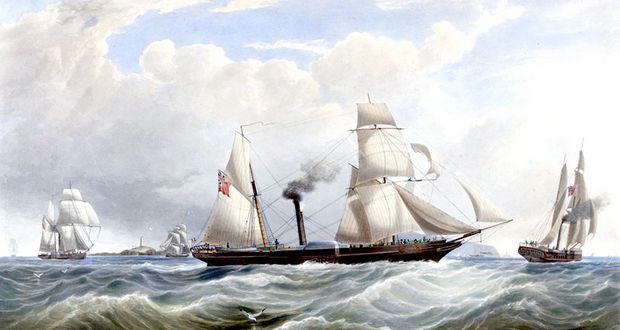
In 1804, London’s African Association sent a man named Henry Nicholls from a British trading post in the Gulf of Guinea to search inland for the Niger River. After expeditions from Tripoli, Cairo, and the Gambia failed, the organization hoped a southern approach would succeed. However, Europeans did not know that the river mouth beside the post was the Niger’s own outlet, so the expedition had unknowingly begun at its destination. Nicholls died by 1805, probably from malaria, before he could solve the mystery.
22. In 1803, U.S. President Thomas Jefferson assigned American explorer Meriwether Lewis a mission to find a direct water route to the Pacific Ocean. When the Corps of Discovery departed Camp River, Dubois, Illinois, in 1804, American cartographer William Clark took primary responsibility for mapping the western journey. He used celestial observations, dead reckoning, a surveyor’s compass, sextants, and a chronometer, regularly comparing his calculations with Lewis’s notes. When the expedition reached the Pacific, Clark’s calculation of its total travel distance missed the actual figure by only 40 miles.
23. In 1913, British explorer Percy Fawcett returned from an Amazon expedition with accounts of dogs that appeared to have two noses. People laughed at his story, and the double-nosed dog remained a cryptozoological animal until the mid-2000s. In 2005, English explorer Colonel John Blashford-Snell photographed a dog named Bella near the Bolivian village of Ojaki, then returned in 2007 and found her son Xingu with the same unusual nose. Known as double-nosed Andean tiger hounds, the rare dogs reportedly live only in Bolivia, where hunters use them to track jaguars through the Amazon rainforest.
24. Between 1910 and 1913, British naval officer Robert Falcon Scott led the Terra Nova Expedition to conduct scientific research in Antarctica and reach the geographic South Pole first. Scott and four companions reached the Pole on January 17, 1912, only to discover that Norwegian explorer Roald Amundsen and his team had beaten them by 34 days. All five members of Scott’s polar party died during the return journey, although other members of the wider expedition survived.
25. During the Terra Nova Expedition’s return from the South Pole in March 1912, British army officer and Antarctic explorer Lawrence Oates suffered from severe frostbite and gangrene. Knowing that his failing health reduced his three companions’ chances of survival, he asked them to leave him behind, but they refused. Oates then walked from their tent into a -40 F (-40 C) blizzard, saying, “I am just going outside and may be some time.” British explorer Robert Falcon Scott called it the “act of a brave man and an English gentleman,” and Oates’s body was never found.


RE: Fact #19 (Hannibal Expedition Reenacted Elephant Crossing) – The part about the elephant wearing custom leather boots is kind of cute, but hearing that she lost 300 pounds in four days and 500 pounds overall is just sad.
RE: Fact #38 (Nansen Expedition Met Rejected Rescuer) – Good thing Nansen rejected Jackson the first time around. Otherwise, they might have all ended up in trouble.
RE: Fact #5 (Antarctic Expedition Broke Flat-Earth Models) – I’d love to see a follow-up on what he’s doing now. Also, it’s hilarious that the view from 30, 000 feet and the obvious curvature wasn’t enough to convince them.
RE: Fact #45 (Mallory Expedition Left Summit Mystery) – Sir Edmund Hillary was asked about this theory once, and his response was simple: “I do not know whether Mallory and Irvine reached the summit. What I do know is that Tenzing Norgay and I were the first to get to the top and back down to the bottom again.”
I’ve heard that too. I like that he acknowledged the pair while still standing by his own achievement, I’m definitely not trying to discredit Hillary. It’s just fascinating that someone might have managed it so many years before. Thanks for sharing those quotes.
Hillary also refused to confirm who actually stepped onto the summit first. He always insisted that they both made it up together.
Actually, Hillary did open up about it after Norgay passed away in 1986. He said: “Finally, I just got a gutsful of it. I got tired of people saying Tenzing had got to the top first. We set off at 6.30am, first light, me in the lead, Tenzing behind on a tight rope. We never discussed who would be first up. It really did not matter to me, as the entire expedition was very much a team affair, but I suspect Tenzing was quite deferential to what he saw as the Sahib. So I got to the top first, with him just 10ft or so behind. I shook his hand in good old Anglo-Saxon style, but Tenzing was a bit more demonstrative and he gave me a huge hug, and we embraced for some minutes, just savouring the moment. We were only on the summit for 15 minutes or so, and I had my oxygen mask off and recall visually plotting a route up some nearby peaks while I was there looking down on the world.”
RE: Fact #21 (Niger Expedition Began At Destination) – How do you even search for a river when you don’t know where it is? Had they heard rumors about it, or were they just banking on a river existing there for some reason?
Maps were incomplete back then. They knew a river existed inland from one direction and they saw a river at the coast, but they didn’t realize they were looking at the same body of water. It’s pretty obvious once you look at a map of the area.
RE: Fact #22 (Clark’s Expedition Maps Proved Accurate) – Maybe if they had gotten their measurements right, they could have beaten Chris Farley and Matthew Perry to the Pacific.
RE: Fact #18 (Sacagawea Reunion Aided Expedition Crossing) – I feel like history class always portrays Lewis and Clark as two lone wanderers trekking through uncharted territory, but they were actually leading an entire Corps of Discovery that included 30 enlisted men.
RE: Fact #46 (Saris Expedition Imported Career-Ending Erotica) – I know it’s an old joke, but it’s practically a tradition by now: “It’s called hentai, and it’s art.”
RE: Fact #20 (Endeavour Expedition Observed Venus Transit) – That expedition is full of wild stories. One guy returned home only to discover he’d been declared dead and his family had given away all his belongings.
RE: Fact #13 (Smithsonian Expedition Killed Rediscovered Seals) – You only need to leave one. Elephant seals are one of the few amphibians that reproduce via mitosis.
RE: Fact #23 (Fawcett Expedition Reported Double-Nosed Dogs) – Each nose only has one nostril, though. Does that just make it a single, wide, double-turbo nose?
RE: Fact #42 (Napoleon’s Expedition Discovered Rosetta Stone) – This actually serves as a solid counter-argument to the claim that Westerners just stole global heritage for their museums. Honestly, without Western archaeologists and historians, many of these artifacts might never have been discovered or understood in the first place. These institutions were the ones that really drove the appreciation of ancient history.
RE: Fact #6 (Roosevelt’s Expedition Strengthened Yosemite Protection) – Imagine a modern president going camping without any security, instead of the hundreds of people that surround them constantly now.
RE: Fact #35 (Blessed Punched Bear During Expedition) – I’d only believe that kind of story if it came from Brian Blessed, Teddy Roosevelt, or Nick Offerman.
RE: Fact #39 (Nazi Expedition Dumped Antarctic Swastikas) – Clearly, all those stories about a secret moon base were just to keep us from looking for their secret underwater base in Antarctica.
RE: Fact #9 (Magellan Expedition Encountered Patagonian Giants) – This sounds like something straight off that aliens-built-the-pyramids channel. Definitely take this with a grain of salt.
RE: Fact #10 (Floyd Became Sole Expedition Fatality) – They also used opium for insomnia, and tobacco smoke enemas for drowning. Plus, they drank tons of alcohol to deal with minor pains and just to kill time on the longest nature hike in American history.
So, um, who exactly was literally blowing smoke up a dude’s ass to save him?
RE: Fact #39 (Nazi Expedition Dumped Antarctic Swastikas) – Sharks eat just about anything they find. License plates, cutlery, and even armor have been pulled out of shark stomachs. It’s very possible those metal swastikas didn’t stay on the ocean floor, some might be halfway around the world in a shark’s belly.
RE: Fact #12 (Shackleton Expedition Saved All Twenty-Eight) – This story is so worthy of a big Hollywood adaptation, with little needing to be changed, it’s dramatic enough as it is. I heard Tom Hardy is meant to be taking it on. Three tiny boats across the Southern Ocean, one to South Georgia across 800 fucking miles with nothing more than dead reckoning to guide them, and then a mad dash across glaciers and mountains in basically civilian clothing. Sitting on their arses and fucking sliding down the glacier in the fucking dark, because they’re in a rush to get their men saved. Knowing the could so so easily just slide off into the darkness. Tom Cream was a legend.
This movie could be made a dozen times, and I would watch every version; it really is just that incredible. It’s probably one of the most fantastical stories of human perseverance you will ever hear. I highly recommend a three-part documentary called “Shackleton: Death or Glory”. If you are having a hard time obtaining a legal copy, there is always the high seas.
RE: Fact #15 (North Pole Expedition Included Armstrong) – I imagine the flat earthers are rolling their eyes at this. They probably think, ‘They brought Armstrong? You know this whole thing is BS.’
Actually, they think Antarctica is an ice wall surrounding the world, and the Arctic is just an ocean in the middle. Not that it makes any more sense, but still.
It’s funny, I spent a good amount of time trying to figure out how that would even work with actual physics before realizing it’s not meant to make sense at all. I definitely wasted my time there.
RE: Fact #27 (Resolute Expedition Vessel Furnished Presidents) – Didn’t Obama get a piece of that ship, like some pens or something, during his time in office?
RE: Fact #24 (Scott Expedition Lost Polar Race) – I was taught about this back in UK grammar school. Captain Lawrence Oates’s sacrifice was always portrayed as incredibly moving, the whole “I’m just going outside, I may be some time” thing.
Rimmer: Yes, but here’s the thing about Captain Oates: he was a total prat. If I were in his shoes, I’d have stayed in the tent, knocked Scott out with a frozen husky, and eaten him. Lister: You would, wouldn’t you? Rimmer: History is written by the victors, Lister. We only know about Oates’s “noble walk” from Scott’s own diary. It’s not like he’d write down, “February 1st: clubbed Oates and ate him for dinner.” That doesn’t look great for the rescue report. It’s much better for the survivor to claim Oates made a “supreme sacrifice” while dabbing up his gravy with the last of the bread.
RE: Fact #25 (Oates Sacrificed Himself During Expedition) – It’s basically a sacrifice fly in baseball, except it’s a South Pole expedition and the guy ended up freezing to death.
RE: Fact #8 (Magellan Expedition Finished Without Magellan) – Another fun bit of trivia: when the surviving crew finally hit familiar waters and landed in Cape Verde, they realized their ship’s logs had the wrong date. They had kept an accurate count, but they lost a day by traveling west. The date mismatch wasn’t actually sorted out until long after the voyage was over. It’s wild that they had the technology to pull off that expedition without even understanding the concept of time zones.
RE: Fact #48 (Qin’s Expedition Vanished Seeking Immortality) – Let’s be real here. If someone dropped 6, 000 children on you, the most likely result is either losing your mind or just dumping them somewhere else.
RE: Fact #35 (Blessed Punched Bear During Expedition) – I’m pretty sure Brian Blessed shouting at a bear is enough to make it rethink its entire life. The punch was probably just for flair. The bear probably just wanted an autograph.
RE: Fact #7 (Challenger Deep Expedition Found Rubbish) – I remember my biology teacher saying he thought it’d be pretty sweet if we just used the Mariana Trench as a trash dump. ‘The Mariana Trench is the deepest part of the ocean. Since it’s so deep I think we should dump our trash there, I think it’d be… uh… I think it’d be pretty sweet.’
RE: Fact #7 (Challenger Deep Expedition Found Rubbish) – They’ll also find plenty of cars down there, since that’s where the U.S. Navy dumped them for sonar tests, but it’s probably best not to bring that up!
RE: Fact #27 (Resolute Expedition Vessel Furnished Presidents) – If you want a great historical novel about the Franklin Expedition, check out The Terror by Dan Simmons.
I’ve read that. I first learned about the Franklin Expedition through Wendigoon and have been obsessed with the story ever since.
RE: Fact #44 (Roosevelt Expedition Collected 23, 151 Specimens) – This totally tracks with everything else I’ve heard about Roosevelt. That guy really did not mess around.
RE: Fact #14 (Shackleton Expedition Whisky Remained Preserved) – There’s a famous story from the end of his life: Shackleton was feeling rough and his doctor told him he needed to slow down and “lead a more regular life, ” specifically suggesting he cut out the alcohol. Shackleton apparently replied, “You are always wanting me to give up things, what is it I ought to give up?” When the doctor said “Chiefly alcohol, Boss, ” Shackleton didn’t have much time left. He suffered a fatal heart attack shortly after that conversation.
RE: Fact #28 (Kon-Tiki Expedition Crossed Pacific Waters) – The book is a great read. It’s wild to hear about things like how they built massive steering oars, only to realize the raft had a sort of “autopilot” if you set the keelboards correctly.
RE: Fact #38 (Nansen Expedition Met Rejected Rescuer) – Nansen and his team hadn’t been heard from in over three years and were assumed dead. That must have been an incredibly awkward meeting.
RE: Fact #26 (Nessie Expedition Found Movie Prop) – Can you imagine spotting that thing in the dark lake? Your adrenaline would be absolutely through the roof.
They saw it on sonar. There must have been a moment where everyone was totally hyped but also a little bit terrified.
RE: Fact #14 (Shackleton Expedition Whisky Remained Preserved) – The funny thing is that whiskey stops aging once it’s bottled. So it’s not actually 100-year-old whiskey; it’s just however old it was when they put it in the bottle.
RE: Fact #2 (Mastodon Hunt Shaped Jefferson’s Expedition) – That seems like a fair reason to me. If I were President and thought mastodons might still be out there, I’d definitely want someone to go grab one.
RE: Fact #9 (Magellan Expedition Encountered Patagonian Giants) – In extreme climates, evolution can sometimes favor larger people because they retain body heat better. However, later travelogues suggest the average Tehuelche man was closer to six feet tall. Skeletal remains in the area, plus the hand outlines found in the Cueva de los Manos, suggest that the Tehuelche were actually around average height.
RE: Fact #34 (Amundsen Expedition Won Polar Race) – There is still some debate over who actually made it first. Still, it’s an incredible achievement for everyone involved, especially considering the gear they were stuck with.
RE: Fact #8 (Magellan Expedition Finished Without Magellan) – In Spain, the expedition is never just named after Magellan; it’s always the expedition of ‘Magallanes y Elcano.’ The Spanish Navy’s training ship is called the ‘Juan Sebastián Elcano, ‘ and in his hometown of Guetaria, there’s a massive monument listing the names of the 18 sailors who actually finished the circumnavigation. So, in Spain at least, Elcano is very famous, possibly even more so than Magellan. Also, just to clarify the fact: those 18 were the ones who arrived with Elcano, but they weren’t the only ones to survive. Some were captured by the Portuguese in Cape Verde and made it back to Spain a few weeks later, finishing the journey as well.
RE: Fact #47 (Zheng He Expedition Captured Alakeshvara) – There’s a book called 1421 by Gavin Menzies about Zheng He’s travels. Menzies should have gone for an Olympic medal in mental gymnastics given how absurd his theories are. Don’t waste your time reading it.
RE: Fact #46 (Saris Expedition Imported Career-Ending Erotica) – Back in 1614, it was reported: ‘Some imputations and aspersions being cast upon Captain Saris for certain lascivious books and pictures brought home by him and divulged… Mr. Governor assured them of his dislike thereof… purposed to get them out of his hands if possible he could, to be burnt.’ And later in 1615: ‘Mr. Governor acquainted them that great speeches having been made of certain books brought home by Captain Saris… now should likewise be eyewitnesses of the consuming them in the fire.’ Basically, he was audited, caught stealing cargo, and his ‘hentai’ collection was discovered. The governor had to hold a public burning to satisfy protesters who were angry about the collection, and Saris was effectively finished. It’s pretty wild that the first Japanese art to reach Britain was basically erotica.
RE: Fact #15 (North Pole Expedition Included Armstrong) – Man, that is such an eccentric billionaire move for an expedition leader to pull. He basically put together the A-Team of explorers.
RE: Fact #49 (Snow Cruiser Expedition Drove Backward) – The vehicle was eventually abandoned and thought lost to the ice, but it was found again almost twenty years later. Since then, it’s vanished again.
RE: Fact #3 (Mercury Pills Marked Expedition Camps) – It’s pretty incredible when you look at the sites they’ve managed to identify because of those pills.
RE: Fact #31 (Jameson Expedition Allegedly Enabled Cannibalism) – You have to wonder what the dad was thinking. “I love my daughter, but six handkerchiefs? That’s a deal.”
RE: Fact #24 (Scott Expedition Lost Polar Race) – The Norwegians weren’t running a scientific mission; they were just focused on the goal and were experts with skis, dogs, and ice, which is how they beat them to the pole and actually survived the trek.
RE: Fact #18 (Sacagawea Reunion Aided Expedition Crossing) – She was likely 14 to 16, and Cameahwait would have been too young to be Chief back then, so he was actually her uncle. Her people, the Agai’Dika, call her Sacajawea, while the Mandan and Hidatsa tribes who kidnapped her and sold her to Toussaint Charbonneau used the name Sacagawea.
RE: Fact #18 (Sacagawea Reunion Aided Expedition Crossing) – ‘Undaunted Courage’ is an excellent book on the expedition. They showed impressive navigation and leadership, but they really only survived due to the consistent generosity of the local tribes. They also got lucky a few times; toward the end, they split into four groups and Lewis was almost killed by Blackfeet warriors.
RE: Fact #10 (Floyd Became Sole Expedition Fatality) – I’ve always found it wild how much they ate during that trip out west. They’d put away up to nine pounds of meat a day, plus whatever berries or nuts they could forage. An 8, 000-mile hike has to burn some serious calories.
RE: Fact #2 (Mastodon Hunt Shaped Jefferson’s Expedition) – The idea of extinction only caught on around 1796. In 1804, most educated people still assumed that if you found bones from an unknown animal, similar creatures were likely living somewhere else. The unexplored interior of the continent seemed like a prime spot for that.