


Antarctica is a land of extremes—untouched landscapes, unique wildlife, and incredible scientific discoveries. In this second part of our exploration, we dive even deeper into the wonders of the frozen continent, uncovering more cool facts that reveal its fascinating and mysterious nature.
For more incredible facts about this icy world, check out 25 Unknown Facts about Antarctica for a deeper dive into its secrets!
1 Ancient Chilean Bones Discovered

Researchers found the oldest bones in Antarctica, belonging to an indigenous Chilean woman who died in her early 20s. Discovered on a beach, experts estimate she arrived between 1819 and 1825. Unfortunately, no documents explain her presence in Antarctica during that time.
2. In 1961, Dr. Leonid Rogozov, a Russian surgeon stationed in Antarctica, performed an emergency appendectomy on himself without anesthesia. As the only doctor on the base, he had no other choice but to carry out the surgery himself after developing acute appendicitis.
3. In 2006, explorers discovered five crates of 100-year-old Mackinlay whiskey encased in Antarctic ice. Abandoned during the 1909 Shackleton expedition, the whiskey remained perfectly preserved beneath decades of ice.
4. In 2009, scientists from New Zealand discovered fossil remains of an extinct colossal penguin in Antarctica. This giant penguin stood nearly 7 feet tall and weighed around 250 pounds. The species, known as Palaeeudyptes klekowskii, likely went extinct due to climate changes and a decline in available food sources during the Eocene Epoch.
5. The name “Arctic” originates from the Greek word “Arktos,” meaning bear, signifying the land of bears. Conversely, “Antarctica” indicates a land without bears.
6 First Leopard Seal Fatality
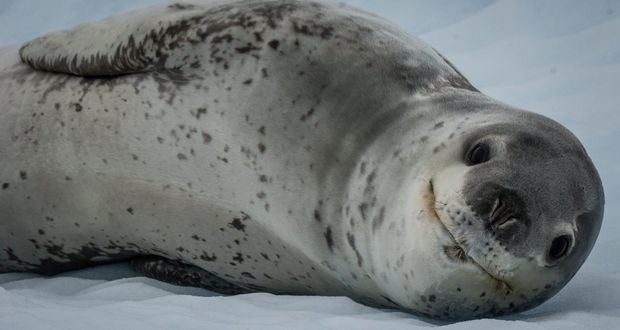
The first recorded human fatality caused by a leopard seal occurred in 2003. Biologist Kirsty Brown tragically drowned while snorkeling in Antarctica when a leopard seal held her underwater for about six minutes.
7. Antarctica was named Australia until 1824, when modern-day Australia adopted the name. The continent remained nameless until it was officially named Antarctica in the 1890s.
8. In October 2018, engineer Sergey Savitsky at Russia’s Bellingshausen Station in Antarctica stabbed welder Oleg Beloguzov after Beloguzov repeatedly spoiled the endings of books Savitsky was reading. The book in question was reportedly “The Master and Margarita.” This incident marked the first arrest for attempted murder in Antarctica, though the charges were later dropped after Beloguzov forgave Savitsky.
9. Since 1994, dogs have been banned from Antarctica to prevent the spread of diseases to the native seal population.
10. Deep Lake, located in the Vestfold Hills of East Antarctica, has a salinity level ten times saltier than the ocean, preventing it from freezing even in winter. Its extreme salinity is due to the evaporation of water over millennia, leaving behind high concentrations of salt that make it nearly uninhabitable.
11 First Antarctic Birth in 1977

In 1977, Argentina flew a pregnant woman to their military base in Antarctica so she could give birth to the first baby on the continent. The Argentine government believed this would secure an indisputable claim on the land, but the claim is not recognized internationally.
12. Despite Antarctica remaining undiscovered for millennia, only three days separated the first two claims to its discovery. In January 1820, Russian explorer Fabian Gottlieb von Bellingshausen and his crew aboard the “Vostok” claimed to have discovered Antarctica, just three days before British naval officer Edward Bransfield, who landed on the Antarctic Peninsula during his expedition on the “Triton.” Both expeditions are considered the first recorded sightings of the continent.
13. Ridge A, a location in Antarctica, is three times better for stargazing than any other place on Earth. Researchers describe it as “so calm there’s almost no wind or weather at all,” and it is where all Antarctic winds seem to originate. Australia currently claims this spot.
14. Russian research stations in Antarctica have banned chess. This decision stems from a 1959 incident at Vostok Station, where one scientist killed his opponent with an axe after losing a chess game.
15. In the 1930s, the U.S. spent $300,000 (equivalent to $5.5 million today) to build a massive car intended to cross Antarctica. However, upon arrival, they discovered the tires did not work in the snow, leading to the car’s abandonment after only 140 km, driven in reverse.
16 Mummified Seals Found Inland
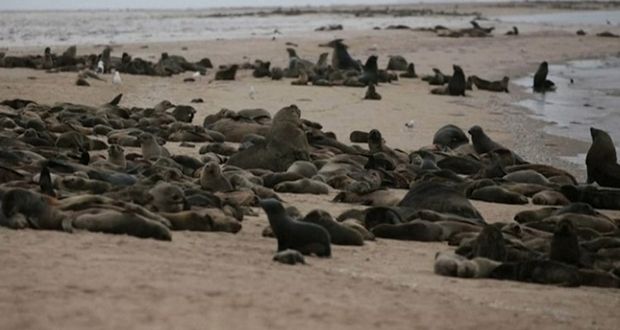
Researchers have found hundreds of mummified seals up to 41 miles inland in Antarctica. One specimen, tested, had been exposed for 1,500 years. They theorize that 1-2 seals get lost annually during whiteout events, accidentally traveling inland and eventually dying.
17. In 2017, scientists from Germany and the UK took sediment cores from the Antarctic seafloor at depths of about 30 meters near the Pine Island and Thwaites glaciers. The cores contained well-preserved samples of forest soil, pollen, spores, and even root systems, dating back 90 million years to the mid-Cretaceous period. These findings suggest that Antarctica was once a swampy, temperate rainforest, with a climate much warmer than today.
18. Antarctica is the largest desert in the world, receiving an average of just 2 inches (50 mm) of precipitation annually, mainly in the form of snow. With humidity levels averaging below 60%, the continent’s extreme dryness makes it one of the harshest environments for plant and animal life.
19. The driest place on Earth is McMurdo Dry Valleys in Antarctica, where it hasn’t rained for 2 million years. Only anaerobic bacteria survive in these extreme conditions, which scientists consider the closest terrestrial analog to Mars.
20. Antarctica hosts over 60% of the approximately 80,000 meteorites ever found on Earth, with scientists recovering around 1,000 new specimens annually. The continent’s dry climate and ice dynamics preserve these meteorites well, and their dark color makes them easily visible against the white ice, facilitating their discovery.
15 Most Controversial & Costly Blunders in History
21 Antarctica’s Blood Falls Phenomenon

In Antarctica, Blood Falls is a waterfall at the terminus of Taylor Glacier in East Antarctica’s Taylor Valley, where water, completely devoid of oxygen but rich in iron and sodium, gushes out and rusts when exposed to air, turning blood red, making the glacier appear as if it’s bleeding. The highly saline brine supports microbial life that thrives in the absence of sunlight, and the flow is sustained by a subglacial lake beneath the glacier.
22. In the 1960s, Australian researchers used four Volkswagen Beetles as their primary mode of transportation across Antarctica’s barren, frozen landscape.
23. Beneath its ice, Antarctica is a cluster of islands. Without ice, it would reveal a giant peninsula and archipelago, known as Lesser or West Antarctica, and a landmass the size of Australia, called Greater or East Antarctica.
24. Before World War II, the Nazis embarked on an Antarctic expedition to claim territory. During airplane surveys, they dropped boxes of metal swastikas to reduce weight, leaving them scattered on the ocean floor.
25. In 2002, scientists from Germany and the UK discovered the giant volcano sponge (Anoxycalyx joubini) in Antarctica’s Ross Sea at depths of 15 to 144 meters. Believed to be over 10,000 years old, this sponge is considered one of the longest-living known animals on Earth due to its slow growth in the cold, high-pressure environment.


RE: Fact #39 (1952 Antarctic Gunfire Incident) – So back in ’82, there was this other thing, right? Apparently, it involved Norwegians with grenades and Americans with flamethrowers. It was kind of a major event.
RE: Fact #30 (Kite-Powered Sleds in Antarctica) – Those scientists are really something else.
RE: Fact #8 (First Antarctic Attempted Murder) – I’d totally be angry too. Stuck alone on a freezing, barren continent, trying to keep it together with books, and the coworker just won’t let him have that little bit of peace.
RE: Fact #2 (Surgeon Performs Own Surgery) – They totally didn’t do that without numbing stuff! No way that could have happened. They used local stuff, like that lidocaine injection right at the spot. Definitely no general anesthesia, which would have knocked him out completely, making the surgery impossible.
No way that could’ve happened. Not with that mindset. If my dad gets a word in, he’d probably say something like, “Back in my day, we had to do it all ourselves, and we enjoyed it!”
RE: Fact #15 (1930s Antarctic Car Failure) – So, the Snow Cruiser ended up getting ditched down in Antarctica. Someone stumbled upon it again buried under tons of snow way back in ’58, but then it vanished again ’cause the ice kept moving.
There’s a car chillin’ somewhere in Antarctica, just waiting for you to find it.
They reckon it bobbed out into the sea when that massive piece broke off a while back.
Gonna go hunt for that story.
Edit: Turns out it was way back in ’63 when a bit of the basecamp was seen sticking out of an iceberg.
Man, that’s one of the coolest pics I’ve ever seen!
So, this is basically the story for one of those Transformers flicks, yeah?
Micheal Bay’s totally getting everything ready for that explosion to happen right now.
RE: Fact #8 (First Antarctic Attempted Murder) – I’m not gonna say if he’s right or wrong, but I totally get where he’s coming from.
So, like, you’re stuck in this brutal place, with the same folks all the time, no space to yourself, and one of them’s a real jerk who just loves messing with you, ruining your only way to chill out in this nightmare.
Seriously, you can’t even get a book the other guy doesn’t have. You’re stuck in Antarctica!
Yeah, I’m with you there. The folks who blabbed the endings totally deserved it. It’s like, you can only mess with people so much, and Antarctica is already pretty darn wild, you know?
So, the scientist told the judge he’d take whatever was coming to him, but the victim actually asked for him to be let off the hook, and in the end, the judge decided to just let it go.
Killing someone on purpose is worse than spoiling a movie, but it’s also something that happens in the heat of the moment. But going out of your way to ruin someone’s fun is just plain mean, especially when you keep doing it over and over.
Totally. The person causing trouble always makes that choice themselves, and could just as easily decide not to. The person reacting, even if they go overboard, usually feels like they didn’t have any other option.
RE: Fact #26 (Amundsen-Scott Station’s Movie Tradition) – So, I actually tried to binge all twelve Jason Voorhees movies one Friday the 13th back in October, but I conked out during Freddy Vs Jason.
Yeah, cramming that into a day would be pretty tough.
RE: Fact #19 (McMurdo: Earth’s Driest Place) – Drive your car over and give it a wash.
Put some laundry out on the line to dry.
Kick back and enjoy the rain.
RE: Fact #21 (Antarctica’s Blood Falls Phenomenon) – Probably just that time of the month for it.
RE: Fact #7 (Australia’s Name History) – So, Australia was basically an island prison for criminals back in the day, right? Pretty wild they snagged the name too!
Seriously, my ancestors didn’t just swipe the land and the native people, they even ripped off the country’s whole name. Unbelievable.
So, get this – there are actual stories out there about convicts sent to Australia who were such master thieves, they straight-up stole the ship they were sailing on, right in the middle of the Pacific, and the captain had no clue. And, on a lighter note, Aussies these days are pretty darn good at stealing my heart.
RE: Fact #39 (1952 Antarctic Gunfire Incident) – Man, I always forget how far south Argentina actually is.
RE: Fact #24 (Nazis Dropped Swastikas in Antarctica) – Sharks will munch on pretty much anything that happens to be in front of them, even metal stuff. We’ve found license plates, forks, spoons, and even full suits of armor inside them.
The main idea is that it’s totally possible some of those metal swastikas aren’t just sitting on the bottom of the Antarctic ocean. A shark might have carried them for miles and miles.
RE: Fact #16 (Mummified Seals Found Inland) – That’s a pretty scary and isolating way to go.
So, right when the Roman Empire was falling apart in Britain, this lonely seal shuffled its way into a faraway, confusing death out on that desolate, weathered plain.
While Charlemagne was ordering hops to be planted in his gardens, that seal was there, becoming a mummy. While the Mongols were building an empire across Eurasia, that seal was there. While all our ancestors were busy with their lives, that seal was there, just sitting there, a dried-out husk.
Life’s a real trip, and death’s only a little bit stranger.
Check out Prometheus, this crazy old tree that’s like 5,000 years old but got chopped down back in the 60s.
Imagine chilling as a tree for 5,000 years, doing your thing with photosynthesis, then bam! You get reborn as a housefly that only lives for a day. Talk about a wild mind-bending switch-up.
RE: Fact #22 (VW Beetles Crossed Icy Antarctica) – Hey, let’s take a road trip to the coldest place on Earth, but we’ll have to do it without a car heater.
RE: Fact #3 (Shackleton’s Whiskey Found) – “So, you’re saying we only found 3 crates?”
“5 crates, sir. 1, 2, 3… ohhh, yeah, my bad, sir, I miscounted. Turns out we only found 3.”
Five crates? We only found four. Why do you need three back?
That’s kinda funny you say that, ’cause from what I saw, they first found 3 boxes, and then later it turned out there were actually 5.
So, they actually snagged six crates, but then they were all like, “Oh, we only found three,” figuring they’d polish off three before they made it back. Turns out, the thin air really messed with their usual drinking game, and they could only knock back one case. So, they ended up saying they “found two extra cases,” if you catch my drift.
Double vision totally does that.
RE: Fact #17 (Ancient Antarctic Rainforest Evidence) – How super hot was the rest of the planet back then?
Think of it this way: not all places on Earth warm up at the same speed. Heat that gets trapped by our atmosphere kinda “spreads out” more than the heat we get straight from the sun. So, as the planet warms, the areas around the poles get a lot hotter, which melts the ice caps, but the tropics don’t heat up quite as much.
RE: Fact #25 (Ancient Sponge Under Antarctica) – That thing’s almost as ancient as my dish brush… I really oughta swap it out sometime.
RE: Fact #50 (Metallica’s Historic Antarctic Performance) – It sounds like an acoustic set, but it’s actually more of a silent disco. That was a pretty interesting surprise, honestly.
So, Lars’ teenage kid actually came up with the idea. Silent discos were a thing, he mentioned it, and bam, it was the perfect solution for this weird issue!
Lars’ kid snagged Saint Anger without paying, just to get under his dad’s skin.
Yeah, I get that. Honestly, Metallica Unplugged wouldn’t be way up there on my own list either.
RE: Fact #15 (1930s Antarctic Car Failure) – Those tires are super smooth so they don’t get all caked with snow, but they just won’t stick to the ice.
This really messes with my head. It was made in Chicago.
Are you telling me nobody realized bald tires are a bad idea in the snow?
Hey, just wondering, if the snow isn’t sticking to the tires, couldn’t it be the other way around too, like the tires aren’t sticking to the snow?
RE: Fact #3 (Shackleton’s Whiskey Found) – Even with Antarctica hitting a chilly minus 22 Fahrenheit, that liquor from 1896 or 1897 didn’t freeze up and actually looks pretty decent. It’s a long shot anyone will actually drink this Scotch, but the master blenders are gonna check out samples to see if they can recreate it, since the original recipe is long gone. Someone should totally have a swig, for science!
So, from what I gathered from the other posts, a few folks actually tried it, but I reckon they sent all the bottles back, maybe all but one, to wherever they picked them up from after checking them out.
RE: Fact #6 (First Leopard Seal Fatality) – Antarctic waters are basically a big battleground for sea creatures. We’ve seen seals get totally tossed around for ages. It’s practically self-defense when you’re clueless about what’s going on and have been on high alert from orcas and stuff for, like, forever.
RE: Fact #47 (Polynesians’ Early Antarctic Sightings) – Only kids in year 6 reckon Columbus was the first to America. The Vikings actually made it over there ages before, back in the sixth century.
RE: Fact #29 (Antarctic Midge: The Lone Insect) – There’s just the one bug we know about.
Scientists are finding tons of new species every year, and Antarctica’s probably the least explored continent, given how few folks actually live there year-round.
RE: Fact #13 (Ridge A: Earth’s Best Stargazing Spot) – Here are some other cool facts about it:
* It can get seriously cold, like down to -100 degrees Celsius.
* Basically, it’s known as the “Eye of the Storm” because the winds coming off Antarctica all seem to begin from this one spot, Ridge A, where it’s actually the calmest.
* Plus, it’s got this wild vortex thing going on – super high-up stratospheric winds swirling around while the air on the ground is totally still. This mix makes it an amazing place to see space, way clearer than anywhere else on the planet, about three times clearer in fact.
* Even though Antarctica is tough and Ridge A is way out there, building an observatory there that could rival the Hubble telescope would be way cheaper than launching Hubble itself.
* Because of the unique weather, a telescope set up here can actually pick up light waves that usually don’t make it through the atmosphere to the ground anywhere else.
Plus, the night there is super dark and lasts for months, not just hours, so you can get crazy long views into space, way longer than anyone’s ever seen before.
So, would having pretty much constant daylight all summer also cause problems, like making it impossible to actually see anything?
True for ground stations, but telescopes in space often take exposures lasting several days.
RE: Fact #31 (Alcoholism Fuels Antarctic Crime) – So when they talk about harming animals, are they talking about penguin tipping or like, full-on American Psycho violence?
RE: Fact #42 (1513 Map Predates Antarctic Discovery) – So, doesn’t the whole Antarctic coast count as the “northern” coast?
RE: Fact #34 (Discovering Lake Vostok’s Mysteries) – We grabbed a piece of super old, frozen lake ice on January 10th, 2013, from way down there. But as soon as we broke through, the lake water underneath rushed up, mixing with the stuff we used to stop the hole from freezing. And just like that, 25 million-year-old water got mixed up with our chemicals.
RE: Fact #9 (Dogs Banned to Protect Seals) – So, get this: dogs can actually pass on sicknesses to seals.
Get this, seals are actually way more like dogs than dogs are like cats.
It’s like, super close. Seals and walruses are both in the Caniformes group.
Plus, weasels, raccoons, skunks, and bears are also Caniformes. And obviously, dogs, wolves, and foxes.
But hyenas? Nope. They’re actually part of the feline family.
This bug is likely canine distemper, which messes with lots of critters, not just dogs. If seals haven’t encountered it before, it could wipe ’em out.
A paramyxovirus would probably be it.
RE: Fact #12 (Close Discovery Claims in Antarctica) – It’s basically “multiple discovery,” you know, when a bunch of people figure something out around the same time. The whole idea is that inventions or discoveries aren’t usually just one person’s genius. It’s more like everything builds up – the info, the tech, the past work – and then suddenly, several people or groups, who might not even know each other, hit on the same “breakthrough.” Think of calculus, the telephone, evolution, oxygen, or even Antarctica.
Here, you’ve got two European countries, both with the ships and know-how, both wanting to explore uncharted, risky areas for similar reasons, and they both found the same thing at pretty much the same moment.
This looks like it’ll send me down a fun rabbit hole, and it’s a pretty solid explanation for this totally wild thing that happened!
RE: Fact #7 (Australia’s Name History) – Kind of wild, right? If those colonial folks hadn’t nabbed the name “Australia” for themselves, kangaroos might’ve ended up hopping around Antarctica instead of down under.
It’s kinda wild how they easily shortened Terra Australis to Australia, but then had such a hard time coming up with something smoother than “the Antarctic Continent”.
It’s wild how everyone’s overlooking that Antarctica wasn’t really “found.” They just figured there had to be land down south, called it Terra Australis, and then stumbled upon Australia.
RE: Fact #37 (Hidden Antarctic Mountain Range) – That’s definitely something to get excited about as climate change really kicks in.
Antarctic spring break trip goes tragically wrong for college student
RE: Fact #4 (Giant Penguin Fossil Unearthed) – I was born late to catch the giant penguins, but too early to see cloned ones.
RE: Fact #27 (Winter-Over Syndrome in Antarctica) – Turns out, what happens in Antarctica doesn’t really cause the syndrome. It’s actually all down to the social stuff going on.
The cold, risks, and tough times don’t seem to be the main issues. The biggest psychological strains seem to be people having trouble fitting in with the group, things being pretty much the same day in and day out, and not having the usual emotional outlets. On top of being cut off from the rest of the world, there’s also a lack of personal space or a complete absence of privacy inside the research stations. When people were doing fieldwork at McMurdo and the South Pole back in ’88 and ’89, they mentioned that not having privacy and all the constant chatter within the community really messed with social interactions, especially between the guys and girls. Because of that, people spent 60% of their free time by themselves in their rooms, while others had to work and live in tight quarters because of their jobs.
RE: Fact #23 (Antarctica’s Hidden Island Cluster) – Totally looks like a continent to me
Once the ice is gone, it’ll rise up the same way Canada’s still doing. I think it’s like a couple of centimeters per hundred years.
So this map kinda shows us what Antarctica might have looked like way back when, like 35 million years ago.
Whoa, is that actually for real? That’s seriously creepy.
RE: Fact #39 (1952 Antarctic Gunfire Incident) – This is just because penguins can’t pull triggers.
RE: Fact #28 (Leopard Seal “Adopts” Photographer) – That leopard seal might’ve totally seen its own reflection in the camera lens, and plus, the diver’s suit is pretty much the same color as a baby leopard seal.
She was attempting to give food to a baby seal that was all by its lonesome.
I’m pretty sure she’s going to be an awesome mom.
RE: Fact #14 (Chess Ban at Russian Stations) – Seriously, they should just outlaw murder already.
Maybe we should ban those crazy scientists. Or just ban axes. Or maybe scientists who use axes?
RE: Fact #32 (Antarctic Treaty of 1961 Overview) – So I’ve totally been there. Some wild facts:
– No country owns the land itself, but they can own the buildings.
– Since no country owns the land, if you can reach it, you’re generally allowed to be there, unless…
– You need an invite to go inside buildings. Four women skied all the way from the edge of the continent to the South Pole, and when they got there, they weren’t allowed into the station and were flown right back out. Keep in mind, they hadn’t been inside a building for weeks and were without food, showers, heating, and all that stuff.
– Someone brought up trash or litter on the continent. Turns out there’s actually a decent amount from before we got so careful about it. I stumbled upon quite a few old beer cans and soda cans. Well, maybe not a ton, but it was definitely present.
Also, yep, all poop gets loaded onto ships and shipped off to… California.
Hit me up with any questions!
RE: Fact #4 (Giant Penguin Fossil Unearthed) – Seeing a 7-foot, 250-pound penguin would be seriously freaky.
RE: Fact #18 (Antarctica: World’s Largest Desert) – I figured this out back in high school.
Then we relocated, and I started at a different high school.
One day, the teacher asks everyone what the largest desert on Earth is. I piped up, “Antarctica,” and the whole class started cracking up at me.
Seriously, that totally happened to me too! My teacher just cracked up and told me it was the tundra. So glad I only had to deal with that place for one year, it was such a bummer.
Back in health class in 6th grade, my teacher totally mocked me when I said guys can get breast cancer. She was like, “They don’t have breasts, so that’s impossible.”
Little things like that still get me riled up years later.
RE: Fact #49 (Antarctic Research Centers Thaw Food) – Aren’t expiration dates kinda ridiculous? Like, salt supposedly goes bad after 6 months, but it’s a mineral that’s like 7 billion years old?
So, expiration dates aren’t just about when something’s not safe to munch on anymore, but also when its texture gets way off from how it was when it was all packaged up.
RE: Fact #19 (McMurdo: Earth’s Driest Place) – How about we chuck some of that bacteria over to Mars, leave it for a few hundred million years, and then swing back to see if it’s evolved?
RE: Fact #25 (Ancient Sponge Under Antarctica) – Down where it’s super dark and far from the sun’s warmth, the deep sea is almost freezing, usually hanging around 4º Celsius. This icy water really slows down all the little body processes.
So, critters in the deep sea, like those elephant sponges, kind of move through life in slow motion. They breathe, reproduce, and their metabolisms all run slower than their cousins in shallower waters. Plus, many of them stick around for ages. Take deep-water sponges, for instance – they grow incredibly slowly, and the fact that they get so big suggests they can live for hundreds of years. Some ocean experts even think the oldest creature on the planet might be a massive sponge spotted under the Antarctic ice shelf, potentially as old as 10,000 years.
RE: Fact #17 (Ancient Antarctic Rainforest Evidence) – So when they say ‘pristine,’ they basically mean it’s in really good shape. It’s not actual dirt and roots, it’s all fossilized inside sedimentary rocks.
Give it another 10 or 20 years and it’ll be a swampy rainforest all over again.
Folks are already figuring out how to build condos by the beach…
RE: Fact #22 (VW Beetles Crossed Icy Antarctica) – So, the US was rolling out these huge aircraft carriers, Russia had these massive tank-house things, and everyone else was inventing these bonkers, oversized vehicles. Meanwhile, the Aussies were like, “Crikey, our own backyard is trying to off us 24/7. Antarctica’s a walk in the park compared to that – just gotta deal with the chill. Just send us four VW Beetles and some warm gear.”
RE: Fact #7 (Australia’s Name History) – Just so you know, the headline might be a bit off. Here’s what I picked up when I was seven at Rooty Hill Primary School:
1) Back in the day, folks weren’t sure if Australia and Antarctica were separate. They just figured all the southern lands were part of this one big place called Terra Australis.
2) Because of that, what we now call Australia used to be known as Terra Australis too.
3) Then, people started realizing they were actually different places. That big green and red island got nicknamed New Holland, while the icy one stuck with the name Terra Australis.
4) Later on, New Holland went back to being called Terra Australis, or Australia.
5) This put the icy Terra Australis in a bit of a bind. So, eventually, the big Penguin Parliament down there, after a ton of tap-dancing and Morgan Freeman-esque narration, decided to rebrand themselves as Antarctica.
That’s cool. Since Holland and Zeeland are places in the Netherlands, New Holland and New Zealand totally track.
RE: Fact #12 (Close Discovery Claims in Antarctica) – So, humans have been around for roughly 300,000 years, spreading out and checking out all the land on Earth. Antarctica was the last big place found, way back in January 1820. For a while, people thought it was Captain Edward Bransfield of the Royal Navy who first spotted it on January 30th. But now, it seems like Captain Fabian Gottlieb von Bellingshausen from the Imperial Russian Navy might have actually seen it three days earlier, on January 27th.
Even if we just look at the ‘Age of Discovery’ starting in the 13th century, this whole thing is wild. Think about it: hundreds of thousands of years of us being around, centuries of tough sea voyages, and huge continents like Australia being found and settled tens of thousands of years ago. And yet, with Antarctica, the last major landmass discovery, we’ve got two guys claiming it just days apart, when it was totally unknown for so, so long.
Seriously, that Russian name sounds super German. Totally common occurrence.
So, this guy was a Baltic German, born where Estonia is now. It’s pretty common across Europe, actually, how many names we think are “native” aren’t really. Like, if you ask someone from Ireland what sounds like a super Irish name, they’ll probably say things like Fitzgerald or Fitzpatrick, but those are actually Norman names.
Seriously, the seas around Antarctica are brutal. Before the late 1800s, sailing through them was pretty much a guaranteed trip to the afterlife. And you have to brave those waters just to get a glimpse of the place! Kind of makes you think about Magellan’s journey around the tip of South America, right?
So, Francis Drake also lost a ship in that spot, and one of his other boats just dipped out of the expedition to head back home. Turns out, both crews only had one boat that made it all the way around.
Here’s a fun fact that might surprise you: Magellan didn’t actually make it all the way around the world himself, though his journey did. He passed away in the Philippines, and Juan Sebastian Elcano took over as captain for the rest of the trip.
RE: Fact #8 (First Antarctic Attempted Murder) – Talk about a rough deal, working in a place like that, and on top of it, having a toxic work environment.
So I caught a documentary about folks working and living down in Antarctica, and honestly, it sounds like a seriously wild gig.
Apparently, there’s a whole lot of drinking, people getting together, being holed up for months on end, a bunch of scientists who aren’t exactly social butterflies, a big imbalance in guys and gals, not a ton of stuff to do for fun, you name it.
And everyone in the film was totally making fun of how only the weirdest people would pick that kind of job.
Edit: The flick was called Encounters at the End of the World.
So, like, if you have a gal pal who worked a season or two there, she’d probably describe her dating scene as “the odds are good, but the people are weird.”
Only the weirdest folks end up working there, right? You really gotta be out of your mind to look at what’s probably the nastiest spot on Earth and think, “Yep, I could totally hang out here for half a year.”
Yeah, just tossing that out there. When a small group is stuck together for ages, a ton of stuff can totally go sideways.