


1 Norway’s Publicly Searchable Tax List

Norway publishes searchable tax lists showing people’s net income, net wealth, and tax paid. You must log in to view someone’s information, and that person can see your name in a search history updated hourly. You can view up to 500 people’s records each month.
2. During droughts in Central Europe, people carved “hunger stones” in rivers to mark the low water level and warn future generations of famine-related hardship if the water fell that far again. One stone in the Elbe River at Děčín, Czech Republic, bears the warning, “If you see me, then weep.” Its oldest readable drought date is 1616.
3. A nearsighted boy got into a fistfight that shattered his glasses and sent glass into his eyes. Russian ophthalmologist Svyatoslav Fyodorov removed the fragments and noticed that the boy’s vision improved markedly as the cuts in his cornea healed. Fyodorov tried to reproduce the effect with precise surgical cuts and introduced radial keratotomy, an early predecessor of LASIK, in 1979.
4. In February 2024, Billy Evans, the partner of Theranos founder Elizabeth Holmes, incorporated a blood-testing startup called Haemanthus. He pitched a device that would scan blood, saliva, and urine for signs of disease, starting with pets before moving to humans. Its prototype reportedly resembled Theranos’ machine, although Haemanthus said it used a different approach. NPR reported that Holmes advised Evans from prison, but Haemanthus denied that she had any involvement.
5. In 2005, Hurricane Katrina forced an estimated 1.5 million people from their homes in Louisiana, Mississippi, and Alabama, creating a Gulf Coast diaspora. By 2015, approximately 40% of evacuees, especially those from Louisiana, could not return to their previous homes. New Orleans had 484,674 residents in 2000 and only 230,172 in 2006; the Census Bureau’s 2025 estimate of 362,154 was still below its pre-Katrina population.
6 Driving Time Tracked Cognitive Decline

Driving more than two hours a day has been linked to lower intelligence and memory test scores among middle-aged adults in a UK study. Researchers compared driving habits with cognitive tests and checked participants again after an average of 5.3 years. Longer driving time was associated with greater odds of cognitive decline.
7. During filming of the 1966 Star Trek: The Original Series episode “Shore Leave,” actor William Shatner suggested that Captain Kirk wrestle a real Bengal tiger brought onto the set. Associate producer Robert Justman had already warned against working with a full-grown tiger. When the animal got loose and Shatner saw it up close, he dropped the idea, later saying he backed down “for the good of the show.”
8. Germany charges a 25-cent deposit on eligible single-use drink bottles and cans. Shoppers get a refund when they return the empty containers, with about 135,000 return locations across the country. According to recycling equipment company TOMRA, 98% of eligible containers come back, giving Germany the world’s highest return rate for a deposit scheme.
9. In 2001, conservationists began restoring an eastern migration route for endangered whooping cranes by training captive-raised chicks to follow an ultralight plane. The pilot wore a crane costume, while handlers used disguises and crane puppets to keep the chicks from imprinting on humans. The birds followed the plane about 1,200 miles from Wisconsin to Florida, then flew north on their own the following spring.
10. In some U.S. states, “dead red” laws let motorcyclists proceed through a red light when its sensor fails to detect their bikes. A rider can otherwise wait through a signal cycle without ever getting a green light. Washington requires riders to stop, wait one cycle, and proceed with due care; Pennsylvania also lets drivers of other vehicles treat a malfunctioning red signal like a stop sign.
11 Passenger Pigeons Vanished Despite Billions

Passenger pigeons once numbered an estimated 3 to 5 billion across North America. People caught up to 800 at a time in large nets, while shooting contests used the birds as targets; one competition required 30,000 kills to win. Hunting and deforestation drove a rapid decline in the late 1800s. The last known bird, Martha, died at the Cincinnati Zoo on September 1, 1914.
12. Irish actor Pierce Brosnan lost the James Bond role in a 2-minute phone call with producers Barbara Broccoli and Michael G. Wilson after four films as 007. He was filming After the Sunset in the Bahamas when his agents warned him that negotiations had stopped; days later, the producers called with their decision. Brosnan said the news shocked him, and Daniel Craig took over in 2006’s Casino Royale.
13. After starring in 2001’s The Fast and the Furious, American actor Vin Diesel asked Universal Pictures not to make a sequel. He believed the first film could become a classic and feared that turning it into a franchise would ruin that chance. Two decades later, he was playing Dominic Toretto in the series’ ninth film, F9.
14. Under Dutch law, when a motor vehicle hits a cyclist or pedestrian, its owner is generally liable even if the other person helped cause the crash. For someone aged 14 or older, the owner pays at least 50% of the damages unless they can prove an exceptional defense. For a child under 14, the owner generally pays 100%, because drivers must anticipate that children may behave unpredictably.
15. On September 11, 2001, a woman named Beverly Eckert comforted her husband, Sean Rooney, by phone as smoke filled the stairwell near him in the World Trade Center’s South Tower. They talked about the life they had shared until the tower collapsed, and Eckert later became an advocate for families affected by 9/11. Nearly eight years later, she met the president to speak for victims’ families. Six days after that meeting, she died in the crash of Continental Flight 3407 while traveling to Buffalo to mark Rooney’s birthday.
16 Black Hole Disks Form Stars
Under typical conditions, a supermassive black hole that feeds through an accretion disk may only reach roughly 50 billion solar masses. If it grows further, gas in the unstable disk can form stars instead of falling into the black hole. At around that mass, the disk may stop forming, cutting off that route of growth, though the black hole could still grow by swallowing stars or merging with another black hole.
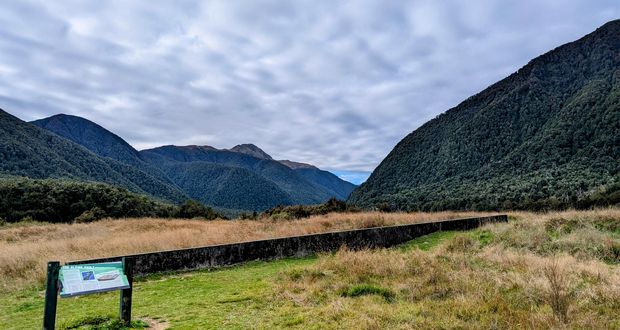
17. In 1964, New Zealand geophysicist Frank Evison commissioned a concrete wall across the Alpine Fault in the South Island’s Maruia valley. Surveying markers in the wall let scientists test whether the fault crept gradually or held still between major earthquakes. The wall has stayed straight without moving a millimeter for about 60 years, supporting the view that the fault shifts several meters at once during earthquakes separated by centuries.
18. In 1939, British major general Bernard Montgomery issued his soldiers in France a circular on preventing sexually transmitted diseases. Senior Church of England and Roman Catholic chaplains objected to its blunt language, and Montgomery nearly lost his command. His superior, British General Alan Brooke, defended him and allowed the circular to stand but warned him against another such mistake.
19. In 4th-century BC Athens, a wealthy Greek courtesan named Phryne stood trial for impiety. According to later accounts, she revealed her body before the jurors while her defender, the orator Hypereides, argued that someone so beautiful could not offend the gods. The jury acquitted her.
20. In 2024, a man named Roger Thiberville died at 91 without heirs and left more than €10 million to Thiberville, a Normandy village of 1,800 people. He had no known connection to the village beyond their shared name, and no one knew of him ever visiting it. He left part of his fortune to his accountant. The village’s share equaled about five times its annual budget. The mayor said the money would pay off debts and could fund projects such as a new fire station.
15 Most Controversial & Costly Blunders in History
21 Khun Sa Offered Australia Heroin

By the 1980s, Burmese drug lord Khun Sa dominated opium production in the Golden Triangle and commanded about 20,000 men. In 1988, he offered to sell his entire heroin crop to the Australian government for A$50 million a year for eight years, a deal that would have taken an estimated half of the world’s heroin supply off the market. Australia rejected the offer. Khun Sa later claimed roughly 31,000 men when he counted troops, reserves, and local militia. He surrendered to Burma’s government in 1996.
22. Theranos founder Elizabeth Holmes told investors that the company’s machine could run blood tests using just a few drops from a finger prick. Federal prosecutors alleged that, during investor demonstrations, Holmes and Theranos executive Ramesh “Sunny” Balwani set the machine to a “null protocol” so it appeared to run a test when it was not. A jury later convicted Holmes of conspiracy and three counts of wire fraud involving investors.
23. When British animator David Firth launched Salad Fingers in 2004, he voiced its unusually soft-spoken title character himself. Firth recorded quietly because he did not want to wake his parents, giving Salad Fingers his hushed voice.
24. British film director Guy Ritchie married American singer Madonna in Scotland in 2000. After Madonna filed for divorce in 2008, he got a settlement reportedly worth £50 million to £60 million, including the value of their London pub and Wiltshire estate. The couple then called reports about the settlement “misleading and inaccurate,” leaving the exact payout unconfirmed.
25. Some people say beets taste like dirt, much as others say cilantro tastes like soap. Beets contain geosmin, a compound that produces an earthy smell, and people differ in how strongly they perceive it. Because smell shapes flavor, that sensitivity can make clean beets taste dirt-like to some people.


RE: Fact #17 (Alpine Fault Wall Stayed Motionless) – Frank’s daughter Margaret once said, “Oh yes, the famous wall! The family joke is that it’s the only thing holding the Alpine Fault together.” RIP Frank.
RE: Fact #14 (Dutch Drivers Face Cyclist Liability) – Every driver in the Netherlands carries insurance for this, so it really just comes down to which insurance company is paying. It isn’t a perfect system, but when a car hits a bike, it’s pretty obvious who’s going to end up more hurt.
RE: Fact #36 (Jikji’s Metal Type Predated Gutenberg) – There’s a big difference between printing a book, which was traditionally reserved for the rich and royalty, and printing for the masses. Asian methods were slow and methodical for a long time. Gutenberg’s press was a game changer because it drastically increased the speed of duplication. The issue wasn’t the origin of the process; it was about whoever solved the problem of mass distribution.
RE: Fact #23 (Salad Fingers’ Whisper Spared Parents) – I’ve followed David Firth’s work for a long time and really enjoyed Salad Fingers when it first dropped, though it always annoyed me when people would just giggle at it. I saw it as a deeply sad and disturbing story. I think the later episodes lost the mark a bit by focusing on surrealist gore rather than the human element. He’s at his best when he’s being interesting rather than just morbid, like in his series ‘Drill Bit Head’ or that brilliant short about the man working on the roof.
RE: Fact #29 (Bob Barker’s Rosebud Sioux Citizenship) – It’s kind of strange given that he was reportedly racist and avoided touching Black contestants on his own show. There are even compilations showing him hugging white women while steering clear of any Black contestants.
RE: Fact #31 (Jim Creighton’s Fatal Baseball Collapse) – “I’m afraid all those guys have retired and, uh… moved on. Actually, your right-fielder has been dead for about 130 years.”
RE: Fact #42 (Ohrnberger’s Car Crash Lateness Excuse) – The story goes: “First one in there was Dante Scarnecchia, my offensive line coach, ” Ohrnberger said. “He goes, ‘How’s it going, speed racer?’ I was like, ‘What’s that?’ He says, ‘Running a little late this morning?’ I was like, ‘Dante, I got into an accident.’ He’s like, ‘Yeah, yeah, yeah. That stuff may fly at IBM if you’re one of those geeks working on the computers and stuff. That stuff doesn’t work here. You be on time from now on.'” Why is this so funny?
RE: Fact #15 (Beverly Eckert’s Fatal Buffalo Flight) – That was the Colgan/Continental 3407 crash.
RE: Fact #39 (Iron Man Faced 30 Rejections) – The X-Men were so huge in the late 80s and 90s that they really overshadowed most other characters. Studios often don’t realize that it’s not about the popularity of the character, but about making a good movie.
RE: Fact #36 (Jikji’s Metal Type Predated Gutenberg) – There’s a major misconception about what Gutenberg actually invented versus what was already common practice. His big contribution wasn’t the printing press itself or the individual type, those existed, but rather the negative matrices used for mass production. By creating a hard metal punch to make a soft metal matrix, he could cast thousands of identical letters that cooled quickly and were ready to use. If a matrix wore out, he could just use the master punch to make another one, ensuring consistency. This sped things up massively. You could set up pages without stopping the press because you had enough identical letters to go around. You could even have multiple workshops producing identical pages simultaneously, and replacing worn-out letters didn’t change the font or shape. He didn’t just make printing popular; he made it possible for it to “become” popular. When you combine that with the simultaneous development of cheap, sturdy paper, you get the birth of ‘industrialized’ printing. That’s why his method changed everything compared to what came before.
RE: Fact #26 (New Jersey, Wisconsin: Noncriminal DUI) – It’s really the people who cause crashes that give everyone else a bad name. If they actually arrested every single person driving drunk in Wisconsin, half the state would end up in jail. /s
RE: Fact #36 (Jikji’s Metal Type Predated Gutenberg) – This was actually known in Europe before Gutenberg; even the Romans understood the idea of using a form to replicate text. Other Europeans toyed with the concept of mass-producing books but eventually abandoned it. Gutenberg’s genius was in the engineering. It’s a bit like how we knew about steam engines since Ancient Greece, but it took centuries for someone to turn that knowledge into something practical and reproducible.
RE: Fact #45 (Finnair Hijacker Demanded 24-Hour Privacy) – What did he think the end game was in a situation like that? Did he genuinely expect to keep the money, or was he just hitting a wall of pure frustration?
RE: Fact #38 (Mucutuy Siblings Survived 40 Days) – The craziest part is that they were actually hiding from the search party. People in their village didn’t trust the government, and even when soldiers got close within days, the kids would spot them and hide. Their fear of the government was actually stronger than their fear of the jungle. If I remember right, it was linked to the stepfather and the village’s connections to guerrillas, though the details are a bit fuzzy now.
RE: Fact #50 (Copper Smelters’ Zero-Dollar Treatment Charges) – So, in theory, if I got my hands on a bunch of low-quality copper ore, could I actually turn a decent profit?
RE: Fact #15 (Beverly Eckert’s Fatal Buffalo Flight) – A woman who made it out of the North Tower died in the crash of American Airlines Flight 587 just two months later.
RE: Fact #5 (Hurricane Katrina Reshaped New Orleans) – You can still find people from New Orleans living in inland southern cities to this day.
RE: Fact #11 (Passenger Pigeons Vanished Despite Billions) – Part of why they went extinct is that they needed massive populations to breed and find enough food. Once the numbers fell below that critical mass, the flocks couldn’t sustain themselves.
I read somewhere that they may have actually been overpopulated due to agriculture. If things had been in balance they may have survived.
They would basically descend on a forest and strip everything bare. By the late 1800s, there wasn’t nearly enough habitat left to support those kinds of numbers, and those huge flocks were a core part of their survival strategy. Whenever people talk about bringing them back, I just wonder where the forests they need are supposed to come from.
RE: Fact #3 (Shattered Glass Inspired Fyodorov’s Keratotomy) – I could never keep my glasses on during a fight for exactly this reason.
I have been punched while wearing my glasses three times, and each time they just knocked off one ear. I usually just rip them off the rest of the way and charge in like a late 80s zombie, arms out, just hoping to grab the person before I get hit in the face again.
I don’t know, my vision is so bad that I am not sure I could even land a punch without them. I just avoid fistfights, which has worked out pretty well for me.
RE: Fact #17 (Alpine Fault Wall Stayed Motionless) – Archaeologists a thousand years from now are going to be so confused when they dig this up.
Speaking of mystery projects, we have an inland lighthouse in Ireland that sits about 40km from the nearest coastline. It was commissioned by a wealthy landowner during the Irish Famine to give local laborers some work to do, but it’s just a lighthouse to nowhere.
RE: Fact #27 (Lincoln’s Broadsword Reach Stopped Duel) – Yeah, if you’re a 6’4″ professional wrestler living in the age of dysentery, I’m just gonna go ahead and give you the win.
RE: Fact #24 (Guy Ritchie’s Disputed Divorce Payout) – My favorite part of the wiki is where it says ‘Ritchie says that he can speak Hebrew.’ It makes it sound like he just claims to have the skill without anyone being able to verify it.
RE: Fact #19 (Phryne’s Body Became Her Defense) – If I remember correctly, the ancient Greeks held a strong belief that a person’s outer appearance reflected their internal character, meaning they assumed good-looking people were inherently good-natured as well.
RE: Fact #29 (Bob Barker’s Rosebud Sioux Citizenship) – Seeing that the Price is Right host Bob Barker was a registered… oh god, please don’t let it be what I think it is. …member of the Rosebud Sioux Tribe. Oh, thank god.
RE: Fact #13 (Vin Diesel Opposed Furious Sequels) – He started out prioritizing quality over quantity, but now it’s all about “family.”
RE: Fact #7 (Shatner’s Tiger Wrestling Proposal Collapsed) – I wouldn’t even try to wrestle an angry housecat. They don’t get any easier to handle just because they’re bigger.
RE: Fact #14 (Dutch Drivers Face Cyclist Liability) – I see this discussed a lot in international cycling circles, but I feel like it’s made out to be a much bigger deal abroad than it actually is in the Netherlands. We don’t have the same litigious culture as the U.S., and I rarely hear about this being a major issue. I also don’t think drivers avoid hitting cyclists just because of liability. Safety is managed through better infrastructure, strict driving tests, and the fact that almost everyone is a cyclist before they ever get behind the wheel.
RE: Fact #16 (Black Hole Disks Form Stars) – This fact paints a misleading picture of astrophysics. There is no hard rule preventing a black hole from growing past 50 billion solar masses, nor does the accretion disk instantly transform into a bunch of stars once that threshold is crossed.
RE: Fact #44 (Dahmer’s White House Tour Bet) – This is a little less impressive when you realize that in the 1970s, anyone could just show up and wander into the White House on a whim. It used to be treated like a public building rather than a fortress.
RE: Fact #30 (Seagulls Inspired £1 Toastie Insurance) – A seagull once snatched a pastry straight out of my mouth while I was still holding it. It swooped in from behind so fast that its wing slapped me across the face while it grabbed the food mid-bite. I basically got pimpslapped by a bird.
RE: Fact #48 (Tito’s Ninth Child Godfather Tradition) – Tito wasn’t even Serbian; he was Croatian-Slovenian. Picking up a Serbian royal tradition was just a calculated move to keep Yugoslavia together.
RE: Fact #10 (Dead Red Laws Permit Crossing) – This happened to me 25 years ago. I was stuck at a red light that wouldn’t change, and a police car was sitting in the lane going the other way. I waited for him to move, but he just flashed his lights and waved me through. I was so panicked, though.
RE: Fact #34 (Dog Owners: 42% Walked Weekly) – A lot of people don’t exercise their dogs enough. But every dog is different. My parents’ dog was a shepherd mix who hated going for walks and definitely wasn’t overweight, she just viewed the house as her territory to patrol and didn’t want to leave. My own dogs are the complete opposite; they live for their runs.
RE: Fact #42 (Ohrnberger’s Car Crash Lateness Excuse) – That’s straight out of George Costanza’s playbook. Can’t fire me if you can’t reach me. “Believe it or not, but I crashed my car. How hurt could I be?”
RE: Fact #43 (Esposito Nearly Declined Gus Fring) – It’s kind of crazy to frame it like he even considered passing on the role. He’s mentioned before how bad his finances were, I seem to remember him saying he was living in his car or close to it. Before Breaking Bad, he wasn’t exactly in a position where he could afford to turn down work in a real production.
RE: Fact #22 (Theranos’ Alleged Null Protocol Deception) – Any sufficiently advanced technology is indistinguishable from a rigged demo, a corollary to Clark’s 3rd Law.
RE: Fact #32 (Left 4 Dead 2’s Cameos) – I was pleasantly surprised by Cabin in the Woods. Bradley Whitford was definitely the best part for me.