


Royal history is filled with stories so strange they sound invented. This fourth collection follows kings who survived assassins, built enormous weapons, kept extraordinary animals, imposed bizarre laws, and sometimes met deaths caused by everything from low doorways to molehills. Together, these 50 tales reveal how courage, cruelty, eccentricity, and sheer bad luck shaped rulers and their kingdoms across the centuries. Catch up with Part 1, Part 2, and Part 3.
1 Casimir’s Tomb Released Toxic Fungus

In May 1973, a 12-member conservation team opened the tomb of Polish king Casimir IV Jagiellon at Krakow’s Wawel Cathedral to assess it for restoration. Over the following years, 10 members reportedly died prematurely and unexpectedly, inspiring rumors of a “Jagiellonian curse.” Microbiologist Boleslaw Smyk later identified Aspergillus flavus inside the tomb, a fungus capable of producing highly toxic and carcinogenic aflatoxins.
2. Frederick the Great ruled Prussia from 1740 to 1786 and became celebrated for his military strategy and battlefield leadership. Most modern scholars consider him primarily homosexual, although the nature of his relationships remains debated. After suffering a demoralizing defeat at the Battle of Kolin in 1757, Frederick wrote, “Fortune has it in for me; she is a woman, and I am not that way inclined.”
3. In 1668, Louis XIV received a female African elephant from the Congo as a diplomatic gift from Portugal and housed her in the Royal Menagerie of Versailles. Her daily diet consisted of 80 pounds of bread, 12 liters of wine, vegetable soup containing bread and rice, and as much grass as she wanted. She lived at Versailles for 13 years but developed severe muscle loss during her final year and sometimes required a crane to lift her upright. After her death in 1681, Claude Perrault dissected her, and her skeleton eventually entered France’s National Museum of Natural History.
4. Prussian King Frederick William I created a regiment of exceptionally tall soldiers officially called the Grand Grenadiers of Potsdam, but better known as the Potsdam Giants. Recruits had to stand more than six feet tall, and their pay increased according to their height. Many men were kidnapped or sold into the regiment, while others were produced by pairing its soldiers with tall women in an attempt to breed future giants. Frederick William considered the men too valuable for combat and restricted them to parade-ground duties, but his son Frederick the Great transferred most of them into active units after inheriting the throne in 1740.
5. During the 1304 siege of Stirling Castle, English king Edward I commissioned an enormous trebuchet called Warwolf. One hundred royal carpenters spent months constructing the machine, which could reportedly launch a 300-pound boulder using a counterweight weighing roughly 15 tons. The Scots inside the castle surrendered by the mere sight of it, but Edward had invested too much time and money to abandon the demonstration. He ordered the Scots back inside, unleashed Warwolf against the castle, and accepted their surrender only after witnessing the weapon in action.
6 Frederick Augustus Denied Porter Duties

Frederick Augustus III, the last king of Saxony from 1904 to 1918, became known for his informal manner and self-deprecating humor. According to a popular story, a woman saw him standing in military uniform on a railway platform, mistook him for an employee, and asked him to move her trunk. Frederick reportedly replied, “Madam, I am not a porter; I only look like one.”
7. Viking forces besieged Paris from November 885 until October 886, but Count Odo and the city’s defenders prevented them from capturing it. Emperor Charles the Fat eventually arrived with an army but stopped short of attacking the invaders. Instead, he allowed them to sail farther up the Seine and plunder rebellious Burgundy while promising them 700 livres, approximately 257 kilograms, of silver. Charles paid the silver after the Vikings withdrew the following spring, infuriating the Parisians who had spent months defending their city.
8. According to legend, French king Louis III mounted his horse in 882 and pursued a girl who fled into her father’s house. Louis attempted to ride through the doorway, struck his head against its low lintel, fell from his horse, and fractured his skull. He died on August 5 at around age 17 without children, leaving his brother Carloman II as the sole king of West Francia. Louis is one of two French kings said to have died after hitting a door lintel, the other being Charles VIII.
9. After the Royalist defeat at the Battle of Worcester in September 1651, the future King Charles II fled across England with a £1,000 reward offered for his capture. The Pendrell brothers disguised him as a farm laborer, concealed him from Parliamentarian soldiers, and helped guide him between hiding places before he escaped to France. Following the monarchy’s restoration in 1660, Charles rewarded the family with pensions, including a £100 annual payment intended for Richard Pendrell’s descendants in perpetuity. Descendants reportedly continue to receive payments administered through the family’s private trust.
10. German-Danish physician Johann Friedrich Struensee became personal doctor to Denmark’s mentally ill King Christian VII and gradually rose to become the country’s de facto ruler. Between December 1770 and January 1772, he issued 1,069 cabinet orders, abolishing torture, forced labor, and press censorship while banning the colonial slave trade and introducing numerous administrative reforms. Struensee also became the lover of Queen Caroline Matilda, and their affair created a public scandal after she gave birth to a daughter widely believed to be his. A palace coup removed him in January 1772, and he was convicted of usurping royal authority before being executed on April 28.
11 Richard Pardoned His Crossbow Killer

On March 26, 1199, King Richard the Lionheart was struck in the shoulder by a crossbow bolt while besieging Chalus-Chabrol in France. The captured crossbowman claimed that Richard had killed his father and two brothers and that he had fired the bolt in revenge. As his wound turned gangrenous, Richard forgave the attacker and ordered him released with 100 shillings. Richard died on April 6, but according to one chronicler, mercenary captain Mercadier disregarded the pardon and had the crossbowman flayed alive and hanged.
12. After Napoleon defeated Prussia in 1806, a peace agreement limited its standing army to 42,000 men. Scharnhorst responded with the Krumpersystem, under which each company regularly placed three to five trained soldiers on extended leave and replaced them with inexperienced recruits. Once trained, those recruits could also leave and make room for another group, allowing Prussia to build a reserve without exceeding the official limit. By 1813, the system had helped create hundreds of thousands of additional trained soldiers who could be recalled for war.
13. Austrian emperor Ferdinand I, the son of Francis II, the last Holy Roman emperor, became known as “the Benevolent” because of his passive but well-intentioned nature. Ferdinand suffered from severe epilepsy and reportedly experienced as many as 20 seizures per day, leaving a regency council to manage much of the government after he inherited the throne in 1835. When he attempted to consummate his marriage to Maria Anna of Savoy, he reportedly suffered five seizures, and the couple remained childless. Following the revolutionary upheavals of 1848, Ferdinand abdicated in favor of his nephew Franz Joseph and lived in retirement until 1875.
14. In 1283, English king Edward I ordered the execution of Dafydd ap Gruffudd, the last native Prince of Wales before Edward’s conquest. Eighteen years later, Edward granted the title to his son and heir, Edward of Caernarfon, who later became Edward II. His appointment began the tradition of monarchs granting the title to their male heirs apparent.
15. Russian emperor Ivan VI ascended the throne in October 1740 at only two months old, but his cousin Elizabeth Petrovna overthrew him 13 months later. Ivan spent the rest of his life imprisoned, much of it isolated from his family. After his transfer to Shlisselburg Fortress, his identity was concealed so thoroughly that even the commandant did not know who he was. Guards murdered the 23-year-old Ivan in 1764 under secret orders when army officer Vasily Mirovich tried to free him and declare him emperor once more.
16 William Adopted Alcohol-Only Weight-Loss Diet

Toward the end of his life, William the Conqueror reportedly became so heavy that his horse visibly struggled beneath him. King Philip I of France mocked William’s size by comparing his confinement to that of a woman after childbirth. In 1087, William tried to slim down by remaining in bed, refusing all food, and consuming only alcohol.
17. In 1087, William the Conqueror was injured during an attack on Mantes, possibly when his horse leaped over a ditch and drove his protruding stomach against the saddle’s pommel. The impact reportedly ruptured his internal organs, and William died at age 59. After his death, household servants seized his weapons, vessels, clothes, linens, and royal furnishings. They abandoned his almost naked body on the floor, leaving a common knight to arrange the funeral.
18. Queen Charlotte died at Kew Palace in November 1818 while her gravely ill husband, King George III, remained isolated at Windsor Castle. Her state coffin rested beneath a canopy in Kew’s dining room before being carried to Windsor. Officials covered the castle’s cobbled courtyards with straw so George could not hear his beloved wife’s funeral procession. He was likely unaware of his wife’s passing.
19. According to one traditional story, French king Louis XI plotted to kill a court astrologer who correctly predicted a death in his court, fearing he’d done it himself. Before proceeding, Louis challenged the man to predict when he would die. Realizing the king’s intention, the astrologer replied, “I shall die just three days before your Majesty.” The answer frightened the superstitious Louis into sparing his life.
20. Radbod, the pagan king or duke of Frisia from around 680 to 719, ruled lands that included part of the modern northern Netherlands. According to legend, the monk Wulfram nearly baptized him but admitted that Radbod’s pagan ancestors were not in Heaven. Radbod withdrew and declared that he preferred eternity in Hell with his ancestors to Heaven with “a pack of beggars.”
15 Most Controversial & Costly Blunders in History
21 Louis IX Fed Beggars Personally
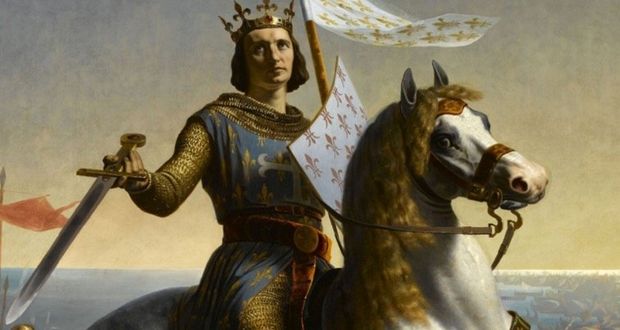
French king Louis IX died from dysentery near Tunis in 1270, during the Eighth Crusade. Pope Boniface VIII canonized him in 1297, making Louis the only king of France declared a saint. His household served meals to more than 100 poor people on ordinary days, and Louis often served them himself. He also abolished trials by ordeal and combat, permitted appeals to the monarch, and introduced the presumption of innocence into criminal proceedings.
22. In 1191, English king Richard I imprisoned Cypriot ruler Isaac Komnenos in silver chains because he had promised not to place him in irons. Isaac had captured survivors and treasure from Richard’s storm-damaged Crusader fleet, then refused demands to release them. Richard landed at Lemesos and conquered Cyprus by June 1, forcing Isaac to surrender. He later sold the strategically important island to the Knights Templar.
23. On January 27, 1547, Henry VIII’s physicians concluded that he was dying but reportedly feared telling him because predicting the king’s death could invite accusations of treason. Sir Anthony Denny, Henry’s closest attendant, warned him that he was unlikely to live and urged him to prepare for death. Henry requested Archbishop Thomas Cranmer but became nearly unconscious before he arrived. Unable to speak, Henry reportedly squeezed Cranmer’s hand as a final sign of faith and died early the following morning.
24. At the Battle of Neville’s Cross in 1346, Scottish king David II was struck twice in the face by arrows as his army collapsed. Contemporary accounts say he fled and hid beneath a bridge over the River Browney until English soldiers spotted his reflection in the water. When John de Coupland tried to capture him, the wounded king fought back and knocked out two of Coupland’s teeth. David endured 11 years of English captivity before being ransomed and eventually died in 1371.
25. Spanish king Alfonso XII died in 1885, while his wife, Maria Christina, was pregnant. Alfonso XIII was born at Madrid’s Royal Palace in May 1886 and immediately became king, with his mother serving as regent. Just after his birth, attendants carried the naked infant on a silver tray to Prime Minister Praxedes Mateo Sagasta. Five days later, Alfonso was baptized with water from the River Jordan while wearing the Golden Fleece.


RE: Fact #24 (David II Broke Captor’s Teeth) – He spent quite a few of those as an English prisoner. At one point, Edward III had both the King of Scotland and the King of France as his captives.
RE: Fact #32 (Richard III’s Hunch Was Scoliosis) – There is a great documentary where they find a guy with the same kind of scoliosis Richard III had. They run him through tests to see how the condition would have impacted his ability to handle a sword, wear armor, ride a horse, and use a lance. Really worth watching.
RE: Fact #11 (Richard Pardoned His Crossbow Killer) – The moment was slightly ruined because Richard died in his mother’s arms, and as the saying goes, ‘the Lion by the Ant was slain.’ According to one chronicler, Richard’s last act of chivalry didn’t matter in the end because Mercadier had the crossbowman flayed alive and hanged right after Richard passed away.
Didn’t it turn out the mercenary was actually paid by Richard’s mother because she was so devastated by his death?
Yeah, I was pretty sure I remembered this ending really badly for the guy.
RE: Fact #41 (King Nicolas Required Gasser Revolvers) – This is the first I’ve heard of a government demanding the public carry handguns instead of rifles. Maybe it’s just an early 20th-century Balkan thing, specifically for assassinating archdukes.
Actually, the archduke wasn’t killed with a Gasser, but with an FN model 1910.
Those are great little pistols. They were very popular for personal protection back then. I own an FN 1922; it’s basically the same gun, just with a slightly longer grip and barrel to meet military requirements.
RE: Fact #39 (Charles XII’s Drunken Bear Died) – Well, it didn’t really work out. After that last glass of wine, the bear definitely stopped drinking for the rest of its life too.
That sounds like the classic ‘set a man on fire and he’ll be warm for the rest of his life’ logic.
RE: Fact #29 (Henry VIII Ordered Ponies Destroyed) – It makes sense that this happened after his 1536 jousting accident. There’s a strong theory that his mental health went downhill after that.
People always bring up what a terrible king he was, but his head injury never gets enough attention. Before that, he was known for being intelligent and athletic. He was a model prince.
Over his thirty-six-year reign, he was blamed for around 57, 000 executions. He was constantly changing the rules on what was considered orthodox. In comparison, Mary and Elizabeth only executed a few hundred each.
RE: Fact #19 (Astrologer Frightened Louis Into Mercy) – This reminds me of a jester who insulted a powerful family and got sentenced to death. Since the king liked him, he asked the jester how he wanted to go, and the guy replied that he wanted to die of old age. The king thought it was so funny that he just banished him instead.
Imagine a serial killer actually managing to talk their way out of a death sentence.
RE: Fact #17 (William’s Servants Looted His Corpse) – The barons who were with him at the end absolutely despised him. They took everything of value and just left him there to rot until the local bishop had some lackeys cram him into a chest that was way too small. His body ended up bursting with foul fluids on the way to Caen. To make it worse, a local knight kicked the casket during the procession because the land where he was going to be buried had been stolen.
His death triggered a mad dash for the treasury, where the first person to arrive essentially crowned themselves king of England. It is wild how much he was hated by his own subjects and those closest to him.
RE: Fact #8 (Louis III Died Chasing Girl) – DM: ‘You can’t ride your horse inside buildings.’ Cavalier: ‘I said I charge with my lance into the tavern.’ DM: ‘Fine. You hit the door. Now make a new character who is wiser. Or at least smaller.’
This is exactly why you always play a halfling cavalier riding an armored potbelly pig. 5D French chess right there.
RE: Fact #13 (Ferdinand Suffered Seizures During Sex) – His parents were double first cousins, which explains a lot. When the revolts against him started, he famously asked, ‘Can they actually do that?’ He eventually handed the throne over to his nephew, who managed to hold onto it until World War I without being hated too much.
RE: Fact #46 (Ferdinand VII Required Special Cushion) – > It was of such an unusual shape that he had to have a special cushion made to help him impregnate his queen. This cushion supported the rather narrow base of the penis, leaving only the bulbous tip for his poor wife to deal with.
Incest is truly something else.
I can only imagine the royal engineers trying to figure out the mechanics of how to help him get the job done.
RE: Fact #4 (Potsdam Giants Never Entered Combat) – The details about their uniforms, the kidnappings, and the King’s strange obsession with breeding tall soldiers are wild. It’s especially disturbing that he tried to physically stretch them on a rack. It’s fascinating that Darwin specifically noted this case as an example of humans being selectively bred.
RE: Fact #22 (Richard Imprisoned Isaac In Silver) – He must have been absolutely furious, because that kind of wordplay doesn’t translate well in Greek.
RE: Fact #44 (Edward Coke Defied King James) – If you play Civ 6, that’s the actual quote from James I when you discover the Divine Right civic: ‘I conclude then this point touching upon the power of kings with this axiom of divinity, That as to dispute what God may do is blasphemy … so it is sedition to dispute what a king may do.’
RE: Fact #15 (Ivan VI Spent Life Imprisoned) – Saying he was killed in an attempted rescue makes it sound accidental, but it was anything but. When Catherine II took over, she left orders that the ‘nameless one’ was to be killed if anyone tried to set him free, he was not to be taken alive under any circumstances. When Mirovich tried to break him out, the guards followed their secret instructions and murdered him immediately.
His guards were essentially prisoners themselves, stuck at their posts for years without seeing their families and with almost no one to talk to. They grew to hate Ivan because he was repulsive, and he was basically their life sentence. They had every reason to kill him the moment an escape seemed likely, and they were handsomely rewarded for their ‘discretion.’ What a wild story.
RE: Fact #34 (Albert I Personally Commanded Belgium) – Technically, he wasn’t the King of Belgium but the King of the Belgians. It means he wasn’t just ruling over a piece of land, but was the leader of the people.
RE: Fact #39 (Charles XII’s Drunken Bear Died) – I have a few more bits of trivia about this that didn’t make it onto the wiki page. He promised his grandmother he’d quit drinking after she scolded him. The only times he actually broke that rule were for things like surgery, which is how he earned the reputation among other royals as ‘the king who drinks watered-down beer.’ Also, he used to hunt bears with muskets but decided it was cheating, so he tried bows and arrows, but eventually switched to a pitchfork. He would bait the bear to stand on its hind legs and then stab it.
Watered-down beer wasn’t really seen as ‘alcohol’ back then. It was the standard drink across Europe because the water downstream from any village was filthy and had to be boiled or brewed to be safe. It wasn’t strong enough to get anyone drunk; even children drank it.
Everyone drank watered-down beer back then because regular water wasn’t safe to consume. He might have stuck to that, though looking into it now, some sources claim the whole story is just a myth.
RE: Fact #12 (Prussia Secretly Trained Massive Reserve) – Also, either Weimar Germany or early Nazi Germany practiced tank maneuvers using ‘tractors.’ Very suspiciously powerful tractors.
RE: Fact #38 (Philip Married His Fourteen-Year-Old Niece) – Also, it’s not mentioned here that his only surviving son with his niece was both mentally and physically incapable of ruling, yet lived for 38 years. A succession war kicked off immediately after he died. The Habsburgs tried so hard to keep their land within the family that they ended up losing it.
RE: Fact #48 (Eric Of Pomerania Became Pirate) – His full title was King of Denmark, Sweden, and Norway, the Wends and the Goths, and Duke of Pomerania. So it was way more than just Sweden, and piracy was basically just his retirement hobby.
RE: Fact #40 (Victor Emmanuel III Dismissed Mussolini) – It is pretty ironic that he got ousted despite having loose ties to Mussolini, while Hirohito stayed in power for 45 years even though he was the one actually driving things in Japan.
RE: Fact #40 (Victor Emmanuel III Dismissed Mussolini) – He wasn’t an absolute monarch, right? Having a Prime Minister suggests a parliamentary system.
RE: Fact #6 (Frederick Augustus Denied Porter Duties) – The guy’s name is actually Friedrich August Johann Ludwig Karl Gustav Gregor Philipp.
RE: Fact #20 (Radbod Chose Hell With Ancestors) – The story goes that he had basically agreed to convert and brought all his men to be baptized. Just before the ceremony, he asked if his ancestors would be saved as well. When the bishop told him no, he called the whole thing off at the very last second.
RE: Fact #35 (Brandy-Soaked Linen Burned Charles Alive) – Can you imagine if it really was an accident, and the person who started the fire spent their whole life terrified they’d be executed for killing the king? Then they grow old only to find out everyone hated the guy anyway and just told jokes about how he was “accidentally” set on fire.
RE: Fact #37 (Infernal Machine Killed Eighteen Bystanders) – French artillery officers who inspected the machine thought that if Fieschi had known more about weapons design, he would have succeeded in killing the King and his staff. If he’d set it up so the fire crossed rather than converging, it could have killed hundreds more people. Crazy stuff.
RE: Fact #37 (Infernal Machine Killed Eighteen Bystanders) – Just one more barrel, I promise. One more barrel and everything will be fixed. Come on, just give me one more barrel.
RE: Fact #16 (William Adopted Alcohol-Only Weight-Loss Diet) – Fans of A Song of Ice and Fire will definitely recognize Lord Too-Fat-to-Sit-a-Horse here.
RE: Fact #49 (Louis XIV Popularized Male Heels) – All shoes need regulations or else things get out of hand!
RE: Fact #27 (William’s Horse Stumbled Into Molehill) – He dragged Britain into so many costly wars that Parliament eventually had to step in and limit the monarch’s power to do that.
It took a civil war and multiple overthrows of the monarchy to get to that point, not just his actions alone.
RE: Fact #13 (Ferdinand Suffered Seizures During Sex) – How did they even track that he had five seizures during that attempt? Did his wife just wait for him to stop, then try again, and stop only after the fifth one? Did they ever actually manage to consummate the marriage?
RE: Fact #9 (Pendrells Earned Charles’s Perpetual Pension) – The wildest thing about King Charles I is that he was 5’6″ when he started his reign, but he was down to 4’8″ by the time it ended.
RE: Fact #37 (Infernal Machine Killed Eighteen Bystanders) – Each barrel had 6 to 8 bullets. When that thing fired, it was basically a massive shotgun. That must have been a horrifying sight.
“Jean Le Page, Arquebusier Ordinaire to the King, showed that each barrel contained about 3.5, 4 inches of gunpowder, 6 to 8 balls, two layers of wadding, and 13 to 14 slugs.” That is absolutely wild.
RE: Fact #20 (Radbod Chose Hell With Ancestors) – One of the reasons Christianity rose so quickly is that it was arguably the first religion to actively court slaves and the impoverished. These groups made up a huge portion of the population but were totally powerless until this faith gave them an outlet. Most other ancient religions seemed to cater strictly to the ruling classes.
RE: Fact #35 (Brandy-Soaked Linen Burned Charles Alive) – It’s easy for us to forget that for most of human history, every artificial light source was an open flame. Accidentally setting flammable stuff on fire was a real risk in just about any situation.
RE: Fact #15 (Ivan VI Spent Life Imprisoned) – It feels like there’s never been a peaceful, democratic transition of power in Russia. It’s just been coups forever.
Gorbachev was probably the closest thing to a democratic leader Russia has ever had.
RE: Fact #50 (Louis XIV Descended 368 Ways) – “I’d like you to meet my wife and my sister.” “But that is the same person.” “Uh huh.”
RE: Fact #25 (Alfonso XIII Became King Naked) – What would have happened if the king died while his wife was only a few weeks pregnant instead of four months along? Would they have just crowned someone else, only to realize a month later that there was actually an heir on the way and have to scramble to get the crown back?
RE: Fact #24 (David II Broke Captor’s Teeth) – One of those arrows was buried so deep in his skull that they just decided to leave it there for good.
RE: Fact #46 (Ferdinand VII Required Special Cushion) – There was something waving in the air that night, the fit was so tight, Fernando.
RE: Fact #45 (Sweyn Forkbeard Ruled Forty Days) – That lasted until his son, Cnut the Great, showed up and took both the crown and Aethelred’s wife. It was an interesting period.
RE: Fact #16 (William Adopted Alcohol-Only Weight-Loss Diet) – He didn’t lose nearly enough weight. The story about his funeral is gruesome, the corpse was so huge that when they tried to force him into the tomb, he literally burst, and the smell was unbearable for everyone in the church.
RE: Fact #2 (Frederick’s Sexuality Shaped Battlefield Quip) – In 1763, when Frederick reunited with his wife after six years, his only remark was, “Madame has grown quite fat.” What a jerk.
RE: Fact #7 (Charles Redirected Vikings Toward Burgundy) – Paying tribute was pretty standard back in the day. The Huns made a fortune for years just by not attacking the East Roman Empire.
RE: Fact #18 (George Never Learned Charlotte Died) – He struggled with mental illness for years, and he had dementia for the last decade of his life. He probably didn’t have the capacity to understand who she was or realize she had died anyway, sort of like Gene Hackman.
RE: Fact #28 (George III Delivered Fifty-Eight-Hour Monologue) – At one point, he actually hallucinated that he was George Washington and that he had won the Revolution against the British.
RE: Fact #23 (Henry’s Doctors Feared Announcing Death) – an archbishop was probably the most qualified person to break that kind of news back then.
RE: Fact #26 (Juliane Shot Crossbow At Father) – For context, she and her husband tried to blackmail Henry I for a castle by threatening to join a rebellion. To keep the peace, there was a hostage swap, but then her husband had a hostage blinded. When they asked Henry for mercy, he gave them a taste of their own medicine and had his own granddaughters blinded.
RE: Fact #27 (William’s Horse Stumbled Into Molehill) – As a descendant of the House of Stuart, I should probably start making friends with moles. But since I’m also Irish, I probably shouldn’t be fond of King Billy. It’s an confusing mix of green and orange loyalties.