


Words can start wars, crown kings, or spark myths — but what happens when they’re mistranslated? From the Bible’s “unicorns” to Britney Spears’ awkward lyrics, history is packed with errors in translation that changed culture, religion, politics, and even life-or-death decisions. These 50 epic mistranslations show how a single slip of the tongue or pen reshaped the world in ways both bizarre and profound.
1 The Lord’s Prayer Lost Word

The Lord’s Prayer may contain one of history’s most famous mistranslations. In the line “Give us today our daily bread,” the Greek word epiousion was rendered as “daily,” even though scholars argue that no such word exists elsewhere in Greek. Some believe the closest meaning is “supersubstantial” or “necessary for existence,” suggesting the verse may have originally carried a more spiritual or mystical sense than a simple request for food. Debate over this single word continues to this day, with no universally agreed-upon translation.
2 Britney Spears’ “Hit Me” Error

In 1998, Britney Spears released “(Hit Me) Baby One More Time,” a song written by Swedish producer Max Martin. Martin intended the chorus to mean “call me one more time,” but mistranslated the slang “hit me” into English, where it sounded more like a reference to physical violence. The awkward wording confused some listeners, yet the single went on to top charts worldwide.
3 Skoptsy Sect’s Fatal Mistranslation

In 18th-century Russia, a radical Christian sect known as the Skoptsy became infamous for practicing castration, mastectomies, and even female genital mutilation as part of their teachings against lust. Their founder, Kondraty Selivanov, drew from a mistranslation of scripture, interpreting a command meant as “be fruitful” to instead mean “castrate yourselves.” This mistranslation shaped their practices for over a century, leading to waves of persecution by Russian authorities and earning the sect a notorious place in religious history.
4 KFC’s “Eat Your Fingers” Blunder

When Kentucky Fried Chicken entered the Chinese market in the 1980s, its slogan “It’s finger-lickin’ good!” was mistranslated as “Eat your fingers off.” The blunder was quickly corrected, but it became one of the most cited examples of early marketing mistranslations. Despite the rocky start, KFC went on to become one of the most successful fast-food chains in China.
5 72 Virgins or 72 Raisins?

Some scholars argue that the famous promise of “72 virgins” in paradise may actually stem from a mistranslation. The Arabic word ??r, often rendered as “virgins,” could instead mean “white raisins” or simply “white ones.” Since the Quran never mentions the number 72 or specifies virgins, with that detail appearing only in later Hadith, the promise of sensual reward may have originally referred to something far more symbolic.
6 Jimmy Carter’s Polish Misstep

In 1977, during a welcome ceremony in Poland, the interpreter for President Jimmy Carter committed a major blunder by translating innocuous remarks into scandalous ones. Carter reportedly said he had just left the U.S., but the translator rendered it as “I left the United States … never to return.” Further, Carter’s desire to understand the Polish people was mistranslated as “I desire the Poles carnally,” and another line about being “happy to be in Poland” was rendered as “happy to grasp Poland’s private parts.”
7 Adam’s Rib or Side Bone?
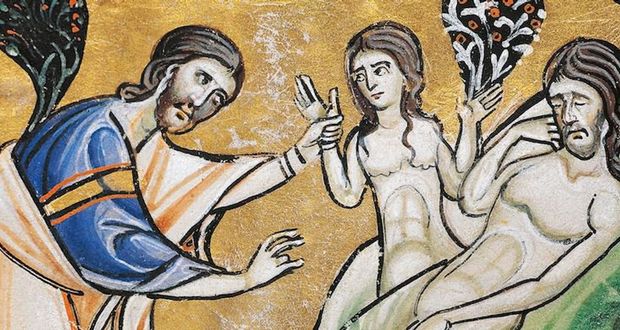
Some scholars propose that the Hebrew word tsela’ (???????), usually translated as “rib” in Genesis 2, may have been mistranslated there. Instead of indicating a literal rib, the term more broadly means “side” or “support beam,” and some suggest the original story might refer metaphorically to a structural or lateral part of Adam’s body, possibly even the baculum (penis bone) of mammals. While this idea is speculative and controversial, it’s been discussed to explain both translation ambiguity and the fact that human males lack a baculum (unlike many other mammals).
Latest FactRepublic Video:
15 Most Controversial & Costly Blunders in History
8 Cake by the Ocean Mix-Up

The hit song Cake by the Ocean owes its quirky title to a translation slip. When DNCE’s Swedish producers tried to reference the cocktail Sex on the Beach, they accidentally translated it as Cake by the Ocean. The band found the mistake hilarious and decided to keep it, turning a mistranslation into a chart-topping anthem.
9 Methuselah’s 969 Years Mistake

Methuselah is famous in the Bible for dying at 969 years, but some argue this number may stem from a mistranslation. According to one hypothesis, the original figure referred to lunar months, not years, which would mean he lived about 78.5 years instead. This reinterpretation would drastically change how we view the extreme lifespans in Genesis.
10 The Tongue Map Translation Myth

The familiar “tongue map,” which shows different spots that detect sweet, sour, bitter, and salty, is actually a myth stemming from a mistranslation of a 1901 German paper. Early researchers meant to convey relative sensitivities, not rigid taste zones, but later translations made it appear as definitive “taste territories.” Modern science has debunked the map, showing that all taste sensations can occur across the tongue. Yet the misinterpretation remains one of the most persistent misconceptions in biology.


RE: Fact #48 (Tootsie Rolls at Chosin Reservoir) – Someone totally read that order, said “whatever, not my problem,” and just shipped a bunch of candy to the front lines.
It wouldn’t be the first time someone’s deliberately placed a weird-sounding order. Maybe there was some top-secret weapons research that needed it.
Yeah, so we call duct tape “hundred mile an hour tape” and paracord “550 cord.” I don’t really know why, maybe it’s because those names have fewer syllables, or maybe it’s just easier to hear over the radios we use.
RE: Fact #15 (666 or 616 Beast Number?) – At Chick-Fil-A, I managed to order something that cost exactly $6.66. I was hoping for a bigger reaction from the cashiers, but they usually just giggle. Kind of a bummer.
RE: Fact #12 (Pandora’s Jar Becomes a Box) – A jar and a box are basically the same thing if you’re thinking about topology.
RE: Fact #35 (Grattan Fight’s Fatal Mistranslation) – The Grattan Fight is a good example of how things went really wrong.
Basically, a group of Mormon pioneers heading west on the Oregon Trail lost a cow, and some Lakota Indians killed it. The Army showed up and offered to make things right with the Lakota leader, but the Mormon guy refused. Nothing got resolved that day.
The next day, some US Army soldiers from Fort Laramie, which is now in eastern Wyoming, were sent to arrest the Indian who killed the cow. They were led by a brand-new West Point graduate, 2nd Lieutenant Lawrence Grattan. He brought along a translator named Lucien Auguste, who wasn’t great at Lakota and, to make matters worse, got drunk on the way to the camp.
People watching from a nearby trading post said that when Grattan and his men arrived, Auguste couldn’t translate the Lakota leader’s words correctly. Grattan kept insisting they hand over the person responsible. Then, Auguste started provoking the Lakota, and they got upset about the soldiers being there. Witnesses said an American soldier fired the first shot, killing the Lakota Chief. His warriors then shot back, and all the American soldiers were killed. In total, 31 American soldiers died, and the only Lakota casualty was their Chief, Matho Wayuhi.
This incident sparked violence from the Lakota, leading to what’s known as the First Sioux War. This really kicked off decades of on-again, off-again fighting between the U.S. and the Lakota, which resulted in thousands of deaths on both sides. The conflict didn’t end until the last Lakota band, led by Chief Thatanka Iyotake, defeated the US Army at the Battle of the Rosebud and the Battle of Little Big Horn.
So, in a nutshell, a translator who wasn’t good at his job got drunk and ticked some people off, which led to over twenty years of intermittent fighting. A pretty bad situation all around.
RE: Fact #19 (Joan of Arc’s Name Twist) – In France, she’s usually called Jeanne d’Arc, but Joan is just the English version of her name.
Seriously, it’s wild how many people think Joan was a French name.
If English worked for Jesus, it works for me too.
RE: Fact #43 (A Bit Sticky Imjin Disaster) – This is still used as a perfect example of how *not* to communicate clearly during a crisis.
Here’s the story: During a conflict, US and South Korean forces were facing North Korean troops when, unexpectedly, up to eight Chinese Army divisions joined the North Koreans. A South Korean Army commander, fighting alongside the Marines, contacted Marine Colonel Chesty Puller about a large Chinese assault in his area. Puller asked how many Chinese soldiers were attacking, and the commander excitedly replied, “Many, many Chinese!” When Puller asked another officer, he got the same answer. Frustrated, Puller asked to speak with his Marine liaison officer. An American voice came on the radio, and when Puller asked the lieutenant how many Chinese were there, he got the reply, “Colonel, we got a whole sh*tload of Chinese up here!” Puller then exclaimed, “Thank God, at least there’s someone up there who knows how to count!”
When you bring up Chesty Puller, you should also mention his son, Lewis. Chesty himself went through every conflict without a major injury.
His son, Lewis, who wanted to follow in his dad’s footsteps, became a Marine infantry lieutenant in Vietnam and was severely injured just three months in. He lost both legs, one hand, and some fingers on his other hand. Always in physical pain, he sadly took his own life, but not before writing his autobiography, which was titled *Fortunate Son*.
RE: Fact #32 (America Named for Vespucci Error) – Pretty sure the Viking explorers were the first folks from the west to find out that Native Americans were already here, right?
RE: Fact #22 (Ivan the Terrible or Fearsome?) – People tend to forget that “terrible” used to mean something that could actually scare you, not just something that’s low quality.
RE: Fact #26 (Lion, King of Wrong Jungle) – That’s not quite right. Simba actually lived in the jungle for a long time when he was hiding from Scar. Did you miss that part of the documentary?
RE: Fact #42 (April Glaspie’s Words Misheard by Saddam) – So, back in July 1990, the US ambassador to Iraq, April Glaspie, asked about the military buildup near the border. She told the Iraqi officials that the US, wanting to be friendly and not confrontational, had no say in the dispute between Kuwait and Iraq, basically saying “we don’t get involved in Arab-Arab issues.” She also reassured Saddam Hussein that the US wasn’t planning any economic war against Iraq. This might have made Saddam think the US gave him the okay to invade Kuwait.
This whole conversation only came out in 2011 after a leak of a US embassy cable from after Glaspie met with Saddam. Plus, just a week before the invasion, a State Department official told Congress that the US had no commitment to defend Kuwait.
Apparently, journalists later asked Glaspie why she said those things, and she replied, “we didn’t think he would go that far,” implying they didn’t expect him to invade and take over the whole country. It seems the US government at the time thought Saddam was just trying to pressure Kuwait about debt and oil prices, not actually invade.
RE: Fact #37 (Cortés Mistaken as a God) – This story about the Spanish arriving in Mexico and conquering the Aztec Empire is super interesting. So, the Spanish brought along a priest named Geronimo de Aguilar who spoke Yucatec Mayan, and a woman named Malintzin who knew both Mayan and Nahuatl. Imagine the translation mix-ups that must have happened!
When they got to the Aztec province of Cempoalah, Cortes apparently convinced the local leaders to lock up an imperial tribute collector. This was basically like declaring war on the Aztecs. The Totonacs told Cortes that no ordinary person would do something like that, so they figured he had to be a “teule.” The Spanish then interpreted this as “god” or “demon.”
Here’s the twist: “teule” isn’t actually a word in any indigenous language. The closest thing is the Nahuatl word “teotl,” which *can* mean god or demon, but it also has like 15 other meanings depending on the context. Plus, Nahuatl wasn’t even the Totonacs’ native language, so we don’t really know what they originally meant. It’s like a Totonac -> Nahuatl -> Mayan -> Spanish telephone game, and what came out the other end was “god.” This led the Spanish to believe the locals saw them as deities, and they started acting the part. It sounds like it caused a ton of confusion for everyone involved, and the idea of Cortes being a god has even stuck around to this day.
RE: Fact #14 (Mummies Eaten by Misreading) – So, they were eating asphalt before that mistranslation happened?
RE: Fact #21 (Eden’s Apple from Latin Pun) – From what I’ve heard, it was way more likely to be a pomegranate.
RE: Fact #4 (KFC’s “Eat Your Fingers” Blunder) – Eating your fingers feels way more natural and convincing than licking them. I think it’s a bit odd to suck or lick your fingers when you’re eating with other people.
Is it okay to eat your own fingers in front of other people?
RE: Fact #48 (Council of Chalcedon’s Schism Spark) – So apparently, when people were asking for ammo and supplies, some folks in the background were yelling for “Tootsie Rolls.” Kot explained that “Tootsie Rolls” was code for mortar shells back then. He said when they did the parachute drop and got all these Tootsie Rolls, they were like, “What the heck?” but he managed to survive on them for two weeks.
I’m a 105mm howitzer crew member, and yeah, we still call ’em that.
Living for two weeks just on Tootsie Rolls sounds like a personal nightmare of diarrhea and awful fake chocolate.
RE: Fact #8 (Cake by the Ocean Mix-Up) – The Swedish word for cake is “tårta”, so I’m not sure how they messed up the translation.
Yeah, that’s really fishy. We’re known for being great at English.
RE: Fact #19 (Joan of Arc’s Name Twist) – So, the real kicker here is that her name wasn’t actually Joan!
Just a heads-up, some folks believe “Jesus Christ” is a mangled version of “King Yeshua.” Also, apparently, the Judeo-Christian God has a name – Yahweh.
RE: Fact #13 (Forlorn Hope from Dutch Error) – There’s a place called Camp Forlorn Hope in Fallout New Vegas.
RE: Fact #5 (72 Virgins or 72 Raisins?) – I don’t think that’s a good enough reason to be a martyr, personally.
RE: Fact #41 (The Ems Dispatch Sparks War) – Here’s a bit more elaboration. Before the Franco-Prussian War, there was this whole thing about a Hohenzollern possibly being a candidate for the Spanish throne. King Wilhelm basically put a stop to it because France was pressuring him. But then the French ambassador pushed for more, demanding the King promise no Hohenzollern would ever be a candidate for the Spanish throne again. The King wasn’t too keen on that and rejected it pretty flatly. Bismarck got a report about this, edited it to make things sound way more confrontational, and published it.
The mistranslation part comes in because the French press messed up the word “adjutant.” The ambassador tried to talk to the King again, but he was turned away by the King’s adjutant. In Germany, that’s a pretty important role. But in French, an adjutant is more like an enlisted man. This really ticked off the French public and put Emperor Napoleon III in a position where he felt pressured to ramp things up, leading to the Franco-Prussian War.
It’s kind of like the difference between assistant regional manager and assistant *to* the regional manager these days.
RE: Fact #7 (Adam’s Rib or Side Bone?) – So, “tslaos” is the plural of “tsela,” and it’s pronounced “tsel-ah-os” and “tse-la” respectively.
The word basically means “side,” and you can see that in Exodus 26:35. Some people argue that a man’s “side” refers to his ribs, and that’s mentioned in Strong’s concordance.
And just so you know, “yarekh” can mean both “side” and “loin.”
RE: Fact #2 (Britney Spears’ “Hit Me” Error) – That was the original “Call Me Maybe.”
More like a sequel to “Call Me By Blondie”
RE: Fact #9 (Methuselah’s 969 Years Mistake) – But if you keep reading the article, it makes his father out to be 5 years old. Then they come up with another idea that would make his father 16 and him 90. I don’t think they’ve figured it all out yet, but it’s a cool thought.
So, I remember this thing about really long-lived people whose lifespans slowly got shorter, eventually matching everyone else’s. If it was measured in months, the other lifespans wouldn’t add up right. And then there’s that one person who supposedly walked with God, who’d have been super young if it were months.
But if we’re talking years, I always figured it would be wild when all those people started dying off. Like, one guy lives 900 years, his son lives 800, his son lives 700, and it keeps going down. If they all had kids in their early hundreds, there should have been a century or so where a ton of people were dying around the same time. I’d guess that would have been a huge crisis – imagine 12 generations chilling together, and then the older 9 all pass away at once.
What if it’s a pretty simple idea, not some super complicated metaphor? Maybe the Hebrews just meant exactly what they wrote, and they were mistaken?
RE: Fact #3 (Skoptsy Sect’s Fatal Mistranslation) – That’s a pretty wild mistranslation.
That’s a surprisingly close guess! This info isn’t confirmed and seems unlikely to be true according to Wikipedia. It’s way more probable that these ideas came from people taking Matthew 19:12 super literally.
I’m not a language expert, but as someone who grew up speaking Russian, this sounds a bit questionable to me. I’ve never come across that first verb before, and it doesn’t even seem like a legit old-fashioned word. The only place I could find it mentioned was in a book about Russian folklore and religious groups called ‘Ivan the Fool’ by Andrei Sinyavsky. Sinyavsky was a big deal in Russian literary circles and the resistance movement, but he also had a reputation for being pretty playful and ironic with his topics.
RE: Fact #40 (Khrushchev’s “We Will Bury You”) – Regardless, it was taken as a threat of actual violence, which back then could have meant a nuclear strike. So yeah, that comment really put a damper on things between the USSR and the West.
This is kind of about how groups like Al Qaeda use the phrase “we love death the way you love life.” People often misunderstand it to mean they just enjoy destruction and seeing others die, but it’s really more about bragging about their own courage. They’re saying they’re eager for martyrdom and going to heaven, while their enemies are just trying to stay alive. It’s a paraphrased quote from General Khaalid ibn al-Waleed, who told Persia he’d send people who “love death as you love life.”
It’s tricky to pin down exactly what he was getting at. There’s a joke from Stalin’s purges of scientists in the 30s that goes “I have disagreements with Stalin on the agrarian question – who will bury whom.” That joke itself is a nod to the Bolshevik slogan “who will overtake whom,” which was short for whether capitalism would overcome communism or vice versa, and later the idea that class struggle was inevitable. This is where Gorbachev said Khrushchev got the idea, likely blending it with Marx’s famous saying that workers would be the gravediggers of capitalism.
So, what he probably meant was that we will bury capitalism, just as communist revolutions in the past had buried capitalism. Apparently, there’s some debate about whether he used “закопа́ть” (bury) or “похорони́ть” (inter/funeral). “Похорони́ть” is more about a funeral, while “закопа́ть” is a general term for burying something, like heaping dirt into a hole. You might use “закопа́ть” if you were digging in to defend against an attack.
From what I can gather, most people say he used “похорони́ть,” so he was definitely talking about capitalism’s demise. He likely meant that capitalism will destroy itself in the remaining capitalist countries, just as it had in countries that are now socialist, and this would happen no matter what the Soviet Union did.
RE: Fact #20 (Norse Jötnar Mistranslated as Giants) – From what I’ve read, it seems the idea of “giants” might stem from Old French words like ‘Geantes,’ which sound similar to the Old Norse ‘Eoten’ or ‘Jötnar.’ These terms described a race of powerful, rebellious supernatural beings – sometimes called “the ones who rise tall or high,” or “eaters” or “devourers.” While some Jötnar were huge, the Poetic Edda doesn’t always say they were giants in the way we think of them now.
It’s interesting how the word changed over time. After William the Conqueror took over England in 1066, French words became common, and the Old French word ‘geant’ (which eventually became our word “giant”) replaced the Old English ‘eóten.’ ‘Geant’ originally referred to the Giants from Greek myths, who, like the Germanic Jötnar, were foes of the gods. Even earlier, the Greek word for ‘geant’ was used to translate a Hebrew word for very large beings in the Bible, and that sense of “enormous size” eventually stuck as the main meaning of “giant.”
RE: Fact #36 (Treaty of Waitangi’s Translation Divide) – It seems like more of a difference in how ideas were translated, rather than a direct translation mistake. It’s possible it was even a conscious choice. The Treaty of Waitangi, or Te Tiriti o Waitangi in Māori, is pretty unique, both back then and even now when you look at international law.
Basically, from a very simple, colonizer-focused viewpoint, it was an agreement from February 6th, 1840, between the British Crown and the Māori people of New Zealand. The idea was that Māori handed over control of New Zealand to the Crown, making it an official British colony.
The English version is pretty clear about this. But the Māori version, Te Reo Māori? It’s quite different. Here’s a quick rundown of the key differences:
In the English text, Māori gave up complete sovereignty over New Zealand to the Crown. In the Te Reo version, they gave up complete governance. Because Māori didn’t really have a concept of total sovereignty, the chiefs who signed the Treaty thought they would still be able to manage their own affairs, with the Crown providing oversight and protection.
The Treaty also promised Māori the “full exclusive and undisturbed possession of the lands and Estates, forests fisheries and other properties which they may collectively or individually possess so long as it is their wish and desire to retain the same in their possession.” Like many Indigenous peoples before colonization, Māori had large areas of land they used for farming seasonally. This meant a good chunk of their land would be left to recover at any given time. The Crown and settlers saw this unused land as unclaimed, so they took it. This was made easier because the Treaty also gave the Crown the exclusive right to buy land that Māori no longer wanted. In the Te Reo version, this part was translated as “Te tino rangatiratanga,” which means the unqualified exercise of their chieftainship over all their lands, villages, property, and treasures. To this day, it’s not entirely clear if the Te Reo version and the Chiefs who signed it understood that the Crown was being given the exclusive right to buy, or if they thought it just meant they had the first chance to buy.
It’s a super complex subject. For the first few years, the colonial government actually stuck to the spirit, if not the exact wording, of the Treaty. But by the 1850s, they’d pretty much abandoned it and started using sneakier ways to get land. By the 1860s, Māori were openly fighting back against the Crown, which led to the New Zealand Land Wars. The effects of all this are still felt by Māori today, and there’s even a government department focused on making things right for the historical injustices and trauma.
You can find more info about the differences between the texts and read the full treaties from the Waitangi Tribunal.
RE: Fact #11 (The Abominable Snowman’s Name Slip) – Abominable sounds super cool, like a Marvel villain. Watch out for the Abominable Snowman!
RE: Fact #11 (The Abominable Snowman’s Name Slip) – half man, half bear, half snow, half man!
RE: Fact #5 (72 Virgins or 72 Raisins?) – It’s more poetic. Classical Arabic is studied a lot. And yeah, even though lots of words have multiple meanings, raisins weren’t going to make people think it was worth dying to say “I’m Muslim.”
The 72 virgins in heaven aren’t meant literally. Heaven is supposed to be so amazing that all worldly pleasures are nothing compared to just being there. That part is more like saying, “Heaven is like having all these women for yourself!”
The number 72 fits the poetic flow of the Quran’s language in Arabic. That number and the virgins aren’t the main point. The Quran uses metaphors like this all the time.
Seriously, thanks for highlighting this! I’ve always wondered why people don’t realize the “72 virgins” thing probably isn’t meant literally. But then, they have no issue believing Israel is literally overflowing with milk and honey, even though that’s what the promised land was supposed to be like.
RE: Fact #14 (Mummies Eaten by Misreading) – That Futurama reference is great, when Fry eats the professor’s mummy and the professor freaks out, saying he was going to eat it himself!
RE: Fact #10 (The Tongue Map Translation Myth) – Did anyone else learn this as a kid, try it out, and then decide it was false based on their own experience? Glad to see it’s actually false.
RE: Fact #46 (Tootsie Rolls at Chosin Reservoir) – Here’s how I picture that going down:
Private: “Hey Sargent, check this out – the mortar guys just ordered a ton of tootsie rolls!”
Sargent: “Well, duh, Bill. They’re the mortar section. If you keep saying dumb stuff like that, I’ll make you clean the latrines.”
RE: Fact #10 (The Tongue Map Translation Myth) – I remember a kid in my 3rd-grade science fair who won first place for a model of the tongue’s taste regions. It took me like, ten years to find out that wasn’t true, because I learned it in school, and you just assume what you learn in school is right.
What they teach you in school is usually true.
RE: Fact #44 (Charles Budd Robinson’s Fatal Misunderstanding) – There’s a MASH episode that really highlights the difference between how Brits and Americans communicate.
In it, a British major visits his soldiers who are being treated at the hospital. He basically calls them lazy and tells them they’ll be back fighting soon. Hawkeye, the American doctor, gets super mad, thinking the major is just a jerk pressuring the men instead of being supportive.
Later, Hawkeye sees the same major joking with the soldiers and going over the details of their lives. He asks the major how he went from being a bully to being like a caring father figure.
The major explains that for the British way of thinking, if he had shown a lot of concern, the men might have worried something was seriously wrong and they’d be permanently injured. By being tough on them, they knew everything was okay. So, while he seemed like a cold jerk to Americans, to Brits, he was actually being reassuring and letting them know they were in good hands.
I found that really relatable, especially living across the pond and then back in the UK. When I had a bad case of appendicitis and sepsis in London, a friend came in and apologized to the nurses for me being a bother, joking that I was just trying to skip lectures. It totally cheered me up. But when I had an allergic reaction to meds in Toronto, my friends from New York came in, hugged me, and asked if I was okay, and that made me start worrying that maybe the doctor hadn’t told me the whole story.
This is a really great post, and I’m especially a fan because I love anything MASH-related!
I heard a story from a Royal Marine about a time someone in his unit stepped on a landmine and lost a leg. After their tour, the guys really looked out for him. They visited him in the hospital and got him a gift. They brought him a really nice, expensive Nike shoebox, but it only had one shoe inside – they did it to make him laugh and cheer him up. I’m not sure if that kind of joke would land the same way over in the States, maybe it depends on the specific unit.
Yeah, that sounds about right. It’s just a personal story, not like those epic war tales or anything. But, for example, my coworker called in sick, and she’s not someone who would do that unless she really had to. When I heard, I called her right away to see if she was just trying to get a few extra days before her vacation. Obviously, I meant to call and see if she was okay, and she knew that too.
RE: Fact #30 (Michelangelo’s Horned Moses Mistake) – It seems like there are a lot of misunderstandings because some Hebrew words that don’t translate perfectly into English end up being inaccurately rendered in the Old Testament. For example, the book of Ecclesiastes repeating “All is vanity” might have actually meant “All is smoke” or “All is vapor.” Since there isn’t a great English word for that, they used “vanity,” which has led to people misunderstanding the main point of that really great book for ages.
RE: Fact #6 (Jimmy Carter’s Polish Misstep) – Hey Poland, I’m here to fu*k around and I’m sticking around!
It sounds different if you imagine Bill Clinton saying it.
RE: Fact #17 (Pavlov’s Bell That Never Rang) – So, Pavlov did some pretty messed up things in his research. It wasn’t just with dogs; he also did stuff with kids, mainly orphans.
RE: Fact #3 (Skoptsy Sect’s Fatal Mistranslation) – It’s funny how with all these mistranslations out there, you’d think at least one Christian group would have a few folks learn Hebrew and check out the Old Testament in the original language, just to make sure their interpretation is all good.
RE: Fact #5 (72 Virgins or 72 Raisins?) – This is super funny, but I’m pretty sure it wasn’t originally 72 raisins. Like, who would make that big of a sacrifice for a snack that’s not even that great?
You can grab that same stuff at the gas station for $2.99. Seriously, ditch the suicide vest.
RE: Fact #16 (Lucifer Lost in Translation) – It kind of makes the whole “fallen angel” story a bit silly when it’s not brought up again. Plus, Jesus is called the morning star.
RE: Fact #28 (Willie Ramirez’s $71 Million Word) – Since I know two languages, I would’ve likely translated “intoxicado” to mean “intoxicated by drugs or alcohol.” “Veneno” means “poison,” and “envenenado” means “to be poisoned.”
RE: Fact #21 (Eden’s Apple from Latin Pun) – Lots of Christian scholars and theologians see the whole story as metaphorical. Ancient Hebrew is a very symbolic language and doesn’t translate into technical terms like English does. The original texts in the Talmud were written for people who pretty much viewed everything as an allegory. So, the idea of a tree could easily represent things like roots, branches, and strength, rather than just a literal tree.
This leads to the idea that the “knowledge of good and evil” is about the human tendency towards binary judgment, especially in cultural development. The “fruit” is the result of this: acting based on judging others.
Of course, religions often go to extremes and are way too literal, ignoring how language works and its context.
So, the whole “Christian literalism” thing is actually pretty recent, like, only from the 1700s.
RE: Fact #43 (A Bit Sticky Imjin Disaster) – So, two colonels from opposite sides were getting ready for a chat with the general. One issue came up, and the British colonel was totally pushing to “table” it for discussion. But the American colonel was just as strongly saying, “No way, we shouldn’t table it!” Turns out they were both saying the same thing, which got a good laugh.
Sounds like they really, really agreed on that.
Whoever came up with a language that has words meaning their opposite should be, like, punished. Or maybe not, I guess?
RE: Fact #20 (Norse Jötnar Mistranslated as Giants) – And next you’ll tell me their dwarves weren’t actually short!
RE: Fact #8 (Cake by the Ocean Mix-Up) – That song is super catchy, almost annoyingly so!
RE: Fact #4 (KFC’s “Eat Your Fingers” Blunder) – Honestly, why bother correcting it? “Eat your fingers off” could be a way more epic slogan. It kinda paints this picture where the food is SO delicious that you’d want to devour it super quickly, craving every last bit, and in your haste, you’d end up accidentally munching on your own fingers.
This saying is already used in Arabic in Lebanon. It means the food is so good you’d eat your fingers after it.
RE: Fact #2 (Britney Spears’ “Hit Me” Error) – Max Martin is the guy who wrote and composed tons of hits for pop singers and boy bands back in the 90s. He actually mistranslated a lot of his own lyrics.
RE: Fact #46 (Tootsie Rolls at Chosin Reservoir) – Yeah, getting hit with a Tootsie Roll would still sting! It’s basically a “make the best of a bad situation” kind of thing.
Imagine if you died by getting shot by a Tootsie Roll.
Haha, I can totally picture clueless people trying to shove candy into a motor tube, then setting it off and having it just blast everywhere. Imagine the enemy’s confusion if it started raining bits of sweet brown candy!
RE: Fact #3 (Skoptsy Sect’s Fatal Mistranslation) – This totally feels like a skit from Discworld.