

21 Irish Deichtine Lugh Cu Chulainn

In Irish mythology, there is a story of a god divinely conceiving a child in a newlywed virgin’s belly: the god Lugh places his child in Deichtine, who is betrothed to the mortal Sualtam. Ashamed to be pregnant by another man and facing scandal among the Ulstermen, she decides to abort the divine child and then goes to her husband’s bed as a “virgin” bride. Deichtine later becomes pregnant by Sualtam and gives birth to a fully human baby, Sétanta. That boy grows up to be Cú Chulainn, one of Ireland’s greatest heroes in the Ulster Cycle.
22 Norse Fenrir Gleipnir Wolf Chain

In Norse mythology, the dwarves forged a magical chain to shackle the giant wolf Fenrir, using impossibilities as its ingredients: the sound of a cat’s footfall, a woman’s beard, the roots of a mountain, a bear’s sinews, a fish’s breath, and a bird’s spittle. The gods had already failed to hold Fenrir with ordinary iron chains, so they turned to the dwarves. When they tested this chain named Gleipnir on the island where they lured Fenrir, the wolf agreed to be bound only if one of the gods placed a hand in his mouth as a pledge of good faith. Fenrir found he could not break Gleipnir and bit off the hand of the god Týr in fury.
23 Slavic Romantic Pseudo Deity Inventions
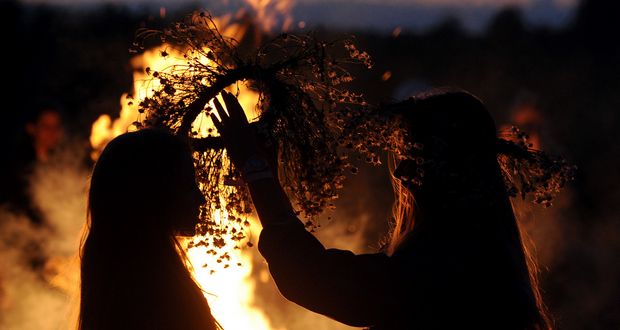
In Slavic folklore studies, scholars use the term “Slavic pseudo-deities” for pagan gods who were basically made up by medieval chroniclers and 19th-century romantics who wanted to give the Slavs a mythology like that of ancient Greece and Rome. Sometimes, medieval Christian writers misunderstood or embellished local customs and names, transforming vague references or poetic phrases into imagined gods. In the 1800s, romantic nationalists eagerly systematized these scraps into a grand pantheon, presenting detailed gods and goddesses who never actually existed in pre-Christian worship.
24 Phosphorus Venus Morning Star Lucifer

In Greek mythology, the god Phosphorus represented the planet Venus as the Morning Star, the “Bringer of Light.” Greek poets used his name for the bright star that appears just before dawn, marking the coming of the sun. When the Greeks’ Phosphorus passed into Latin, his name was translated directly as “Lucifer,” which also means “light-bringer.” Only much later did Christian tradition reuse the Latin word Lucifer for a fallen angel, but in its original mythic context it simply named the shining planet Venus at daybreak.
25 Chilean Trauco Footless Forest Seducer

In Chilean mythology, the Trauco are dwarf or goblin-like creatures who live deep in the forest, are incredibly ugly, and have no feet, yet are strangely irresistible to young women. When an unmarried woman becomes pregnant, people sometimes blame the Trauco rather than accuse a known man.
26 Tongan God Tafakula Blinding Anus

In Tongan mythology, the god Tafakula defeated his enemy gods in a bizarre way by straddling an island and preparing to confront them. Instead of using weapons, he bent over and exposed his anus to the assembled gods. His anus shone with a brilliant light like the sun, flooding the area with an unbearable glare. The terrifying and dazzling sight scared off the other gods, leaving Tafakula victorious.
27 Athena Greek Owl Wisdom Symbol

In Greek mythology, owls became symbols of knowledge in the West because they were the companion animal of Athena, the goddess of wisdom. Ancient Athenians stamped the bird on coins and pottery, and they associated its large eyes and nocturnal sight with keen perception and clear thinking. Over time, Latin writers and later European artists repeated this pairing of Athena and her owl, turning it into a stock emblem of learning. The exact origins of why the owl was first linked to Athena remain unclear.
Latest FactRepublic Video:
15 Most Controversial & Costly Blunders in History
28 Greek Nymph Echo Hera Curse

In Greek mythology, the word “echo” comes from the nymph Echo, whom Hera punished by taking away her voice so that she could only repeat another’s shouted words. Before the curse, Echo distracted Hera with constant chatter while Zeus chased other lovers, and Hera eventually struck back by limiting her speech to simple repetition. Later, Echo fell in love with Narcissus, but she could not speak freely to him and could only mimic his words. Rejected and heartbroken, she faded away until only her disembodied voice remained.
29 Japanese Kasa Obake Haunted Umbrella

In Japanese mythology, if an old umbrella is left alone long enough, it can become a one-eyed, one-legged hopping demon known as Kasa-Obake. This creature is a type of tsukumogami, a household object that gains a spirit after long use or neglect, and it usually appears as a tattered paper umbrella with a single glaring eye, a long tongue, and one leg wearing a wooden clog. At night, Kasa-Obake hops through streets or houses, startling people and playing tricks rather than outright attacking them.
30 Mississippian World Tree Cosmos Model

Mississippian Native Americans had a cosmological concept similar to Norse mythology, complete with a great World Tree that linked different layers of the universe. Between about 1000 and 1500 CE in what is now the southeastern and midwestern United States, they envisioned an Upper World, a Middle World, and an Underworld, all connected by this vertical axis. Archaeologists see traces of this belief in mound layouts, ceremonial plazas, and engraved images of trees, birds, and serpents that mark the boundaries between realms.


RE: Fact #9 (Native Deer Woman Hoofed Seductress) – In Lakota tradition the figure known as Deer Woman goes by the name Anukite. The myth says the first couple’s daughter was a striking young lady called Ite, and Tatefell fell head‑over‑heels for her. They wed and ended up with four children, the Four Winds. Wanting godhood, Tate enlisted the trickster spider Inktomi, who made the Sun swoon for Ite. During a feast Ite took the Moon’s seat (essentially the Sun’s wife) and the Sky punished her by hurling her down to earth. One side of her face was marred, and she became known as Anukite or Winyan Numpa.
Folks say Anukite shows up in men’s dreams or visions either as a single deer or as two deer‑womenm a white‑tailed and a black‑tailed one. The two forms represent proper versus improper sexual behavior. Men who sleep with her are thought to lose their minds, while women who dream of her may gain strong powers, heightened sexual allure, or even artistic talent if they make a wise choice soon after.
Actually, it’s not just generic Native American mythology. it’s specifically Lakota.
Deer Woman appears in numerous Plains traditions, and the he just happened to reference the Lakota version.
RE: Fact #27 (Athena Greek Owl Wisdom Symbol) – Athena embodies wisdom, especially the battlefield kind that mattered a lot in ancient times, which is why she’s shown carrying a spear and a shield. As for owls, besides the many that inhabit the area around Athens, they’re top‑tier hunters. Quiet and deadly.
RE: Fact #38 (Tarasque French Chimera Saint Martha) – When the party’s just going full murder‑hobo and you’re over it, this is a solid way to wrap up a D&D campaign.
RE: Fact #42 (Innu Spirit Matshishkapeu Fart Power) – Makes sense.
The asshole’s the most powerful body part, and here’s that old joke that goes with it.
A meeting of the body parts to pick who runs the show:
The brain says, “I do all the thinking, so I’m the most important and should be in charge.”
The eyes chime in, “I see everything and tell the rest of you where we are, so I’m the most important and should be the boss.”
The hands add, “Without me nothing gets picked up or moved, so I’m the most important and should run things.”
The stomach pipes up, “I turn food into energy for everyone else. Without me we’d starve, so I’m the most important and should be in charge.”
The legs jump in, “If I’m not around we can’t go anywhere, so I’m the most important and should call the shots.”
Then the rectum says, “I think I should be in charge.”
Everyone else shouts, “You?!! You don’t do anything! You’re not as important as us, you can’t be the boss!”
The rectum just stops working…
A few days later the legs are wobbly, the stomach feels queasy, the hands shake, the eyes get watery, and the brain’s all foggy.
RE: Fact #13 (Cerberus Hades Three-Headed Spot Dog) – In my view, Hades totally takes the crown for being the most awkward deity. He couldn’t even manage a simple chat with the girl he liked—who also happens to be his niece—so he ends up kidnapping her, nearly dooming humanity. Now he just hangs out down in the Underworld, steering clear of his siblings.
Because Hades also presided over wealth, you’d expect him to have had no trouble attracting women.
It won’t help if you’re so socially awkward you can’t even get out the door.
Picture Hades as the mythic equivalent of 4chan—he lurks in perpetual darkness, fixated on twisted obsessions, and the only friend he keeps is his pet.
RE: Fact #26 (Tongan God Tafakula Blinding Anus) – I was about to wonder why Tongan myths never crossed my radar, and now I kinda get it.
RE: Fact #13 (Cerberus Hades Three-Headed Spot Dog) – One way to look at the name Cerberus is that it could come from the Proto‑Indo‑European root *ger*, meaning “to growl,” which would link it to the Norse watchdog Garm. The usual Indo‑European line for *kerberos* is shaky, though, because we don’t have solid evidence for a “/b/” sound in that language, suggesting the form might be a later invention. A more plausible PIE candidate would be *kervos*, so the combination *ger‑kervos* makes sense as a possible ancestor. Besides, *kerberos* isn’t limited to “spotted”; it also carries the idea of a “pit” or “hole,” so a compound like *gerkervos* or *gerkerveros* could be read as “growling pit.”
That picture clicks if we remember that early thinkers often imagined Cerberus as a hyena rather than a dog. Young hyenas live in burrows and frequently pop several heads out at once, giving the impression of a many‑headed beast that lives in a hole. Hyenas are also spotted, which satisfies the “spot” nuance. Holes, of course, are associated with the underworld, so you end up with a spotted, apparently multi‑headed monster that growls from a pit—exactly the vibe of *gerkerveros*. TL;DR: it’s a viable theory, but it’s far from the most likely etymology.
RE: Fact #19 (Deucalion Pyrrha Greek Flood Reboot) – Probably those stories began near the end of the final Ice Age, about 10,000–15,000 years ago, as the glaciers melted and sea levels surged over a hundred feet.
RE: Fact #3 (Maori Hawaiki Ancestral Homeland Myth) – I grew up in Hawai‘i and, as I learned about the other South‑Pacific islands and their cultures, a clear pattern emerged: people hopping from one island to the next, leaving a sort of breadcrumb trail of settlement. Hawai‘i, though, sits way out there—far more isolated than the rest. Still, the incredible Polynesian navigators somehow managed to reach it.
Thinking about all the ways ancient sailors figured out their routes still blows my mind. Imagine crossing the entire Pacific in a simple open craft and then spotting a tiny island a thousand kilometres away. There are reports that Māori voyagers pushed down to Antarctic islands, returning with wild tales of massive icebergs. It’s honestly incredible.
The navigation setup is pretty slick, but what truly amazes me is how they managed to keep enough provisions for such a lengthy voyage.
I figure they must have spotted the islands by trailing the birds.
Most folks picture the sea as an impassable wall, but actually it acted more like a fast‑moving highway. Spotting an island wasn’t the impossible quest we imagine either—shifts in currents, a lone cloud on the horizon, a distant bird, even a piece of driftwood all served as clues pointing toward land. Even two hundred miles out, travelers would have seen plenty of such hints. It wasn’t random chance; they were using what they knew.
RE: Fact #22 (Norse Fenrir Gleipnir Wolf Chain) – I get the other bits, but I’m still wondering why the ancient Norse figured bears didn’t have any ligaments.
RE: Fact #15 (Ra’s Tears Create Sacred Bees) – When I hear “Re”, I picture a tiny speck of golden sunshine.
RE: Fact #26 (Tongan God Tafakula Blinding Anus) – Just strolling in and flashing your asshole can actually earn you more wins than you’d expect, even without any solar power to back you up.
RE: Fact #48 (Cronus Devours Children Zeus Revolt) – I get it, it turned into a self‑fulfilling loop because Zeus only did it to free his brothers and sisters after their dad ate them.
RE: Fact #16 (Greek Chaos Primordial Cosmic Void) – That idea feels more like “nothing existed until chaos came first.” It’s a theme you see a lot in creation myths.
RE: Fact #39 (Jewish Philtrum Angel Forgotten Wisdom) – What actually causes a cleft lip? Is it something like an angel being in a rush?
RE: Fact #23 (Slavic Romantic Pseudo Deity Inventions) – I ran into this while digging into Balkan folk parades like the Kukeri. People love to say those are ancient pagan rites, but most of them actually show up in the 1800s. The claim that they’re centuries‑old was mostly a way Balkan groups tried to prove their cultural roots while under Ottoman rule.
There’s a paper by Stamatis Zochios titled “Kupala and Koliada: Two examples of Slavic pseudomythology” that looks at the two deities mentioned on the Wikipedia page. The whole story seems to go like this:
– Medieval writers misread certain Slavic celebrations and called them old pagan sacrifices.
– Later, Renaissance and Enlightenment scholars took those notes at face value, inventing whole mythologies, bogus etymologies, and forced links to Greek and Roman gods.
– 19th‑century romantics then borrowed those fabricated tales for paintings and novels.
– The Soviet government later pushed that invented myth and the romantic art to chip away at the Church’s authority, arguing that Slavs were always secretly pagan and only pretended to be Christian.
What’s ironic is that the original medieval chroniclers, who started the whole misinformation chain, were usually scathing about the festivals—calling the participants demon‑worshippers. Modern scholarship now thinks those celebrations actually grew out of Byzantine Christian traditions. So the chroniclers tried to stamp out “pagan” worship by demonising Christian rites, and centuries later we end up glorifying the fake pagan gods they themselves concocted. Nice turn of events.
Back in the Middle Ages, scribes tried to squash worship of imagined pagan deities by branding Christian celebrations as demonic. Centuries later, that very propaganda sparked a revival of those “pagan” gods—essentially the ones the chroniclers invented themselves. Talk about irony. I’m completely hooked on how history repeats itself.
RE: Fact #21 (Irish Deichtine Lugh Cu Chulainn) – Eventually he shows up as the Lancer character in Fate/Stay Night.
RE: Fact #7 (Chinese Great Flood Yu Engineer) – Almost every culture has a tale about a massive flood.
Almost all societies grew thanks to farming that relied on water and nutrients delivered by rivers’ occasional floods. So it’s hardly surprising that they all ended up with flood stories.
RE: Fact #5 (Canaanite Adam Serpent Tree Myth) – When you compare the old Near Eastern faiths, you’ll spot a lot of overlap—especially the flood tale, which appears repeatedly.
Stories about floods turn up in pretty much every culture. Most mythic traditions include such tales, largely because ancient peoples tended to settle near rivers, lakes, or coastlines.
Pretty much every culture has a story about an old flood. When the last ice age ended, massive areas got drowned by rising seas. So it’s easy to see why people link that to Noah’s Ark and other flood legends from around the globe.
Maybe they came across fossilized shells high on a peak and assumed the ocean once covered that height, sparking the origin of a flood story.
Settlements have always clustered around rivers and lakes, places that are prone to big floods. After the last ice age, periodic deluges left a strong impression on collective memory, so when people later farmed the fertile floodplains they kept telling stories of the water’s wrath. Finding marine fossils high up on mountains only reinforced the idea that a great inundation once covered the land. Because myths travel, once an early civilization embraces a flood narrative, neighboring societies tend to adopt a similar tale.
RE: Fact #21 (Irish Deichtine Lugh Cu Chulainn) – Right after his first fight, Cú Chulainn staggered back to his own Ulster camp still caught in a wild battle frenzy, unable to tell allies from enemies. The Ulster folk panicked, fearing he’d end up slaying them all. The women all bared their breasts, which distracted him just enough for the men to wrestle him down and plunge him into water to cool off. What a legend.
RE: Fact #1 (Aztec Cihuateteo Childbirth Spirits) – I figured the tale would end on a high note, but it didn’t.
Apparently the Maya thought that any woman who died giving birth was taken straight to the top of the Cieba tree and honored as a warrior.
From what I’ve gathered, Sparta reserved proper headstones just for soldiers killed in combat and for women who passed away during childbirth.
RE: Fact #26 (Tongan God Tafakula Blinding Anus) – In this situation, the sunlight literally burst out of his backside.
RE: Fact #7 (Chinese Great Flood Yu Engineer) – They call the Yellow River China’s sorrow for a good reason. Its disastrous floods alone can explain why their mythology is riddled with flood stories.
RE: Fact #7 (Chinese Great Flood Yu Engineer) – Nearly every culture seems to have its own take on a great flood. I once heard a Cree story where the spirit Wisakachak caused a deluge, then built a raft and gathered a handful of animals—beaver, muskrat, raven, wolf, and others. After they spent days on the boat, the wolf dove deep, fetched some earth, and Wisakachak worked some magic, turning it into islands that reshaped the world.
There are several variations. In one version the creator rebuilds everything, while another swaps the muskrat for the wolf as the earth‑retriever. I recall a telling where multiple animals tried to dive first; the otter got caught and drowned, and only one eventually succeeded.
Given that seasonal floods happen often and most people historically lived along rivers, it isn’t surprising that flood legends pop up all over the place.
Rivers overflow pretty regularly, and people have been turning that into irrigation since ancient times. Most societies have a flood story in their folklore, which makes sense since they all settle close to water.
RE: Fact #16 (Greek Chaos Primordial Cosmic Void) – Kaos turned out to be the extra rider in the apocalypse, but they vanished before anyone ever heard about them.
RE: Fact #1 (Aztec Cihuateteo Childbirth Spirits) – What about miscarriages though?
So that’s the recipe for ending up with a Botchling.
RE: Fact #10 (Egyptian God Huh Endless Time) – There’s no solution to your endless questioning—just roll with the mystery and let it swallow you. Huh. Exactly.
wut
No thats the god of kabobs
RE: Fact #14 (Stymphalian Bronze Man-Eating Birds) – Sounds like Elden Ring enemies
RE: Fact #41 (Islamic Houris Versus White Raisins) – When you go through the whole section you’ll notice the only things left are food, and then—boom—a virgin.
RE: Fact #8 (Greek Atalanta Hippomenes Golden Apples) – So you totally skipped the juicy bit: after the race Hippomenes never thanked Aphrodite, and while they were out hunting a deity sparked such passion that they ended up making love inside a shrine—either Zeus’s or Rhea’s. For that sacrilege they were turned into lions, a punishment delivered by Artemis, Cybele, or even Zeus himself.
The twist is that the ancient Greeks thought lions never mated with other lions—only with leopards. So, as a punishment for their mutual desire, they were transformed into beasts that could never feel that attraction again.
Greek myths don’t really give you a win—those gods act like total jerks. Take Aphrodite, for example. She’s like, “You don’t even want a husband? Fine, I’ll have a guy cheat you in a race and then use her charm to push you into bed.” And Artemis? She’s like, “You already slept with someone, so I’ll just transform you into a beast.” No matter if you end up having sex or staying celibate, someone always ends up screwed.
Most polytheistic beliefs work the other way around: you honor a deity hoping they’ll grant you favors in the manner they’re known for. In this case, the whole point is to see which god you manage to upset the most, because that deity will then wreck you in their typical fashion.
RE: Fact #27 (Athena Greek Owl Wisdom Symbol) – That Latin phrase “ululas Athenas ferre” always amuses me—it’s said to mean “to bring owls to Athens,” which was a silly effort since the city was already packed with them, like giving a baker a loaf he already has. I picture someone lugging a sack of owls along the road, only to reach the gates and slam his foot in irritation when owls are everywhere. Pretty funny, huh?
RE: Fact #48 (Cronus Devours Children Zeus Revolt) – Time’s symbolism is wild. Stuff gets eaten by time and entropy, but it never even knows it’s falling apart. Then those “children of time/spacetime” turn the tables, existing outside the flow, kind of like how our consciousness stretches across past, present and future. Think about Eden – the fruit gave us the idea of death. To me, a lot of creation myths really boil down to the birth of human awareness.
RE: Fact #16 (Greek Chaos Primordial Cosmic Void) – In the Warhammer 40k lore, Chaos is basically the deepest reality— the fundamental truth that underpins everything. If you can see it clearly, it’s stunning and holy, and its forms deserve reverence. May we forever bask in its bright, glorious presence.
RE: Fact #10 (Egyptian God Huh Endless Time) – From what I gather, his name sounded like [ħeħ]; the source doesn’t spell out the vowels, so it could also have been something like [ħuħ].
That initial h isn’t the English h—it’s a voiceless pharyngeal fricative, a throat‑y sound you hear in Arabic. The middle vowel is [e], similar to the “ay” in “pay,” which makes the whole thing come out roughly as “kheikh.”
RE: Fact #12 (Jewish Estries Shapeshifting Female Vampires) – It claims to prey on men, women and kids—so does that imply everyone?
I’d say they’re basically just like ordinary vampires.
RE: Fact #11 (Talos Bronze Automaton Guardian Crete) – We’re nothing more than maggots, squirming in the grime of our own corruption.
RE: Fact #30 (Mississippian World Tree Cosmos Model) – Think about it—when a society develops among lots of trees, it’s only natural for that forest feel to seep into its customs. By contrast, the Judeo‑Christian‑Muslim traditions originated in arid lands, so they end up focusing more on mountains.
RE: Fact #36 (Japanese Unicorn Criminal Heart Piercer) – Alright Netflix, where’s that buddy‑cop unicorn comedy? One tough Japanese unicorn teams up with a proper English wish‑granting unicorn, and they’re on the hunt for a missing mermaid.
RE: Fact #4 (Plato Zeus Splits Original Humans) – If memory serves, this isn’t a genuine Greek myth at all—Plato simply fashions a tale in the manner of Aristophanes. Because Aristophanes was famous for his comic dramas, Plato casts him as the one who spins a funny story to entertain the other guests.
RE: Fact #17 (Norse Loki Goat Rope Prank) – Picture the All‑Father strolling into the space, letting out a sigh, then turning on his heel and walking out without uttering a word.
He mutters under his breath, “Moron. It’s meant to be right around the goat’s testicles, seriously.”
RE: Fact #3 (Maori Hawaiki Ancestral Homeland Myth) – Perhaps the earliest Polynesians who got to the islands simply named them after the mythic homeland spoken of in their legends.
Picture someone telling his friends they’ve finally located the land of their ancestors—a sort of promised paradise. He claims that if you join him on an open boat and spend three months sailing, you’ll end up there.
RE: Fact #29 (Japanese Kasa Obake Haunted Umbrella) – It feels like the trick Japanese moms and dads use to make their kids tidy up. 🙂 You’ve really got to be into Japanese mythology.
RE: Fact #2 (Greek Sirens Bird-Body Oracles) – Decades of experience have taught me that the series What We Do in the Shadows nailed this. Good grief—my stomach just flipped.
RE: Fact #7 (Chinese Great Flood Yu Engineer) – Since people normally settle by seas and rivers, it’s unsurprising that every culture has dealt with massive floods. Being Dutch, I’ve got plenty of stories to share.
The Inca people made their home high in the Andes, and they passed down a story about a massive flood.
One tale focuses on Lake Titicaca, where a hidden temple sits beneath the water.
Another legend centers on the Yellow River, and archaeologists have found evidence of a massive flood that occurred about 4,000 years ago. The communities hit by that disaster were also inland. Early Chinese civilization developed away from the coast, and the legendary Xia dynasty never held any coastal lands.
RE: Fact #6 (Krampusnacht Austria Alpine Demon Parades) – My dad went completely obsessed with Krampus and its folklore, so now on Christmas Eve we’ve made a habit of belting out Krampus‑themed carols with relatives and friends. We’ve even gotten to the point of having four or five instruments and a chorus of college‑trained singers. Last year we invited grandma over for dinner without a second thought, and she stayed for the singing; the horrified expression on her face totally ruined my holiday.
It’d be great if your dad got a chance to explore the Austrian countryside sometime.
RE: Fact #34 (Theseus Sinis Pine Bender Execution) – Some other accounts claim he bound people to a couple of pine trees, knocked the trunks down, and then let them spring back, ripping the victims apart. Gruesome.
RE: Fact #2 (Greek Sirens Bird-Body Oracles) – Aren’t the sirens in the Odyssey actually women whose songs are irresistibly beautiful, luring anyone who hears them? That’s why Odysseus had himself tied to the mast—so he could listen without being pulled in.
We thought you was a toad.
Steer clear of hunting for the treasure.
Sure, it was the enchanting music that pulled sailors toward them, not how they looked.
Who’s on the mic? That voice is on fire—let’s aim the boat toward it.
RE: Fact #6 (Krampusnacht Austria Alpine Demon Parades) – I’m from Bavaria, and we have a similar custom called Rumpelklaus that takes place on December 5‑6. Only men aged 16 until they marry are allowed to join in. It isn’t just children who get whacked—basically anyone out in the open can be struck, though some villages set up fenced sections where only locals may be hit. Watching kids sprint away from the Klausen is pure chaos and a lot of fun. Then on December 4, the girls get their turn to dress up and give people a good whack.
RE: Fact #28 (Greek Nymph Echo Hera Curse) – Was that her method for making the echo less irritating?
RE: Fact #8 (Greek Atalanta Hippomenes Golden Apples) – I figured that was bound to happen. When it comes to cheating, the Greek gods and goddesses are the real champions.
In every meaning of the word
RE: Fact #4 (Plato Zeus Splits Original Humans) – Aristophanes spins this origin story for Socrates and a bunch of inebriated fellows as his take on love, but it’s really just a joke, not a serious doctrine. As a comic playwright, his part in The Symposium is basically to provide some laughs. The story’s entertaining, yet I’m pretty sure few Greeks actually bought into it.
Adding to that, several Greek myths explain the origins of the two genders. One such tale, the Pandora and the Jar story from Hesiod’s *Works and Days*, suggests women were fashioned as a way to vex and chastise men.
Remember the irony: Aristophanes, normally a top‑notch comic, delivers a speech in the Symposium that sounds almost like a classic tragedy, spiraling into self‑destructive, wildly delusional excess.
Right after him, Agathon—himself a tragedian celebrating his first‑play victory—steps in. He offers a tongue‑in‑cheek, almost comic take on love, complete with the upside‑down twists you’d expect from an Aristophanic comedy. He hails Eros as the wisest, most beautiful, and even braver than Ares, the god of war. The effect is meant to draw a noticeable smirk, since Agathon is being deliberately cheeky.
RE: Fact #12 (Jewish Estries Shapeshifting Female Vampires) – Seems I’m able to step onto sacred ground. Well, sh*t
There are no crosses on land that Jews consider sacred, so
RE: Fact #40 (Pele White Dog Volcano Omen) – Man, that’s awesome. Back when my friend and I were on a trail, a stray white pup just popped up, trotting ahead of us and then hanging on our heels. A few miles later its fur puffed up and it bolted forward, but not a single bark. We hadn’t even noticed it at first—turns out a bear cub and its mom were nearby. We eased back, waited a bit, then kept moving. Still grateful for that unexpected white dog.
RE: Fact #30 (Mississippian World Tree Cosmos Model) – Just so there’s no confusion, I’m not implying that Norse explorers had any impact on these beliefs—it’s simply a fascinating case of mythology arriving at similar ideas independently. Also, it’s interesting that the Norse had already adopted Christianity many centuries before the era when those artifacts were created. (I meant to say “these artifacts were created,” not “found.”)
RE: Fact #9 (Native Deer Woman Hoofed Seductress) – Reservation Dogs actually weaves in a Deer Woman storyline, and they pull it off really well.
The moment I saw this fact, the show instantly popped into my head.
That storyline turned out solid. The series was fantastic, but I’m left wishing it had a couple extra seasons.
I totally agree—I wish they’d given us another season or two. It was an amazing series.
I actually got teary when they shared her story. The series delivered some unexpected, heavy moments.
RE: Fact #14 (Stymphalian Bronze Man-Eating Birds) – Isn’t most bird sh*t poisonous?
RE: Fact #5 (Canaanite Adam Serpent Tree Myth) – Some people here act like Christianity just ripped ideas from native traditions out of thin air. Actually, Jewish tradition has been borrowing and reshaping stories from neighboring cultures for ages. When the Jews were forced into exile under the Babylonian Empire, those blended narratives were finally written down, and that era also produced the division between the Samaritan and Jewish communities.
Do you see yourself as a Talmud‑focused copyright attorney?
He found that on Bob Loblaw’s Law Blog.
RE: Fact #10 (Egyptian God Huh Endless Time) – I picture the scribe turning to someone and saying, “Hey, what’s the name of that deity again?” The other guy, not catching it, replies, “Huh?” and the hieroglyph artist just rolls with it and writes it down.
That can definitely happen. The little utterance “huh” functions almost everywhere as the go‑to way to ask “what did you just say?”
RE: Fact #35 (Cassandra Apollo Cursed Trojan Prophetess) – Michael Burry’s Twitter name is casandra – he warned about the 2008 crash and nobody listened.
RE: Fact #49 (Golden Fleece Himalayan Takin Fur) – In some spots they’d just lay a fleece down in the riverbed and let the water wash over it, trapping any gold bits that passed. That sounds like a more believable origin, assuming it actually happened.
RE: Fact #25 (Chilean Trauco Footless Forest Seducer) – People talk about the Trauco as a forest spirit from Chile’s Chiloé islands, said to be born of the serpent god Coi Coi‑Vilu. He supposedly exerts a magnetic pull that draws younger and middle‑aged women toward him. Legend names his wife the hideous Fiura, and he carries a tiny stone‑capped hatchet that he swings at trees to flaunt his sexual potency.
If a woman gets marked by him—even while she’s asleep—she becomes helpless against his allure, ends up at his feet, and has sex with him. Some men from Chiloé are cautious, believing that his stare can actually be lethal.
Think of him as the basilisk from Harry Potter: utterly irresistible to a certain girl, while anyone else who looks dies—except here the attraction is aimed at women.
It’s also a tongue‑in‑cheek excuse people use for women who cheat.
As one joke puts it: “There was this insanely ugly dwarf‑type goblin, but his massive co*k left me no choice.”
It even comes across as a laughable excuse for women who cheat, and, regrettably, the same line of thinking can be twisted to justify men who rape.
RE: Fact #18 (Amaterasu Cave Sun Goddess Rescue) – Man, that’s massive—I only got through roughly a third of it, and that’s being generous.
In short, Amataratsu lost her temper with her sibling Susanoo, stormed off into a cave to mope, and the sun vanished. That let demons pour in. The deities tried to rescue her but kept failing, until one of them convinced the Dawn Goddess Ame No Uzumi to tempt Amataratsu with a seductive dance—something she was totally into. She finally emerged, the group sealed the cavern and exiled her brother, who only returns later with a Grasscutter and a bit more decorum.
In Shinto lore, Ame no Uzumi no Mikoto teams up with Sarutahiko Ōkami as the deities overseeing marriage. Amaterasu, meanwhile, is said to be the grandmother of Japan’s first emperor, Jimmu, linking an unbroken line that stretches to today’s monarch—arguably the longest continuous dynasty on record. Interestingly, Washington state hosts a working Shinto shrine, one of the few outside Japan, where the enshrined kami include Amaterasu, Sarutahiko, and Ame no Uzumi.
To be honest, I’d probably end up out as well.
I get why she was furious at her brother—he actually hurled a dead cow through her ceiling. That startled the women who were weaving, and one of them accidentally stabbed herself in the private parts with a shuttle and died. The more I try to picture that whole sequence, the more my head hurts. Japanese myths are wonderfully bizarre.
RE: Fact #24 (Phosphorus Venus Morning Star Lucifer) – Revelation 22:16 records Jesus saying he’s sent his angel to bear witness to the churches, calling himself the source and descendant of David and the bright morning star. In short, the claim equates Jesus with the Morning Star, which is also linked to Lucifer.
RE: Fact #33 (Egyptian Horus Set Lettuce Trick) – Set: This mayo looks off, nephew. Are you sure it’s still good?
Horus: Absolutely, uncle— I made it myself.
RE: Fact #3 (Maori Hawaiki Ancestral Homeland Myth) – I once saw a claim that the Polynesian and Māori word “taboo” is actually linked, albeit loosely, to the Hawaiian term for “forbidden.” That Hawaiian word shows up as the “kapu” no‑entry sign on a door in Lilo and Stitch.
That term in Māori is Tapu.
Yeah, the Māori language doesn’t have the consonant B at all.
Even though the pronunciation changes, the meaning stays the same. Many Polynesian languages use the same words. It leans more toward “sacred,” though that’s a tiny detail. In Hawaii, Kapu appears everywhere you’d normally see a “No trespassing” sign.
RE: Fact #5 (Canaanite Adam Serpent Tree Myth) – When I first looked at it, I was sure it said “Canadian mythology.”
RE: Fact #14 (Stymphalian Bronze Man-Eating Birds) – If I remember correctly, even he couldn’t wipe out every one, so Athena gave him her shield to bang on, which frightened them away. Some versions of the story claim that was the only divine aid he ever received on any of his quests.
RE: Fact #1 (Aztec Cihuateteo Childbirth Spirits) – I keep thinking about which of our current customs will look downright dumb to future generations. I bet there are way more than most of us assume, and I’m not just referring to religion.
Democracy, huh? So they weren’t using some giant neural net to sync everyone’s thoughts? That’s a pretty odd era.
RE: Fact #23 (Slavic Romantic Pseudo Deity Inventions) – Picture this: folks inventing made‑up gods just to line their pockets or advance an agenda. Yeah, that’s obviously a brand‑new thing.
RE: Fact #6 (Krampusnacht Austria Alpine Demon Parades) – Just realized I’m a Pagan and definitely not an alcoholic who’s abusive.
RE: Fact #37 (Hercules Augean Stables Lawsuit Myth) – And that Greek legend says Hercules had his case tossed, killed the king, started the Olympics, then got ruled against for cheating and taking money.
I love that bit where a group of centaurs get plastered on wine, try to take down Hercules, and he ends up shooting them with poisoned arrows. Then his centaur buddy grabs one of those arrows to inspect it, fumbles, drops it on his own foot and bites the dust.
RE: Fact #22 (Norse Fenrir Gleipnir Wolf Chain) – poor wolfie 😿
May he have his revenge…..