

26 Mammoth Ivory Fed Chinese Demand

After the 1990 international ban on trading elephant ivory, China increasingly turned to legal mammoth ivory recovered from thawing permafrost in the Russian Arctic. In 2013, National Geographic reported that nearly 90 percent of Siberian mammoth tusks, estimated at more than 60 tons annually, ended up in China. Rising temperatures and erosion exposed more tusks, encouraging hundreds or thousands of hunters to search the Siberian tundra and Arctic islands. However, legal mammoth ivory failed to reduce demand for illegal elephant ivory, and both materials often reached the same Chinese carving workshops.
27. On May 28, 1962, Project Coldfeet parachuted an Air Force major named James Smith and a Navy lieutenant named Leonard A. LeSchack onto the abandoned Soviet Arctic station NP 8. The drifting station lay beyond practical helicopter and icebreaker range, so the men gathered Soviet documents and equipment on the ice. On June 1, a converted CIA B-17 used the Fulton Skyhook to lift the equipment and both men off the ice without landing. The recovered material revealed Soviet research into detecting American submarines beneath the Arctic ice.
28. Camels originated in North America about 45 million years ago and eventually spread into the High Arctic. Between 3 million and 5 million years ago, some crossed the Bering land bridge into Eurasia and later moved south. Other camel relatives traveled into South America, where their descendants evolved into llamas and alpacas.
29. Arctic foxes create unintentional gardens by reusing the same tundra dens for generations, with some dens lasting more than a century. Food scraps and waste add nitrogen and phosphorus to the soil. Researchers in Canada found 2.8 times more plant growth around the dens than in the surrounding Arctic landscape.
30. Hooded seal milk can contain up to 75 percent fat, helping pups grow quickly in the extreme Arctic environment. Mothers nurse their pups for only two to four days, the shortest nursing period of any mammal. During that brief time, a pup can double its weight from about 20 kilograms to 40 kilograms.
31 Axel Heiberg Preserves Mummified Forest

Axel Heiberg Island, in Canada’s High Arctic near the North Pole, holds a mummified forest that grew around 40 million years ago. Some of its dawn redwood trees reached up to 140 feet tall during a warm period, despite facing three full months of darkness each year. Mud buried the fallen trees, while the cold Arctic environment preserved their stumps, leaves, seeds, and cones.
32. In western Greenland north of the Arctic Circle and throughout eastern Greenland, the law bans people from importing outside dogs to protect the purity of the Greenland dog. Police and assistance dogs may enter with special permits, while southwestern Greenland has no such restrictions.
33. Lofoten is a Norwegian archipelago at about 68 degrees north inside the Arctic Circle. Its summers remain cool, and temperatures can fall below freezing, but its winters stay remarkably mild for the latitude. Warm water from the North Atlantic and Norwegian currents creates possibly the world’s largest positive temperature anomaly for its latitude. The surrounding sea teems with life and contains Røst Reef, the world’s largest deep-water coral reef.
34. Scientists once thought melting Arctic sea ice would boost marine life by letting more sunlight reach the ocean. Instead, the extra light increased plankton growth, and after the plankton died and sank, seafloor bacteria converted nitrate into nitrogen gas. In 2026, University of Edinburgh researchers reported that the Arctic Ocean crossed this tipping point around 2009, leaving less nitrate for plankton at the base of the food chain. They described the chemical shift as irreversible under current climate conditions.
35. Between 1936 and 1949, introduced penguins lived along Arctic Norway after nine king penguins arrived aboard the SS Neptune. The experiment aimed to establish a northern penguin population that could provide meat and eggs, much like the extinct great auk once had. In 1937, a woman killed one penguin after it entered her Gamvik farmyard because she considered the unfamiliar bird a freak of nature. The penguins survived the conditions well but were also hunted to extinction. Sightings continued until 1949.
36 Arctic Caterpillars Freeze For Years

The Arctic woolly bear caterpillar cannot eat enough during the short summer to complete its transformation. Natural antifreeze chemicals in its blood and tissues allow it to freeze solid during winter, thaw in spring, and continue feeding. Earlier estimates suggested this cycle could last 14 years before the caterpillar became a moth, although later research revised the typical cycle to about seven years. It remains one of the world’s longest-lived caterpillars.
37. Before humans settled Iceland around AD 870, the Arctic fox was the island’s only native land mammal. People later introduced every other permanent land mammal found there, including reindeer, mink, mice, and rats.
38. Between 1902 and 1913, Georgian revolutionary Joseph Stalin was arrested seven times and exiled six times, escaping from exile five times. After his final arrest, authorities moved him to Kureika, a Siberian hamlet on the edge of the Arctic Circle, to prevent another escape. Over roughly the next two years, Stalin lived near Indigenous Tungus and Ostyak communities, joined them on fishing trips, and spent long periods in a one-man shelter on Polovinka Island. The February Revolution ended his Siberian exile in 1917.
39. Only 177 miles from the Arctic Circle, Iceland has Northern Europe’s largest banana plantation inside greenhouses near Hveragerði. The Icelandic National Gardening School planted its first banana plants around 1950 as an experiment. Heat from nearby volcanic springs keeps the greenhouses at about 70 degrees Fahrenheit throughout the year, even when Iceland receives only four hours of winter sunlight. The bananas grow slowly and are harvested from April through June, but commercial production proved too expensive.
40. In 2014, scientists announced the discovery of Nanuqsaurus hoglundi, a small tyrannosaur that lived in Arctic Alaska about 70 million years ago during the Late Cretaceous Period. Researchers identified it from skull and jaw fragments and estimated that it measured around 7 meters long, about half the size of Tyrannosaurus rex. They determined that the fossils belonged to a mature animal from a new species, not a juvenile from a known species. Its name comes from the Inupiat word “nanuq,” meaning polar bear.
41 Oymyakon Remains Earth’s Coldest Village

Oymyakon in eastern Siberia is the coldest permanently inhabited village on Earth and lies closer to the Arctic Circle than to the nearest city. A monument in its town square marks a reported 1924 temperature of -71.2 degrees Celsius, or -96.2 degrees Fahrenheit, helping earn Oymyakon the nickname Pole of Cold. The frozen ground supports few crops, so residents rely heavily on meat and fish, including delicacies such as frozen raw Arctic fish, white salmon, whitefish, and frozen raw horse liver.
42. The Thule people, ancestors of modern Inuit, began moving east from Alaska in the 11th century and eventually replaced the Dorset culture across the North American Arctic. Inuit oral histories call the earlier people Tuniit and describe them as taller and stronger than the Inuit but gentle, shy, and easily driven away. Scientists still do not know whether conflict caused the Dorset disappearance because other possible causes include climate change and disease, while oral accounts describe both peaceful and violent encounters.
43. A 2014 DNA study concluded that the first Paleo-Eskimo settlers reached the North American Arctic around 5,000 years ago and lived in near-isolation for more than 4,000 years. Their culture disappeared about 700 years ago as the Thule people spread across the region, but researchers still do not know exactly why. Later genetic research found that Paleo-Eskimo ancestry survived indirectly among modern Inuit, Yupik, Aleut, and Na-Dene-speaking peoples, overturning the earlier claim that they left no descendants.
44. Pibloktoq is the name historically given to sudden episodes of hysteria reported among people in the Arctic and first documented in 1892. During an episode, a person may shout unintelligibly, remove their clothes, and run naked in temperatures far below freezing. After several hours, they usually collapse from exhaustion, sleep deeply, and recover completely. Researchers have proposed several possible causes, but no single explanation has been confirmed.
45. Inuvik, a Canadian town 200 kilometers north of the Arctic Circle, transformed an old hockey arena into what was described as the world’s most northerly commercial greenhouse. Residents formed a nonprofit in 1998, saved the building from demolition, and replaced its metal roof with transparent panels. The greenhouse entered full production in 2000, and by 2004, locals were growing fresh produce in 88 raised plots under 24-hour summer sunlight.
15 Most Controversial & Costly Blunders in History
46 Inuit Sweat Patterns Favor Faces
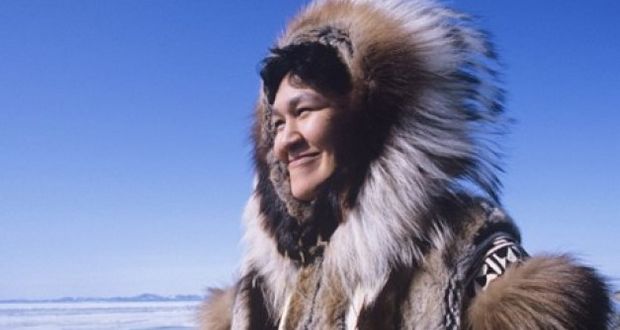
In 1974, researchers compared 37 Inuit men with 21 white men and found that the Inuit participants had more active sweat glands on exposed facial areas, including the nose and cheeks. Their trunks and limbs, which Arctic clothing normally covered, showed much less sweat-gland activity. The researchers suggested that this Arctic adaptation could allow the exposed face to release heat during exertion while heavy clothing covered the rest of the body.
47. The Inventio Fortunata was a lost book, probably written in the 14th century, that described the Arctic North Pole as a magnetic island surrounded by a giant whirlpool and four continents. The book had disappeared by the 1490s, leaving cartographers to rely on a summary by a Brabantian traveler named Jacobus Cnoyen. Flemish cartographer Gerardus Mercator used that account for his 1569 world map. Cartographers continued to copy its imaginary Arctic geography into the 17th century.
48. Before explorer John Ross reached them in 1818, the Inughuit of Arctic Greenland had lived in such deep isolation that they were reportedly unaware other people existed, including other Inuit groups. Colder conditions had cut them off around the 17th century, and they gradually lost the knowledge needed to build kayaks and umiaks. In the mid-19th century, visiting Baffin Inuit reintroduced boats, leisters, and bows and arrows, while the Inughuit taught them a more advanced form of sled technology.
49. Some Arctic Inuit and Aleut communities historically formed structured partnerships that sometimes included exchanging wives. These relationships could strengthen friendships and create obligations for mutual support between unrelated men and their families.
50. For centuries, the Inughuit of Arctic Greenland made iron blades from the Cape York meteorite without smelting ore. They broke pieces from its massive iron fragments and cold-forged them into cutting edges by hammering them with heavy stones. Communities settled near the meteorite and used its metal for generations to make knives, harpoons, and other tools, while trade carried pieces of the iron across the Eastern Arctic.


