


1Ford Pinto Recall
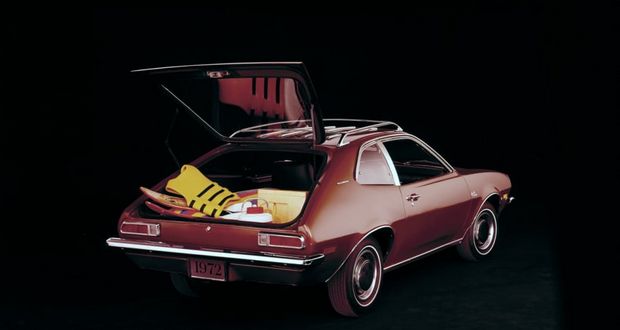
In the 1970s, the Ford Pinto was found to have a fatal design flaw where its rear-mounted gas tank could explode in low-speed rear-end collisions due to inadequate shielding. Internal Ford memos revealed the company calculated it would be cheaper to settle lawsuits than redesign the car, but after public outcry and media exposure, they issued a recall of 1.5 million vehicles in 1978, one of the largest automotive recalls in U.S. history.
2. In 2013, IKEA recalled its iconic Swedish meatballs from stores across Europe, including the Czech Republic, Sweden, the UK, and others, after tests revealed traces of horse meat in the beef-pork blend. Although not a health risk, the scandal erupted during a wider European horse meat controversy, leading to public backlash and widespread mockery online. IKEA initially denied the claims but eventually halted sales and increased meat traceability standards across its supply chain.
3. In 2019, Fisher-Price recalled 4.7 million Rock 'n Play Sleepers after the product was linked to over 100 infant deaths, many caused by suffocation when babies rolled over unrestrained. Despite years of warnings from pediatric experts and consumer advocacy groups, the recall only came after mounting pressure from the Consumer Product Safety Commission (CPSC) and public outrage. The delayed response led to lawsuits, congressional investigations, and long-term reputational damage for both Fisher-Price and parent company Mattel.
4. In 2006, Bausch & Lomb recalled 2.3 million bottles of ReNu with MoistureLoc after it was linked to an outbreak of Fusarium keratitis, a rare fungal eye infection that can cause blindness. Over 100 cases were reported in the U.S., with additional infections in Asia and Europe, prompting countries like Singapore to suspend sales before the company issued a global recall. Under pressure from the CDC and FDA, the company completely withdrew the product, incurring losses estimated at $100 million and causing significant harm to its reputation.
5. In 2004, the adult trivia game The Guy Game, developed by Topheavy Studios and published by Gathering, was released for PlayStation 2, Xbox, and Windows, featuring Spring Break footage where one of the topless participants was later revealed to be only 17. A court injunction swiftly removed the game from shelves, halted sales, and resulted in no rerelease due to the scandal and legal fallout.
Latest FactRepublic Video:
15 Most Controversial & Costly Blunders in History
6James Bond Laserdiscs Withdrawn

In 1991, the Criterion Collection released the 007 movie Dr. No on laserdisc with a special commentary track featuring director Terence Young, screenwriter Richard Maibaum, and others, but it was quickly recalled at the request of EON Productions due to offensive, sexist, and potentially defamatory remarks and sensitive production details. While most unsold copies were destroyed and reissued without extras, surviving originals are now rare collectibles.
7. When dangerous side effects are reported in pharmaceuticals, companies sometimes conduct a "phantom recall" by quietly hiring third parties to remove tainted products from stores before the FDA can mandate an official, public recall that might damage their reputation. This tactic was used by Johnson & Johnson in 2009 for defective Motrin IB and by Purdue Pharma, which downplayed early OxyContin abuse reports to avoid regulatory backlash.
8. In August 1999, DC Comics released the anthology Elseworlds 80 Page Giant, which included the story "Letitia Lerner, Superman's Babysitter" by Kyle Baker and Liz Glass, featuring a sequence where baby Clark Kent climbs into a microwave. DC President Paul Levitz deemed the scene inappropriate and ordered nearly the entire North American print run pulped; only 700-2,000 copies escaped destruction, making surviving issues exceedingly rare and highly valuable to collectors.
9. In the 1890s, master counterfeiter William Brockway operated out of New York and Chicago, producing $50 notes and $1,000 bonds so convincing that they triggered Treasury alarms over duplicate serial numbers. His operation was eventually busted, with $600,000 in counterfeit notes seized, and although there's no official record of a recall, some sources claim the government quietly pulled the affected notes.
10. In 2009, Samsung recalled over 210,000 refrigerators after reports of explosions caused by faulty defrost heaters, with incidents in South Korea and the UK causing major property damage. While no fatalities occurred, the company faced backlash and launched a free home repair program to fix affected units.
11Glico's Cyanide Crisis

In 1984, Glico-maker of the popular Japanese snack Pocky-faced threats from a mysterious group calling themselves the "Monster with 21 Faces," who claimed to have laced Glico products with potassium cyanide, prompting a full retrieval of inventory and costly removal of approximately $21 million worth of candy. Although no confirmed poisoning occurred, the scare led to a $130 million drop in sales, massive layoffs, a nationwide product boycott, and mobilization of over 40,000 police officers, yet the offenders were never caught.
12. In November 2008, DC Comics recalled Action Comics #869, the penultimate issue of the Brainiac storyline, because its original cover depicted Superman and his father drinking from bottles whose unlabeled contents were widely interpreted as beer. Retailers were instructed to destroy the initial print run, and a corrected version was reprinted with the label changed to read "Soda." Only a small number-estimated around 100 or fewer-of the original covers survived, making them scarce collectibles that currently sell for about $110-$150 each depending on condition.
13. Fireball Cinnamon Whisky has different formulas for Europe and North America because Norway, Finland, and Sweden recalled it in 2014 due to propylene glycol levels, an ingredient found in antifreeze. Nonetheless, the FDA maintained that the levels of propylene glycol were safe.
14. In 1997, Nike recalled 38,000 pairs of its "Air" line sneakers-sold in predominantly Muslim markets-after the stylized flame-like "Air" logo was found to resemble the Arabic script for Allah, sparking offense and pressure from CAIR. Nike issued an apology, discontinued the design, redirected remaining stock away from sensitive regions, donated $50,000 to an Islamic elementary school, and avoided a threatened global boycott through this swift action.
15. In December 1989, Toyota issued a voluntary recall of all 8,000 Lexus LS 400 sedans sold after two drivers reported minor issues-specifically glitchy cruise control, a warped third brake light, and a poor battery connection that could lead to failure. Lexus moved with extraordinary urgency to collect each car within 20 days, dispatching dealers to pick them up, provide loaner vehicles, and return them washed, detailed, full of gas, fully repaired, and with a gift.
16Rare Honus Wagner Card

In 1909-1911, the American Tobacco Company produced the T206 Honus Wagner baseball card as part of its promotional cigarette-pack series, but production was halted early when Wagner objected-reportedly because he didn't want children buying cigarettes to collect it-or possibly due to compensation disputes. Today, only 50 to 60 authentic copies are known to exist, making it exceedingly rare and highly valuable-with cards fetching anywhere from $1 million to over $7 million at auction.
17. In 2000, Galoob Toys Inc. recalled about 8.9 million Sky Dancers flying dolls after receiving reports of injuries caused by the dolls striking adults and children. Injuries included scratched corneas, broken teeth, mild concussions, broken ribs, and facial lacerations requiring stitches.
18. In 1999, Belgium experienced an outbreak of mass hysteria, with hundreds reporting cramping, nausea, and headaches allegedly from drinking Coca-Cola products. Coca-Cola recalled 30 million products, claiming to have identified the epidemic's cause. However, toxicology experts found no evidence of contamination.
19. In 1994, Intel’s original Pentium P5 (60/66 MHz) and P54C (75–100 MHz) CPUs contained a hardware FDIV bug—a design flaw in the floating point unit’s lookup table—that led to incorrect results when dividing certain large numbers (e.g., 4,195,835 ÷ 3,145,727). The error triggered a full recall with roughly 1 million chips replaced under public pressure—ultimately costing Intel $475 million in replacement and write off expenses.
20. In March 2007, Menu Foods and other pet food makers voluntarily recalled over 60 million cans and pouches after contaminated wheat gluten and rice protein imported from China-tainted with melamine and cyanuric acid-caused acute kidney failure, reportedly killing up to 8,500 pets across North America. The contaminated ingredient was intentionally added to boost apparent protein content during testing, triggering extensive recalls, congressional action, and billions in financial losses for affected companies like Menu Foods, though few regulatory protections emerged before later legislation.
21McDonald's Radioactive Shrek Glasses

In 2010, McDonald's recalled 12 million Shrek-themed glasses made by Arc International after tests found the paint contained dangerous levels of cadmium, a toxic metal. The cadmium posed long-term health risks, and McDonald's offered a $3 refund per glass despite no reported injuries.
22. In 1998, Bungie recalled 200,000 copies of their strategy game "Myth II: Soulblighter" after discovering a serious uninstaller bug that could wipe a user's entire hard drive if the game was installed outside the default directory. Though no mass damage was reported, Bungie recalled shipped units before store release, fixed the issue, and offered replacement discs and a free copy of another game to affected customers.
23. In 1996, The Lane Company issued a voluntary recall for 12 million "Lane" and "Virginia Maid" cedar chests whose automatic-latch lids posed a suffocation risk to children. These chests, manufactured between 1912 and 1987, trapped children inside when the lid latched shut upon closing. Tragically, 14 children suffocated between 1977 and 2015. The CPSC fined Lane $900,000 in 2001 for delaying reporting of the hazard, and the company supplied free replacement latches-though millions of recalled units reportedly remain in homes.
24. In 1915, Ford issued the first automotive recall after drivers of the Model T suffered bites from chiggers nesting in Spanish moss used as seat stuffing. Though the number of affected cars and financial loss is unknown, the issue prompted Ford to replace the moss and restuff the seats, though some now view the incident as part legend.
25. In 1944, the Homer Laughlin China Company halted production of its Fiesta red dinnerware after the U.S. government requisitioned the uranium oxide used in its glaze for the Manhattan Project. The plates, which were mildly radioactive, returned in 1959 using depleted uranium, and the company faced little public backlash for use of uranium.
