


The human body never ceases to amaze—and confuse. From quirky biological phenomena to cutting-edge medical findings, this eighth installment in our series continues to reveal strange, surprising, and scientifically fascinating truths about the flesh, bones, and brains that make us who we are. Whether it’s teenagers injecting mercury to become superheroes, or the shocking effect of simply wearing a necktie, every entry in this list adds a new layer to our understanding of ourselves. If you’re ready for another deep dive into the weird and wonderful mechanics of the human machine, let’s get started.
Missed the earlier editions? Catch up with Part 1, Part 2, Part 3, Part 4, Part 5, Part 6, and Part 7.
1 Human Sleep Cycle Discovery

In 1962, geologist Michel Siffre discovered that the human body can naturally settle into a sleep-wake cycle of up to 50 hours when deprived of a day/night cycle. He entered a dark cave intending to stay for two months, assuming one sleep equaled one day. However, he miscalculated by two weeks.
2. Human cells make up only 43% of the body’s total cell count. Despite diligent washing, microscopic creatures inhabit nearly every part of the body, with the highest concentration in the oxygen-deprived depths of our bowels.
3. The more frequently you hear a lie, the more likely you are to believe it, due to the illusory truth effect. Researchers identified this phenomenon in a 1977 study, demonstrating that repeated exposure to information makes it seem more credible to the brain.
4. The average volume of blood during an erection is approximately equal to or greater than the volume of blood in the brain.
5. Women’s brains appear about three years younger than men’s of the same age in terms of metabolism.
6 Brain Death Controversy
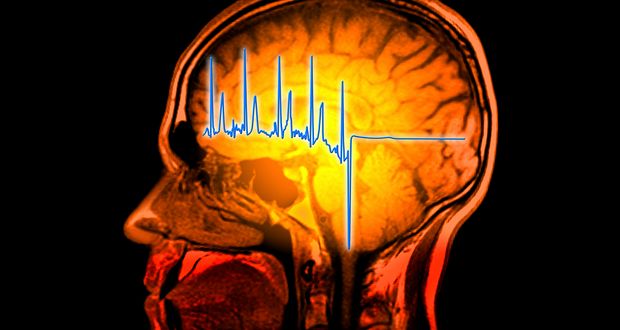
The concept of “brain death” remains controversial and not universally accepted. While most of the medical community defines it as the irreversible cessation of all brain activity, some argue it is more of a social and legal construct than a definitive biological state.
7. Your brain constantly predicts the future. Before you become aware of your surroundings, it has already guessed what might happen next. Often, reality reflects your brain’s “best guess.”
8. Taxi drivers are less likely to die from Alzheimer’s disease. Memorizing routes is believed to have beneficial effects on the hippocampus, a brain structure involved in learning and memory, which typically degenerates in Alzheimer’s patients.
9. The grogginess you feel upon waking is due to ‘sleep inertia,’ caused by the gradual return of blood flow. Initially, blood reaches the ‘primitive brain centers’ first and takes 15 minutes or longer to flow to the deeper thinking areas.
10. The “cocktail party effect” describes our brain’s ability to focus on one conversation in a noisy room. This skill allows us to tune into specific voices while filtering out background chatter and even recognize important words like our name, even when not paying attention.
11 Brain Waves Cleanse During Sleep

During sleep, brain waves help flush waste out of the brain. Individual nerve cells coordinate to produce rhythmic waves that propel fluid through dense brain tissue, effectively washing it in the process.
12. A study involving 75,000 adults compared participants’ preferred sleep timing, known as chronotype, with their actual sleep behavior. Regardless of one’s preferred bedtime, everyone benefited from turning in early. Staying up late, suggested as a 1 a.m. bedtime, negatively impacts mental health.
13. Some people still attempt to mouth-breathe while sleeping-even with their mouths taped shut. This leads to a strange behavior known as mouth puffing, where air tries to force its way through puffed cheeks.
14. After a heart attack, the body increases sleep time to limit heart inflammation and damage.
15. Studies indicate that sleep regularity, i.e., going to bed and waking up at the same time each day, is a stronger predictor of mortality risk than total sleep duration. Disrupted sleep patterns may increase the risk of heart disease, metabolic issues, and even early death, regardless of how many hours you sleep.
16 Pathological Demand Avoidance Disorder

Pathological Demand Avoidance (PDA) is a disorder characterized by extreme, uncontrollable anxiety when faced with perceived demands. Those with PDA may avoid not only others’ demands but also their own simple demands, such as hunger or sleep.
17. The best time to take a nap is 7-8 hours after waking up, typically in the early to mid-afternoon, depending on your wake-up time. A nap should last 20-45 minutes to avoid sleep onset issues. For longer naps to catch up on sleep debt, it’s better to nap earlier.
18. Hallucinogen Persisting Perception Disorder (HPPD) is a non-psychotic disorder where individuals experience lasting visual hallucinations or perceptual distortions after using drugs, including psychedelics and dissociatives.
19. Hypersexuality is a presumed mental disorder that causes unwanted or excessive sexual arousal, leading individuals to engage in or think about sexual activity to the point of distress or impairment.
20. Researchers found that removing eyebrows from pictures of familiar faces significantly reduces the chances of recognition, even more than removing the eyes themselves.
15 Most Controversial & Costly Blunders in History
21 Green Eyes: A Rare Phenomenon

Green is the rarest eye color globally, present in only about 2% of the population. In contrast, brown eyes are the most prevalent, with approximately 79% of people worldwide possessing them. Genetic research indicates that all humans originally had brown eyes. A mutation affecting the OCA2 gene, occurring between 6,000 and 10,000 years ago, led to the emergence of blue eyes.
22. Two healthy teenagers in New Delhi, India, injected elemental mercury in 2014, hoping to transform their bones into metal after watching X-Men Origins: Wolverine. Fortunately, they experienced no serious repercussions, aside from a lengthy recovery and surgical removal of mercury deposits.
23. Most Japanese people have only one pinky toe knuckle instead of two, resulting in 204 bones instead of the usual 206. This unique trait went unnoticed until 1995.
24. Astronauts in space lose up to 1.5% of their bone mineral density each month. Although they recover most of it back on Earth, those with permanent loss do not experience more fractures than normal.
25. During WWII, pilots often blacked out during turns due to strong G-forces causing blood pooling in their legs. However, British ace Douglas Bader did not face this issue because he had lost his legs in an accident.


RE: Fact #18 (Persistent Hallucinations After Drug Use) – HPPD’s actually pretty mild compared to what people usually think. The Wikipedia picture’s pretty accurate, though you often get more blurry shapes. People who mess around with LSD or shrooms might see it for a bit after tripping. It’s not really a problem unless you’re trying to see in the dark.
RE: Fact #50 (Dunbar’s Number: Social Limits) – A lot of people say only three, but you probably know way more than that. Think about everyone you see regularly—neighbors, your mail carrier, that gas station attendant, your hairdresser—plus your family and teachers (if you’re still in school). That adds up to way more than three pretty quickly.
That “specific number” thing? Turns out it’s wrong.
Scientists also questioned Dunbar’s number because primate brains aren’t all wired the same way – things like diet and predators are more important to their social lives than brain size. Plus, people’s social circles vary wildly anyway.
Later research shows there’s no real cap on how many friends you can have.
A new study used better data and found brain size doesn’t limit how many connections we can have. Dunbar’s number has been under fire for ages, and one research team found you can’t put a precise number on how many friends someone can have.
There’s a limit, though. Even if the range is huge, Dunbar’s still right – we only have so much time for relationships. He’s focusing more on the time constraint lately, rather than mental limits.
RE: Fact #48 (Microplastics Found in Human Testes) – I’ll be releasing out Lego sets really soon.
Nah, that’s not me. I just spit out dust bunnies and moths.
RE: Fact #1 (Human Sleep Cycle Discovery) – Vsauce did a similar sleep experiment once. Michael lost his sense of time completely and started freaking out a little.
My sophomore year, I got a windowless room – loved it at first, slept like a log. But then I totally lost track of time. One time, I slept in so late I missed a class – I’d forgotten my alarm and slept for over twelve hours! I usually only slept about seven and a half hours back then.
He’s been nuts ever since.
He’s always been a little nuts! See his first Mario video on YouTube — it’s hilarious.
Totally nuts.
RE: Fact #17 (Optimal Nap Timing and Duration) – Years ago, I saw someone’s online signature that said they now loved afternoon naps and spankings, even though they hated them as a kid.
RE: Fact #32 (Horror Movies Raise Blood Protein) – Makes sense. Fear gets your body ready for trouble, like it’s expecting to get hurt.
High-stress jobs really mess with your heart and can lead to heart attacks and strokes.
Wow, I hadn’t thought of that! That’s a cool thing to look into if it’s real.
RE: Fact #27 (Deadly “Death Crystals” in Blood Cells) – It’s not the crystals themselves that are the problem, it’s something else that’s doing the killing, and the crystals are just there.
They reckon it might be liver stuff breaking down, with those phagocytes gobbling it up.
That’s what we call a biomarker.
RE: Fact #49 (Moravec’s Paradox: Human vs. Computer) – It’s like we built machines to fix our weaknesses, not our strengths.
RE: Fact #43 (West African “Ghost” DNA Mystery) – That’s wild! If those ancient creatures lived somewhere that doesn’t keep fossils well, finding any remains would be tough.
We basically only have a shoebox-full of bone bits to understand the first few million years of human evolution.
Think about how quickly huge areas of land, like the green Sahara and Doggerland, disappeared. It’s very possible whole species of humans are buried somewhere we’ll probably never find.
Maybe they were just mislabeled in the scientific database. Scientists can’t really check for something unless they know to look for it, right?
So, “ghost lineage” just means we haven’t found DNA to match the fossils yet, not that the fossils themselves aren’t out there. Ancient DNA is super rare, so lots of hominin species are known only from fossils – no DNA link yet.
Denisovans are a similar puzzle; we don’t have a key fossil to definitively identify them. That’s why they don’t have an official scientific name. People have suggested names, but nothing’s settled yet.
RE: Fact #8 (Taxi Drivers and Alzheimer’s Resistance) – My mom had dementia, and her mom did too, so I get a little freaked out about getting it myself. Sometimes I just skip using those GPS apps if I have a general idea where I’m going.
Word puzzles, memory games, and chess—that kind of thing—help people with early dementia. It makes sense that other things might help too.
Some new drugs, like Semaglutide and HMTM, look pretty promising for dementia. I’ve got a family history of it, so I really hope they find a cure someday.
RE: Fact #41 (Vitamin D and Sun Exposure Connection) – Turns out, I’m not a lizard, just low on vitamin D.
RE: Fact #19 (Hypersexuality Causes Distress and Impairment) – Basically, hypersexuality means you’re so focused on sex, you can’t think about anything else. Nymphomania’s closely tied to that. It’s not just being a teenager or acting wild; it’s a serious problem that can mess up your life.
RE: Fact #10 (Cocktail Party Effect in Noisy Rooms) – So what do you call it when this is messed up? A bunch of us are having this problem.
I have APD, it’s rough. Too many people talking at once? Forget about it – I can’t concentrate on anything.
Hey, so I don’t have a hearing problem, really, but sometimes if there’s a lot of noise, it all just blends together. It’s not that I *can’t* hear, I totally can, I just can’t tell what’s what.
RE: Fact #28 (Iron Deficiency in Blood Donors) – I was young and clueless – figured I was doing my bit for the world and gave blood every three months, like the Red Cross says to. Passed out after the eighth time. Turns out my iron was super low. Now I can only donate once a year.
RE: Fact #23 (Unique Pinky Toe Trait in Japan) – People were way more interested in the Japaknees than the Japatoes.
That comment was seriously awful.
RE: Fact #31 (Bell Clapper Deformity Risks) – My buddy got a serious kick in the nuts from a girl back in middle school—for nothing! He was too embarrassed to tell his mom, but when he was at my place playing PlayStation, he was doubled over in pain, throwing up. We had to call his mom. Turns out, he had a twisted testicle and waited too long, so they had to take one out.
Your testicle’s got a little tether to the scrotum, keeping it from twisting. Some guys are missing that tether and get testicular torsion – it’s actually pretty common. It’s a quick fix if you catch it early; just a small surgery to untwist and anchor it. See a doctor.
RE: Fact #5 (Women’s Brains Metabolically Younger) – Testosterone is a powerful thing.
Testosterone’s a powerful stuff we’re all born with, and I’m done pretending it’s not.
It blows my mind how many people don’t get that men are naturally stronger and more aggressive than women – it’s just biology. We’re basically on steroids all the time from puberty onwards.
RE: Fact #48 (Microplastics Found in Human Testes) – Imagine: 100,000 years in the future, someone unearths old bones and…perfectly preserved plastic testicles.
Plasticles, right?
He’s my go-to Greek philosopher.
RE: Fact #44 (Menopause in Humans and Chimps) – I figured they’d cracked this one. Menopause only happens naturally in animals that help raise their grandkids. Otherwise, animals just keep having babies their whole lives.
RE: Fact #9 (Sleep Inertia and Morning Grogginess) – I’m totally awake the second my eyes open. My brain just picks up right where it left off before bed.
RE: Fact #2 (Human Cells vs. Microbial Life) – I just do what they say.
Seriously, your gut bacteria affect your food cravings and other stuff.
Those guys are piloting a huge meat robot.
It makes you wonder how aware we really are. There’s a noticeable delay between stimulus and our reaction.
Our awareness is in that ‘ping’.
My inner demons are battling – one wants Starbucks, the other wants me back in bed. Who wins?
RE: Fact #2 (Human Cells vs. Microbial Life) – We’re basically meat sacks with a hole on each end, protecting our insides and living off what’s left over.
Meat donuts? Sold.
RE: Fact #39 (Skin’s Natural pH Protection) – Every time you wash your hands, that soap – a really strong, alkaline kind – gets rid of it all.
RE: Fact #36 (Ginger Root in Corporal Punishment) – It used to be a punishment, but now it’s a BDSM thing.
RE: Fact #3 (Illusory Truth Effect Explained) – That’s how they get you to buy stuff/believe things.
RE: Fact #22 (Teenagers’ Risky Mercury Experiment) – People who are really down sometimes do this as a suicide attempt. Athletes also sometimes do it to get better. That second part needs more info, though.
The guy watched X-Men and wanted to be like Quicksilver. He also used to get bitten by spiders so he could be like Spiderman. Weirdly, he was otherwise totally fine, mentally and IQ-wise.
He was pretty normal except for this whole thing.
RE: Fact #30 (Neck Ties and Reduced Brain Blood Flow) – The victims of the South Side Necktie Strangler—that infamous serial killer who only strangled people with their own ties—weren’t publicly identified.
RE: Fact #42 (Freedivers Exploit Negative Buoyancy) – Free divers gotta work pretty hard to get back to the surface after they dive down.
The fact’s a bit off. Actually, someone showed that you hit negative buoyancy around 20 meters underwater; they were neutral at 15 meters.
RE: Fact #11 (Brain Waves Cleanse During Sleep) – How can I make this smoother?
You can’t, and wouldn’t want to, mess with this. The saltiness is just right.
Too much flow is a problem. Too little flow is a problem. Same with the fluid – too much or too little is bad news.
Fun fact: Archimedes figured this fluid thing out ages ago!
Try sleeping on your left side.
RE: Fact #16 (Pathological Demand Avoidance Disorder) – So, I get this thing. If I get an IRS letter saying “fill out this form now or pay $5000!”, I totally procrastinate. Even if it’s right there, pen, envelope, stamp – the whole shebang – and takes only 30 seconds, I’ll completely avoid it. Then, on the very last day, something kicks in, and I do it, grumbling the whole time.
I could just do it quickly, or let it bug me for a week. My brain picks the second option.
RE: Fact #24 (Space Travel and Bone Density Loss) – Adult broken bones aren’t that common, so I doubt it matters much statistically.
RE: Fact #25 (WWII Pilot’s Unique Advantage) – Funny side note: The Star Fox pilots all lost their legs, that’s why.
RE: Fact #44 (Menopause in Humans and Chimps) – We’re social animals, and raising kids takes a ton of time and energy. It’s handy to have some older folks around to lend a hand.
RE: Fact #7 (Brain’s Future Predictions) – Our brains are basically like super-powered autocomplete.
RE: Fact #35 (Sunlight and Vitamin D Production) – Totally makes sense. People in sunny places get tanner to protect themselves, while those in less sunny places get less tan to soak up what little sun there is.
Dark skin wasn’t about getting more pigment, it was about survival in sunny places. Without it, you’d get fried and die. People with darker skin lived longer, had kids, and passed on those dark-skin genes. Evolution—brutal, but awesome.
It’s pretty interesting how these factrepublic discussions just assume pale skin came first, and darker skin evolved later. I figure darker skin evolved earlier, before modern humans even showed up, since it seems like a natural adaptation after we lost our fur. My guess is that lighter skin popped up later in places where people didn’t get enough vitamin D from their food. In those areas with less sun, lighter skin helped them make vitamin D faster, giving them an edge.
Most people, except those from the Arctic, have darker skin. Arctic people get tons of vitamin D from eating seal and whale meat. If you don’t eat that, you’ll need supplements, just like everyone else.
Snow reflects so much UV light, you’d be surprised how much sun exposure you actually get. Even with the lower, weaker winter sun, it’s easy to get sunburned or hurt your eyes. Lots of UV rays bounce around.
RE: Fact #6 (Brain Death Controversy) – Denialists are a weird bunch, but this is a real debate. You mostly hear about them when a kid’s case goes badly, the parents freak out and take the body home. They get stuck in denial, and eventually, sadly, the kid dies of cardiac arrest. It can take years, though.
My son, just fifteen, shot himself. I was there when they checked if he was brain dead. Looking into his empty eyes, I couldn’t bear the thought of him being trapped like that. We took him off life support. I had to do the same thing when my mom had an aneurysm. I’ve seen my mom and my son die. I wouldn’t tell any parent what to do, but I never want to be, or have anyone I love be, just a body slowly dying.
Good call, but sorry you had to do it again.
Hey, I’d never tell another parent how to parent, but seriously, you did good. You did what was best for your son, even if it was super tough. I’m really, really sorry.
Man, I’m so sorry about your son. That’s just awful. I can’t imagine.
RE: Fact #44 (Menopause in Humans and Chimps) – I don’t care what causes it. Honestly, I wish evolution had given me a tail.
RE: Fact #11 (Brain Waves Cleanse During Sleep) – So, what exactly *is* a brainwave made of? Muscle? Fluid? Brain stuff?
RE: Fact #20 (Eyebrows Crucial for Face Recognition) – That reminds me of something Frank Zappa said: computers can give you all the numbers, but they miss the human side of things – the feeling, you know?
RE: Fact #27 (Deadly “Death Crystals” in Blood Cells) – Wow, I’ve been a medical lab scientist for 17 years, looked at tons of blood smears, and I’ve *never* seen anything like this. They’re not even in my hematology book.
I saw them once, like three years into my job. I didn’t find them, but everyone in the lab checked them out.
RE: Fact #43 (West African “Ghost” DNA Mystery) – It’d be awesome to have a Carl Sagan type, but for biology, explaining all this stuff. Maybe NOVA will do a show on it.
RE: Fact #12 (Early Sleep Boosts Mental Health) – Early birds and night owls who stay up late seem to have more mental and behavioral problems. Professor Jamie Zeitzer, who led the study, says it’s not about matching your natural sleep cycle, but staying up late that’s the issue. He admits they don’t know exactly why.
RE: Fact #21 (Green Eyes: A Rare Phenomenon) – Lots of folks seem to think hazel and green eyes are the same thing, but they’re not! Pure green eyes are pretty uncommon, but hazel eyes aren’t exactly common either.
I’m curious, how uncommon are grey eyes?
Grey eyes are basically blue, so people usually group them together.
RE: Fact #37 (Michelin Tire Baby Syndrome Explained) – My daughter was a big baby – really high up there for weight and height. The health visitor kept saying she was fat! Her dad’s 6’5″ and I’m 5’8″, so it’s no surprise she’s nearly 6 feet tall at 14 and definitely not fat now. She was adorable as a chubby little thing, though!
RE: Fact #8 (Taxi Drivers and Alzheimer’s Resistance) – Yeah, I read a study a while back saying it’s good to mix up your walking routes as you get older—helps keep dementia at bay.
It’s kinda like a brain workout! Instead of falling into a rut, you’re actively thinking and finding new ways to do things. I’ll give it a shot.
Diving into factrepublic and YouTube or Wikipedia might seem pointless, but it can actually turn up surprising stuff. For example, I learned taxi drivers are less likely to get Alzheimer’s! That led me down a rabbit hole about dementia, then brain videos on YouTube…and suddenly, I knew more about neurons. It’s all a bit hit-or-miss on the internet, but hey, it’s still learning something new.
RE: Fact #43 (West African “Ghost” DNA Mystery) – Sounds like some Victorian-era nonsense. “Your DNA’s haunted, go snort some coke.”
Or, you could try some tobacco smoke… you know where. It’ll get rid of the ghosts.
RE: Fact #49 (Moravec’s Paradox: Human vs. Computer) – Wow, I never knew this had a name! I’ve been saying that same thing to clients and stakeholders for ages – “if it’s easy for a human, it’s hard for a computer, and vice versa.” I really need them to get this. It’s called Moravec’s Paradox.
I really love figuring out what parts of my job are best for computers and which parts are better for people. It’s super satisfying to automate the boring stuff!
Computers are surprisingly great at sorting things, oddly enough.
RE: Fact #45 (Human Height Changes Over Millennia) – I’m not short, I’m just a little behind the times.
RE: Fact #19 (Hypersexuality Causes Distress and Impairment) – Wow, so much wrong info floating around! That Wikipedia page isn’t helping either. Hypersexuality is usually a symptom, not a diagnosis itself. It often shows up with things like hypomania and bipolar disorder.
Think of it like this: a high sex drive is one thing, but hypersexuality is a whole different ballgame. We’re talking about people acting out inappropriately – think couch-humping in the common room level inappropriate. It’s not just “really liking sex,” it’s seriously disruptive and problematic. Especially on the psych wards, we had to practically dodge some patients who were constantly making unwanted advances.
RE: Fact #8 (Taxi Drivers and Alzheimer’s Resistance) – When did taxi drivers last need to learn the streets? I’ve been in cars lately where the driver barely knew what city they were in, just blindly following their Bolt or Uber app, even if it’s a terrible route.
London black cab drivers have to ace this crazy test called “The Knowledge” to get their license. It’s thousands of streets and landmarks within a six-mile blast radius of Charing Cross – they have to know them all! It usually takes three or four years to learn it all; it’s tough, but there’s tons of help out there if you’re up for it.
RE: Fact #13 (Mouth Puffing Persists Despite Tape) – I’d totally suffocate if you taped my mouth shut all night.
RE: Fact #47 (Phosphorus in Human Urine) – All living things use ATP, a compound that moves energy around inside their cells. ATP stands for adenosine triphosphate – “tri” means three, and P is for phosphate. So, even though you don’t need tons of phosphorus, every living thing does, which is why it’s in fertilizer.
RE: Fact #36 (Ginger Root in Corporal Punishment) – Wow, talk about a payoff from Grandpa’s old stash!
RE: Fact #29 (Type “O” Blood in Indigenous Populations) – My favorite blood fact? Type O blood was supposed to be type 0 – zero A antigens, zero B antigens! They just messed up the letter, it’s a total typo.
RE: Fact #42 (Freedivers Exploit Negative Buoyancy) – That’s seriously scary.
RE: Fact #21 (Green Eyes: A Rare Phenomenon) – Man, I was so close to being in the top 1%, but now it’s 2%! Bummer.
RE: Fact #32 (Horror Movies Raise Blood Protein) – Lots of figures of speech are more straightforward than we realize.
RE: Fact #46 (Solar Core vs. Human Metabolism) – I still can’t wrap my head around the sun burning through 600 million tons of hydrogen every second – for billions of years already, and billions more to go!
RE: Fact #42 (Freedivers Exploit Negative Buoyancy) – The cool thing about freediving is that it’s totally optional.
I lost all interest in caving after hearing about Nutty Putty Cave. It’s not that it’s a terrible way to go – I’ve done plenty of things that could kill me. It’s just… this guy’s whole life, everything he ever felt and did, from his first crush to his last breath, is reduced to “the Nutty Putty Cave incident.”
So many extreme sports have ridiculously silly names. Imagine dying at 26 in the most awful way possible, and the only thing people remember is “Oh, that’s the guy who died on the Baby Bunny Boopers bike trail?”
Seriously? No way. I’d rather be totally boring than have *that* be my epitaph.
RE: Fact #18 (Persistent Hallucinations After Drug Use) – Yeah, I’ve got it. It’s usually easy to ignore, but when I try things like stargazing, it’s a real pain because the night sky looks all glitchy and kinda pulsates.
So, the lesson here is: don’t overdo the psychedelics.
I’ve had this since way before I ever touched drugs. I figured it was normal until I was seventeen and my mom was totally baffled when I said I have trouble seeing individual stars because of all the static. It’s called visual snow, and apparently it might be linked to migraines. Seriously, you never had anything like that before drugs?
RE: Fact #37 (Michelin Tire Baby Syndrome Explained) – It’s not usually a problem on its own, though it can show up with other things.
If it’s just the skin creases, and nothing else, parents can rest easy—it’s harmless and will go away.
RE: Fact #36 (Ginger Root in Corporal Punishment) – A royal caning worker got a bonus ages ago for that clever idea.
Meanwhile, the royal canning guy who’d had the same idea a couple weeks before got sent home early.
The royal caning department’s always been super political. It’s all about connections and image, not skill or effort.
RE: Fact #45 (Human Height Changes Over Millennia) – Short Ages.
I’m only five feet tall, and he said he only dates women over five-five. Bummer.
RE: Fact #1 (Human Sleep Cycle Discovery) – The wiki doesn’t even begin to describe Siffre’s super long solo trip: For the first five weeks, he was on a weird 26-hour day/night cycle. Then, around day 37 (which he thought was day 30!), things got really strange. He had one super long day, then slept for ages. After that, his days were all over the place, from 26 hours to 40 or 50! By day 77, he couldn’t even string beads, and his thoughts were a mess. Two days later, he was so done he called to get out, but he hadn’t even hit the halfway point yet. He even thought about killing himself, but decided against it because of his parents. Finally, on day 160, he saw a mouse and wanted it as a friend, so he tried to catch it…and accidentally killed it. He wrote that he was completely overwhelmed.
RE: Fact #45 (Human Height Changes Over Millennia) – That’s a cool fact! I bet the high-protein diet really helped them grow so tall. Thanks for sharing!
Have you seen the picture floating around on the internet of the US and El Salvador women’s basketball teams. Wow, the US players are *way* taller—six to twelve inches taller! My first thought was that the US team probably eats a really high-protein diet, while the El Salvador team might not get enough good nutrition, which could affect their growth. I wonder if that’s really the reason, or if that article backs this up.
It would, but the US has a bigger pool of tall people to choose from.
RE: Fact #30 (Neck Ties and Reduced Brain Blood Flow) – I was seeing this girl, and her little brother, maybe twelve, had to go to this fancy family thing with us all dressed up. He got this dress shirt, way too big – like, a seventeen-inch collar, which gaped open like a V-neck.
We were razzing him about it, and he’s all, “Yeah, but I’m super comfy. How’s that tie feel?”
The little guy had a point.
Man, before the workplace rules changed, we had to wear ties. I used to joke every morning, “Ah, the noose goes back on!” They dropped that rule after Covid hit.
RE: Fact #48 (Microplastics Found in Human Testes) – Scientists think this discovery might be connected to fewer sperm in men.
The human testes were saved, so we couldn’t check their sperm count. But we could check the dog testes, and those with more plastic had lower sperm counts. It shows a link, but more research is needed to prove microplastics are the cause.
A smaller study in China last year also found microplastics in some human testes and semen samples. Recent mouse studies showed microplastics lowered sperm counts, messed with their sperm, and messed with their hormones.
Wow, we’re gonna sterilize ourselves… Pretty poetic, huh?
Our fake money matters way more than us surviving, right? Those shareholders, with their measly 70 or 80 years, are more important than the whole future of humanity. Ugh.
RE: Fact #14 (Heart Attacks Increase Sleep Time) – I’ve been getting heart palpitations and stressed out a lot lately—for years, actually. I sleep like a rock, though. Makes me wonder if they’re connected.
Hey, you should really see a cardiologist. I was always stressed, especially from work, and had a heart attack in 2005—totally out of the blue, after a light workout. Got a stent, all good now, but I had high cholesterol and type 2 diabetes. My cardiologist said the cholesterol was the main problem.
Almost 20 years later, I still take meds and see my heart doctor yearly, my regular doctor twice a year. I sleep much better now, too.
But my wife’s brother died of a massive heart attack at 47, right in front of everyone. He even asked about my health the day before! So please, get checked. Stress is huge these days, and you don’t get a lot of second chances. Mine hit while I was eating leftover chicken and watching TV; thought it was indigestion at first. I was home alone, but the EMTs got there fast.
Seriously, see a doctor. Don’t mess around with this.
RE: Fact #33 (Beetroot’s Historical Uses in Europe) – Blood’s red, so it figures they’d use it for blood problems. ~ Doctor.
RE: Fact #38 (Understanding Ear Eczema) – So, eczema in your ear? That’s just ear eczema.
RE: Fact #26 (Cyanogen Chloride: A WWII Chemical Weapon) – CK is a real handful – it’s unstable because it polymerizes, sometimes explosively. That doesn’t sound like a pleasant experience.
Many chemical weapons are pretty flammable, explosive, or just plain volatile. They work by reacting with your body, and stuff that’s that reactive usually goes boom with lots of other stuff too.
Think of cyanide – movies make it seem like some harmless pill or liquid, but actually, it’s super flammable, explosive, and reactive.
Cyanide’s a really simple molecule—just carbon and nitrogen triple-bonded. Chemists know nitrogen bonds often mean “bang” because they’re usually high-energy and unstable. That’s why most explosives use them.
Lots of stuff your body reacts to is also pretty common outside of it.
RE: Fact #5 (Women’s Brains Metabolically Younger) – Guys are just rushing through life.
We do our thing and then bounce.
Guys die faster ’cause we’re always out doing crazy stuff like hunting bison and wrestling bears. Women have a couple of kids and think *that’s* tough. Yesterday, I took down a coyote trying to mess with our yurt. Grabbed it by the front paws and, well, let’s just say its chest didn’t make it. Women wouldn’t get it.
RE: Fact #50 (Dunbar’s Number: Social Limits) – Three’s my limit; after that, it feels like I’m putting on a massive concert.
That’s great, but I struggle to keep up with even one. 150 connections? I can’t even fathom it!
RE: Fact #23 (Unique Pinky Toe Trait in Japan) – So, that article says about 40% of Europeans have the fused pinky knuckle, compared to 75% of Japanese. It’s pretty common, even if you’re not Japanese.
Human gene flow is crazy high. No gene’s unique to just one population—it’s all about the different amounts of each gene.
A lot of people really cling to the idea of clear-cut racial categories.
This fact made me look, and I think I only have one pinky toe joint.
RE: Fact #20 (Eyebrows Crucial for Face Recognition) – Ever heard John Pinetta’s bit about eyebrows? He shaved them for *Hairspray*, and said that without them, people can tell something’s off, but they can’t figure out what it is.
RE: Fact #29 (Type “O” Blood in Indigenous Populations) – ABO blood type is super old—we share it with all the great apes, so it wasn’t something that popped up in the Americas before Columbus. The high number of people with type O blood in the Americas, especially in the south, is easily explained by how the population started out.
RE: Fact #33 (Beetroot’s Historical Uses in Europe) – I adore beets, but man, that pink pee the next morning after forgetting I ate them is terrifying!
RE: Fact #18 (Persistent Hallucinations After Drug Use) – I knew this guy who really went hard on RC psychedelics, dissociatives, and benzos. He got visual trails, but said it wasn’t a big deal, just a bit of a nuisance.
RE: Fact #29 (Type “O” Blood in Indigenous Populations) – Why though?
Apparently, having blood types A and B offers a little protection against some nasty diseases. Most killer diseases actually came from hanging around animals and people. In the Americas, before Columbus, the only really domesticated animal was the dog. So Native Americans didn’t have as many diseases, and didn’t need those extra blood type defenses like they did in the East.
RE: Fact #4 (Blood Volume in Erections) – A full erection can hold way more blood than your brain—think 130 to 200 milliliters versus 100 to 130 milliliters.
RE: Fact #40 (Butternut Squash Hand Irritation) – Heads up: Wash your hands after cutting citrus fruits. The stuff in the juice can react with sunlight and cause a skin reaction.
RE: Fact #38 (Understanding Ear Eczema) – Ugh, this thing’s driving me crazy! My ear’s been itching constantly, I’m always digging at it with a bobby pin.
RE: Fact #24 (Space Travel and Bone Density Loss) – Less than 800 people have ever been to space, and only 24 have gone beyond low Earth orbit—that’s where radiation really gets you. Astronauts have to be super fit anyway, so a Mars trip isn’t happening tomorrow.