
Human beings can thrive on surprising foods, suffer from seemingly harmless diets, and reshape entire eating traditions through science, scarcity, migration, and marketing. From ancient meals preserved in pottery to modern research on nutrition and gut bacteria, our food choices reveal how adaptable and vulnerable the human body can be. These facts explore the strange, clever, and sometimes dangerous ways people have eaten throughout history.
1 Potatoes And Buttermilk Sustained Ireland

Although potatoes alone do not provide complete nutrition, people can survive for years on a diet of potatoes and buttermilk. Potatoes provide calories, vitamin C, potassium, magnesium, iodine, and certain B vitamins, while buttermilk supplies vitamin B12, calcium, and vitamin A. This combination sustained much of Ireland’s population for generations before the 1845 potato blight, with some adult men consuming 5 to 6 kilograms of potatoes per day.
2. Introducing peanut products into babies’ diets between 4 and 6 months of age could reduce peanut allergies across the population by up to 77%. Researchers led by the University of Southampton, King’s College London, and the National Institute for Health and Care Research found that most peanut allergies develop before age 1. Waiting until 12 months could reduce cases by only 33%. Researchers recommend introducing suitable peanut products at 4 months for babies with eczema, using smooth peanut butter or baby-safe peanut snacks rather than whole or broken peanuts.
3. A British teenager who ate French fries, Pringles, white bread, and occasional slices of ham or sausage developed severe vitamin deficiencies, malnutrition damage, and blind spots in the center of his vision. At age 14, he visited a doctor for fatigue and received vitamin B12 injections and dietary advice, but he did not follow the treatment or change his diet. By age 17, tests revealed deficiencies in vitamin B12, copper, selenium, and vitamin D, and doctors diagnosed nutritional optic neuropathy caused by damage to the optic nerve. His central sight loss permanently impaired his ability to read, watch television, and recognize faces.
4. Some Australians follow a diet called kangatarianism, which excludes every type of meat except kangaroo for environmental and ethical reasons. Supporters otherwise eat a vegetarian diet and argue that wild kangaroos require no additional farmland or water while producing little methane compared with cattle and other livestock.
5. A 2022 study proposed that martial artist and actor Bruce Lee may have died from hyponatraemia, a dangerously low sodium concentration that can develop when excess water dilutes the blood. At the time of his death in Hong Kong in 1973, the 32-year-old had reportedly stopped eating solid food and was living mostly on carrot and apple juice. Researchers argued that chronic fluid intake and other factors may have prevented Lee’s kidneys from removing enough water. They suggested the resulting hyponatremia may have caused the cerebral edema found during his autopsy.
6 High-Fiber Diets Reduce Calorie Absorption
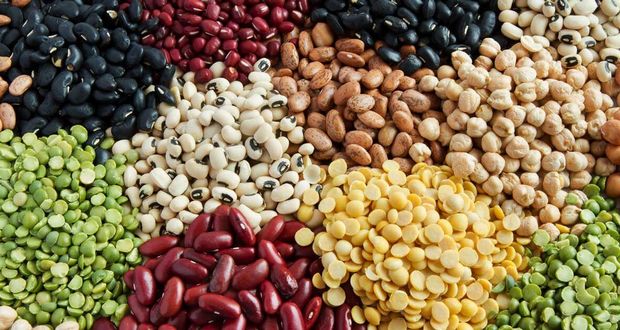
People absorb fewer calories overall from a high-fiber diet than from a Western diet rich in processed foods, according to a 2025 Arizona State University-led study. Researchers gave participants both diets with identical proportions of carbohydrates, proteins, and fats, then measured their metabolism inside sealed whole-room calorimeters. Nearly everyone absorbed fewer calories from the high-fiber diet, although participants with methane-producing gut microbes extracted more energy from it than those who produced less methane.
7. A person can die from eating only rabbits without another source of fat or carbohydrates because rabbit meat is extremely lean. This condition, called protein poisoning or rabbit starvation, occurs when someone consumes excessive lean protein without enough alternative energy sources. Arctic explorer Vilhjalmur Stefansson described the condition among people forced to survive on lean animals such as rabbits, although actual deaths were rare.
8. Eating the Australian aquatic fern nardoo without preparing it correctly can make a person starve even while consuming enough nutritious food. Nardoo contains large quantities of thiaminase, an enzyme that destroys thiamine, or vitamin B1, which the body needs to release energy from food. During their 1861 expedition, British explorers Robert O’Hara Burke and William John Wills grew weaker despite eating up to 4 or 5 pounds of nardoo between them daily. Aboriginal Australians made the plant safe by roasting its spore cases before grinding them, as heat destroys the thiaminase.
9. A 2022 systematic review found that low-carbohydrate, high-protein diets greatly decreased resting total testosterone in healthy men. Researchers defined low carbohydrate as 35% or less of total energy and high protein as 35% or more.
10. Roman gladiators were often overweight and ate mostly vegetarian diets rather than developing the lean, muscle-bound bodies shown in movies. Austrian scientists analyzed bones from about 70 gladiators buried at Ephesus, near Selcuk in modern Turkey, and found that they mainly ate barley, beans, and dried fruit. Researchers suggested that this carbohydrate-heavy diet created a protective layer of fat that shielded vital organs, nerves, and blood vessels from cutting wounds.
11 British Rationing Improved Wartime Health
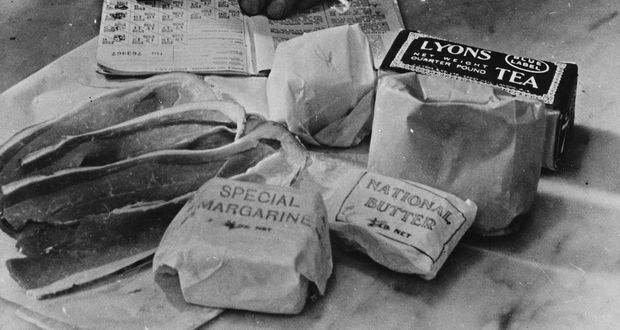
Food rationing during World War II increased life expectancy and reduced infant mortality in the United Kingdom, excluding deaths caused by the fighting. Rather than forcing everyone to eat a prescribed menu, the system ensured access to a varied diet containing enough vitamins while reducing fat and sugar consumption and increasing milk and fiber intake. The government also gave young children free blackcurrant syrup and bottled orange juice while providing subsidized milk to children under 5 and expectant mothers.
12. Chemical analysis of ancient West African pottery revealed organic residues from meals prepared by the Nok people as early as 3,500 years ago. Researchers examined 458 prehistoric vessels from 10 sites in central Nigeria and found diverse plant lipid profiles in more than one-third of them. The evidence indicates that Nok cooks processed leafy greens, cereals, pulses, and possibly yams, with the greens likely including African eggplant, okra, cowpea, jute mallow, and bombax.
13. Iceberg lettuce consists of nearly 96% water, making it less nutrient-dense than most darker leafy greens. One shredded cup contains less than 1 gram of fiber and only trace amounts of calcium, iron, vitamin C, and vitamin K.
14. Ordinary food cravings during pregnancy generally do not correlate with maternal nutritional imbalances, and researchers still do not know their exact cause. Studies indicate that 66% to 90% of expectant mothers experience at least one craving, but popular choices vary across cultures, arguing against a universal nutritional cause. One exception is pica, a compulsive urge to consume non-food substances such as chalk, rocks, or ice chips. Pica may indicate a mineral deficiency or severe anemia.
15. Golden Rice is a genetically modified crop designed to improve nutrition and fight malnutrition in low-income regions where rice forms a major part of the diet. Ordinary rice grains contain neither vitamin A nor its precursors, so scientists inserted genes that allow the grain to produce beta-carotene, which the body converts into vitamin A. The beta-carotene gives the rice its golden color.
16 Quinoa Could Feed Space Crews

NASA researchers identified quinoa as a potential crop for its Controlled Ecological Life Support System in 1993 because of its nutritional value for long-duration crewed space missions. Quinoa contains 12% to 18% protein and supplies all essential amino acids in favorable proportions, making it unusually complete among plant foods.
17. Oregon State University researchers patented a fast-growing strain of red seaweed called dulse that reportedly tastes like bacon when fried and offers twice the nutritional value of kale. Marine biologist Chris Langdon and his team originally cultivated it as food for edible sea snails called abalone. The dulse contains vitamins, minerals, antioxidants, and up to 16% protein by dry weight. After business professor Chuck Toombs recognized its potential for human consumption, the university’s Food Innovation Center began developing products such as rice crackers and salad dressing from it.
18. To combat widespread iron deficiency, Cambodian families add fish-shaped iron ingots called Lucky Iron Fish to their cooking pots. Canadian physician Christopher Charles initially tested plain iron lumps, but women used them as doorstops, so he molded them into the “try kantrop,” a fish considered lucky in Cambodian culture. Boiling the fish in food or water releases iron, while added citrus juice helps the body absorb it. Studies found that 90% of test subjects used the fish regularly and were more than 10 times as likely to achieve normal blood iron levels as a control group.
19. Beginning in January 2020, the U.S. Food and Drug Administration stopped requiring vitamins A and C on updated Nutrition Facts labels because deficiencies had become uncommon compared with when the labels were first created. Manufacturers may still list both vitamins voluntarily. The revised labels instead require vitamin D and potassium because many Americans do not consume enough of these nutrients.
20. On October 1, 2008, a 20-year-old Belgian student reheated spaghetti that had been prepared five days earlier and left at room temperature. Within 30 minutes, he developed a headache, abdominal pain, and nausea before vomiting for hours and suffering diarrhea. His parents found him dead the following morning, approximately 10 hours after he ate the meal. Tests found significant amounts of Bacillus cereus in the pasta, linking his death to the food poisoning commonly called “fried rice syndrome.”
15 Most Controversial & Costly Blunders in History
21 Pistachios Fed Humans For Millennia

Humans have eaten pistachios for approximately 8,750 years. Archaeological evidence shows that pistachio seeds had become a common food by 6750 BCE, while evidence of their later production comes from Bronze Age Djarkutan in modern Uzbekistan. Native to Iran and Central Asia, pistachio trees eventually reached Europe through the Romans during the first century AD.
22. Your body absorbs roughly 51% of an egg’s protein when you eat it raw, compared with about 91% when you cook it. Cooking changes the protein’s structure, allowing digestive enzymes to break it down more efficiently. Rocky Balboa, therefore, would have absorbed more protein by frying his famous training eggs instead of drinking them raw.
23. When chocolate develops a white or gray powdery coating, it has experienced either sugar bloom or fat bloom. Moisture causes sugar bloom by dissolving surface sugar, while temperature changes cause fat bloom by bringing cocoa butter to the surface. Both indicate improper storage rather than spoilage, so the chocolate remains safe to eat.
24. Kudzu, also known as Japanese arrowroot, is edible, and people have used its root in traditional Chinese medicine for more than 2,000 years. People can cook the root like a potato or grind it into powder, while the leaves, vine tips, and purple blossoms are also edible. However, avoid wild kudzu in the southern United States because it may have been treated with pesticides, and only consume plants that you have grown yourself.
25. Eating certain species of tropical and temperate fish can cause hallucinogenic fish inebriation, a rare poisoning sometimes likened to a three-day LSD trip. The salema porgy, or Sarpa salpa, can trigger a condition called ichthyoallyeinotoxism, producing vivid auditory and visual hallucinations, nightmares, nausea, and weakness. People supposedly consumed the fish recreationally in the Roman Empire and used it ceremonially in Polynesia, although modern cases remain rare.





RE: Fact #22 (Cooked Eggs Deliver More Protein) – This is basically true for all food. Fire is a pretty big deal.
RE: Fact #22 (Cooked Eggs Deliver More Protein) – Rocky would have been a lot better off if he actually learned to keep his guard up and block a punch instead of just walking face-first into fifty of them every round.
He’s just mastering the ancient Face-to-Fist style, which is closely related to the Face-to-Foot and My-Nuts-to-Your-Fist styles.
RE: Fact #50 (Lunch Appeared When Dinner Moved) – Working in hospitals or nursing homes, you get used to people over 70 calling their midday meal ‘dinner’. It causes so much confusion when I mention dinner and they get all mixed up, saying something like, ‘I just had dinner!’
My grandma does the big midday meal thing too. She refuses to call it lunch or supper because she insists she’s ‘not a farmer.’
I’m a big fan of when older people take a hard stand on stuff that doesn’t actually matter. It always makes me laugh.
RE: Fact #33 (Seafood Diets Distort Bone Dating) – On a related note, it’s incredibly hard to get accurate radiocarbon dating for anything after 1945 due to atomic testing.
Future archaeologists will be able to date us by the amount of microplastics in our remains.
RE: Fact #24 (Kudzu Offers Several Edible Parts) – Growing your own is actually illegal in a lot of the US South. It’s more like harvesting whatever you’re already unlucky enough to have growing on your property.
RE: Fact #38 (Avicenna’s Butcher Ruse Cured Delusion) – Funny, I was just reading about Avicenna last night. One of his quotes might be my new favorite: ‘The knowledge of anything, since all things have causes, is not acquired or complete unless it is known by its causes.’
RE: Fact #13 (Iceberg Lettuce Contains Mostly Water) – If we’re eating it for the crunch, calling it ‘no nutrients, just water’ is a massive upgrade.
Getting your water through fruits and veggies is a smart way to hydrate. Most of us aren’t drinking enough water and just dehydrate ourselves further with all the salt and sugar in everything we eat.
I go for celery when I want a crunchy snack that’s mostly water. Plus, the fiber is a bonus.
RE: Fact #30 (Poor Diets Outkill Smoking Worldwide) – >…responsible for more deaths than smoking.” Serious question: since everyone eats, but not everyone smokes, what are the actual death rates per participant?
RE: Fact #28 (Pompeii Victims Had Perfect Teeth) – I’ve been there. The detail is incredible, though they almost look like artificial teeth because they’re so white. Back then, sugar was way too expensive to be a common habit.
RE: Fact #10 (Roman Gladiators Ate Mostly Plants) – Like the vast majority of Romans, gladiators ate mostly plant-based. Meat was a luxury for them.
Lentils were one of their staples, and that’s actually a great source of protein.
Same with chickpeas. Do you know the difference between the two? Well, I’ve never had a garbanzo bean on my face.
Meat would still be a luxury if the government didn’t subsidize it so hard.
RE: Fact #13 (Iceberg Lettuce Contains Mostly Water) – I have a friend who is allergic to everything under the sun, including lettuce. She told a botanist about it, and he just said, “Lettuce? That’s just crispy water!”
RE: Fact #49 (Oslo Breakfast Helped Children Grow) – My Norwegian grandma was 6’7″ and she never had the Oslo Breakfast. If she had eaten that in school back in ’32, she would have been catching geese with a rake.
A friend of mine once floated the theory that the reason there are so many Scandinavian supermodels is because the wars during the 20th century thinned out the male population, giving the survivors more options to pick partners they found attractive. I have no clue if that’s actually true or just totally offensive.
“Catching geese with a rake” sounds like a foreign idiom that just comes across as weird when translated word-for-word.
RE: Fact #40 (Polar Bear Liver Can Kill) – Why do they carry so much Vitamin A? How does that even help the bear survive up north?
Vitamins A, D, E, and K are fat-soluble, so they build up in your fat tissue instead of being flushed out like water-soluble vitamins. That Vitamin A just stays trapped in the liver unless that fat is burned for energy.
RE: Fact #5 (Bruce Lee’s Hyponatraemia Death Theory) – It could easily be the Equagesic he took that night. People have been pointing to that for ages.
Cerebral edema from painkillers is way less common than hyponatremia. It’s actually pretty common for people, like marathon runners, to run into serious trouble with low sodium levels.
I personally witnessed a rower die from this. They weren’t eating and just drinking water, and they had a heart attack right at the finish line, even after they won.
RE: Fact #29 (Viking Coprolite Revealed Intestinal Worms) – Holy sh*t, that is a beast. Not surprising the Viking left it behind for future generations to find. He must have been pretty proud of that one!
Pfft, that’s nothing. After being in the ICU on morphine for over a week without a bowel movement, laxatives finally got things moving. In one of those portable toilets, I dropped something 15 inches long and wider than Popeye’s forearm. I weighed 17 pounds less after that. RELEASE THE KRAKEN!
RE: Fact #13 (Iceberg Lettuce Contains Mostly Water) – My grandpa used to tuck leaves of iceberg lettuce into his hat when it was hot out. He claimed it kept his head cool and fit better than a regular hat liner.
RE: Fact #38 (Avicenna’s Butcher Ruse Cured Delusion) – Basically: ‘I’m a cow.’ ‘No, you’re not.’ ‘I’m a cow.’ ‘Then I’m a butcher.’ ‘I’m not a cow anymore.’
It went more like: ‘Alright cow, I can’t butcher you until you gain some weight.’ ‘Okay, time to eat! I don’t want to let the butcher down.’
RE: Fact #1 (Potatoes And Buttermilk Sustained Ireland) – Guess we’re looking at buttermilk mashed potatoes with vitamins when the grocery bill gets too high.
Everyone gets a salt and pepper shaker for the year, but no other condiments allowed. I can see some influencer and businessman teaming up to market this as a ‘tough guy’ diet plan.
Throw in some cabbage and you’ve got colcannon, a classic Irish staple. It’s cheap, nutritious, and delicious. Grain porridges and beans are solid options too. Most traditional staples share those same traits: affordable, simple to make, and energy-dense enough to keep you going through a long day. If you live in a rural area, you can even forage for seasonal greens and herbs. Dandelions are super versatile, and things like spice bush or sumac, which is still common in many countries, are totally underutilized in the U.S. It’s wild how we’ve practically forgotten about our own native food sources.
RE: Fact #46 (Roman Punch Reached Titanic Tables) – It sounds like they figured if they messed up the roasts, they could just get the guests hammered so nobody would notice.
RE: Fact #26 (Drinking Man’s Diet Sold Millions) – Wait, you guys are actually losing weight on alcohol?
RE: Fact #17 (Dulse Seaweed Fries Like Bacon) – I have a hunch it doesn’t actually taste like bacon. My wife is vegan, and ten out of ten times something ‘tastes like’ bacon, it doesn’t. Some of it tastes okay, but they should just stop trying to mimic real food. Just be seaweed, you know?
I read about those researchers last year. Apparently, they were just normal scientists looking for a farmable seaweed, not on a vegan crusade. They were cooking samples and just went, ‘Dude, that smells like bacon. Try it?’ followed by, ‘Dude, that tastes like bacon.’ I want to try a bacon shake made from this stuff as soon as possible.
I like to imagine researchers actually talk like that: ‘Breh, look at this plant, ‘ and ‘Yo fam, that tastes kinda like bacon.’
RE: Fact #37 (Neanderthal Plaque Revealed Diverse Diets) – I don’t follow the diet myself, but I’m pretty sure it’s not meant to be a direct replica of what other species ate back then.
You’re right. It’s just a label for eating things that were available before we started farming wheat, basically hunter-gatherer food, whether that’s veggies or meat.
RE: Fact #32 (Ploughman’s Lunch Was Cheese Marketing) – I’m a fan of the Cheese Board. They really could have called it the Cheese Marketing Committee instead.
RE: Fact #26 (Drinking Man’s Diet Sold Millions) – This reminds me of that classic Allan Sherman song, “The Drinking Man’s Diet”: “Oh, I’m on the Drinking Man’s Diet, It came from a book I was loaned It’s really terrific and quite scientific And I’m half stoned. For breakfast some cornflakes and vodka, But cornflakes have carbohydrates So I don’t eat those fattening cornflakes, I eat the vodka straight. Drink, drink, everyone drink It’s not as bad as we used to think. With every Manhattan your stomach will flatten, So drink, drink, drink! The Air Force invented this diet, A fact which they hotly deny. Of course they deny it, cause this is the diet That got the Air Force high. For lunch you can have three martinis, What better lunch is there than that? But caution: do not eat the olives, Cause olives make you fat.”
RE: Fact #33 (Seafood Diets Distort Bone Dating) – I had to look up how radiocarbon dating works to refresh my memory. There’s 14C, which is radioactive, and 12C, which isn’t. The half-life of 14C is fixed, while 12C doesn’t decay. You compare the current ratio of the two to estimate an item’s age, then refine it with better data on past ratios. After that refresher, the explanation makes sense: since fish in hard water have different carbon levels, they end up incorporating ‘older’ carbon into their bodies, making them look much older than they really are when they fossilize.
Thank you. I’m glad I wasn’t the only one who found the explanation in the fact a bit confusing.
RE: Fact #1 (Potatoes And Buttermilk Sustained Ireland) – My mom lied to me. I loved potatoes as a kidand was always chastised that they were empty calories, nothing but starchy carbs. Later I learned they have more potassium than a banana, protein, fiber, vitamin c, and iron. Low in sugar too… Like there’s better things you can eat, like more nutritionally efficient, but they’re not bad at all.
RE: Fact #36 (McDonald’s Food Matched Sports Supplements) – I was at a 24-hour mountain bike race in Arizona once, and the winner of the solo group had a wild nutrition strategy. He just polished off a mini can of Pringles and a Coke after every single lap. Meanwhile, other pros had nutritionists constantly adjusting their intake. It was pretty impressive to see.
I’ve talked to ultra-marathon runners about this; things like chips are super easy to digest, which is exactly why they reach for them during runs.
Endurance stuff is strange. That winner likely knew exactly how many calories he needed per lap, and that combo probably hit the spot. Coke helps because when you’re deep into an endurance event, digestion slows down, leading to nausea; the carbonation settles the stomach, the sugar provides a quick energy boost, and the caffeine keeps you alert. Plus, the salt in the chips helps keep muscles from cramping.
RE: Fact #6 (High-Fiber Diets Reduce Calorie Absorption) – Hardly anyone gets enough fiber these days. I started swapping white flour for spelt and added way more beans, which helped a ton. It’s pretty concerning given how common colorectal issues are.
RE: Fact #24 (Kudzu Offers Several Edible Parts) – That stuff is a massively invasive species here in North America. It will absolutely destroy forests if you don’t keep it in check.
RE: Fact #36 (McDonald’s Food Matched Sports Supplements) – If you’re in great shape and burning calories at a high rate, standard dietary advice doesn’t always apply. Remember those pieces on Michael Phelps? The guy ate like a dozen eggs and two pounds of sausage every morning, and he’s clearly healthy. I have relatives in the South who lived off bacon, grits, eggs, buttery biscuits, fried chicken, and potato salad their whole lives, stayed thin, and lived to be 90. Of course, they were farmers working the fields every single day.
I used to run with some guys who’d say, “If the engine is running hot enough, anything will burn.”
My job involves heavy manual labor for 8 hours a day, 5 days a week. I eat 3000 to 3500 calories a day, and at 5’10” and 160 pounds, I’m in the best shape of my life. A lot of those calories are definitely not healthy, I snack on junk food during my shift to keep my energy up. I try to keep my three main meals healthy, but sometimes you just have to indulge. Hard work lets you get away with some dietary sins.
RE: Fact #20 (Leftover Spaghetti Killed Belgian Student) – The details in this story are tragic. It sounds like he wasn’t a typical food poisoning case, especially since the toxin was in the pasta but not the sauce. It’s a reminder of how dangerous those bacteria can be.
Why are the parents described as “worried” in quotes? Were they being sarcastic about being concerned for their child?
How would anyone even know those specific details about him throwing up and going to the bathroom?
RE: Fact #12 (Nok Pottery Preserved Plant Diets) – I can’t wait for future anthropologists to dig up our plates. They’re going to be so confused by what we ate.
RE: Fact #11 (British Rationing Improved Wartime Health) – When oranges were first brought to Britain, people boiled them. Boiled oranges, classic British diet.
If it isn’t boiled to death, it isn’t British. I really miss my grandmother; she was the only one who could ruin gammon, peas, cabbage, and potatoes quite like that.
RE: Fact #20 (Leftover Spaghetti Killed Belgian Student) – I’m cautious if food has been sitting out at room temperature for a couple of hours, let alone an entire day. Five days is just wild.
This is why I always tell the teens I know to work in food service for a bit. So many people have absolutely no idea what proper safe handling practices look like.
RE: Fact #40 (Polar Bear Liver Can Kill) – Imagine being the first person to figure this out the hard way. Some guy who just crossed the land bridge from Siberia, kills his first polar bear, eats a bit of liver, and that’s it for him.
RE: Fact #35 (Japanese Television Displays Anti-Waste Caption) – The show “Taskmaster” always makes it a point to say they eat any food used in tasks afterward or donate it to a food charity if it’s inedible.
RE: Fact #12 (Nok Pottery Preserved Plant Diets) – This would be around 1500 BC. By then, the Great Pyramid of Giza was already a thousand years old.
RE: Fact #50 (Lunch Appeared When Dinner Moved) – My farmer relatives in the Midwest always call lunch ‘dinner’. It’s a huge, long meal where everyone comes inside to sit down and chow down for about an hour. Then they call the evening meal ‘supper’, which is usually leftovers and a bit of a grab-and-go situation while people head off to enjoy their night.
RE: Fact #23 (Chocolate Bloom Signals Storage Problems) – Another fun fact: when chocolate is poured and cooled to make a bar or chip, it’s considered a glass. If you melt it down and cool it again, the way the sugar crystals rearrange actually makes it a ceramic.
RE: Fact #8 (Nardoo Fern Can Destroy Thiamine) – As a medical professional, I have to emphasize: thiamine deficiency is serious and can lead to permanent heart or brain damage. Please don’t try to use this as a weight loss method.
RE: Fact #20 (Leftover Spaghetti Killed Belgian Student) – If you ever hit up a buffet, you’ll see staff constantly stirring the food, especially the rice. It’s a health code requirement to stop this kind of illness. Bacteria can multiply fast under the right conditions.
RE: Fact #32 (Ploughman’s Lunch Was Cheese Marketing) – So, what exactly is the official Ploughman’s? Cheese, bread, beer, and onion? Is that it?
RE: Fact #44 (Perpetual Stews Never Stopped Cooking) – Some food stalls in Thailand keep their stew pots boiling for decades. You can even see massive buildup on the outside of the cauldrons from years of spillover.
High-end restaurants usually operate this way with their stock pots, too. Scraps go in and it just gets boiled every day.
In China, that practice is called Lo. There are places in Hong Kong that claim their soup stock has been running since the Imperial Era.
The only part of that story that’s hard to swallow is that a single restaurant stayed in business that long.
RE: Fact #11 (British Rationing Improved Wartime Health) – The best part of this fact: The only negatives were the extra time needed to eat enough bread and potatoes, a “remarkable” increase in gas from the starch, and a 250% increase in stool volume.
RE: Fact #48 (MREs Might Survive Twenty Years) – There’s actually an entire community on YouTube dedicated to people who eat and review old MREs.
RE: Fact #18 (Lucky Iron Fish Fight Anemia) – One detail I haven’t seen mentioned is that they’re producing these in Cambodia using recycled metal and employing people who might otherwise be labeled unemployable, including those with disabilities. It’s one of those developments that really hits all the right marks for me.
RE: Fact #37 (Neanderthal Plaque Revealed Diverse Diets) – I’m sticking to the Paleo diet for life. I’ll eat whatever a Paleolithic person would have, assuming it was available to them. I bet they would have loved pizza.
RE: Fact #38 (Avicenna’s Butcher Ruse Cured Delusion) – You’re usually taught to avoid feeding into delusions and to keep people grounded, though there are exceptions. It backfires a lot. I once cared for a dementia patient who insisted on checking the mail. I kept redirecting him, but that was his only focus. Finally, I just lied and said it was Sunday, so there was no mail. But then I had to deal with his Sunday routine instead. Eventually, I managed to explain that it was 8 p.m. on a Thursday and he was in the hospital, and he had a rare moment of clarity where he said, ‘I just get so mixed up these days.’ He was a great guy who loved sharing stories about his youth. Those early memories really are the ones that stick.
RE: Fact #31 (Detox Diets Lack Scientific Evidence) – They definitely “should” be discouraged by professionals. Unfortunately, the people who love “detox” diets are rarely the same people seeking advice from health professionals.
RE: Fact #9 (Low-Carb Diets Lower Male Testosterone) – They compared 27 studies with only 309 subjects total. If the average study had fewer than 12 people, doesn’t that really hurt the reliability?
The number of studies matters less here. This is a meta-analysis, meaning they didn’t run the study themselves but pulled data from 37 different ones. The bigger gamble is assuming all those studies collected data the same way, if not, you end up with systematic errors. Another assumption is that the interventions were isolated, meaning the subjects weren’t exposed to other variables. Controlling for that is tough; randomized controlled trials are the gold standard for a reason. The reliability issue you’re hitting on is that with 309 subjects, you lack enough units to account for different variables. It’s a pretty small sample. You might see a general trend, but the precision just isn’t there. I’m also skeptical about their selection process; honestly, this feels like p-hacking until someone replicates it.
RE: Fact #21 (Pistachios Fed Humans For Millennia) – I need some guidance on this. Is it better to crack and eat them one by one as I go, or should I open them all first and make a little pile?
RE: Fact #7 (Rabbit Meat Can Cause Starvation) – This reminds me of the show Alone. One guy bagged a huge moose, but he still had a really hard time because the meat was so lean; he ran out of fat stores long before he finished the protein.
It’s often called “mal de caribou” or “caribou sickness.” It can happen with any diet that’s just lean protein without enough fat or carbs, especially for people trying to survive solely on wild game.
RE: Fact #7 (Rabbit Meat Can Cause Starvation) – Pioneer journals often mention adding bear or beaver fat to deer and elk meat to avoid this exact problem.
RE: Fact #10 (Roman Gladiators Ate Mostly Plants) – Gladiators didn’t die as often as you’d think, either. They were expensive to train.
RE: Fact #6 (High-Fiber Diets Reduce Calorie Absorption) – >The study found that people whose gut microbiomes produce a lot of methane are especially good at unlocking extra energy from a high-fiber diet. This may help explain why different individuals get different amounts of calories from food that makes it to the colon. >The researchers note that high-fiber diets are not the villain here. People absorb more calories overall from a Western diet of processed foods, regardless of methane production. On a high-fiber diet, people absorb fewer calories overall, but the amount varies according to methane production.
RE: Fact #17 (Dulse Seaweed Fries Like Bacon) – I feel like I’ve heard this claim a dozen times now. I’ve been keeping an eye out at the specialty markets that stock imported goods, but I still haven’t actually seen this supposed super-food anywhere. I’m calling nonsense on the whole thing until I can buy some and taste it for myself.
RE: Fact #47 (Corned Beef Became Irish-American Tradition) – That happened because Irish immigrants lived near Jewish neighborhoods, and Jewish people made corned beef because they don’t eat pork.
RE: Fact #39 (Probiotic Yogurt Changed Brain Connectivity) – Interesting study, but it’s worth noting it was funded by Danone Research, the company that owns Dannon yogurt.
RE: Fact #43 (Teff Export Ban Protected Ethiopia) – Just a heads-up that ‘superfood’ is really just a marketing term; it doesn’t actually mean anything.
RE: Fact #27 (Gluten-Free Diets Are Not Healthier) – Yeah, specialty diets really only help a small group of people. About the only thing generally healthy for everyone is “eat lots of non-starchy veggies, ” but that’s never a popular suggestion.
RE: Fact #14 (Pregnancy Cravings Rarely Signal Deficiencies) – There’s a crazy story about this. Before my wife had her hysterectomy, she used to watch ASMR videos of people crumbling chalk to fall asleep. After the surgery, she suddenly detested them. It turned out she was suffering from anemia due to monthly blood loss and needed iron tablets for months.
RE: Fact #40 (Polar Bear Liver Can Kill) – Vitamin A poisoning is a brutal way to die, which is something they ran into during early arctic expeditions. Your skin starts to slough off, your tendons weaken, and you get cysts in your brain that cause all sorts of problems. There’s a ‘Disappearing Spoon’ podcast episode about it, but a word of warning: it’s pretty graphic if you have a weak stomach.
RE: Fact #41 (Popcorn Thrived Through Two Crises) – My mother grew up in a small Canadian town in the 60s. She had neighbors who were immigrants from Europe, and the mother of that family said she could never eat popcorn because it reminded her of the war. They were starving, and Allied forces had air-dropped food packages that included popcorn. Because no one in her village had ever seen it before, they didn’t know what it was. They tried boiling it, soaking it, and even grinding it, but they couldn’t figure out how to prepare it. It wasn’t until the Allied troops arrived that they were shown how to actually pop and eat the stuff.
RE: Fact #8 (Nardoo Fern Can Destroy Thiamine) – So, how much is actually safe to eat, and how long does that stuff linger in your system? Asking for a friend, of course.
RE: Fact #34 (Swift Runner Cannibalized His Family) – > They are afflicted with neither lunacy, hypochondria, nor frenzy; but have a combination of all these species of disease, which affects their imaginations and causes them a more than canine hunger. This makes them so ravenous for human flesh that they pounce upon women, children, and even upon men, like veritable werewolves, and devour them voraciously, without being able to appease or glut their appetite , ever seeking fresh prey, and the more greedily the more they eat. > Swift Runner butchered and ate his wife and five remaining children. Given that he resorted to cannibalism so near to food supplies, and that he killed and consumed the remains of all those present, it was revealed that Swift Runner’s was not a case of pure cannibalism as a last resort to avoid starvation, but rather of a man with Wendigo psychosis. The name comes from the fact that the Wendigo is a mythical creature that eats human flesh, but is always incredibly skinny and starves no matter how much it eats.
RE: Fact #49 (Oslo Breakfast Helped Children Grow) – Cod liver oil is packed with vitamin D, which you’d normally get from the sun. Since Norwegian winters are so dark, it was a pretty essential supplement.
RE: Fact #2 (Peanuts Introduced Early Prevent Allergies) – I was given a list of allergens to expose my daughter to right when we started solids: peanuts, bananas, strawberries, eggs, and wheat.
RE: Fact #7 (Rabbit Meat Can Cause Starvation) – Some people theorize that rabbit starvation played a role in Christopher McCandless’s death, though plant toxins were also a major possibility.
I remember watching that documentary and cringing while a friend of mine looked up to him. He clearly wasn’t prepared for the wild, he definitely skipped the necessary research before heading out.
RE: Fact #3 (Teenager’s Junk Diet Destroyed Vision) – We had an autistic child who only ate chips and water for a couple of years, and it caused irreversible damage to the white matter in his brain.
RE: Fact #47 (Corned Beef Became Irish-American Tradition) – Just a reminder that Irish bacon is a different cut of meat than what we’re used to in the U.S.
RE: Fact #50 (Lunch Appeared When Dinner Moved) – Some folks up in Northern England still call lunch ‘dinner’ and dinner ‘tea’.
RE: Fact #11 (British Rationing Improved Wartime Health) – I’ve heard that WWII rationing actually favored pregnant women, which helped improve the health of their newborns.
RE: Fact #37 (Neanderthal Plaque Revealed Diverse Diets) – I’m not positive, but I thought the Paleo diet wasn’t about trying to mimic a specific ancient society’s menu, but rather just about cutting out processed foods.
RE: Fact #4 (Kangatarianism Limits Meat To Kangaroo) – We do? Seriously? I might have to hand in my aussie credentials because I’d never heard of this.
RE: Fact #3 (Teenager’s Junk Diet Destroyed Vision) – We have a friend whose son struggles with this, and they’re stumped. The kid only eats a few things, french fries, pretzels, dry spaghetti with salt. He’s on our flag football team and is a great kid, but I’m really worried about his future. His parents are stuck because his doctor says he’s meeting growth targets, but I hope they’re at least giving him a multivitamin.
RE: Fact #17 (Dulse Seaweed Fries Like Bacon) – I’ve been hearing about this for years. I’m convinced it’s either a myth or an experiment that will never actually happen.