

1Lethal Injections After Hurricane Katrina

After Hurricane Katrina struck New Orleans, Memorial Medical Center lost power and running water and saw indoor temperatures soar above 100°F. In response, caregivers chose to hasten the deaths of some patients by administering lethal doses of morphine.
2. Typhoon Tip, which traversed the Western Pacific for 20 days in 1979, was the largest and most intense tropical cyclone ever recorded, reaching its peak with 160 mph winds and an air pressure of 870 mbar. Nearly half the size of the contiguous United States, it devastated Japan with powerful winds, flooding, and mudslides.
3. During Hurricane Katrina, thousands of prisoners were abandoned in Orleans Parish Prison as floodwaters and sewage rose to neck-deep levels. They endured days without food, water, or ventilation.
4. In 2017, a 75-year-old Texas woman took shelter from a tornado in her bathtub. The storm tore the roof off her house, lifted the tub out of her bathroom, and carried it into the woods—where she was found uninjured inside it.
5. During the 1974 tornado outbreak, Indiana forecasters, overwhelmed by the sheer number of simultaneous tornadoes, issued a blanket tornado warning for the entire state. This was the only time in U.S. history that an entire state was placed under a tornado warning.
Latest FactRepublic Video:
15 Most Controversial & Costly Blunders in History
6Could Machine Guns Stop Hurricanes?
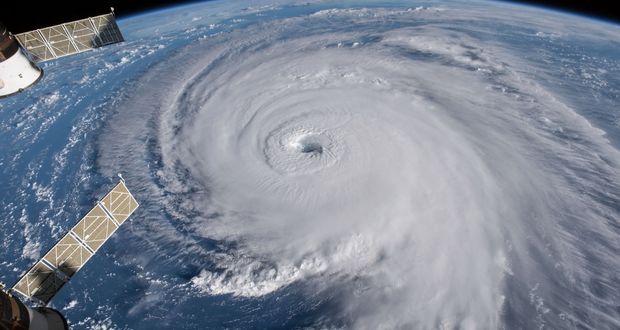
Technically, we can stop a hurricane by shooting at it—if you had 5,000 machine guns firing continuously into the wind for 24 hours straight.
7. The 1991 Andover tornado, an F4 storm, made a direct hit on McConnell Air Force Base, narrowly missing 10 B-1B bombers—two of which were armed with nuclear weapons.
8. A hurricane struck Hawaii while Jurassic Park was filming, destroying sets and stranding the cast and crew in a leaking hotel ballroom. To keep spirits up, Steven Spielberg played cards with the child actors and told them stories. The film later incorporated real footage of the hurricane.
9. In 1994, category 5 Hurricane John became the longest-lasting storm on record, persisting for 31 days. It traveled 7,165 miles, briefly became a typhoon, and caused $15 million in damage—but resulted in zero deaths.
10. In recent years, FEMA has used Waffle Houses as unofficial disaster recovery indicators. These restaurants, located throughout hurricane-prone areas of the U.S., operate 24/7 and have exceptional disaster preparedness, allowing them to reopen quickly after storms.
11Cyclone Ended Samoan Naval Standoff

The Samoan Crisis, a standoff between the U.S., British, and German navies over control of Samoa, ended when the 1889 Apia cyclone wrecked the U.S. and German fleets. Only the British corvette, HMS Calliope, managed to survive the storm.
12. A Pizza Hut manager in Joplin saved many lives during the city’s devastating tornado in 2011 by guiding customers into a walk-in freezer. He bungee-corded his arm to the handle to keep the door closed, but the tornado ultimately pulled him into it and killed him.
13. During Hurricane Dorian in 2019, three cows were swept off an island in North Carolina but were later found alive on a different island. Cape Lookout National Seashore Park officials believe the cows swam up to five miles to safety.
14. In 1944, Typhoon Cobra sank three U.S. Navy destroyers, damaged nine other ships, and claimed the lives of 790 sailors.
15. The deadliest hurricane in U.S. history struck Galveston, Texas, in 1900, killing between 6,000 and 12,000 people. The storm’s debris and bodies spread so far that trains six miles (9.7 km) from the city had to stop. Meanwhile, floodwaters destroyed all bridges connecting Galveston to the mainland.
16Hurricane Names Can Be Retired

Hurricane names follow a predetermined six-year rotation. However, if a hurricane is particularly devastating—like Katrina—its name is permanently retired from the list.
17. Louisiana native Melanie Martinez lost five separate homes to five different hurricanes: Betsy (1965), Juan (1985), George (1998), Katrina (2005), and Isaac (2012).
18. In 2008, a single basketball shot may have saved hundreds of lives. Alabama player Mykal Riley made a three-point shot that pushed the game into overtime—just minutes before an EF-2 tornado passed by. Had he missed, hundreds of fans might have been in the parking lot when the tornado hit.
19. The Bermuda coat of arms features a depiction of a sinking ship. The ship Sea Venture, carrying some 150 colonists bound for Virginia, was shipwrecked on shoals off Bermuda during a hurricane in 1609. The crew survived and chose to stay on the island, becoming the first English settlers of Bermuda.
20. The largest British ship ever lost at sea, the 92,000-ton MV Derbyshire, sank in a typhoon off Japan without issuing a mayday call. Investigators later found the wreck and concluded that the entire sinking could have occurred in as little as two minutes.
21Abandoned Six Flags New Orleans

Six Flags New Orleans was abandoned after Hurricane Katrina. Today, the park remains an overgrown swamp, with many attractions still standing as they were before the hurricane.
22. When Cyclone Olivia hit Australia in 1996, an anemometer recorded a wind gust of 254 mph (408 km/h), making it the fastest non-tornadic surface wind speed ever observed on Earth.
23. In 1991, Typhoon Yunya struck the Philippines at the same time the country was experiencing the second-largest volcanic eruption of the 20th century—Mt. Pinatubo eruption.
24. Approximately 44% of those who refused to evacuate during Hurricane Katrina stayed behind to avoid abandoning their pets. This crisis led to major changes in state and federal laws regarding pet evacuations during disasters.
25. After Hurricane Mitch hit Honduras in the 1990s, the Choluteca Bridge remarkably survived the storm. However, the hurricane’s extreme flooding completely rerouted the river, leaving the bridge standing over dry land.

