

26Theodore Edward Hook

In 1810, to win a bet that he could turn any place into the most talked-about address in London, Theodore Hook sent thousands of letters from 54 Berners St., requesting deliveries, visitors, and assistance. Within a day, thousands had been drawn to the street, including the Archbishop of Canterbury.
27. The US Patent Office building was the only major government building to survive the British burning of Washington DC during the War of 1812. Superintendent Dr. William Thorton persuaded the British that they'd be destroying the shared intellectual record of mankind if the patents were burned.
28. Stephen Girard was one of the wealthiest men in American history. He personally saved the U.S. government from financial collapse during the War of 1812.
29. 1816 was called "The Year Without a Summer" after the eruption of Mount Tambora in Indonesia. Crop failure forced Joseph Smith to leave Vermont, and his journeys resulted in “The Book of Mormon.” The dreary rain in Switzerland drove Mary Shelley to stay indoors, where she wrote “Frankenstein.”
30. The word ‘Freelance’ comes from the 1820 novel ‘Ivanhoe’. It meant a mercenary knight with no allegiance who offered his services in exchange for money.
Latest FactRepublic Video:
15 Most Controversial & Costly Blunders in History
31Hugh Glass

While exploring South Dakota in 1822, Hugh Glass was left for dead after being mauled by a grizzly bear. He later awoke, set his broken leg, laid upon a rotting log to let maggots eat his gangrenous flesh, and crawled 200 miles to the nearest settlement, living off berries and roots.
32. In 1828, a 16-year-old boy named Kaspar Hauser mysteriously appeared in Germany claiming to have been raised his entire life in a dark cell. Five years later, he was murdered just as mysteriously, and his identity remains unknown.
33. Soldiers are required to "route step" (or walk out of step) when crossing bridges because, in 1831, the rhythmic march of British soldiers broke a bridge, throwing soldiers off of the bridge.
34. The word "scientist" did not exist before 1833. Before this, scientists were referred to as "natural philosophers".
35. The fire hydrant is believed to have been invented by an engineer named Frederick Graff, but this can't be verified because the patent was destroyed in a fire at the patent office in 1836.
36Lilburn Boggs

In 1838, Missouri Governor Lilburn Boggs issued Missouri Executive Order 44, ordering all Mormons to leave the state or be killed.
37. When invented in 1840s, some people criticized anesthesia as a “needless luxury.”
38. In 1842, Abraham Lincoln was challenged to a duel by a political rival, James Shields. Due to his towering height, Lincoln chose broadswords. When the day of the duel arrived Lincoln demonstrated his strength by chopping a nearby tree branch in half, causing Shields to back out and apologize.
39. In 1848, to begin construction on the Niagara Falls Suspension Bridge, engineers needed to secure a line across the 800-foot chasm. The lead engineer held a kite-flying contest and eventually paid a local boy $5 for securing the first line over the river
40. Henry "Box" Brown was a 19th-century Virginia slave who escaped to freedom at the age of 33 by arranging to have himself mailed in a wooden crate in 1849 to abolitionists in Philadelphia, Pennsylvania.
41Con man

Samuel Thompson was the original con man. In 1849, he would walk up to strangers in New York and begin a conversation. Gaining their trust, he would ask “Have you the confidence to trust me with your watch until tomorrow?” He would never return them. When finally caught, he was labeled a “confidence man”, later shortened to simply “con man.”
42. The potato chip was believed to have originated in 1853 when a chef named George Crum had his fried potatoes sent back by an annoyed customer multiple times because the potatoes were "too thick". He was fed up, cut the potatoes razor thin, and put extra salt on them. The customer, to his surprise, loved it.
43. Captain Jonathan R. Davis, in a well-documented incident, single-handedly killed 11 armed bandits who ambushed him in 1854. He killed 7 with dual-wielding revolvers and then finished the remaining 4 with a Bowie knife. He sustained only 2 slight flesh wounds.
44. In 1899, a taxi driver named Jacob German was arrested for driving 12mph, 4 mph over the legal limit. He was pulled over by a police officer on a bicycle.
45. In 1860s, two stray dogs named Bummer and Lazarus who were best friends became local celebrities in San Francisco. Their exploits were celebrated in local papers and they were granted immunity from the city’s dog catchers.
46Niihau
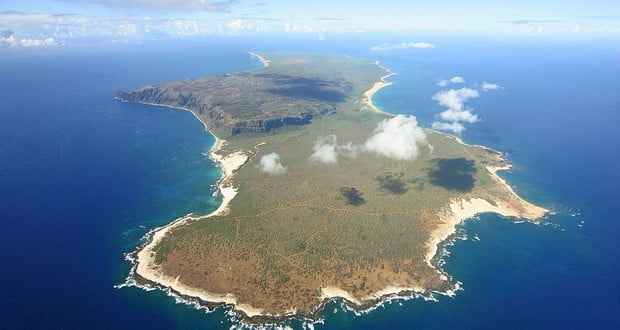
Niihau, the 7th largest island of Hawaii is completely privately owned by one family who seeks to maintain it as it was purchased in 1864 (for $10,000 in gold), including the native population.
47. A New Zealand politician named Jerningham Wakefield was such a notorious drunk that his friends would lock him in Parliament overnight to keep him sober enough to vote the next day. However, this failed in 1872 when his political enemies began lowering bottles of whiskey down the chimney.


