

21 Johnstown Flood 1889

In 1889, Pennsylvania’s South Fork Dam failed catastrophically, unleashing 20 million tons of reservoir water that roared downhill with a force rivaling the Mississippi River. The torrent obliterated Johnstown and nearby towns, killing 2,209 people in one of America’s deadliest disasters.
The dam’s history made the tragedy even worse. U.S. Congressman John Reilly had bought the dam, stripped its vital sluice pipes for scrap, and then resold it to a private fishing club for wealthy elites. The club’s members included industrial giants like Andrew Carnegie, Andrew Mellon, and Henry Clay Frick, who enjoyed exclusive fishing privileges while neglecting maintenance. After the flood, efforts to hold them legally responsible went nowhere.
22 Banqiao Dam Collapse 1975

During China’s Cultural Revolution in 1975, the Banqiao Dam in Henan Province failed catastrophically under the pounding rain of Typhoon Nina. The storm unleashed a one-in-2,000-year flood that overwhelmed the dam and several others in the region. When Banqiao collapsed, it unleashed a massive wall of water that killed an estimated 170,000 people outright. The disaster destroyed nearly 6 million buildings, left 11 million homeless, and triggered widespread crop failures that later caused famine and more deaths.
In a desperate attempt to prevent even greater destruction, Chinese authorities ordered airstrikes on several downstream dams to redirect floodwaters and protect other structures. The Chinese Communist Party then suppressed news of the disaster for nearly two decades, making the Banqiao collapse one of history’s deadliest and least-known engineering failures.
23 Martin County Slurry Spill 2000
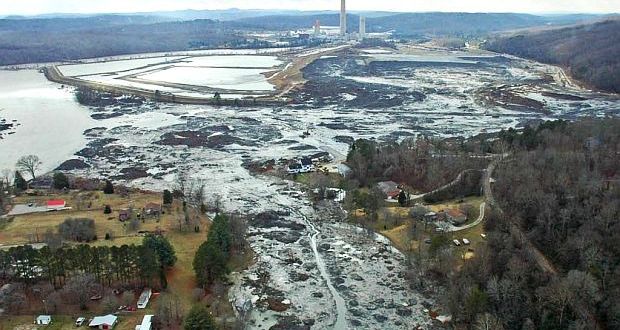
In October 2000, Martin County, Kentucky, experienced one of the worst environmental disasters in U.S. history when a coal slurry impoundment broke and unleashed more than 300 million gallons of toxic sludge. The black wave contaminated over 100 miles of waterways, fouled drinking water supplies, and coated riverbanks in a thick, tar-like mess-making it 25 times larger than the Exxon Valdez oil spill.
The company responsible, Martin County Coal, tried to dodge accountability by calling the spill an “act of God” in court. Environmental groups and locals weren’t buying it, and the disaster became a rallying point for stricter mining waste regulations.
24 Iroquois Theatre Fire 1903

In December 1903, Chicago’s Iroquois Theatre, billed in ads as “Absolutely Fireproof,” turned into a death trap just 37 days after opening. A backstage spark ignited scenery during a packed matinee performance, and flames ripped through the building. Over 602 people died, and 250 more were injured, most of them women and children from upper-middle-class families out for a holiday show.
Panic set in as unfinished fire escapes forced patrons to jump from windows. The first jumpers’ bodies broke the falls of those who followed. Public outrage was fierce. Lawsuits targeted the theatre’s owners and even the mayor, but the only conviction went to a tavern keeper, and it wasn’t for negligence but for grave robbing victims’ remains. The Iroquois Theatre fire remains the deadliest single-building blaze in U.S. history.
25 Mecca Girls’ School Fire 2002

In 2002, a tragic fire broke out at a girls’ school in Mecca, Saudi Arabia, killing 15 young students. Witnesses and local reports strongly suggested that the country’s religious police, the Committee for the Promotion of Virtue and the Prevention of Vice, played a role in the disaster. As flames spread, they allegedly blocked girls from fleeing the building because they weren’t wearing proper Islamic dress.
The horrific incident sparked outrage inside and outside Saudi Arabia, forcing the government to overhaul school safety measures and curb some powers of the religious police.
26 Hartford Circus Fire 1944

In 1944, tragedy struck the Ringling Bros. Circus in Hartford, Connecticut, when a massive blaze tore through its big top. At the time, circus tents were waterproofed with paraffin wax, a method that backfired horribly as the wax fueled the flames. As the fire raged, 1,800 pounds of molten wax rained down from the roof, killing 167 people and injuring 700, most of them women and children.
One small victim, despite a nationwide publicity campaign with her photo in magazines, was never identified. She became known as “Little Miss 1565,” and the investigating officers who never found her name left flowers on her grave every year until their own deaths. Adding to the eerie story, the man who confessed to setting the fire claimed he acted after a nightmare in which “an Indian riding a flaming horse” urged him to start blazes.
27 Peshtigo Wildfire 1871

The Great Chicago Fire may be famous, but it wasn’t even the deadliest blaze in the Midwest that day. On October 8, 1871, the Peshtigo Wildfire in Wisconsin roared through 1.2 million acres, killing anywhere from 1,500 to 2,500 people, five times more than Chicago’s tragedy.
The inferno consumed everything in just two hours, leaving little time for escape. Yet history largely forgot it because it shared the spotlight with other massive fires the same day: the Great Chicago Fire, the Great Michigan Fire, and the Port Huron Fire. To this day, the Peshtigo fire remains America’s deadliest wildfire.
Latest FactRepublic Video:
15 Most Controversial & Costly Blunders in History
28 Triangle Shirtwaist Factory Fire 1911

In 1911, the Triangle Shirtwaist Factory in New York City became the site of one of America’s most infamous industrial tragedies. A fire broke out in the garment factory, and 146 workers, mostly women aged 14 to 23, died because the owners had locked all the exit doors to prevent theft and unauthorized breaks.
Ironically, just a few years earlier, employees had gone on strike demanding shorter workweeks, sturdier fire escapes, and unlocked doors. Their demands were denied. Adding insult to tragedy, the factory’s owners survived and profited roughly $400 per worker from insurance payouts. The disaster outraged the public, leading to sweeping fire safety reforms, mandatory unlocked doors during work hours, and stronger fire escape standards that shaped modern workplace safety laws.
29 Victoria Hall Stampede 1883

In 1883, tragedy struck after a magic show at Victoria Hall in Sunderland, England. Organizers began handing out prizes to kids on the ground floor, angering those seated in the balcony. An estimated 1,100 excited children surged downstairs to claim rewards, but the exit door at the bottom opened inward and had been bolted so only one child could squeeze through at a time. The children in front were crushed by the force of those behind them. By the end, 183 children, aged just 3 to 14, lay dead. The heartbreaking event spurred the invention of the “push bar” emergency door, which is still an industry standard for safety today.
30 Ycuá Bolaños Supermarket Fire 2004

In 2004, shoppers at the Ycuá Bolaños supermarket in Asunción, Paraguay, faced a nightmare when a fire erupted inside the busy store. As smoke and flames spread, panicked customers ran for the exits, only to discover they’d been locked. The owners had sealed the doors to prevent theft during the chaos.
Nearly 400 people died, and almost 500 were injured, making it one of Paraguay’s worst disasters.


RE: Fact #22 (Banqiao Dam Collapse 1975) – This reminds me of how the zombie plague kicked off in the World War Z book. Apparently, some divers in China were fishing stuff out of a sunken village, and then a kid went all rabid and undead, which is supposedly how the whole thing began.
RE: Fact #38 (Intelsat-708 Xichang Rocket Crash 1996) – The Chinese government said the rocket failed because of an unexpected gust of wind.
#51 Knickerbocker storm of 1922. Snowfall accumulated collapsing the roof of the Knickerbocker theatre in Washington DC killing 98 and injuring 133 people.
RE: Fact #21 (Johnstown Flood 1889) – So, at my elementary school, all the 5th graders went on a field trip to Johnstown every year. They actually mention it briefly in that show, The Men Who Built America!
RE: Fact #6 (Oppau BASF Explosion 1921) – I use an M-80 to unclog the toilet at home. It works 60% of the time, every time.
Yeah, it seems like the folks here managed to clear out the clog and the silo.
And I bet a bunch of nearby toilets weren’t clogged anymore either.
RE: Fact #1 (Beirut Port Explosion 2020) – I live about 130 kilometers from Beirut and I saw it really clearly. It was like a white flash way off in the distance.
RE: Fact #10 (Cuyahoga River Fires 1868-1969) – Wow, $100,000 in damage seems pretty low for burning down railroad bridges.
RE: Fact #29 (Victoria Hall Stampede 1883) – This is an excerpt from somewhere else, not from wiki.
The bodies of the dead children were laid out in front of the hall so parents could identify them. There’s a particularly heartbreaking story about a couple who walked down the rows of the dead together. The woman pointed to one little child, saying it was theirs. Then, she pointed to another a bit further down, and then another at the end of the row. She broke down crying, “My God! All my family, gone!”
RE: Fact #49 (Sultana Steamboat Explosion 1865) – Wow, it was carrying almost six times the number of people it was designed for! That’s wild.
You can see in the photo how many people were on there the day before the disaster. Also, that picture is apparently the oldest photo ever taken in Arkansas.
Back in 1865, photography was already a pretty big deal. So, I’m really struggling to buy that this is the absolute oldest photo ever snapped in Arkansas.
RE: Fact #24 (Iroquois Theatre Fire 1903) – This event was really sad, but the Eastland disaster actually had more than 200 extra deaths. If you add that to the Chicago Fire, the city lost around 1,750 people across just three events.
Even all of that together is still less than the Peshtigo, WI fire and the Michigan fires, which all happened on the same day as the Chicago fire. The combined death toll for Michigan and Wisconsin is said to be about 2,000, but that’s probably an underestimate. Lots of lumberjacks in the woods might not have been accounted for, and entire families and towns were wiped out, taking their records with them.
Edit: When I wrote that the Iroquois disaster “barely exceeded” the others, that was a mistake because I knew 2,000 was more than 1,740. I initially only planned to mention the Peshtigo Fire, which killed about 1,500 people. But once I included the Michigan Fire, the total did clearly go over 1,740. It’s worth remembering that the death tolls for both the Peshtigo and Michigan fires were likely higher because so many records were destroyed.
Wow, folks looking for shelter in a water tank actually boiled to death. Guess that survival idea of mine is out the window!
RE: Fact #36 (Searcy Titan II Silo Fire 1965) – Pretty wild that the Titan II didn’t end up harming way more people. It was basically just a pressurized tank with super thin aluminum walls, filled with really toxic hydrazine, and then crammed into a tight concrete shaft.
So, there’s a bunch of high explosives right on top, all wrapped up in some sort of metal. And then there’s also whatever likely-toxic stuff they put in FOGBANK.
FOGBANK seems like it might be an aerogel, so it’s probably not toxic.
RE: Fact #29 (Victoria Hall Stampede 1883) – Yeah, back then, newspaper articles about what happened really fired up the public, and an investigation followed. Because of that, a law was passed saying public places for entertainment had to have a certain number of emergency doors that opened outward. It’s still a law today. Nobody was held accountable for the whole disaster, and they never found out who it was that bolted the door shut. The Victoria Hall was still used until 1941, when it got taken out by a bomb during World War II.
Yeah, we’ve got those push bar exits in public buildings in the US too. Seems like we learn from what happens elsewhere.
We Americans only seem to learn from big disasters, not from everyday stuff. – Theodore Roosevelt
A lot of laws and standards we have now came about because of serious, tragic events.
Yeah, it seems like a lot of building codes in the U.S. came about because of really bad fires. The Iroquois Theater fire, the Cocoanut Grove nightclub fire, and The Station nightclub fire were huge tragedies. Most of the rules we have about how to get in and out of places, and how buildings are put together, seem to stem from those events.
RE: Fact #20 (Wanggongchang Explosion 1626) – This is a really important part about what might have caused it.
They never definitively figured out what caused the explosion. Over time, people have suggested a bunch of different things, like gunpowder, a meteorite exploding in the air, natural gas, or even a volcano. Even though some of these ideas seem plausible, there’s still no agreement among scientists.
About gunpowder specifically: it seems like an easy answer, but there are a few things that don’t quite fit. For one, there wasn’t any burning damage right at the center, and historical accounts mention that people’s clothes were strangely torn off. This suggests it was more of a pressure wave than a fire. The gunpowder idea also doesn’t explain the sounds and rumbling heard from the northeast before the explosion, and it doesn’t account for how incredibly destructive it was. While a lot of gunpowder could create a big cloud, it burns rather than explodes, and it’s hard to see how it could have created enough force to collapse the ground by 6 meters, throw huge trees for miles, or launch a 3-ton stone lion over a city wall. Based on what happened, the explosion would have needed to be as powerful as the atomic bomb dropped on Hiroshima.
Seriously though, maybe it was aliens. That’s super interesting, thanks! Makes you wonder what the folks living there were thinking.
Worker: I’ve got a thought for a more effective explosive.
Boss: Alright, go mix up some. What’s the worst that could happen?
And that’s how China’s 17th-century nuclear program came to a halt
RE: Fact #11 (Exxon Valdez Oil Spill 1989) – Exxon was supposed to have a spill response team ready in the area because of the pipeline deal, but they didn’t follow through. That’s why they couldn’t even try to stop the oil from spreading.
Some people also say Exxon actually profited from the spill. The price of oil went up a lot, which quickly made them a ton of money everywhere. The cost of cleaning it up was way less than the extra profits, and the fine was so small that it actually made sense for them to have an accident.
So basically, there’s a reason these oil spills keep happening. You don’t need to be a genius to see why.
The next year, I was working at a set net site in Kodiak. We still had oil and tar everywhere on the rocks and floating around. Exxon can go fu*k themselves. The cleanup jobs paid so well that roughnecks and oil platform crew ended up taking those roles instead, making good money pressure washing and scrubbing rocks way out in the middle of nowhere. The only funny story I heard from that time was about Kodiak’s giant salmon-eating bears that hang out by the shore in the summer. Apparently, a guy from the lower 48 sprayed himself head to toe with bear repellent and had to be medevaced to Seattle.
RE: Fact #33 (Khodynka Field Stampede 1896) – So, I went to a wedding last summer and there wasn’t even a cash bar, which was wild. I can totally confirm that when people expect to get some drinks and there’s nothing, it doesn’t go over well. A bunch of folks actually ended up taking money back out of the gift envelopes they’d given.
RE: Fact #11 (Exxon Valdez Oil Spill 1989) – Exxon trying to blame a drunk captain was a total lie. The real story is way worse.
RE: Fact #37 (Nedelin Catastrophe 1960) – I’ve heard people say the Russian space program had fewer deaths than the American one, and I’m not so sure that’s accurate.
RE: Fact #49 (Sultana Steamboat Explosion 1865) – A lot of the folks who died were just let go from being Union POWs. They were too weak to get away from the fire or swim out of there.
Yeah, it probably wouldn’t have made much difference. When your boilers go out, you’re pretty much out of luck.
Yeah, shrapnel and super-heated steam, on top of the usual shockwave.
RE: Fact #25 (Mecca Girls’ School Fire 2002) – During any kind of crisis, whether it’s in Islam or any other religion, you’re allowed to do whatever it takes to help yourself or someone else. For instance, if you see a naked woman about to fall or jump from a building, you should run and grab her. And if you’re starving and the only food available is alcohol and pork, go ahead and eat and drink!
RE: Fact #10 (Cuyahoga River Fires 1868-1969) – The Clean Water Act might sound like standard stuff, but it’s actually as major and crucial as any other law you can think of.
RE: Fact #24 (Iroquois Theatre Fire 1903) – This write-up is seriously eye-opening. It’s like the people who built it actively tried to make a fire as bad as possible. Think about it: exit doors swinging inward, skylights meant for ventilation but screwed shut, just one way in, no alarms, no sprinklers – the list goes on.
The part about the fire itself is just heartbreaking. Two sections really stuck with me:
The folks in the orchestra got out to the lobby and the front, but people in the dress circle and gallery, even if they dodged the fireball, couldn’t get to the lobby because iron gates blocked the stairs. Most people died at the bottom of those stairs, trampled or suffocated.
Then, the people who made it out the emergency exits on the north side ended up on these unfinished fire escapes. A lot of them jumped or fell from those narrow, icy escapes, and the bodies of the first ones actually cushioned the fall for the ones who came after.
There were bodies piled up to 10 feet high around the doors and windows. People tried to climb over the dead to get away, but many ended up dying themselves from the heat, smoke, and fumes.
But, if you’re worried that the horrible people responsible got away with it, don’t be: this was NOT the case.
Due to public anger, a bunch of people, including Mayor Carter Harrison, Jr., were charged with crimes. Still, most of those charges were dropped a few years later. That happened because the owners’ lawyers used delaying tactics and exploited weaknesses in the city’s building and safety rules.
RE: Fact #48 (Brooklyn Bridge Stampede 1883) – Were those African or Asian elephants?
Sounds like there were probably a few of each kind. Barnum even brought out his favorite elephant, Jumbo, for this stunt. Jumbo was an African bush elephant, but it’s generally a lot easier to train Asian elephants for people to work with.
RE: Fact #34 (MV Doña Paz Ferry Disaster 1987) – Seriously, how have I never heard about this, especially with nearly 4,000 people dying?
That was my reaction too, I was a young adult back in 1987. I guess the story was in the news, but I honestly don’t remember it. It’s kind of a sobering thought that the most horrific events that feel massive to the people involved can just be a tiny blip to everyone else.
RE: Fact #15 (St. Francis Dam Failure 1928) – So, Mulholland and the others at the Bureau of Water Works and Supply were found to not be criminally responsible. This is because, at the time, no one could have known the rock formations the dam was built on were unstable.
RE: Fact #11 (Exxon Valdez Oil Spill 1989) – Joseph Hazlewood was unfairly blamed and wrongly accused of being drunk. Exxon needed someone to blame.
RE: Fact #21 (Johnstown Flood 1889) – Hey, you should totally check out the book Johnstown! It’s a really interesting read about the tough time those folks had when the dam flooded.
RE: Fact #30 (Ycuá Bolaños Supermarket Fire 2004) – Nearly 400 people died, and the longest sentence given was just 12 years.
Do you think we should aim for justice or revenge? I was just rewatching Batman Begins yesterday. For those who disagree, do you think if he gets out after 12 years, he’ll go on to kill another 400 people? Should we increase his sentence to prevent that? What’s the main point of punishment anyway?
RE: Fact #32 (Station Nightclub Fire 2003) – You can probably find a first-person video from someone who was at that show online. This person noticed the stage catching fire, immediately headed for the exit, and then filmed the whole scene for a while after they got out, while the place was completely engulfed in flames. It’s really unsettling, like watching something out of a morbid documentary, and it’s heartbreaking to hear the panic of some people who escaped but then realized their loved ones were still inside and wouldn’t make it out. So, it’s definitely not safe for life, you’ve been warned.
It’s wild how people didn’t make it out even though they were so close to the exit. Some were even stuck halfway through the doorway.
I recall seeing a huge crowd of people stuck in the doorway. The person filming went to get a different angle, then came back to the same door to find a jet of flame shooting out. It was truly horrifying. Initially, I was shocked that the cameraman just stood there filming instead of helping the people stuck in the door, but it was a completely unmanageable situation, and the best he could have done was make eye contact with them as they burned.
So, funny enough, the cameraman was actually there filming some extra footage for the local news. They were doing a story about nightclub safety, which is kind of ironic.
The WPRI reporter, Jeffrey A. Derderian, was also a part-owner of The Station.
That video is definitely unforgettable. It was absolutely horrific to see all those kids die.
RE: Fact #13 (Yungay Avalanche Disaster 1970) – I went to Vesuvius a while back and wow, it really feels like it could go off at any moment. That’s pretty scary when you think about the million or so people living in Naples. It’s not like it’s a secret, everyone knows the risk. But, folks have homes and jobs, they’ve built lives there, and it’s not like it’s guaranteed to happen tomorrow. So, people just keep living their lives, and the government doesn’t really force them out. I’d bet if someone ran for mayor of Naples promising to make everyone leave and just abandon the city, they’d get no votes at all.
RE: Fact #12 (Sampoong Store Collapse 1995) – Seriously, the cracks got worse because the columns holding up the fifth floor weren’t lined up with the ones below. This means the weight of the fifth floor was just dumped onto the slab instead of being properly supported.
So, there were a bunch of things that went wrong with that disaster. The mall was being built during a time when South Korea was really modernizing, which meant a lot of stuff got rushed and building inspectors weren’t really on top of their game. They even took out support beams to get more space, and moved other beams to make it even bigger. These beams were supposed to be stacked, but moving them messed up the floors, which were just poured concrete without any reinforcement inside.
Plus, they added a whole fifth floor without checking if the building could handle the extra weight. The final straw was when three heavy air conditioning units were dragged across the roof and poked holes in the concrete. These units ended up right over a spot where the support beams weren’t aligned right. Then they turned them on, and the vibrations weakened and cracked the roof. The AC units fell through, which made the support beams collapse, and then the concrete just fell with them.
Also, on the top floor they added, there were tons of restaurants. And since in Korea they eat sitting on the floor, they put in floor heating on top of that already not-so-strong slab. They also made the columns thinner than they were supposed to be in the first place. It’s just wild how much they messed up and made bad choices.
RE: Fact #18 (Aberfan School Disaster 1966) – I just checked out a Wikipedia page about this because I heard it was the anniversary of the tragedy. Seeing photos of the coal tips back then… I seriously can’t believe they let them be there! It looks like such a terrible idea, honestly. That one that collapsed was 111 feet tall, right on the edge of a steep hill leading into town, and built over natural springs. How could the people in charge not have seen this disaster coming?
Also, it’s worth mentioning David Beynon, the deputy headmaster. He died trying to protect five children he was holding. Sadly, none of them survived.
RE: Fact #27 (Peshtigo Wildfire 1871) – I grew up in Wisconsin, and we learned all about this back in 4th grade when we studied our state history.
RE: Fact #39 (Great Whiskey Fire Dublin 1875) – So, my uncle passed away at a whisky distillery up in the Highlands of Scotland. It was a really awful accident. He apparently slipped and fell into a big vat of 12-year-old Speyside whisky. Witnesses actually saw him climb out of the vat twice to pee, and then he unfortunately drowned.
RE: Fact #17 (Lisbon Earthquake and Tsunami 1755) – That Assassin’s Creed: Rogue sequence really stuck with me. It’s funny, looking at it now it doesn’t seem as wild, but when I was playing it – that crazy run with everything falling apart around me was one of the most immersive moments I can recall from the whole series.
RE: Fact #7 (Lake Agassiz Flood 9000 BCE) – I think it’s way more probable that flood myths just popped up independently in different cultures. Early civilizations often settled near rivers or lakes, and when floods, sometimes big ones, happened, it probably inspired stories. Since the core elements of a bad flood are pretty universal, it’s easy to see how different myths might seem connected, but a common origin seems pretty far-fetched and not really needed to explain it.
This seems to align pretty well with the academic perspective. Flooding happened all the time for early settlements. Major floods were probably one of, if not the, most frequent extreme weather events these early civilizations worldwide dealt with.
It’s kind of like asking why so many cultures have stories about lightning and thunder and where it comes from. It’s not due to some single, epic “thunder” moment, but because it’s a shared experience.
RE: Fact #3 (Port Chicago Disaster 1944) – Is that the one where they told all the soldiers in an all-black unit to carry explosives that weren’t stored right? And everyone knew it was super risky and a bad idea, but they still made those guys do it? fu*k that sh*t.
I like the story about the 761st tank regiment. Those guys were awesome.
Yeah, you’re right. Those were sailors who got hurt or died when an ammo ship blew up. About a month later, another group of them turned down orders because of similar dangerous conditions, and a bunch were found guilty of mutiny. They were completely cleared just last year.
Most of the folks convicted got out in under two years.
RE: Fact #16 (Aggie Bonfire Collapse 1999) – Yeah, the bonfire still happens every year, it’s just run by a group that isn’t officially connected to the university anymore.
My university had a bonfire event where 5-10 student groups each built their own bonfire structure, about two stories high. We all lit them at the same time, and the student-run fire department kept an eye on things.
The tallest A&M bonfire reached 109 feet. After that, they had to limit them to 55 feet tall with a 45-foot diameter. Just to give you an idea.
How big are those unofficial bonfires nowadays? I remember one issue with the old Aggie bonfire was how they kept trying to make it a bit taller each year, and eventually it just got way too high.
From what I remember from the investigation, there were five or more things that went wrong. They moved it to the polo field, which had a slight slope of 1° to 2°. It was a really dry summer, but then it rained heavily right before it fell. They also took off the steel bands that had been put on after it partially collapsed in 1994. The wire they used to hold the logs together was also weaker and was a gift. I think the last thing was that the center pole was straight up and down, making it 1° to 2° off from being centered with the load. Though, it’s possible that happened just as it settled – I don’t remember the exact details of the investigation on that. Unlike the 1994 collapse, this time the center pole broke between the tiers, not within a tier. I don’t recall height being a factor in the investigation.
All these things together caused the stack to fail so badly and come down incredibly fast.
I was supposed to be helping build that evening but got pulled off and wasn’t there. Unfortunately, one of the guys in my group wasn’t so lucky and was one of the people who died.
Also, I forgot to mention how the tiers were connected. For newer stacks, the lower tier leaves some tree tops sticking up so the tier above can be wired in and interlock where they meet. Back in 1999, they “improved” this by also trying to jam the upper tier into the top of the lower tier. This actually weakened the wire holding the tier together. What they thought was making the stack stronger by binding the tiers more tightly actually probably made it weaker.
So now the limit is 45 feet, and that’s only for the very top part of the center pole. The main difference from how they used to build them is that back then, they stacked each level on top of the one below. Now, they build it so each piece touches the ground and they just use different lengths to make it look tiered.
RE: Fact #46 (Mina Hajj Stampede 2015) – I was working in Saudi Arabia back then, and some of the higher-ups were Egyptians. They went on this pilgrimage, and I heard that everyone lost their wives – they were all crushed. It happened during the part of the pilgrimage where you throw rocks at Satan.
RE: Fact #1 (Beirut Port Explosion 2020) – This happened during a BBC interview, and it was really scary.
That wedding video was wild. First you hear happy wedding sounds, then they feel/hear the earthquake, and then BAM, the shockwave hits.
There’s also a video of a priest during a mass.
I recall reading that she found it hard to even think about her wedding day because the memories are mixed up with PTSD, and that day is also a national day of mourning.
RE: Fact #18 (Aberfan School Disaster 1966) – I remember seeing this in The Crown, and that’s actually how I found out about it.
RE: Fact #42 (Great California Flood 1861-62) – Yeah, the ARkStorm sounds way worse than a big San Andreas quake, and just as probable. If it hit now, it’d likely be the priciest natural disaster ever.
One small thing – it doesn’t happen *exactly* every 200 years. It’s more like, on average, every ~200 years. The next one could be 500 years away, or we could have two in the next ten years. That’s just how weather patterns go.
So I checked out the page, and it looks like the shortest time between these events is 51 years, and the longest is 426 years. We’re currently in the 150 to 200-year average window, so by those original guidelines, it could literally happen any day now.
My big question is, do you think climate change might make the storm stronger or more likely to happen? Or could it actually have the opposite effect, making it weaker or less likely?
Knowing what led up to this kind of system and what influenced it can help us understand and predict when it might happen again.
We’ll never be able to predict it more than a very short time ahead, that’s just how chaotic systems operate.
RE: Fact #19 (Fidenae Amphitheatre Collapse 27 CE) – Honestly, I’d be a bit skeptical about the exact death toll, and that goes for injuries too. Another source mentions 20,000. It’s clear a huge number of people died, though.
RE: Fact #3 (Port Chicago Disaster 1944) – I’d never even heard of this before.
RE: Fact #33 (Khodynka Field Stampede 1896) – If fewer than 1000 people die at a coronation, people usually consider it pretty uneventful.
RE: Fact #24 (Iroquois Theatre Fire 1903) – The Titanic was also claimed to be unsinkable.
Yeah, I came here to say the same thing. It feels like tempting fate, and while I’m not usually one to be super superstitious, this specific thing makes me really uneasy.
sounds like you’re a little paranoid
RE: Fact #29 (Victoria Hall Stampede 1883) – It’s really similar to that disaster at a The Who concert, which happened almost 100 years after this. It’s just terrible to imagine.
It’s really wild how often crowding and bad building layouts have led to people dying. The Hillsborough disaster and the Station nightclub fire are other big examples from the last hundred years.
During the Hajj stampede in Mecca, about 2,000 people died. Apparently, the Saudi Prince blocked an exit so he could visit without crowds bothering him.
RE: Fact #25 (Mecca Girls’ School Fire 2002) – Something similar went down in Ireland, with those fu*king nuns.
Some folks are saying the nuns aren’t to blame and that their decisions weren’t about what the kids were wearing, but a lack of training.
But seriously, you don’t need training to know you should get out of a burning building. Heading upstairs to a place with no exits when there’s plenty of time to escape is just plain stupid. They must have had some other reason for that choice. It seems reasonable to suggest the nuns made that call based on what the kids were wearing. The Catholic Church, as bad as their views are now, were a whole lot worse 70 years ago.
And another thing – not a single nun died in the fire, so they clearly knew how to look after themselves.
RE: Fact #39 (Great Whiskey Fire Dublin 1875) – The coolest part of the article is when it mentions how people used cups, bowls, and even their boots to scoop up the liquid flowing from the burning buildings. Apparently, some folks were seen using their boots as drinking cups!
If you’re too cool to take a drink from your boot, that says more about your feet than it does about my drinking problem.
Rich F1 drivers would be fine with this.
Seriously, I’d rather drink out of my shoe than the gutter. Why isn’t *that* the gross part? And hello, alcohol is a sanitizer! Pshhh.
RE: Fact #49 (Sultana Steamboat Explosion 1865) – It’s always strange when things like that happen. It’s like the worst school massacre in US history has been similarly forgotten.
The next time someone shakes their head and says things are worse now, you can mention that the worst school massacre in US history happened in 1927 and nobody knows about it because Lindbergh crossing the Atlantic totally stole the spotlight.
Honestly, the Peshtigo fire was the deadliest in US history, with over a thousand lives lost. It’s wild that so few people know about it, probably because the Great Chicago fire happened on the exact same day.
RE: Fact #42 (Great California Flood 1861-62) – Wikipedia has a map showing where flooding might happen.
RE: Fact #2 (Halifax Explosion 1917) – When you wander around Halifax, you can totally see how the explosion shaped the place geographically. You’ve got the areas that were completely wiped out, where pretty much all the buildings are from the same time period. Then, right next to those, there are zones where some buildings are old, some are newer, and some look like they’ve been patched up and rebuilt – sort of ‘two-faced’. Some areas showing the edge of the destruction are massive.
RE: Fact #36 (Searcy Titan II Silo Fire 1965) – You can visit a Titan II silo at a museum in Tucson, which I highly recommend checking out.
It is one of the coolest museums I’ve ever visited.
RE: Fact #4 (Texas City Explosion 1947) – I guess the only good thing about Texas City is that there’s a Buc-ees not too far away on the 45.
RE: Fact #7 (Lake Agassiz Flood 9000 BCE) – So you’re saying Noah’s Ark wasn’t real? Like, you don’t think he built a boat with advanced engineering for its time, somehow rounded up two of every land animal on Earth, and kept them all fed and cared for with only what was on the ship? And then those two animals repopulated the planet without any genetic issues? That sounds totally unbelievable!
RE: Fact #41 (Yellow River Flood 1938) – This might sound awful, but honestly, I wouldn’t be shocked if breaking the dam ended up saving lives. I can totally picture a slightly more successful Japanese advance leading to millions of deaths. It’s like the ultimate trolley problem scenario.
His officers had to literally drag him into talks with the CPC because he would have much rather fought communists than deal with the invading Japanese army. That’s why Chang Hsueh-liang is considered a hero in both Taiwan and China.
Everyone rags on Chiang Kai-shek, and honestly, a lot of it is fair. But his situation was so incredibly messed up and tough that nobody could have really nailed it. His whole life was basically a series of impossible choices, like those trolley problems. And even today, folks are still arguing about what he should have done.
He was super bad at running the country in pretty much every way, except keeping himself in power. It got so rough that while Japan was causing trouble in China, he was busy fighting the Communists, who only had a few hundred thousand soldiers and had actually agreed to stop fighting him to focus on Japan. He kept putting terrible commanders in charge, was really corrupt himself, and treated farmers so poorly with high taxes and violence that they hated his army almost as much as the Japanese.
It really shows how bad things were when even the US pushed him to make a deal with the Communists and share military aid, because the Communists were the only ones actually having any success against Japan, even if it wasn’t on a huge scale.
He really messed up and caused millions of Chinese deaths because he was so incompetent. It makes sense why he had to retreat to Taiwan, even after getting tons of military aid from the US.
RE: Fact #48 (Brooklyn Bridge Stampede 1883) – People used to believe elephants would only walk on super stable ground.
Funny thing is, that bridge was built to handle six times the weight they expected. And even with cheaper cables, it’s still rated for four or five times the maximum load. Over 100 years later, it’s still standing strong without any major structural upgrades, as far as I know.
Well, that’s just ’cause the Green Goblin isn’t a real thing.
RE: Fact #19 (Fidenae Amphitheatre Collapse 27 CE) – What really got me thinking was what happened after the collapse. Folks were so mad about it that the Roman Senate actually put in place their first serious safety regulations. That’s a big part of why amazing structures like the Colosseum, which went up only a few decades later, were constructed so solid.
And the way they made sure those rules were followed was pretty smart. To prevent bribery, they had an entire group of senators approve a project, not just one person. They also made it a rule that the builders had to be super wealthy – worth at least 400,000 sesterces. A Roman soldier would have to work for over 400 years to make that kind of money! The idea was that someone with that much wealth and a name to uphold wouldn’t jeopardize it all by cutting corners on construction.
Sounds like the same old story – they just handed the building market over to their rich buddies. Pretty much what’s been going on for ages.
You’ll want to make sure your contractor can actually handle a project that big. I’ve seen situations where shady government contractors were just one person who bid on a job and then scrambled to find others to actually do the work.
RE: Fact #26 (Hartford Circus Fire 1944) – They thinned the paraffin with gasoline. I’m pretty sure they switched the thinning agent or started doing it because of war rations, even though I can’t find the original source.
Gasoline evaporates super quickly, so I figured it would have already vanished by the time they finished setting up the tent.
RE: Fact #7 (Lake Agassiz Flood 9000 BCE) – Even though the worldwide flooding was only about a meter, that doesn’t mean villages closer to the source didn’t get hit way harder. Those places definitely flooded and people had to move out.
RE: Fact #1 (Beirut Port Explosion 2020) – That video of the blast was really something else. So powerful.
RE: Fact #36 (Searcy Titan II Silo Fire 1965) – On the Titan sites, they’d assign crews to the same locations. The idea was that you’d get to know the site really well that way. This particular site had so many ghost stories going around that the Air Force would switch crews up to keep everyone from getting too freaked out.
Got my interest piqued, do you have any ghost stories about this site you’d be willing to share?
People have told stories about the emergency phones on-site. Apparently, they’d ring even when nobody was near them, just if someone lifted the receiver.
There are also tales of guys getting tapped on the shoulder and asked for a cigarette, but then turning around to find no one there.
The craziest one I’ve heard is about indicator lights showing blast doors opening and closing from the silo areas, heading towards the Control Center. The crew apparently ran to another level, and then something opened all the safes and threw papers everywhere. They waited until they heard the door close again before going back to clean up.
RE: Fact #14 (Thanksgiving Day Disaster 1900) – While rescuers were working hard to save people and deal with the dead, the game kept going. Stanford ended up winning 5-0 with a field goal right at the end. It’s interesting how the article shifts from really graphic descriptions of the accident to just unemotionally reporting on the game.
That game was pretty bad, honestly.
This happens every time Stanfurd wins a game.
RE: Fact #28 (Triangle Shirtwaist Factory Fire 1911) – Wasn’t this a big reason for getting better working conditions and worker rights over here in the States?
This event led to the Workers’ Compensation Law being passed and the NYS Workers’ Compensation Board being formed.
It’s sad to think that most laws protecting workers and keeping them safe were created because of terrible accidents and suffering.
You know, I’ve been wondering why so many businesses in the US have that sign above their doors saying “door to remain unlocked during business hours.”
Yeah, I think that’s why doors are usually meant to open outwards. I remember hearing about a really bad fire from a long time ago, and part of what made it so awful was people pushing on a door that was supposed to be pulled. Nobody wanted to back away from it because of the fire behind them.
RE: Fact #43 (Cavalese Cable Car Disaster 1998) – The co-pilot mentioned PTSD in this article. The guy who destroyed the tapes. Apparently, at 5,000 feet, he smiles at the camera and is worried that image will be shown with the footage of the crashed cable car. That’s why he burned the tape. Mr. Schweitzer, maybe you’d have less PTSD if you hadn’t killed 20 people, destroyed evidence, and gotten away with it.
He calls himself an “Aviation Mishap Survivor,” which is technically true, but it’s also kinda like calling James Earl Ray a “Gun Violence Survivor.”
RE: Fact #5 (New London School Blast 1937) – Wow, talk about a twist of fate! It’s a really dark bit of irony that the very thing that brought so much prosperity to that town ended up causing such a devastating accident. And that blackboard message is just chilling. It really makes you think about how life can change in an instant.
My uncle Marvin is the last surviving rescuer from that explosion. He was working nearby and helped pull survivors and the dead out. He still goes to the New London School Explosion museum often.
He just hit 100 and is amazing. There was a fire at his place recently, and he actually managed to put it out himself by throwing pots of water on it before the fire department even arrived.
At his birthday party, he talked about how important it was to him that the lives lost in that event aren’t forgotten. So, I think he’d be happy to see how many people are responding to this post. I’ll let him know.
It’s a bit strange, but my grandparents actually went to that school when the explosion happened. I’m not totally sure how it impacted them personally. My grandfather shares the name Marvin, though he’s a bit younger than the Marvin you mentioned. The community in New London, TX is still super close, and my grandparents attend one or two reunions every year. They’ve been doing it for ages!
Hey, just wanted to say thanks for the message! Tell your Uncle Marvin that a 40-year-old guy from Portugal is bowing down to him out of respect.
Wow, that’s heartbreaking. It sounds like there are a lot of terrible stories out there. Imagine identifying your child by crayon-colored toenails from the night before. Makes you want to tear up.
That was pretty sad to read, kind of like that scene with the girl in the red dress in Schindler’s List.
RE: Fact #21 (Johnstown Flood 1889) – The wiki mentions that wealthy club members really helped out after the flood. Henry Clay Frick, like about half the club, gave thousands to help. And Andrew Carnegie, who was already a big name in industry and charity, built the town a new library after the flood.
Also, check this out: people in Pennsylvania are still paying for that flood through a Johnstown flood tax on alcohol, which is 18%. Oh, wait, that tax was actually for a different flood later on.
So, it turns out they had to buy some goodwill because everyone found out they hadn’t done any repairs or maintenance on the dam for ages. They’d even been warned it was about to collapse, but nobody in the club wanted to shell out for higher dues. It was a total PR mess.
RE: Fact #39 (Great Whiskey Fire Dublin 1875) – Haha, I guess they figure liquor keeps the Irish from trying to take over the world.
RE: Fact #38 (Intelsat-708 Xichang Rocket Crash 1996) – And that’s why the American space program always launches near a big body of water.
RE: Fact #42 (Great California Flood 1861-62) – It seems like California cycles through these big changes every couple of hundred years.
Learn to swim, seriously.
RE: Fact #26 (Hartford Circus Fire 1944) – It really seems like humanity mostly figures things out after a bunch of people get seriously hurt or worse. Like, “Whoops, maybe we should avoid that in the future, huh?”
Yeah, that’s unfortunately true. It’s why climate change really freaks me out. We haven’t exactly got the best history as humans, and you can’t just say “oops” after we’re all gone!