


1Reavis: Baron of Arizona's Land Deception
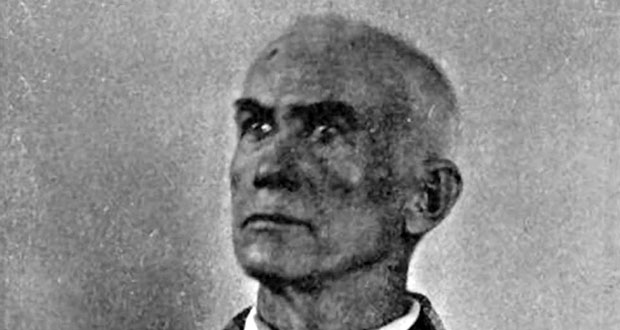
In 1883, James Addison Reavis claimed ownership of 44,000 square kilometers of land in Arizona and New Mexico, collecting rent illegally for three years. He forged documents, alleging a purchase from a family with a Spanish land grant. When he sued the U.S. government, his deception was exposed, leading to a two-year prison sentence.
2. On December 28, 1917, H.L. Mencken published a satirical article titled "A Neglected Anniversary," claiming the bathtub was invented by Adam Thompson, criticized by doctors, and introduced to the White House by Millard Fillmore. The entire story was a hoax meant to mock public gullibility. Mencken later confessed to the prank in a follow-up article, but it didn't garner as much attention as the original satire.
3. In Australia's notable literary hoax, soldiers James McAuley and Harold Stewart created the fictional poet Ernest Malley to submit nonsensical work to Angry Penguins, a modernist magazine. The duo, critical of modernist verse, aimed to test if proponents could distinguish between real and fabricated poetry. Despite the poems being exposed as a hoax, Angry Penguins received acclaim for Malley's work, which eventually gained recognition as excellent Australian literature in the years following the revelation.
4. In 1896, the Louvre purchased the alleged ancient Tiara of Saitaphernes, presented by Russian art dealer Schapschelle Hochmann. Despite doubts from archaeologists, the Louvre displayed the artifact for six years before a 1903 article in Le Matin exposed Israel Rouchomovsky as the real creator, unaware of the deception. The revelation led to public backlash against Hochmann and the Louvre, while Rouchomovsky gained acclaim as a skilled goldsmith.
5. 24 journalists under the direction of Mike McGrady wrote "Naked Came the Stranger," a book with a ridiculous plot and gratuitous sex scenes that defies literary standards. Despite its flaws, the book was published, reviewed in reputable newspapers like The New York Times, and became a bestseller. The group revealed the hoax on The David Frost Show, boosting sales, and the book spent 13 weeks on The New York Times Bestseller List, later inspiring an unrelated film with the same name. The experiment highlighted the challenges in defining literature or, perhaps, people's affinity for controversial content.
Latest FactRepublic Video:
15 Most Controversial & Costly Blunders in History
6DHMO Ban: Zohner's Gullibility Experiment

In 1997, Nathan Zohner conducted a science fair project titled "How Gullible Are We?" where he distributed a report on the dangers of dihydrogen monoxide (DHMO) to classmates. The report highlighted seemingly harmful effects of DHMO, such as excessive urination and metal corrosion. Zohner's classmates, unaware that DHMO is water, voted to ban it. The project aimed to expose the lack of critical thinking in accepting perceived scientific facts, earning Zohner the first prize.
7. In 1917, Elsie Wright and Frances Griffiths took five photographs in Cottingley, England, purportedly showing them with fairies. Sir Arthur Conan Doyle later endorsed their authenticity, but skepticism persisted. In 1981-82, Frances and Elsie admitted that the first four photos were hoaxes and that they faked the pictures with paper cut-outs from a book. They maintained the fifth photo's authenticity until their deaths.
8. The Feejee Mermaid, popularized by P.T. Barnum, was presented as a mummified creature with the body of half mammal and half fish. Barnum leased it from Moses Kimball and exhibited it as a curiosity. However, the mermaid was a gaff, created by an Indonesian craftsman using papier-mâché, exotic fish materials, or the tail of a fish combined with the torso of a baby orangutan and the head of a monkey. The original exhibit was lost in a fire, and Harvard University's Peabody Museum now houses a copy.
9. In 1933, a widely circulated photograph falsely claimed to depict German Chancellor Adolf Hitler as a baby, portraying him with a scowl and aiming to ridicule him. German officials responded by providing a genuine baby photo of Hitler, which appeared normal. The origin of the hoax was falsely attributed to Austria, but the true source remained unknown. The baby in the photo was later revealed to be an American, and the image had been manipulated to make him appear angrier.
10. On April 13, 1844, The New York Sun published a sensational article about eight people flying across the Atlantic in a balloon. Claiming famous figures were on the journey, including Monck Mason, the balloonist, the story was a hoax created by the destitute Edgar Allan Poe. The paper retracted the tale after only two days.
11SINNA: Alan Abel's Indecency Hoax

In 1959, prankster Alan Abel initiated a hoax called The Society for Indecency to Naked Animals (SINNA), claiming their mission was to clothe animals for decency. With the slogan "A nude horse is a rude horse," Abel generated press releases and convinced people of the organization's existence. The "president," portrayed by actor Buck Henry, even appeared on Walter Cronkite's CBS news show in 1962. The ruse persisted until 1963, when Time magazine exposed it.
12. Yoshitaka Fujii, a Japanese anesthesiologist, fabricated 172 scientific articles during his 19-year career, making him the record holder for scientific fraud. Dismissed from Toho University in February 2012 for lacking ethics approval in eight studies, suspicions had lingered for over a decade. A review revealed the improbability of true results in 168 of Fujii's papers. Exploiting minor aspects of anesthesiology and diverse journal placements, he navigated through seven different jobs, evading suspicion.
13. In 1924, Artur Alves Reis, a Portuguese arms dealer just released from jail, convinced London-based printing company Waterlow and Sons to print 300 million escudos (nearly 1% of Portugal's GDP) secretly for a loan to Portuguese Angola. The money, printed in 500 escudo notes, appeared genuine. Reis laundered it in Portugal, establishing the Bank of Angola & Metropole. Attempting to control the Bank of Portugal, he bought over 20% of its shares by September, triggering suspicions. The scheme unraveled by November, causing a crisis and contributing to a coup. Reis was sentenced to 20 years in prison and died penniless in 1955.
14. Charles Dawson, an amateur archaeologist, hailed the Piltdown Man as a groundbreaking discovery in 1912 while searching for the "missing link" between apes and humans in accordance with Charles Darwin's theory of evolution. Unearthed in Piltdown, Sussex, the fossils were initially celebrated but later revealed to be a hoax in 1953 when new dating techniques exposed inconsistencies. Subsequent analysis in 2009 implicated Charles Dawson as the likely mastermind behind the forgery, marking a significant deception in the history of human evolution research.
15. During World War II, Juan Pujol Garcia, a Spaniard, initially tried to offer his services as a spy to the British, but with no relevant experience, they declined. Undeterred, he approached Nazi intelligence in Madrid, posing as a pro-Nazi spy. The Nazis accepted, and Pujol, nicknamed GARBO, fed them fabricated information from Lisbon, impressing both sides. Eventually, he convinced MI6 to accept him as a double agent. Working with Tomas Harris, they created a fictional spy network that played a crucial role in deceiving the Germans about D-Day preparations. Pujol received both the Iron Cross from the Germans and an MBE from the British for his remarkable deception.
16Poyais: MacGregor's Imaginary Nation
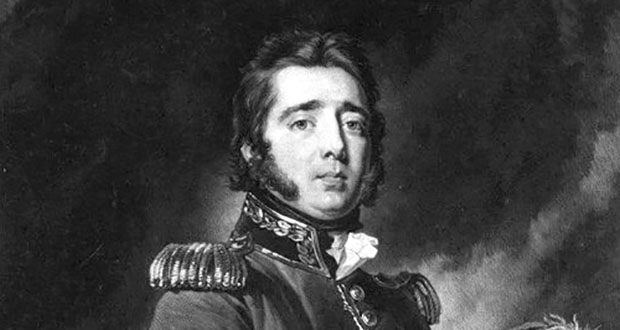
In the 1820s, Gregor MacGregor went beyond typical cons, inventing an imaginary Central American country called Poyais, complete with a flag, banknotes, and a nobility system. Capitalizing on Britain's economic boom, he raised almost $6 billion by offering bonds for the fictional land's development. He also convinced Scottish settlers to seek fortunes in Poyais. However, the reality was devastating, with starvation, disease, and suicides claiming two-thirds of the settlers. MacGregor's scheme failed, and he fled to Paris, attempting a similar trick before eventually escaping to Venezuela and avoiding returning to Europe.
17. In 1983, the West German magazine Stern published what they believed to be Adolf Hitler's unseen diaries, purchased for $4 million. Handwriting experts confirmed their authenticity, but skepticism led to further tests, revealing modern stationery and forgery. Editors, including those from Stern, The Sunday Times, and Newsweek, resigned. The diaries were later exposed as a hoax, forged by Konrad Kujau, a small-time crook.
18. In 2009, Richard and Mayumi Heene claimed their son Falcon had floated away in a helium balloon shaped like a flying saucer. The media covered the incident extensively, dubbing Falcon "Balloon Boy." However, it was later revealed as a hoax when Falcon was found hiding in the attic. Richard Heene received a 90-day jail sentence and a restitution order, while Mayumi served 20 days of community service. They were also prohibited from financially benefiting from the incident.
19. Joseph B. Swan, a Colorado farmer with a penchant for practical jokes, pulled off a simple yet effective hoax by claiming to grow 26,000 pounds of potatoes in a year on one acre of land with his special "Maggie Murphy" variety. Using a carved piece of wood, he posed in a photograph with a giant 86-pound potato, which became widely circulated. Despite the skepticism of experts who exposed the fake, Swan received numerous requests for his special potato seed until he eventually revealed the hoax, claiming the magnificent potato had been stolen and he was quitting the spud business.
20. In 1726, a woman named Mary Toft claimed to give birth to rabbits, gaining public attention. Surgeon John Howard, after inspecting the remains, endorsed the story, and Mary allegedly delivered more rabbits. The bizarre tale even led to a royal investigation. However, Mary's hoax was exposed when evidence of purchased rabbits emerged. She confessed, and her five-month jail term followed.
21Nat Tate: Boyd's Art World Satire

In 1998, acclaimed British novelist William Boyd orchestrated an elaborate literary hoax with the publication of Nat Tate: An American Artist 1928-1960. The biography detailed the life of Nat Tate, an abstract expressionist who supposedly destroyed 99 percent of his work and took his life, but it was entirely a figment of Boyd's imagination. Presented as real and reviewed extensively, the hoax involved collaboration with Tate Britain, the National Gallery, and even a public reading by David Bowie on April Fools' Day. The elaborate ruse aimed to expose the pretentiousness of the art world, as revealed when a reader exposed the hoax in The Independent.
22. On April Fools' Day in 1957, the BBC aired a deceptive episode of Panorama, a documentary show, claiming a Swiss family harvested spaghetti from trees. The mockumentary featuring renowned broadcaster Richard Dimbleby captivated UK viewers who were unfamiliar with spaghetti. Many sought advice on growing their spaghetti trees, prompting the BBC to humorously suggest placing spaghetti in tomato sauce and hoping for the best.
23. In 1725, Dr. Johann Berringer, Dean of the Faculty of Medicine at the University of Würzburg, was pranked by colleagues who planted over 2000 fake "lapides figurati" (stones with recognizable images). Despite obvious signs, such as stones forming insects and a Hebrew text spelling "Jehovah," Berringer published a book about his finds. His colleagues, regretting the prank, unsuccessfully tried to dissuade him. The scandal unfolded when Berringer realized the deception, leading to legal action and ruined careers for all involved.
24. In 1967, Leonard Lewin published the controversial "Report From Iron Mountain On The Possibility And Desirability Of Peace," allegedly from a secret 15-man panel advocating perpetual war for economic stability. It recommended the government establish a perpetual war to maintain the economy and global status quo. It sparked widespread debate, with some labeling it a hoax and others seeing it as confirmation of a conspiracy to prolong the Vietnam War. Five years later, Lewin admitted fabricating the report to satirize think tanks and promote contemplation on transitioning to a peacetime economy, but conspiracy theorists persist in believing its authenticity.
25. In the early 1900s, Wilhelm von Olsten showcased Clever Hans, a horse claimed to possess extraordinary math skills. Osten, a mathematics teacher, traveled for free exhibitions, where the horse would answer questions by tapping his foot. Doubters prompted independent studies, revealing Hans couldn't answer unknown questions. His true ability was tapping until people signaled the correct answer, fooling audiences and earning applause.


