

26Unique Bison Population on Antelope Island
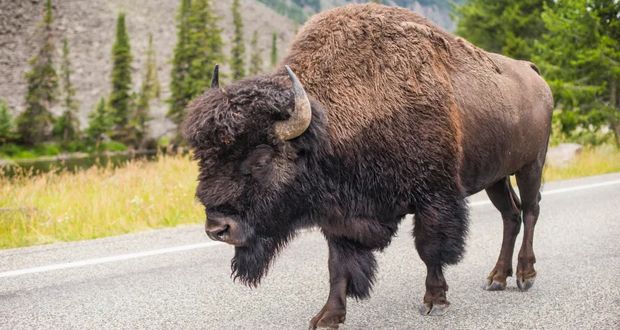
A unique population of bison, genetically distinct from most farmed bison, has established itself on Antelope Island in the Great Salt Lake. This herd is crucial for providing genetic diversity to support and reestablish wild bison populations across North America, helping to ensure the species' long-term survival and ecological health.
27. The Norwegian Forest Cat nearly went extinct during World War II due to cross-breeding with free-ranging domestic cats. The Norwegian Forest Cat Club's official breeding program, which started post-war, helped the breed recover and gain recognition.
28. In the 1980s, the last 29 Guam kingfishers were captured to save the species from extinction caused by invasive brown tree snakes. Thanks to zoo breeding programs, their population has grown to 140 (as of 2020), with future plans to reintroduce them to their native habitats.
29. In Rochester, New York, six webcams monitor Peregrine Falcons nesting on the Times Square Building and Kodak Office Tower as part of a decades-long effort to reintroduce this species, which nearly went extinct in upstate New York due to DDT pesticide exposure.
30. In the 19th century, the United States made efforts to reintroduce squirrels to urban areas, even using them as educational tools to teach children kindness.
Latest FactRepublic Video:
15 Most Controversial & Costly Blunders in History
31Michigan's Moose Lift Success Story

In January 1985, Michigan's Department of Natural Resources airlifted 59 moose from Ontario’s Algonquin Provincial Park to Marquette County in an effort dubbed "Michigan's Moose Lift," aiming to re-establish the dwindling moose population in the Upper Peninsula. By 2011, this initiative had successfully increased the moose population to approximately 433.
32. The Bronx hosts a thriving population of wild parrots, initially introduced due to the pet trade but now making the area their home by nesting on warm baseball field lights. They have since spread across other boroughs, including Manhattan.
33. The Judean Date Palm was extinct until scientists germinated 2,000-year-old seeds found in an ancient jar in Israel, dating between 155 B.C. and 64 A.D., successfully bringing the tree back into existence.
34. In 2003, scientists "resurrected" the Pyrenean ibex, an extinct species, bringing back one living specimen, which tragically died seven minutes later from a lung defect. It thus became the first animal to go extinct twice.
35. The 1990s reintroduction of the extinct Red Kite to England was so successful that the population has grown exponentially, making accurate counting impossible. Other European countries are now using English kites to reintroduce the bird.
