

26Spectacled Bears of S. America
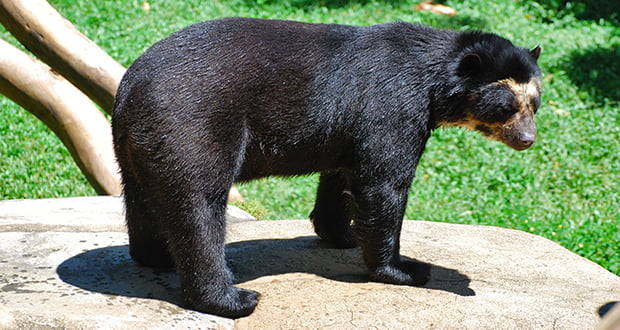
Only the spectacled bear is indigenous to South America. One of four living bear species, they are also known as Andean bears since they prefer to spend most of their time in trees. Only 5–7% of their diet consists of meat, making it predominantly vegetarian. Paddington Bear was based on this species of bear.
27. In the past, South America was home to carnivorous, flightless birds that reached heights of 8 feet and weighed as much as 300 pounds. They were commonly referred to as "terror birds." It lived approximately 5 to 2 million years ago.
28. Capybaras are the world's largest extant species of rodent, and they have flourished well in South American cities, where they are commonly spotted in parks and around lakes. Capybaras are tame and often tolerate being petted by humans; however, this is not recommended due to the ticks these mammals carry, which can transmit Rocky Mountain spotted fever.
29. The prehistoric Titanoboa snake could reach a length of 42 feet and a weight of up to 2,500 pounds. It is believed to have preyed on giant crocodiles and existed in what is now South America.
30. The great South American liberator Simón Bolívar was known as "Iron Butt" (culo de hierro) for his "endurance on horseback." In the 1800s, "iron butt" helped liberate Venezuela, Bolivia, Colombia, Ecuador, Peru, and Panama from Spanish rule.
Latest FactRepublic Video:
15 Most Controversial & Costly Blunders in History
31French Guiana in EU

As an overseas department and region of France, French Guiana lacks the autonomy of a true independent state. French Guiana is in South America, but it is part of the European Union, uses the euro, and everyone who lives there is a French citizen, even though the country is in South America.
32. About 2.7 million years ago, the Isthmus of Panama rose, creating a land bridge between North and South America. This is when the Great American Interchange happened, which saw bears, cougars, and horses heading south and creatures such as armadillos, opossums, porcupines, and others migrating northward.
33. Because Brazil has a much larger population than any of the other Spanish-speaking countries in South America, Portuguese is the most widely spoken language in South America.
34. Colonia Tovar is a little town in Venezuela that was founded by German immigrants in 1843, and it has remained true to its Germanic roots ever since, earning it the nickname "The Germany of the Caribbean" due to its authentic architecture, cuisine, and language.
35. Dutch is spoken widely in Suriname, in South America, but the locals also speak Sranan Tongo, a creole language derived from Portuguese, Dutch, and West African languages. The population consists of aboriginals, Dutch, Indonesians, Indians, Chinese, and escaped slaves (Maroons). As a result of centuries of Dutch control and the subsequent forced or voluntary migration of people of many different nationalities, the country is now one of the most culturally and religiously diverse places on the planet.


