


1Uruguay's Champagne

Only Uruguay, besides France, is allowed to freely use the term "champagne." This is because of a debt owed by France to Uruguay following World War 2. All other nations must use the word "sparkling wine" when selling this kind of product.
2. During a naval fight between Argentina and Uruguay in 1841, the Uruguayan ship eventually had to retreat due to a lack of ammunition. The captain gave the order to load the cannons with the hard balls of cheese they had on board and shoot them. The Argentinean ship lost two sailors when the cheese tore holes in the sails of their ship.
3. The South American nation of Paraguay runs entirely on hydroelectric power but only uses around 10% of the electricity it creates, sending the rest of it abroad. Almost all of this energy comes from the Itapu dam, which is the source of about 25% of Brazil's electricity.
4. Scopolamine, sometimes known as "Devil's Breath," is a hallucinogen popular in Colombia. People under the influence of this drug appear normal, but they lack the ability to exercise their own free will, making them easy prey for thieves who can convince them to hand over their money and possessions and then forget about it the next day.
5. In 1862, Peru commissioned the construction of a hospital ship, which is still in use today. The original steam engine is still in use, and it is still powered by dried llama dung.
Latest FactRepublic Video:
15 Most Controversial & Costly Blunders in History
6Maned Wolf
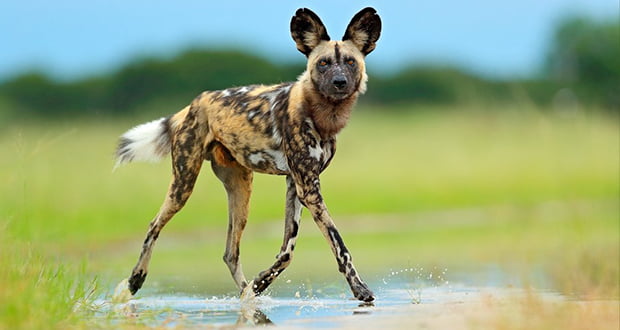
In South America, the maned wolf is the biggest canid. Rather than a wolf, it resembles a fox with long legs. Studies of its genes indicate that it is a separate species from both foxes and real wolves. It is the sole member of the Chrysocyon genus.
7. Surprisingly, French Guiana, an overseas region of France, is home to the European Union's and France's largest national park. This protected area in Guyana is known as the Guiana Amazonian Park.
8. In 1928, the United States threatened to invade Colombia to put an end to a strike by employees of the Chiquita Fruit Company. In what has been dubbed the "Banana Massacre," the Colombian army opened fire on unarmed protestors, including men, women, and children, resulting in between 800 and 3,000 deaths.
9. Tierra del Fuego, located at South America's southernmost tip, is technically an archipelago separated from the continent by the Strait of Magellan. One of the languages spoken on this archipelago, Yaghan, has lost all but one of its native speakers as of the year 2019. When Cristina Calderon's sister-in-law, the only other known native speaker of Yaghan, passed away in 2005, she became the language's sole surviving speaker.
10. In an attempt to break the grip of colonial elites and establish a mestizo society, Paraguay's first dictator, José Gaspar Rodrguez de Francia, established a decree in 1814 that restricted the marriage options available to colonial residents to blacks, mulattoes, and natives. Because of this regulation, the country is one of the most racially integrated in all of Latin America.
11Microclimates of Peru
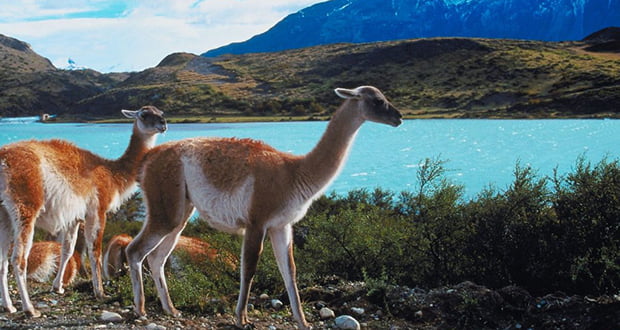
There are 90 distinct microclimates in Peru, representing 30 of the world's 32 climates, making it one of the most climate-diverse countries in the world.
12. Around 50 beavers were first introduced to Tierra del Fuego, an island at South America's southernmost tip, in 1946 to boost the local fur trade. While no such fur trade ever materialized, Patagonia's forests have been irreparably damaged by the beaver population, which is now estimated to be over 100,000.
13. On the 25th December of each year, the residents of one Peruvian village celebrate a holiday known as "Takanakuy," during which they challenge each other to a fistfight to settle any unresolved grudges from the past year. After that, everyone gets drunk to forget the past year and welcome the new one.
14. From orbit, you can sometimes actually watch a massive amount of sand moving from the Sahara Desert to South America. The Amazon rainforest is nourished by this nutrient-rich sand. It's a major factor in the area's extraordinarily high biodiversity.
15. In 1865, the dictator of Paraguay launched an ill-advised war against Brazil, Argentina, and Uruguay. Over half of Paraguay's population, and as much as 90 percent of its male population, died in just five years. It was probably the worst military defeat a modern nation-state had ever faced.
16War of World Prank in S. America

Some time after the initial airing of "War of the Worlds," a similar hoax was attempted in Ecuador. When the public discovered it was a hoax, they encircled the radio station and burned it to the ground, killing an estimated 100 individuals inside. A few lucky folks jumped out of windows, but about 20 people perished.
17. Mount Everest, when measured in terms of its elevation above sea level, is the highest peak in the world. However, if you measure from the planet's center, where it bulges slightly near the equator, the Chimborazo in Ecuador is the tallest mountain in the world.
18. As part of an anti-fascist and anti-Nazi "goodwill tour," Walt Disney was sent to South America by President Franklin D. Roosevelt. He worked with Jose Carioca on the film "Saludos Amigos" to improve ties between the United States and South America.
19. Today, there are more than 100 uncontacted people worldwide. Most of them call the remote rainforests of South America and New Guinea home.
20. It's impossible to drive to Iquitos, Peru's largest city. You'll need an aircraft or a boat to get there.
21Prehistoric Giant Sloths

The South American continent was formerly home to enormous sloths (Megatherium). It was the largest known bipedal mammal, with a potential weight of 4 tons (about the same as a modern elephant) and a height of 3.5 meters (12 feet) when standing on its hind legs. It existed between 400,000 and 8,000 years ago.
22. There are still 6-foot-long giant otters that exist in the wild, but they are secluded to just three river basins in South America. They are capable of taking on crocodiles (Caimans specifically) as a pack, and they hunt in large numbers.
23. After the American Civil War, many individuals who supported the Confederacy emigrated to Mexico and other parts of South America. Many people from the American South decided to relocate to Brazil, where they founded communities with names like "Americana" and "New Texas."
24. There was a war between Peru and Ecuador in 1941. Neither nation was an Axis or an Allied power. In other words, this was an international war that broke out during World War 2 but had nothing to do with the European theater.
25. Arthur Raymond Chung, President of Guyana, South America, from 1970 to 1980, is noted for being the first ethnically Chinese head of state in a non-Asian majority country.


