


26Bluefin Tuna Trash?
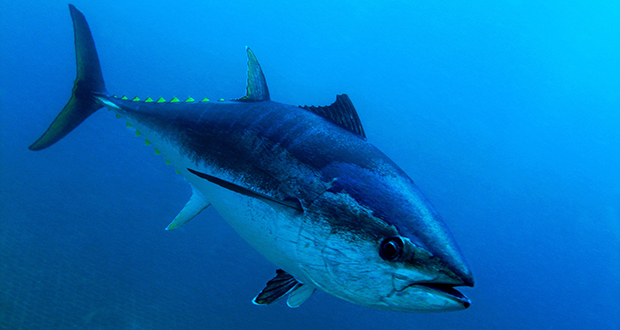
Bluefin Tuna, the most expensive fish in the world, was considered a trash fish until the 1970s. Its reputation was so bad in Japan that it was referred to as “neko-matagi”, which meant food too low for even a cat to eat.
27. Up until 1974, banks could refuse to issue a credit card to a woman unless she was married and her husband co-signed for the card. A divorced woman was considered too much of a risk because she “couldn't keep a marriage under control.”
28. For most of history, smiling in a painting or photograph was considered radical, and even Mark Twain once wrote, “A photograph is a most important document, and there is nothing more damning to go down to posterity than a silly, foolish smile caught and fixed forever.”
29. At the premiere of Beethoven's 9th symphony, police had to break up the applause, as the amount he was receiving was considered inappropriate for a private citizen.
30. The bikini was considered so skimpy back in 1946 when it was first designed that no model agreed to wear it and its designer Louis Réard had to hire a nude dancer from Casino to wear it at swimsuit review.
Latest FactRepublic Video:
15 Most Controversial & Costly Blunders in History
31Impotency Lawsuit

In Renaissance France, a woman could take her husband to court if he was impotent. Because marriage was created by the church in part as a means for procreation, to be unable to “uphold your end of the bargain” was considered a form of fraud.
32. In the 1900s, Margarine was considered contraband in 30 U.S. states, and some states felt so strongly about this substance that they required it to be dyed pink in order to make it look less appetizing.
33. In 2011, Russian President Dmitry Medvedev signed an order making beer an alcoholic drink. The law went into effect on 01/01/2013. Before this, any drink under 10% alcohol was considered a soft drink.
34. In the early 1900s, Celery was considered a delicacy and one of the most popular foods in America. Kalamazoo was the Celery capital of the world.
35. In the 16th century Europe, it was considered manly for men to wear elaborate headdresses made of ostrich feathers.
36Snake Oil Salesmen
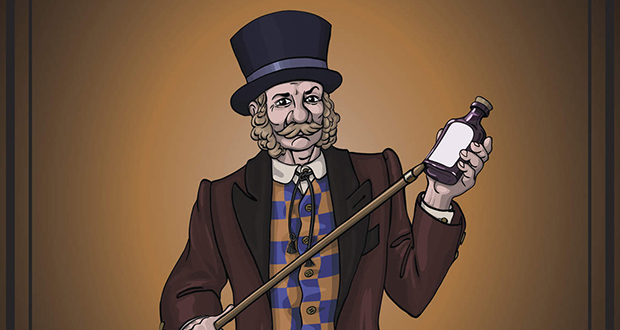
The original "Snake Oil Salesman" wasn’t convicted of selling snake oil. He was convicted of selling fake snake oil. Oil from Chinese water snakes was considered a legit medicine at the time, but Clark Stanley was convicted in 1917 of selling fake snake oil.
37. For hundreds of years, people believed that the Egyptian pyramids were used to store grain.
38. Marconi believed, late on in life, that no sound ever dies completely. He dreamt of building a device strong enough to pick up the actual words of Jesus at the ‘Sermon on the Mount.’
39. Dying by crucifixion was considered so shameful in the ancient world that early Christians made up an alternate ending in which a man was mistakenly crucified in Jesus’ place.
40. Lobsters were routinely fed to prisoners, apprentices, slaves and children during the colonial era and was known as the poor man’s food.
41The Waltz
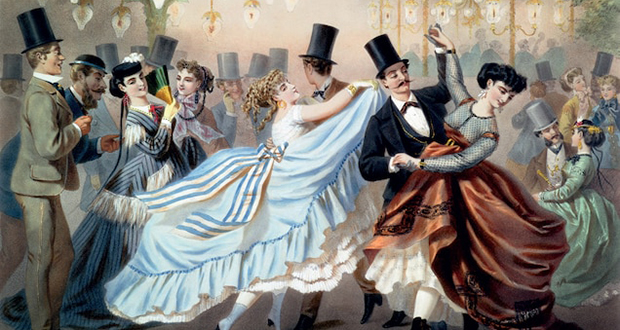
The Waltz was considered “riotous and indecent” as late as 1825.
42. In the 18th century Europe the Pineapple was considered as a symbol of wealth and power. In England, you could even rent one for a night to show off to other people.
43. Poème Symphonique was an experimental composition that was played on 100 metronomes. It was so controversial that the broadcast of its first performance on Dutch television was canceled and replaced by a soccer game.
44. The WPA painting “The Fleet’s In!” was considered so scandalous by the US Navy that it was removed from the public by Assistant Secretary Roosevelt, who kept it above his mantel until he died.
45. The snow scene in The Wizard of Oz (1939) used industrial-grade asbestos as Snow. Cotton was used as fake snow until the 1920s but was considered a fire hazard. Firefighters recommended using Asbestos because it was fire retardant.
