

26Grafting in Cows
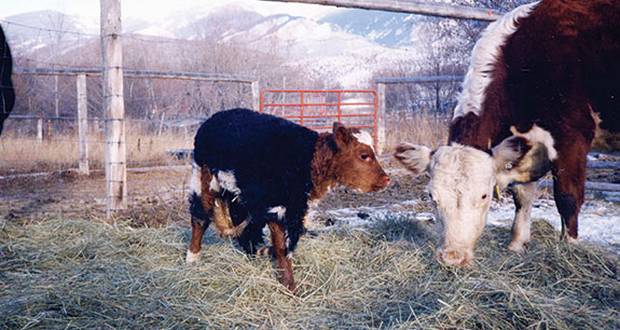
A cow can be tricked into nursing a calf not her own by skinning her dead baby and putting the skin on another calf. The practice is called "grafting".
27. When a female blue whale gives birth to its calf, it can weigh up to 3 tons and stretch up to 25 feet, which already makes it as one of the largest creatures on earth. It can grow an impressive 200 pounds a day during its first year of life.
28. Infanticide has been observed in dolphins, where a male dolphin will attempt to kill a newly born calf to free its mother for mating.
29. Due to the scarcity of food in their natural habitat, newborn wild Axolotls will resort to cannibalism and eat their siblings' limbs. The victims still have chances to survive though, since the Axolotl can regenerate not only limbs but major organs such as gills at any stage in its life.
30. Giraffes give birth standing up, requiring the newborn to fall 6 feet to the ground.
Latest FactRepublic Video:
15 Most Controversial & Costly Blunders in History
31Polar Bears Cubs
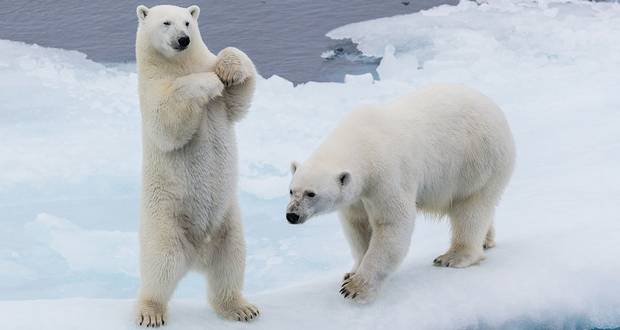
Most polar bears are twins and while they are the largest land carnivore, newborn cubs are only about 10 inches (25 cm) long and weigh about 2.2 pounds (1kg). They grow rapidly because the mother's milk they feed on is 31% fat.
32. Dolphins are born with mustaches (hair around the upper lip). A mustache helps newborn dolphins locate and feel their mother for the first few days of nursing and falls off after a week or so because of a natural depilatory process.
33. Female kangaroos can be perpetually pregnant. While the young joey is nursing in her pouch, another embryo will put itself "on hold" until the new baby leaves the pouch, after which the inch-long newborn kangaroo will crawl up to and into the pouch.
34. Fawns (baby deer) are often left alone for hours while their mothers forage for food. Sometimes well-meaning people 'kidnap' the fawn thinking it has been abandoned when it is just waiting for its mom.
35. Pandas will sometimes fake pregnancies to receive more food and special treatment from humans.
36Pausing Pregnancies in Kangaroos

Kangaroos can pause their pregnancies for up to two years in times of hardship. They will then start it up again when conditions improve.
37. Mother black bears do not typically attack to defend their cubs. They may show harmless bluster, which makes them seem ferocious. Defense of cubs against people is mainly seem in grizzly bears not black bears.
38. When newborn opossums latch onto their mother's nipple for the first time, the nipple swells, and the baby becomes stuck to it for 55 to 60 days.
39. Scientists have attempted to grow panda fetuses in a cat. It worked, but the cat's mother died of pneumonia before she completed term.
40. Pigeons, penguins, and flamingos don't feed their newborn young regurgitated food but instead puke up their cells from the crop and esophagus made specifically to feed young. The sloughed cells have more protein and fat than mammalian milk.
41Dolphin Mother's Sleepless Nights

Newborn dolphins and their mothers don't sleep for the first month of the infant's life and barely sleep for the next few months.
42. It is vital for newborn kittens to begin drinking milk soon after birth and 24 hours at the latest. During the first several days after giving birth, mother cats give off "colostrum" which is a watery and yellowish substance that is full of maternal antibodies, proteins, and minerals.
43. Baby koalas have to eat their mother's feces for the first few months of their lives. This is due to the fact that the young ones cannot yet fully digest and break down the toxins in eucalyptus leaves.
44. You should always check a dead mama opossum's pouch for babies. Just because the mom is dead doesn't mean the babies are and a wildlife rehabilitator can potentially save them.
45. A wombat's pouch is backward so no dirt will get in when they're digging. This also means baby wombats always look at their mom's crotch.


