

11Telegraph

When the telegraph appeared in the 19th century many early telegraph operators were young men and women who often used their machines to chat with each other and even arrange dates. The telegraph was thus a forerunner to modern chat and dating apps.
12Rotary payphones

Rotary payphones were reinstalled during the '80s and 90's to discourage drug sales because they couldn't be used to call dealer's pagers.
13Pneumatic tube mail

Until 1953, New York City had a pneumatic tube mail network that spanned 27 miles and connected 23 post offices. At its peak, the system moved 95,000 letters a day.
14Tape recorder

Old school computers like the Apple could save and load games to/from cassette tapes in a tape recorder. This basically worked by interpreting the audio data as game data. This prompted some pirate FM radio stations in the 1980s to broadcast games right over FM radio every weekend.
15Cassette tapes

Back in the 1980’s people were able to download Video Games from a radio broadcast by recording the sounds onto a cassette tape that they could then play on their computers.
16PXL-2000

In 1987, Fisher-Price manufactured and sold a camcorder named PXL-2000 capable of recording video footage to standard audio cassettes.
17Stereobelt

Stereobelt was a personal stereo audiocassette player invented by a former television executive and book editor in the early 1970s. He fought for and eventually received over $10 million in royalties from Sony, which came out with a similar device called the Walkman on July 1, 1979.
Latest FactRepublic Video:
15 Most Controversial & Costly Blunders in History
18Computer mouse
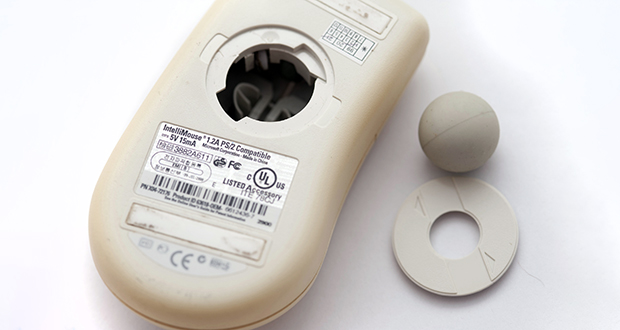
The ball in an old computer mouse was not made of hard rubber, but it was a metal ball coated in rubber.
19Film cartridges

The first imagery satellites took pictures with old school film cartridges that had to be developed in black rooms back on Earth. To retrieve these cartridges, the satellites would drop them into the atmosphere and planes would catch them mid-air.
20Tabulating machine D11
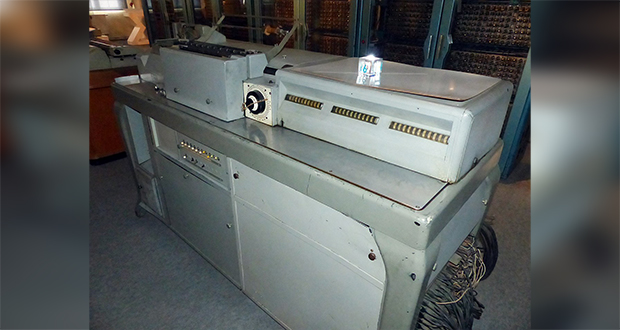
Dehomag, a German subsidiary of IBM and was the main provider of computing equipment in Nazi Germany. It provided the German government with machines named Tabulating machine D11 to conduct censuses and gave the Nazis a way of tracing Jews. The technology was used by the Gestapo to locate and arrest its victims.


