

11Percent symbol
The percent symbol (%) is supposed to be a fraction of zero over zero. There are higher symbols such as the permille sign (‰) and others for smaller percentages.
12Tree(3)
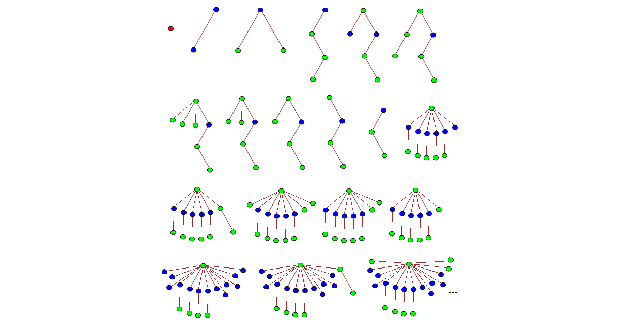
Tree(3) is a number so large that Graham's number of people wouldn't be able to begin calculating it. The only thing we know about Tree(3) is that it is finite. We do not know what it is or even how many digits there are.
13Lucky number
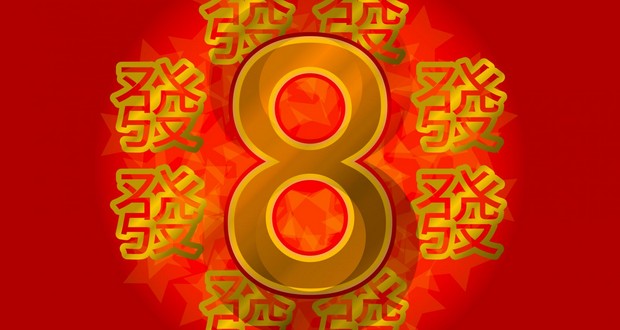
The number 8 is such a lucky number in China that the Chinese government scheduled the Beijing Olympics to begin 8 seconds after 8:08 on 8/8/2008.
14Trigonometry
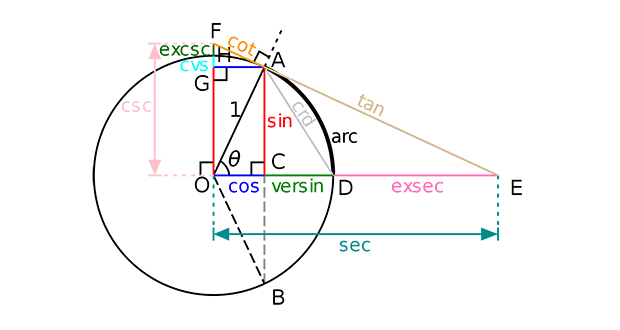
Trigonometry was invented by Muslim mathematicians as a way for worshippers to calculate the direction to Mecca for prayer.
15Kaprekar's constant
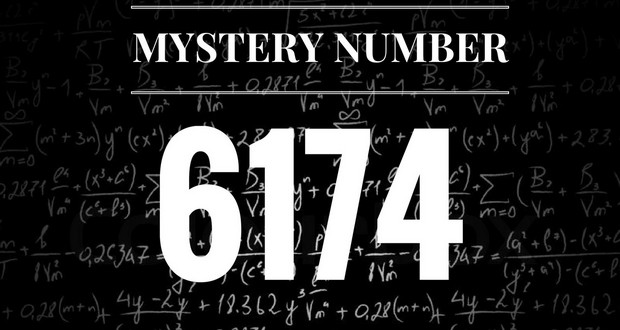
6174 is Kaprekar's constant. If you have a 4 digit number with at least 2 distinct digits, order the numbers within it in ascending and descending order, subtract the smaller number from the larger, and repeat with the result, you'll eventually always end up with 6174.
1673939133
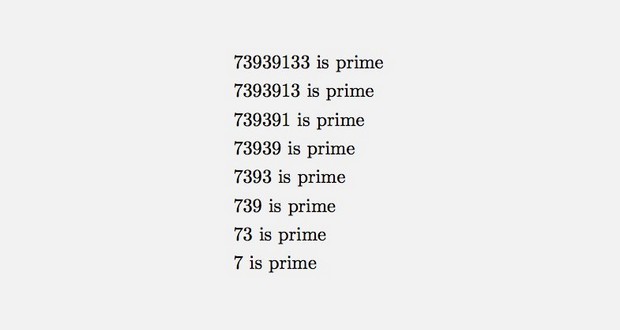
73939133 is the largest known prime number that, if you keep removing digits from the right, will always leave a prime number.
17Abū al-Wafā' Būzjānī
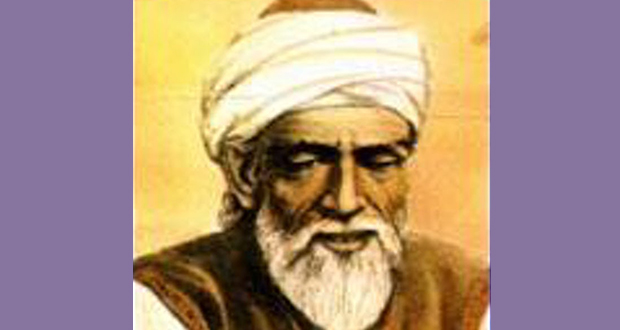
Abū al-Wafā' Būzjānī was a Persian mathematician and astronomer who worked in Baghdad and made important innovations in spherical trigonometry.
Latest FactRepublic Video:
15 Most Controversial & Costly Blunders in History
18Henri Poincaré
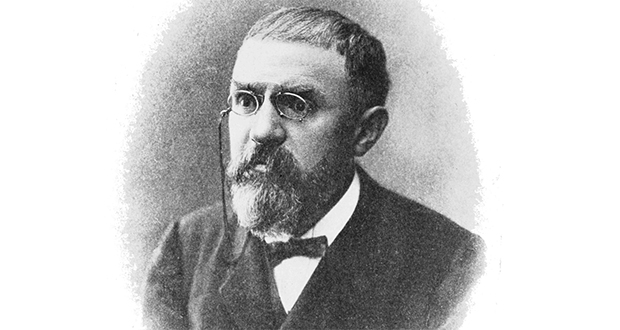
In 1887, a mathematician named Henri Poincaré received a prize for his work on the stability of the solar system. A year later, after finding an error in his own work, he published a paper contradicting it, which led to the development of chaos theory.
19Longest mathematical proof
The longest mathematical proof is 15,000 pages long, involved more than 100 mathematicians and took 30 years just to complete it.
20Per Enflo
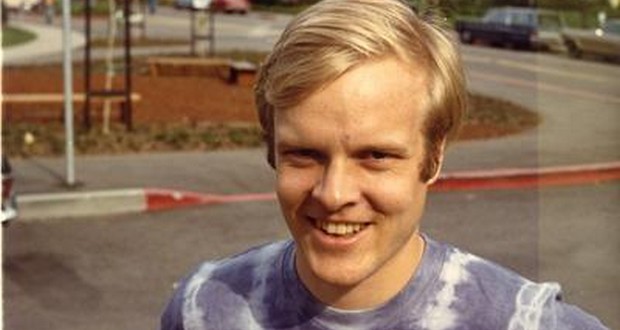
A mathematician named Per Enflo solved Problem 153 in the "Scottish Book" in 1972 and was awarded a live goose as promised by Polish mathematician named Stanisław Mazur, who posed the problem in 1936.


