


26Medieval Hairstyles
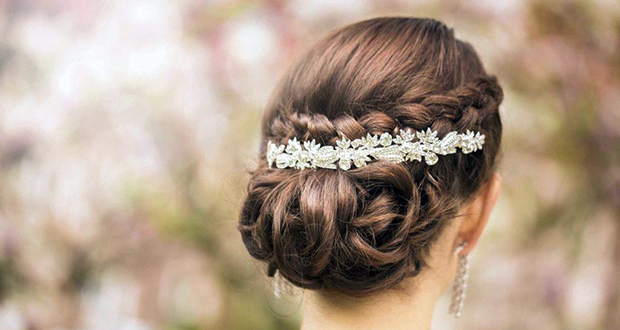
In medieval times, women’s hairstyles showed if they were single or married. Married women would have kept their long hair tied up in braids beneath a head covering of some sort. Single women allowed their hair to fall freely over their bodies signalling that they were available for marriage.
27. Caca Dauphin was a fashion craze that was based on the poop color of Marie Antoinette’s son. It was fashionable to spend thousands of dollars to dress in the particular shade of brown the young prince excreted.
28. The inventor of Velcro took 20 years to take his idea from concept to production and even then the apparel industry wasn’t sold on it. It wasn’t until NASA came along asking about it for use in space that the fashion industry then went wild due to it now being space-aged.
29. The “Grecian Bend” was an effect of the extremes of women’s fashion in the 1860s where the combination of heels and material caused women to tilt, or bend, forward.
30. During the Victorian Era, there was a tapeworm diet trend. The style was to have pale skin, eyes that looked dilated, red cheeks and lips, and a tiny waist. In the age of corsets, they also ingested tapeworms to lose weight. This trend is still practiced today by some women who take a pill that has a tapeworm egg inside.
Latest FactRepublic Video:
15 Most Controversial & Costly Blunders in History
31Beard Tax
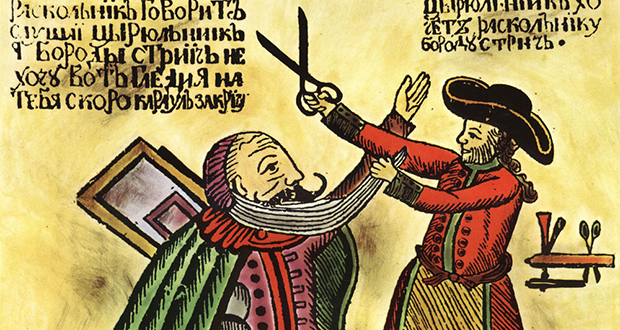
In 1698, Peter the Great introduced the “Beard Tax” after he visited Western Europe and liked their fashion sense. Anyone with a beard was forced to pay tax for it, and in turn, given a beard token. If you were stopped by the police without the token they would immediately shave your face on sight.
32. T-shirts have existed since the late 1800s, and were not considered fashionable stand-alone garments until the 1950's when Marlon Brando wore one in the film “A Streetcar Named Desire.”
33. In 1770, the British Parliament passed a law condemning lipstick, stating that “women found guilty of seducing men into matrimony by a cosmetic means could be tried for witchcraft.”
34. Roman busts sometimes had removable “hair” so that you could update it later on with the current fashionable hairstyle.
35. Mexican pointy boots are a style of pointed fashion boots made with elongated toes that are popular footwear for men in parts of Mexico. The boots are commonly worn in an ironic and comedic way by males involved in the música Trival subculture.
36Normcore
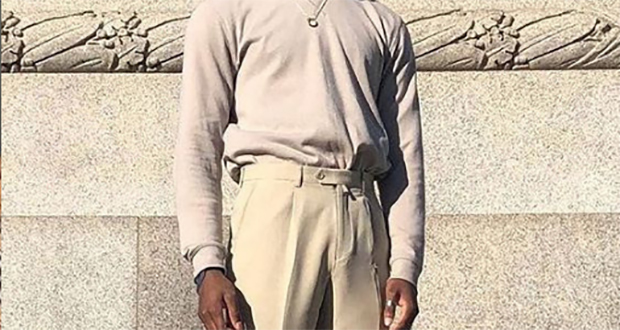
Normcore as a fashion style emerged to help blend in with normal/casual attire. Wearers are people who do not wish to distinguish themselves from others by their clothing.
37. In the 1920s, fashion designer Coco Chanel accidentally got sunburnt while visiting the French Riviera and she returned home with a suntan. Because of Coco’s status and the longing for her lifestyle by other members of society, tanned skin became seen as fashionable, healthy, and luxurious.
38. A Baltimore hairdresser helped prove that ancient Roman Vestal Virgins’ hairstyles were not wigs, as was commonly believed, but was instead achieved through the use of needle and thread, which she showed by recreating the hairstyle on a live person for the first time in centuries.
39. During World War 2, nylon was being rationed leaving women with no stockings, and since going out bare-legged was a fashion faux pas, women had to get creative and began painting on their stockings. Some even used eyeliner to draw a trompe l’oeil seam on the back of their legs.
40. “The Great Male Renunciation” was a late 18th-century phenomenon during which Western men stopped using brilliant or refined forms in their dress, which were left to women’s clothing.
41Consumptive Chic
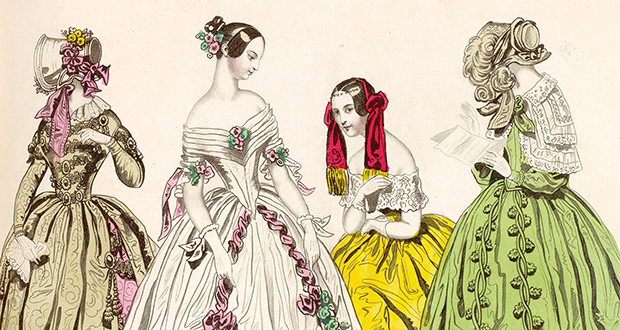
Tuberculosis was so romanticized during the Victorian era that fashion trends emerged to highlight and emulate the symptoms of the disease. This fashion movement is referred to as “Consumptive Chic.”
42. Many women at the turn of the 20th century wore maternity corsets when they were pregnant to minimize the appearance of their bellies.
43. The miniskirt is named after the Mini Cooper and not the skirt's size. The designer, Mary Quant loved Mini Cooper cars and named the garment after them, saying that car and skirt were both “optimistic, exuberant, young, flirty,” and complimented each other.
44. American women didn’t start shaving their armpits until 1915. This sudden change was brought on due to an advertisement in Harper’s Bazaar fashion magazine. It was so effective that now 90% of US women shave their pits.
45. During World War 2, at the urging of the US government, actress Veronica Lake changed her signature hairstyle because women working in wartime machine shops were often injured when their long hair became tangled in machinery. Doing this might have even harmed her career.
