



1Quasar 3c273 vs Sun
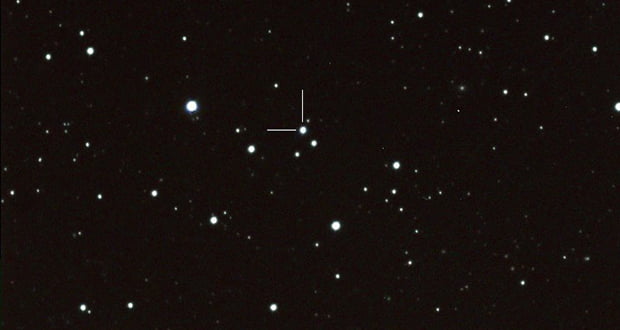
Quasar 3c273 is 4 trillion times brighter than the sun and 100 times brighter than the output of all the stars in the Milky Way. It’s so bright, that if it were 33 light years away, it would shine just as bright in the sky as the sun, which is only 8 light minutes away.
2. Some of the shooting stars we see are actually astronaut poop burning up in the atmosphere.
3. A star discovered 75 light-years away is no warmer than a freshly brewed cup of coffee.
4. There are more trees on Earth than there are stars in the Milky Way galaxy.
5. In 1994, when the Northridge earthquake knocked out the power in Los Angeles, people contacted authorities and observatories wondering what the strange bright lights (stars) in the sky were.
Latest FactRepublic Video:
15 Most Controversial & Costly Blunders in History
6Segue 2
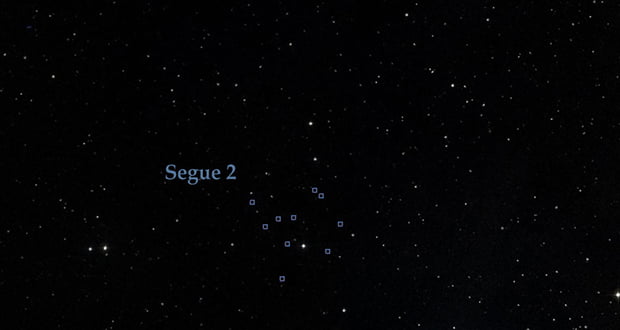
A dwarf galaxy named Segue 2 is the least massive galaxy in the known Universe, located 114,000 light-years away. The galaxy consists of just 1,000 or so stars with a bit of dark matter holding them together
7. NASA dubbed Galaxy NGC 4151 the "Eye of Sauron" for its striking similarity to Tolkien's character.
8. Scientists have found a star, now known as S2 that is orbiting a supermassive black hole at the center of our galaxy at speeds exceeding 11,000,000 mph.
9. Light entering our eyes from the top half of the Andromeda Galaxy is approx. 250,000 years older than the bottom half.
10. Quasars emit more energy than thousands of times the entire output of our galaxy.
11SN 1604

The last time a star went supernova in our galaxy was in 1604, and we're overdue for another one.
12. Supernovae explode on an average once every 100 years in a galaxy. Assuming there are 170 billion galaxies in the universe, there are 53 supernovae exploding every single second.
13. In 2011, scientists estimated that there are at least 50 billion planets in the Milky Way, of which at least 500 million are in the "habitable zone" of their star. As of January 2013, the number of estimated planets in the Milky Way has more than doubled.
14. The Earth and our solar system are currently traveling through in an area with only 5% of the average density of the Milky Way Galaxy. It was likely blasted clear by a supernova 300,000 years ago.
15. The "North Star" is actually a handful of stars orbiting each other
16Observable universe
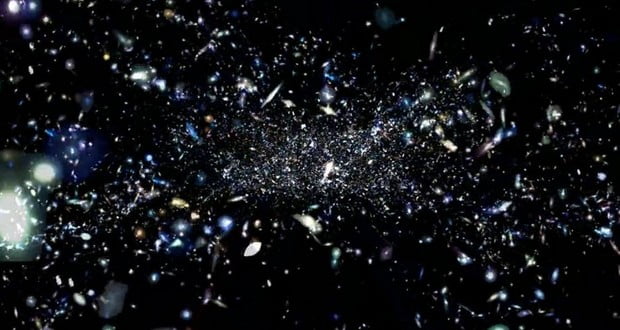
There are about 24 galaxies in the observable universe for every single person alive on earth (170 Billion galaxies/7 Billion humans)
17. The lowest note in the observed universe is caused by the rumbling of a black hole in the Perseus galaxy 250 million light years from Earth. It is 57 octaves below middle C
18. Half of all stars aren't in a galaxy
19. Scientists have named a galaxy, "Death Star Galaxy" because it is shooting an energetic blast of energy from its supermassive black hole at its companion galaxy and thereby destroying it.
20. It takes the Earth (and the Sun) 226 million years to orbit around the Milky Way Galaxy. Which means Earth has made the orbit around our galaxy about 20 times since the planet is 4.5 billion years old.
21Andromeda galaxy size
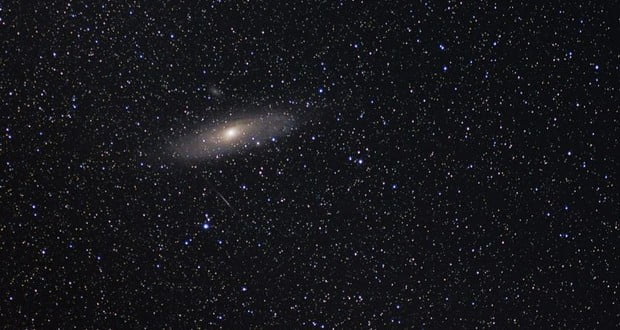
The visible size of the Andromeda galaxy is over 4 times that of our Moon when seen from earth. It is far too faint to be casually observed by the sky gazers. To an unaided eye, it just appears as a small, faint, fuzzy patch.
22. In 2013, South African and Swedish scientists discovered that dung beetles navigate using the Milky Way for orientation. They are the first animals proven to use our galaxy for navigation.
23. When you're looking at the Sagittarius constellation you're actually looking into the center of our galaxy.
24. It is theorized that if or when the Andromeda and Milky Way Galaxies collide in 3-5 billion years, chances of even two stars colliding is negligible because of the huge distances between them.
25. The Milky Way, Andromeda, and all the nearby galaxies are being pulled into something that we can't see that is tens of thousands of times more massive than our galaxy, called The Great Attractor.
