


Space looks peaceful from Earth, but the details are pure nightmare fuel: rock tides on Io, a Moon that keeps making water from solar wind, and starquakes that could strip atmospheres if they hit close enough. In Part 3, you will jump from Pluto’s strange legacy to JWST’s “little red dots,” plus the wild engineering behind Apollo, Voyager, and the first black hole photo.
For previous facts, click here to read: Part 1 | Part 2
1 Clyde Tombaugh’s Pluto Ashes Flight

In 1930, a 23-year-old farm boy named Clyde Tombaugh discovered Pluto after spending nearly a year comparing photographs of the night sky for a moving “star.” He had no astronomy degree at the time, but he later earned a master’s degree and taught at New Mexico State University. Tombaugh kept studying Pluto and the outer solar system throughout his life until he died in 1997, at age 90. In 2006, NASA launched a portion of his ashes aboard the New Horizons spacecraft, sending him on a posthumous journey to the world he had found.
2 Babylon’s Zodiac Drifted Off-Script

More than 3,000 years ago, Babylonian astronomers helped shape the familiar zodiac signs by tracking the Sun’s path through constellations across the year. Over time, Earth’s axis slowly precessed, which made the Sun’s modern position against the stars drift away from those ancient sign dates. That means a person’s traditional Western zodiac sign may not match the constellation the Sun actually appeared in at birth. The mismatch became even messier because the Sun also passes through Ophiuchus, a 13th constellation that the old 12-sign system left out.
3 We Move 500,000 Miles Hourly

The solar system orbits the center of the Milky Way at roughly 137 miles per second. At that speed, Earth, the Sun, and everything around us travel almost 500,000 miles along their galactic path in just one hour. So the place in space where you sat an hour ago is already far behind you.
4 Ole Romer Timed Light’s Delay

In 1676, Danish astronomer Ole Rømer timed the eclipses of Io, a moon of Jupiter, while working at the Paris Observatory. He noticed the eclipses seemed to run late when Earth moved farther from Jupiter and early when Earth moved closer. Rømer argued the pattern made sense if light traveled at a finite speed, because the signal had to cross a longer distance when Earth was farther away. Using that idea, he estimated light needed about 22 minutes to cross a distance equal to the diameter of Earth’s orbit, which is in the right ballpark but about a quarter too low.
5 Norman Lockyer Named Helium First

In 1868, astronomers spotted a strange yellow spectral line in sunlight and concluded it came from an element nobody had identified on Earth. British astronomer Norman Lockyer proposed it was a new element and named it helium, after the Greek word for the Sun, helios. Scientists later proved the Sun’s mystery gas really existed on Earth when William Ramsay and others isolated helium from uranium ore in 1895. That makes Helium the only element on the periodic table that was not discovered on Earth.
6 Apollo 11’s 200°F Sunlight

On July 20, 1969, Apollo 11 put Neil Armstrong and Buzz Aldrin on the Moon at Tranquility Base, where direct sunlight heated exposed surfaces to extreme temperatures. In later recollections of that first EVA, Armstrong described conditions as around 200°F, emphasizing how brutally hot the sunlit environment felt without an atmosphere to spread the heat. Mission reporting from Apollo also discussed temperatures around 180°F in the sun and deep cold in shadow. That is why the astronauts relied on reflective suits and life-support cooling to work outside at all.
7 EHT Flew Five Petabytes Airborne

To compose the first black hole image released in 2019, the Event Horizon Telescope team had to wrangle about 5 petabytes of recordings, enough to weigh more than half a ton in hard drive modules. They needed to move those drives to correlator centers in western Massachusetts and Bonn, Germany, so they literally put them on airplanes because shipping petabytes beat any practical internet transfer. Flying about 700 terabytes over roughly 14 hours works out to an effective transfer rate of about 14 gigabytes per second.
Latest FactRepublic Video:
15 Most Controversial & Costly Blunders in History
8 Murchison’s Two-Handed Amino Acids
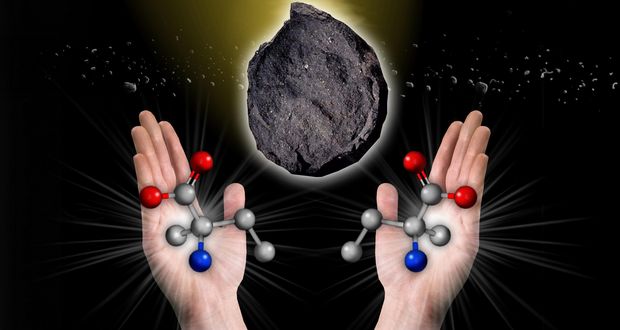
In 1969, the Murchison meteorite fell in Australia, and scientists found it loaded with organic compounds, including amino acids. The rock is a CM2 carbonaceous chondrite, which means water-rich fluids altered it on its parent body, so liquid water once played a role in its chemistry. Early studies reported many of its amino acids as racemic, with left- and right-handed forms in roughly equal amounts, which points to abiotic formation rather than Earth life that strongly favors the L-form.
9 SGR 1806-20’s Extinction Flare

On December 27, 2004, satellites detected an extreme gamma-ray blast from the magnetar SGR 1806-20, tied to a violent “starquake” on the neutron star. Even from tens of thousands of light-years away, the flare briefly disturbed Earth’s ionosphere. Scientists warned that if a similar event happened within about 10 light-years, it could severely damage Earth’s atmosphere, including stripping much of the ozone layer, and might trigger a mass extinction.
10 1054 Daylight Supernova Guest Star

When a massive star goes supernova, it can briefly shine with the power of an entire galaxy’s stars put together. In 1054, observers in China recorded a “guest star” so bright it was visible in daylight for 23 days, then continued to glow at night until about 1056. Today, astronomers link that blast to the Crab Nebula in Taurus.


RE: Fact #42 (White Dwarfs Cool Into Black Dwarfs) – I love stuff like this. It’s like how the night sky should technically be filled with a constant field of stars, but the light hasn’t reached us yet, and never will, because the universe is expanding at such an insanely fast speed. It blows my mind.
RE: Fact #28 (Pluto Failed the Neighborhood Test) – It’s classified as a dwarf planet. Does that mean it isn’t a planet? The word is right there in the name.
RE: Fact #45 (Sun Core Power Beats Human Metabolism) – 200 to 300 watts per cubic meter is basically the same power output as an active compost heap.
Sure, but one is isolated and surrounded by billions of others, while the other doesn’t stop heating up just because it gets too hot for microbes. If heat can’t escape and keeps getting pumped into the system, you end up with insane temperatures. You can overheat an isolated room just by having too many people in it.
Hay bales can overheat and combust, too. If the moisture is just right, the middle starts composting while the outside dries up, acting like insulation. The center keeps getting hotter until, on a really hot, sunny day, the heat from the compost, the sun, and the oxygen makes it catch fire. That’s why you sometimes see those burnt-out squares in fields.
RE: Fact #32 (Io’s 100-Meter Rock Tides) – Correct me if I am wrong, but that is not quite what the fact says. It is still cool, but maybe not what people are imagining. These are 100-meter TIDES, not 100-meter WAVES. Calling them waves makes it sound like you could stand there and watch rocky walls roll across the surface, but it is actually just the ground heaving up and down due to gravitational forces. It is a slow, gradual change rather than a crashing wave. Since the moon is tidally locked to Jupiter, I suspect the other moons are primarily responsible for this effect. I wonder what that cycle would look like; if anyone has a way to map that curve, let me know.
Glad someone explained this. “Waves of rock” really misleads people into thinking it moves like liquid. It is basically just the whole moon stretching by 100 meters, which would be impossible to feel.
RE: Fact #43 (Abell 3266’s Three-Million-Light-Year Fireball) – I’m only here for an explanation of why this isn’t actually a galaxy-eating fireball.
First off, it’s not a fireball, just hot gas similar to any other nebula, though likely way less dense. Second, it’s not eating galaxies. If anything, hot gas usually helps form new stars.
It won’t eat a galaxy. This cloud is mostly just hot hydrogen, but the molecules are spread out across a huge volume. If I told you something with the mass and speed of a train was heading for you, would you run? What if you found out it was just a rain cloud? It’s the same idea. This “galaxy-eating” cloud is really spread out and losing energy, so it’ll be gone soon.
RE: Fact #5 (Norman Lockyer Named Helium First) – If I remember my Percy Jackson lore correctly, he was then overthrown by Apollo.
You’re right, Apollo did indeed overthrow the Scottish chemist Sir William Ramsay.
RE: Fact #17 (Sagittarius A Fits Inside Earth-Sun Gap) – I’m pretty sure it can pull in objects with mass from practically an infinite distance.
RE: Fact #27 (Pillars of Creation’s 6, 000-Year Fate) – I don’t know who needs to hear this, but by my math, it would take 401 quadrillion 419 trillion mantis shrimp stacked head-to-toe to reach Proxima Centauri. If you wanted a star closer to our sun’s size, it would take around 200 nonillion mantis shrimp. This assumes each shrimp is 51 grams and 10cm long. Hope that makes someone’s day.
This makes so much sense. It’s time we ditched the metric system and adopted the truly universal mantis shrimp.
RE: Fact #48 (Voyager’s Supermarket Aluminum Foil Fix) – I worked in a university plasma/fusion lab for a while. We had a setup that used 22kV pulses to create short-term plasma environments, and electrical noise kept killing our signal. I wrapped all the connections in store-bought aluminum foil, running from the chassis back to the data hardware. During the next shot, I heard a loud pop and the whole system died. It turned out our lab ground was a stake by a creek; when they poured concrete over it, the ground dried out and lost conductivity. My foil wrap created a new ground path through the electronics and fried them. After spending thousands on repairs, I eventually got it running and realized the data actually recorded perfectly without noise. So, the foil really does work.
RE: Fact #30 (Darian Calendar’s 24 Martian Months) – “Do you have any idea how old that Martian girl is?” “She said she was 9!”
RE: Fact #40 (Half of Stars Roam Between Galaxies) – I used to think it was lonely when the nearest star was 4.22 light years away. For these rogue stars between galaxies, the distance to the next star must be thousands of light years.
Imagine if there was intelligent life on a planet orbiting one of those stars. Talk about the worst spawn point ever.
I disagree. Those stars don’t have to deal with nearby supernovas causing mass extinctions. If intelligent life is common, living in a galaxy might be like living in a city full of gangs and nutjobs looking for trouble. Staying out in the sticks between galaxies sounds way more relaxed and safer for developing species, at least while their own star is steady.
RE: Fact #10 (1054 Daylight Supernova Guest Star) – It was also used to sync up calendars worldwide. Since just about everyone recorded it, it made tracking the timeline much easier.
RE: Fact #22 (Jose Bonilla’s 447 Sun Crossers) – Do you think it was a near miss from the asteroid belt, or something from even further away?
RE: Fact #50 (Apollo Left Five Unfired Moon Grenades) – Chekhov’s RPG. This is going to save humanity one day by blowing up an alien mothership.
RE: Fact #14 (Mariner 4’s Paint-by-Numbers Mars) – This makes me think of the old Sputnik comms setup. Didn’t they use fax technology?
RE: Fact #1 (Clyde Tombaugh’s Pluto Ashes Flight) – It is wild to think about people like William Herschel, a musician with no formal science background who built his own telescope and discovered Uranus. Then there is Srinivasa Ramanujan, an impoverished kid who struggled in school but created incredible mathematics from a single trigonometry book he got at 11. His mentor, G.H. Hardy, even compared his brilliance to Newton and Archimedes.
Ramanujan’s story is the really wild one. He had one textbook. Just one. He essentially taught himself the foundations of Western math by figuring it out on his own. He was clearly top-tier, and honestly, the movie about him was a total letdown.
It makes you wonder what he could have done if he had better access to information instead of having to derive every single formula himself.
RE: Fact #41 (Quasar Water Cloud: 140 Trillion Oceans) – This is exactly why aliens aren’t coming to Earth to raid our resources.
RE: Fact #29 (Meteorites Delivered Earth’s Mineable Gold) – I like to think dinosaurs hoarded all the gold and buried it to keep it for themselves, which is why it’s so hard to find. If we aren’t careful, we’ll end up like them and wipe ourselves out over riches.
RE: Fact #19 (New Horizons Missed Pluto by Minute) – Most people think “five nines” or 99.999% is the ultimate standard for perfection. NASA just hit six nines. That’s impressive.
RE: Fact #38 (iPTF14hls: The Zombie Supernova Star) – The report says the debris expands slower than any other supernova by a factor of 6, like it is exploding in slow motion. But if that were due to time dilation, the spectrum would be shifted by that same factor, which doesn’t match the data. Still, ‘exploding in slow motion’ is wild.
That is only 100 times faster than TNT exploding, so yeah, definitely a very slow explosion.
This is what I hate about being mortal. It haunts me that we will never know the answers to some of the universe’s biggest questions.
RE: Fact #15 (Triton Would Shine Seven Times Brighter) – Maybe the Artemis crews should just bring some white paint with them. Over time, we could have an extra-shiny Moon.
RE: Fact #25 (Olympus Mons Hides Its Own Slope) – Some mountain climber is definitely sitting at home thinking about how they’ve gotta get to Mars and climb that thing.
RE: Fact #39 (NASA’s L1 Magnetic Shield for Mars) – Is there any data on how massive that shield would need to be or how much power it would consume?
RE: Fact #11 (Gliese 581c’s 2050 Reply Window) – To be clear, this wasn’t a genuine attempt at contact, it was a marketing stunt. The transmitter only had an effective power of maybe 70 to 200 kW, which is orders of magnitude weaker than what we routinely beam out for early warning radars. If aliens were going to find us, it wouldn’t be because of a 6-hour, low-power signal. To pick that up, they’d need a planet-sized receiver or technology far beyond ours. If they were that advanced, they’d have already spotted us from our regular radio leakage.
It doesn’t really matter how serious the attempt was if the planet is too hot to actually be habitable, as newer research suggests.
It would be classic irony if the first alien contact was the result of a half-baked marketing gimmick from a long-gone company.
RE: Fact #49 (Earth Has Made 20 Galactic Orbits) – So that means our solar system will hit its 21st birthday in about 100 million years or so.
RE: Fact #38 (iPTF14hls: The Zombie Supernova Star) – I had not heard of this star before, but it sounds similar to Eta Carinae. The leading hypothesis for that one is pair-instability pulses. If a star is massive enough and has low metallicity, internal energy can create electron-positron pairs, dropping the radiation pressure. Then gravity takes over, and the star sheds some of its outer material.
RE: Fact #26 (25, 000 Years to Galactic Center) – This is exactly why science fiction invented warp drives and faster-than-light travel. The same cast of characters just couldn’t visit different systems in one lifetime otherwise.
RE: Fact #7 (EHT Flew Five Petabytes Airborne) – For those wondering: 5 petabytes = 5, 000, 000 gigabytes 5, 000, 000 GB / 14 GB/s = 357, 142.8 seconds 357, 142.8 / 60 / 60 / 24 = 4.13 days
RE: Fact #37 (Sagittarius Aims at Galactic Center) – Sagittarius the Archer is directly opposite the constellation Gemini. Gemini’s main stars are Castor and Pollux. Incidentally, in the movie Face/Off, John Travolta plays Sean Archer, and Nicolas Cage plays Castor Troy, whose brother is named Pollux.
RE: Fact #30 (Darian Calendar’s 24 Martian Months) – That calendar will be ignored the second people actually settle there. “Congratulations on being the first pioneers on a new world! Now, please use this calendar that some guy on Earth made up decades ago.”
RE: Fact #33 (Neith’s Phantom Moon of Venus) – For those wondering, modern astronomers and historians believe these sightings were just artifacts from early telescope lenses. They often happened when Venus was at its brightest, likely causing optical distortions or reflections. There is no phantom moon.
Not with that attitude! But seriously, that is a very interesting theory.
Are we sure it wasn’t a captured asteroid? Like Mars has? Even if it eventually collided with Venus, I am not sure if it would create a crater or just a ring.
Mars’ moons were not discovered until much later, and we didn’t even know about asteroids in the 1770s. It is unlikely that telescopes back then could have spotted anything orbiting Venus unless it was massive, like our Moon or one of Jupiter’s big ones.
RE: Fact #46 (Neutron Stars Have Millimeter Mountains) – It’s basically a giant atomic nucleus, the only thing stopping it from collapsing is neutron degeneracy pressure.
RE: Fact #29 (Meteorites Delivered Earth’s Mineable Gold) – All gold originated in a supernova, no matter how it got to Earth.
Our sun doesn’t have enough mass to go supernova, so it couldn’t produce gold anyway.
Actually, no. Supernovas don’t produce much gold. Most of it comes from neutron star collisions.
RE: Fact #45 (Sun Core Power Beats Human Metabolism) – That kind of explains why fusion power is so tricky. We aren’t just trying to recreate the sun here on Earth, we’re trying to build something thousands of times more efficient.
RE: Fact #6 (Apollo 11’s 200°F Sunlight) – We all remember those famous words: “One small step for a man, and holy fucking sh*t it’s hot up here.”
It’s not quite the same, but this reminded me of one of my favorite Onion articles: [Holy sh*t Man Walks on Fu*king Moon].
“We can put a man on the moon, but we can’t bomb a tiny Asian nation into the stone age?” Lmfao.
RE: Fact #24 (WASP-12b’s Tidal Egg Shape) – That planet is a gas giant about twice the size of Jupiter, so it isn’t solid like Earth, and its orbit around its star only takes about one day.
Any planet larger than 300km tends toward hydrostatic equilibrium, meaning its surface aligns with gravitational contours. In this case, the star and the planet are interacting to create a non-symmetrical gravitational potential, which causes the egg shape. I’m just not sure how much the planet’s radius affects the intensity of that distortion.
RE: Fact #23 (Perseus Black Hole’s Ultra-Low B-Flat) – If you wave your hand back and forth, you create an inaudible sound, and you can make it as low-frequency as you want just by slowing your hand down. What makes this black hole phenomenon so special?
RE: Fact #2 (Babylon’s Zodiac Drifted Off-Script) – I had an astronomy professor who once went on a rant about this for half a class. Apparently, he kept getting pestered by astrology questions whenever people found out what he taught, and he was totally fed up when he walked into class that day.
I am an astronomer, and I can back that up. When I taught ASTR 101 and 102, a few girls would always ask astrology questions on the first day. When I explained that this was a science course and astrology isn’t based on reality, some would literally get up and drop the class. It wasn’t many, but it was soul-crushing every time it happened.
astrology got the cool name, and astronomy probably should have been the one called astrology.
Is it normal for people to sign up for a class without knowing what it is? I guess they thought they knew, but that’s still strange.
I am an astronomy student and I absolutely loathe astrology. Every time I mention my major, people ask me about my zodiac sign.
I worked with a guy who had an astrology degree, but he was also a jerk, so I made a point of asking him about my sign just to mess with him.
RE: Fact #9 (SGR 1806-20’s Extinction Flare) – This makes it sound like something like this could happen nearby any day now. Out of the hundreds of billions of stars in the Milky Way, there are only 14 stars within 10 light-years of Earth. The closest is Alpha Centauri at just over 4 light-years, and the brightest is Sirius at under 9. An event would have to be incredibly close in cosmic terms to really affect us.
Apparently, the nearest star capable of quaking like that is 9, 000 light-years away.
RE: Fact #2 (Babylon’s Zodiac Drifted Off-Script) – I have noticed that the more badass your zodiac sign is, the more likely you are to believe in it. Look at the bull tattoo The Rock has; that’s because he is a Taurus. I feel like I’ve met plenty of people who make sure to mention their birthday if they are a Taurus or Scorpio, but I have never met a Virgo who cares enough to tell me.
I can see it happening. “Oh, I’m a lion!” “Rad, I’m a scorpion.” “…I’m just some creepy twins.”
Unless you are in middle or high school debating which golden armor you would wear as a Saint Seiya character. That is when Virgos really go crazy.
I am a Virgo, and Ted Bundy and John Wayne Gacy were Virgos too.
RE: Fact #1 (Clyde Tombaugh’s Pluto Ashes Flight) – If you are ever in Flagstaff, the observatory he worked at is worth the trip.
It is a great spot. People paint him as just an intern grabbing coffee and taking out the trash, doing the Pluto search in his spare time.
Man, my girlfriend and I stayed in Flagstaff for a few days on the way to the Grand Canyon. I really wanted to check out the observatory, but she wanted to stay at the hotel and eat pizza. I definitely regret not just going by myself.
RE: Fact #39 (NASA’s L1 Magnetic Shield for Mars) – Or, hear me out: we build a drilling machine with an indestructible auger, send a team to the center of the planet, and restart the core by setting off nukes!
RE: Fact #8 (Murchison’s Two-Handed Amino Acids) – This doesn’t prove life exists out there; amino acids pop up all over space. It does, however, provide some interesting context on how life might have actually started on Earth.
Assuming this piece came from something larger, is it possible other fragments have landed on Earth-like planets and sparked an evolutionary path similar to ours?
That’s a pointless assumption. The real takeaway here shouldn’t be “life from space, ” but rather that amino acids are incredibly common and don’t need biology to form.
RE: Fact #35 (Saturn’s Rings: 10 Meters Thin) – Best guess is they will be gone in about 100 million years, so do not put off your trip to see them.
Do not dally on the Jupiter trip either. The Great Red Spot is shrinking and might vanish within a century. Storms like that come and go, Cassini saw a similar one back in the 1660s that eventually faded. Might as well stop by the gas giant on your way to the rings.
RE: Fact #1 (Clyde Tombaugh’s Pluto Ashes Flight) – What he did was impressive, but this makes it sound like he was just a hobbyist. He had been an amateur observer throughout his teenage years, but when he found Pluto, he was working at a professional observatory, trained by experts, and actively searching for a planet that was theorized to exist.
RE: Fact #25 (Olympus Mons Hides Its Own Slope) – It’s all because the slope is so minimal. As a shield volcano, it has a very gentle profile, with flanks averaging only a 5-degree slope. It’s often compared to a circus tent held up by a single, off-center pole.
All of that makes me wonder at what point we stop calling it a mountain and start calling it something else, like a planetary bulge or a volcanic welt.
RE: Fact #13 (Earth’s Inner Core Rotation Reversal) – I don’t care what the core does, as long as the surface rotation stays the same so we don’t have to rewrite every textbook to say the sun rises in the West.
We wouldn’t need to rewrite the books anyway. If we told software engineers they had to update their code to account for that, they’d revolt and shut down society. We might as well just pretend the sun goes around the Earth and ignore the books.
RE: Fact #4 (Ole Romer Timed Light’s Delay) – I tried to replicate this experiment for a high school project with my local observatory. My results were 30% off, but it was still a cool experience.
I’ve definitely done college labs where I’d have been thrilled just to get in the same ballpark. That’s a pretty impressive experiment for a high schooler.
Generally, astronomers view numbers within a few orders of magnitude of each other as effectively the same. A single order of magnitude might as well be perfect accuracy.
The margin of error in the original experiment was 26%. So, you actually replicated it perfectly, error and all. Haha.
RE: Fact #17 (Sagittarius A Fits Inside Earth-Sun Gap) – The whole diameter argument is misleading. A black hole’s diameter is totally different from a normal object’s. All the mass is crushed into the singularity, and the volume inside that perimeter is just empty space. The only reason we say it’s that size is because once you cross that line, there’s no coming back.
RE: Fact #34 (Polaris Drifts, Errai Takes Over) – The series Dr. Stone actually covers this. Humanity gets turned to stone for thousands of years and wakes up in a new age. The main character tries to navigate using the stars he remembers, but realizes the Earth’s tilt has shifted, so he has to recalibrate his methods.
As cheesy as that show is, I love it. It is science fantasy, but it incorporates actual science in a cool way. There should be more shows like that. It might inspire more kids to pursue science, and even if it only reaches a small percentage of viewers, that is a win.
RE: Fact #20 (Verona Rupes’ Twelve-Minute Freefall) – I’m not totally sold on that figure. Given Miranda’s surface gravity, a 12-minute fall should have you moving at around 56 m/s, or about 127 mph.
RE: Fact #31 (Moon Gravity Lifts Earth 40 cm) – As a former land surveyor, I’m curious: how can I set rebar points with thousandths of an inch of accuracy and have them remain accurate years later if this is happening? Shouldn’t there be a discrepancy? Does this effect only happen on certain types of ground?
I used to do gravity surveying. If we didn’t account for the moon, our readings would just look like a static sine wave. A nice perk of that job was getting a paid day off whenever a 7.5+ magnitude earthquake hit anywhere, since our gear acted like seismographs.
Why would you need to monitor gravity? Shouldn’t it be constant?
What’s the farthest distance you’ve ever measured? This is a hemisphere-scale effect.
About 2 miles, but that wasn’t to thousandths of an inch. I measured the Kinston, NC airport runway using 9 prisms and dealt with tons of heat waves. That explanation makes sense though.
RE: Fact #3 (We Move 500, 000 Miles Hourly) – The Earth spins at roughly 1, 609 km/h, orbits the Sun at 107, 826 km/h, and the Sun orbits the Milky Way at 788, 578 km/h. On top of that, our galaxy is moving toward the cosmic microwave background at 2.1 million km/h. Then you have to factor in our movement within the Local Group, the Virgo Cluster, the Laniakea Supercluster, and our drift toward the Great Attractor and Dark Flow.
This is exactly why there are no time travelers. We’ve left a trail of geniuses floating in space.
Some sci-fi stories cover this. They point out that you need an anchor point, but that gets tricky because the anchor might not even exist at your destination point.
Fun fact: there is no way to measure your velocity in space without a point of reference.
We just use the ground beneath us as that reference when calculating our speed. All motion is relative.
RE: Fact #7 (EHT Flew Five Petabytes Airborne) – Tremendous throughput, but high latency.
RE: Fact #50 (Apollo Left Five Unfired Moon Grenades) – America really became the first society in history to bomb a celestial body.
RE: Fact #14 (Mariner 4’s Paint-by-Numbers Mars) – So, there’s a computer-processed color version of that image, right? Does it exist somewhere? It would be interesting to see them side-by-side.
RE: Fact #4 (Ole Romer Timed Light’s Delay) – Fun fact: Rømer was looking into the timing of the Galilean moons to use them as a clock, which would help ships figure out their longitude on the open ocean. A captain would carry an almanac of eclipse times set to a standard reference, like Amsterdam. If they spotted an eclipse at 2:30 AM while the almanac said it was 8:30 AM in Amsterdam, they could calculate exactly how far they were from that reference point. Latitude was simple enough, you just measured the angle between the horizon and the North Star or the Southern Cross. People thought longitude would be easy to nail down with some basic math. While it worked fine on solid ground, it was impossible on a ship because of the mechanical complexity. Eventually, captains just started using precise chronometers instead.
That last part isn’t quite right. The general relativity correction would only be a matter of milliseconds. The real issue was much simpler: it’s rare to get a clear night at the exact moment an eclipse happens, and trying to spot one from a rocking boat is incredibly difficult. The theory worked, it just wasn’t practical for navigation.
There’s a great book on this topic by Dava Sobel titled Longitude. It covers the struggle to build the first reliable seafaring chronometers. Land-based pendulum clocks were common and accurate enough to calculate longitude, but they were useless on a ship pitching at sea.
He was the 39th greatest Briton, according to a poll.
RE: Fact #13 (Earth’s Inner Core Rotation Reversal) – This reminds me of that movie where they built a ship to drill into Earth’s core and set off nukes to stop the planet from burning up.
RE: Fact #45 (Sun Core Power Beats Human Metabolism) – I can never get over the fact that the sun burns through 600 million tons of hydrogen every second, has been doing it for billions of years, and will keep doing it for billions more.
RE: Fact #47 (Galactic Habitable Zone Life Belt) – Supernovas, sure. But radiation? Life is incredibly good at adapting to that. There are organisms that can live and reproduce inside running nuclear reactors, and some have even learned to harvest energy from ionizing radiation. DNA repair mechanisms can be scaled up significantly.
Extremely high radiation levels probably make it hard for life to get started in the first place, though. It is one thing to take a car built in a shop and make it bulletproof, but it is a totally different thing to try building one while it is actively being shot at.
Exactly. People often forget that extremophiles are highly evolved for their specific niches; they didn’t just originate in those environments.
I have always felt that way whenever people say a place can’t support life, it probably just can’t support life as we know it. For all we know, there could be sentient beings out there made of granite.
RE: Fact #21 (Solar Wind Rebuilds Moon Water Daily) – Technically, “lunar soil” is a misnomer since it lacks organic material. The surface of the moon is actually regolith.
RE: Fact #30 (Darian Calendar’s 24 Martian Months) – Reading about this calendar makes me realize how alien it feels. It’s wild to think how different our interpretations of time might be if we ever met an extraterrestrial civilization.
You don’t need aliens for that. Look at how time zones were only developed once rail travel became common. Concepts like “weeks” and “months” have shifted throughout history, too. There’s even a culture in Africa that uses “east” and “west” instead of “left” or “right.” If you asked many Americans to point East at high noon without using landmarks, they wouldn’t have a clue.
Yeah, Brunell had to deal with the fact that Bristol was 10 minutes behind London because of the sunrise. If I remember correctly, the station clock had a second minute hand offset by 10 minutes to account for it.
Earth horoscopes are ruined by this too, since they depend on the positions of celestial bodies relative to Earth. Someone could make a killing creating a proper Martian horoscope system. “You were born under the day Earth and Venus transited the sun! Begone, spammer!”
RE: Fact #46 (Neutron Stars Have Millimeter Mountains) – I think he meant the surface is perfectly smooth, not flat. Poorly phrased fact, but really cool info.
RE: Fact #39 (NASA’s L1 Magnetic Shield for Mars) – We should use gravitational tractoring to smash Venus into Mars, creating a new planet with a metal core and a single moon. Go big or go home.
RE: Fact #18 (Titan Holds Hundreds of Earth’s Hydrocarbons) – Titan is covered in methane lakes and oceans, maybe we should send it some air freshener.
Methane is odorless on its own, it’s just the stuff that usually comes with it that smells.
So if we send enough pine scent, we could make the whole place smell like a forest. On a random side note, cows can actually growl. It’s pretty strange if you aren’t expecting it.
RE: Fact #3 (We Move 500, 000 Miles Hourly) – Dilbert: You will return to this exact spot in one day. Alice: Does our location algorithm account for planetary movement? Ted: I really should have asked more questions.
RE: Fact #43 (Abell 3266’s Three-Million-Light-Year Fireball) – Well, I guess we’d need over a quadrillion lions to fight this sun then.
It’s more matter than a trillion suns, but spread over a much larger area. It’s really just a dust cloud.
Yeah, but would you have clicked on this if the fact was just “large mass of diffuse dust observed far away”?
RE: Fact #11 (Gliese 581c’s 2050 Reply Window) – I wonder if the signal would even be strong enough for us to detect if they sent something back.
We have incredibly sensitive equipment. If they have the tech to pick up our signal, they should be able to send one back. You can calculate signal decay easily, you just have to assume a perfect vacuum and treat the physics like a spherical cow.
If you assume a 20 Kelvin receiver, 10 dB SNR, and a 128 Hz bandwidth, your minimum signal is about 3.5 x 10^? watts, which would require an antenna the size of South Africa to capture it.
RE: Fact #28 (Pluto Failed the Neighborhood Test) – There are actually larger objects past Pluto’s orbit that also fail to clear their orbital zones. That was really what kicked off the whole debate.
Exactly. You can either have 8 planets or 17, and some of those are much smaller than our Moon.
Imagine kids having to memorize 17 planets instead of 8. I never thought I’d say this, but think of the children.
RE: Fact #19 (New Horizons Missed Pluto by Minute) – They headed out to photograph a planet, but by the time they arrived, it had been downgraded to a dwarf planet. Even the best mathematicians couldn’t have seen that coming.
RE: Fact #46 (Neutron Stars Have Millimeter Mountains) – If you grabbed a sugar-cube-sized piece of that star and moved it into its own space, would it just poof out like popcorn into an asteroid the size of Mount Everest?
RE: Fact #13 (Earth’s Inner Core Rotation Reversal) – The latest research in Nature confirms the core is slowing down, supporting the 2023 idea that this is just a normal cycle of speeding up and slowing down over decades. Honestly, there’s more to it than just the fact implies. Scientists are interpreting seismic data, not observing the core directly. Since the Earth is so old and our data sample is pretty small, this is still just an educated guess. It’s cool, but I wouldn’t worry about it, no need to panic, quit your job, or do anything drastic.
RE: Fact #26 (25, 000 Years to Galactic Center) – Actually, from the perspective of someone traveling at that speed, the trip wouldn’t take any time at all.
RE: Fact #18 (Titan Holds Hundreds of Earth’s Hydrocarbons) – That might sound like a goldmine, but there’s no free oxygen on Titan. Without oxygen, it’s basically just cold mineral oil.
Yeah, crude oil that burns for energy is probably super rare. It takes millions of years for complex life to break down under pressure to create that.
Nothing like burning through the entire universe’s supply in a couple of centuries. Good job, humanity.
RE: Fact #20 (Verona Rupes’ Twelve-Minute Freefall) – You definitely wouldn’t survive that fall. With Miranda’s gravity being so low, you’d take about 11 minutes to drop from 60, 000 feet, but you’d still be hitting the deck at 120 mph. It isn’t just the gravity that kills you; the inertia you gain during the fall is what would do you in.
RE: Fact #28 (Pluto Failed the Neighborhood Test) – Pluto might not be a planet anymore, but it got an even better title: “King of the Kuiper Belt.”
RE: Fact #12 (JWST’s 341 Little Red Dots) – The nature of these objects is still a mystery, but there are a few good theories. One idea is that they are direct-collapse black holes surrounded by heated gas. Some of these new models fit our current understanding of the universe pretty well.
It’s worth noting that some models suggest these “black hole stars” might be the ancestors of the supermassive black holes found at the centers of most large galaxies. These red dots could essentially be infant galaxy cores.
RE: Fact #24 (WASP-12b’s Tidal Egg Shape) – How can the gravity be strong enough to deform the planet while still allowing it to remain in a stable orbit?
A stable orbit just requires maintaining enough speed. The “pull” causing the deformation is just tidal force, which is the same thing that causes tides in our oceans on Earth.
To put it simply: imagine spinning a blob of gelatin on a string. It can easily get stretched out by the tension while still moving around your head.