

26Crash Test

For decades universities and automobile manufacturers have used human cadavers to get realistic crash test results.
27. Carl Linnaeus’ corpse is the model specimen for the human race. In 1959, taxonomist William T. Stearn officially made Linne, the founder of his discipline, the ICZN lectotype for Homo Sapiens, and his skeletal remains are now the benchmark for what a modern human is and looks like.
28. During the first outbreak of ‘The Black Death’ in France in 1348, cities ran out of consecrated ground to bury the dead so quickly, that the current Pope, Clement VI, had to bless the entire Rhone river to allow corpses to be legally dumped in it.
29. After the monarchy was restored in Britain, King Charles II had Oliver Cromwell’s corpse exhumed and beheaded. The head which was put on a stick outside Westminster Hall fell down during a storm and was retrieved by a nearby guard who stole the head and hid it up a chimney.
30. France lost so many workers during its failed attempt to dig the Panama Canal, that for a time their project's main source of income was selling the corpses (pickled in brine water) to medical schools all over the world as cadavers.
Latest FactRepublic Video:
15 Most Controversial & Costly Blunders in History
31Longyearbyen
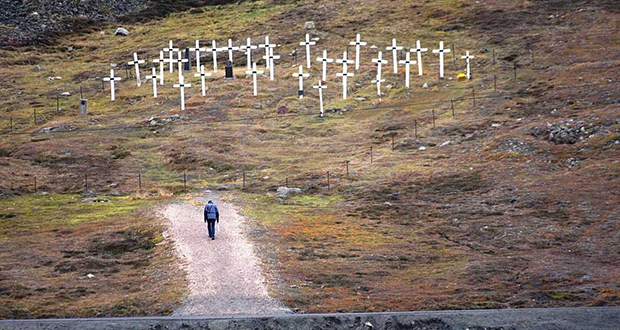
There are no legal ways to be buried in Longyearbyen (Norway). In 1950 they discovered bodies of residents from the 1918 flu pandemic which had not begun to decompose in the cold. Scientists fear the corpses, preserved in permafrost, could still contain live strains of the virus.
32. In 2010, the mummified corpse of Sogen Kato, thought to be Tokyo's oldest man alive, was found in his bedroom by government officials. He had actually died in 1978.
33. Human decomposition begins 4 minutes after death. It’s called autolysis or self-digestion. Blood circulation and respiration stop. Excess carbon dioxide causes an acidic environment, causing membranes in cells to rupture. Enzymes begin eating the cells from the inside out. 24-72 hours after death, internal organs decompose.
34. To discourage intercourse with a corpse, ancient Egyptians left deceased beautiful women to decay for “three or four days” before giving them to the embalmers.
35. There is a bog in Florida that was an ancient burial pond and it contains human remains that were buried almost 2000 years before the first pyramids. The skeletal remains were preserved so well that researchers have managed to collect soft brain tissue from the skulls.


