



1Slippery Snow and Ice

Snow and ice are slippery due to a four-molecule-thick layer of water present on the surface, which is effective down to -30°C. Below this temperature, the surface becomes a true solid, making activities like skating and skiing extremely difficult.
2. Unlike most science fiction shows, 'Firefly' accurately depicts space scenes silently because sound cannot travel in the vacuum of space. This attention to scientific detail sets 'Firefly' apart from other shows.
3. Lightning from clouds plays a crucial role in Earth's nitrogen cycle by breaking down nitrogen molecules in the air. Rain then dissolves these molecules and carries them to the ground, providing essential nitrogen for the growth, production, and decomposition of all living things.
4. The "Women Are Wonderful" effect describes how people generally associate more positive attributes with women than men. While this attribution exists across both genders, women's in-group bias is four times greater than men's.
5. Consuming as little as 15 milligrams of elemental tellurium can cause a person's sweat and breath to smell like garlic for eight months. This fact about science illustrates the peculiar effects of certain elements on the human body.
Latest FactRepublic Video:
15 Most Controversial & Costly Blunders in History
6Carl Sagan and the NAS
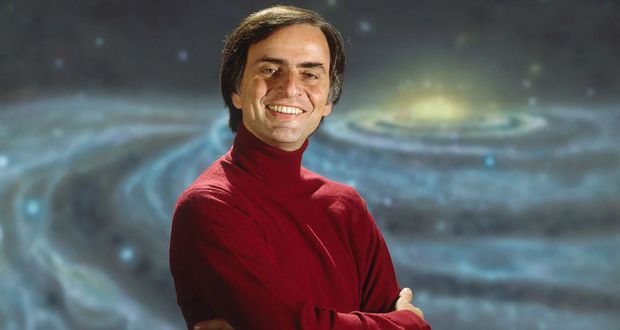
Despite Carl Sagan's scientific background and significant contributions to public science education, the National Academy of Sciences rejected his nomination. The "Sagan Effect" caused popular scientists in the media to be perceived as less knowledgeable than their peers.
7. American adults possess higher scientific literacy than their European or Japanese counterparts, despite the USA's poor reputation in education.
8. A monument in Russia honors laboratory mice for their contribution to science.
9. The Epley maneuver, developed by Dr. John Epley, is a simple and effective treatment for vertigo involving a sequence of head movements. Despite its proven efficacy and ease of application, Dr. Epley struggled to convince other doctors of its effectiveness.
10. An Austrian monk named Gregor Mendel discovered modern genetics between 1856 and 1863. He revolutionized our understanding of genetics by conducting a scientific experiment on 28,000 plants. Despite its significance, scientists ignored his work for 40 years and nearly lost it, highlighting a pivotal fact about the history of science.
11Nitrogen Triiodide Explosiveness

Nitrogen triiodide is a contact explosive so sensitive that it can detonate from a feather's touch, air currents, or even Alpha particles. When triggered, it explodes with a sharp snap and releases a purple cloud of iodine vapor, making it impossible to store, transport, or use.
12. In 1875, scientists accidentally discovered Challenger Deep, the deepest-known point on Earth, during history's first major scientific expedition devoted to oceanography. This discovery significantly expanded our understanding of the ocean's depths.
13. Schrodinger created his famous "cat experiment" to illustrate that misinterpretations of quantum theory can lead to absurd conclusions that do not reflect reality. Ironically, many popularizers of science now use Schrödinger's Cat to claim that this absurdity accurately represents how the real world works.
14. Magnesium is very effective against anxiety, and many people are deficient in this essential mineral. A beneficial magnesium supplement can be as effective as medication for anxiety, but with positive side effects.
15. Since the emergence of our species, humans have experienced 125,000 generations. In contrast, it's been 7,500 generations since our physiology reached its modern state, 500 generations since the agricultural revolution, and only 20 generations since the scientific revolution.
16Stars vs. Water Molecules

Scientists estimate there are "70 thousand million, million, million" stars in the observable universe. Astonishingly, just 10 drops of water contain as many H2O molecules as there are stars in the sky.
17. Marie Curie is the only person to have won Nobel Prizes in two different scientific fields (as of June 2024). She received the Physics Nobel Prize in 1903 and the Chemistry Nobel Prize in 1911.
18. After exposure to light, the retinal, a photoreceptor molecule in your eye, must leave the eye and travel to the liver for recycling. This recycling process is critical for maintaining vision and overall eye function.
19. The brain needs sleep to eliminate harmful free radicals and spent molecules from its hard-working fuel cells; otherwise, it runs the risk of becoming overwhelmed by its own biological waste.
20. The Bronx High School of Science boasts nine Nobel Prize-winning alumni, surpassing the total number of Nobel laureates from China or Spain as of June 2024.
21Helium's Unique Properties
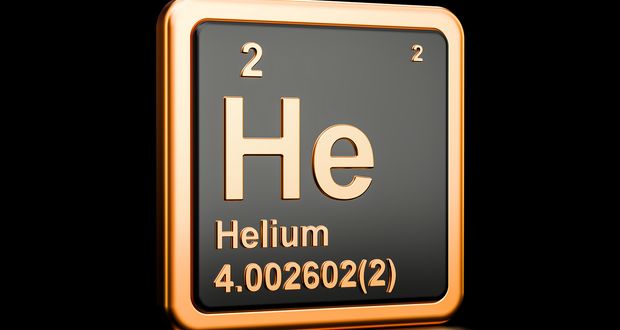
When cooled just below its boiling point, helium exhibits unique behaviors, such as dribbling through molecule-thin cracks, climbing up the sides of a dish, and remaining still even when its container spins due to its frictionless flow.
22. Our brain continuously undergoes phagocytosis, a process in which cells consume smaller cells or molecules to eliminate them from the system. So essentially, our brain is constantly eating itself.
23. Sugar molecules exhibit "handedness," meaning they have a right-hand orientation. While artificial sweeteners can be left-handed versions of the same molecule, our bodies cannot absorb them, yet they still taste sweet.
24. The "shower effect" refers to the phenomenon where people have more creative ideas while showering or doing moderately boring activities. Physicists and authors have reported that 20% of their most creative ideas and problem solutions emerged from a wandering mind. Later studies termed this phenomenon "the shower effect," recognizing it as a valid fact about science and creativity.
25. Due to China's early discovery and love of ceramics, they didn't produce any glass between the 14th and 19th centuries. This lack of glass production meant they had no mirrors or windows, which left them behind in certain scientific advancements, as they didn't develop lenses and other crucial scientific instruments.
