


1Long Words and Intelligence Perception

Using long words doesn't make readers think you're smart. The first psychology paper reporting on this result was called "Consequences of Erudite Vernacular Utilized Irrespective of Necessity."
2. Maladaptive daydreaming causes someone to daydream for hours on end, creating elaborate fantasies comparable to an entire novel or movie. It is a little-known psychological concept that can replace human interaction, interfere with one's life, and be caused by childhood emotional neglect.
3. In 2012, Facebook secretly conducted a massive psychological experiment on its users to see if it could alter their emotional state. Unbeknownst to users, Facebook tampered with the news feeds of nearly 700,000 people, showing them an abnormally low number of either positive or negative posts. The experiment aimed to assess whether more positive or negative comments in a Facebook newsfeed would impact how the user updated their own page.
4. The Gruen transfer is a psychological phenomenon where a person feels lost in a shopping mall due to its intentionally complex layout. Designers deliberately create complex layouts in shopping malls to encourage more impulsive buying. This phenomenon is named after the Austrian architect Victor Gruen.
5. Soviet psychology once classified "the struggle for truth and justice" as a symptom of paranoid delusional schizophrenia.
Latest FactRepublic Video:
15 Most Controversial & Costly Blunders in History
6Bystander Effect: Impact of Group Size
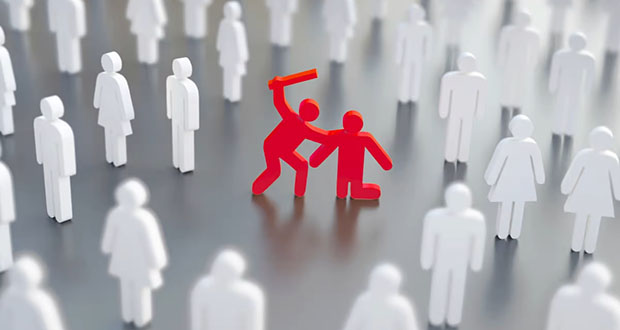
The Bystander Effect is a social psychological phenomenon where individuals witnessing a crime or accident are less likely to help, depending on the number of bystanders. The more bystanders there are, the less likely one of them will offer assistance.
7. Cherophobia is a psychological condition that literally means the fear of being happy. Individuals with this condition experience anxiety at joyful events like parties, avoid life-improving opportunities, and shun joyous people.
8. White torture is a form of psychological torture that entails extreme sensory deprivation and isolation, involving placing the prisoner in a "completely white, soundproof room." This method strips the detainee of personal identity and can induce hallucinations.
9. King Frederick II employed reverse psychology on his peasants, who initially refused to eat potatoes because they tasted horrible. To combat the food famine, he sent guards to protect potato fields, leading peasants to steal and grow their own.
10. Amos Tversky and Daniel Kahneman identified the concept of "loss aversion," which suggests that people tend to prefer avoiding losses to acquiring equivalent gains. People tend to prefer avoiding losses to acquiring equivalent gains. For example, people find it better to not lose $5 than to find $5.
11Paris Syndrome: Culture Shock in Visitors

Some visitors to Paris experience Paris syndrome, which resembles severe culture shock and is characterized by extreme disappointment. Characterized by psychiatric symptoms like delusional states, hallucinations, and anxiety, it primarily affects East and Southeast Asian travelers, such as those from Japan, China, South Korea, and Singapore. Experts theorize that heightened excitement causes physical symptoms and media portrayals contribute to unmet expectations, leading to immense disappointment.
12. Research has linked visible ocean views in an area to a reduction in psychological stress, even when considering factors like income and neighborhood status. A study in Wellington, New Zealand, found that higher visibility of blue space was associated with lower psychological distress, highlighting the potential mental health benefits of increased access to natural elements in urban areas.
13. Psychogenic cough refers to coughs caused by psychological stress, without an obvious medical cause. However, there are challenges in defining and differentially diagnosing this condition.
14. Psychological research shows that roughhousing is essential for childhood development. It teaches communication skills, rule negotiation, and how to communicate verbally and non-verbally. Children who are not allowed to horseplay are more likely to exhibit increased violence later in life.
15. Astrologers and other practitioners of chicanery utilize the 'Barnum effect' or 'Barnum statement' to ascribe a generalized characterization to an individual, which is perceived as true of them, despite the statement being applicable to anyone.
16Learning a Skill: Four Psychological Stages

According to certain psychological models, there are four stages to learning a skill: unconscious incompetence, conscious incompetence, conscious competence, and unconscious competence.
17. The Stasi, East Germany's Secret Police, employed a psychological technique known as Zersetzung, aimed at destroying the self-confidence of perceived enemies through subtle means. This included disrupting the victim's private life by breaking into their home, manipulating contents, and engaging in psychological attacks like gaslighting, property damage, sabotage, career sabotage, and smear campaigns. Zersetzung's advantage lay in its subtle and deniable nature, allowing the Stasi to avoid international condemnation while effectively paralyzing perceived threats.
18. Psychology researchers have found that the pressure to feel upbeat can make you feel downbeat. Embracing your darker moods can make you feel better in the long run.
19. Smile Mask Syndrome is a psychological disorder where subjects develop depression and physical illness due to prolonged, unnatural smiling. Researchers attribute this phenomenon to the significant importance that the Japanese service industry places on smiling, as they first described it in Japan in 1983.
20. Bomb and drug-sniffing dogs will eventually develop psychological problems if they never find any and must occasionally be taken on dummy missions to satisfy their 'prey-drive.'
21Doorway Effect: Spatial Context and Memory
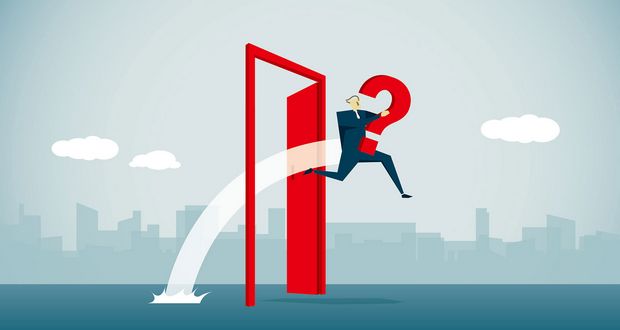
The 'doorway effect' is a psychological phenomenon where a person's short-term memory experiences a decline when moving from one location to another, especially when passing through a doorway. Researchers have observed this memory lapse at both literal boundaries, such as moving between rooms, and metaphorical boundaries, like transitioning between computer desktop windows. Research shows that specific events or episodes organize our memory, and changes in spatial context act as boundary markers, segmenting our continuous flow of memories.
22. A study in the Journal of Family Psychology found that parents do have a favorite child, with 74% of mothers and 70% of fathers admitting to preferential treatment. The research, following 384 families, revealed surprising results: firstborns often felt they were the preferred child, while younger siblings sensed the bias, affecting their self-esteem. Despite birth order, the research showed that almost every child suspected their parents favored a sibling, highlighting the challenges of sibling dynamics.
23. Comparative neurobiologists refute Carl Sagan's widely popularized view in psychology that the brain is layered, with an old reptilian structure at its core. Despite its prevalence in introductory psychology textbooks, the consensus among comparative neurobiologists refutes this view, urging psychologists to abandon this inaccurate model of human brain evolution.
24. Toxic positivity critiques positive psychology for neglecting the acknowledgment and management of negative emotions like anger and sadness. This critique argues that an excessive focus on upbeat thinking may sideline challenging experiences, potentially stigmatizing conditions such as depression.
25. Operation Wandering Soul, a psychological warfare initiative during the Vietnam War, aimed to exploit Vietnamese cultural beliefs about the dead to weaken Viet Cong morale. U.S. forces played eerie voice recordings, known as 'Ghost Tape Number Ten,' featuring Buddhist funeral music and manipulated voices, suggesting deceased soldiers urging their comrades to return home.


