

1Longest Pregnancy

The longest pregnancy on record lasted over a year and produced a perfectly healthy baby girl.
2. According to an analysis by the Guttmacher Institute, unplanned pregnancies cost US taxpayers $2.1 billion each year. More than half of U.S. pregnancies are unintended, and roughly 1-in-20 American women of reproductive age have an unplanned pregnancy each year.
3. Lady Margaret Beaufort, the mother of King Henry VII gave birth to him at the age of 13. The pregnancy was so difficult for her, due to her size and youth that it made her unable to have any more children. By the age of 15, she had been married 3 times.
4. It is possible for a human to become a chimera by fusing with his/her fraternal twin in the womb. If it occurs early enough, each twin will claim body parts as his/her own, allowing a single person to be made up of two genetically different individuals.
5. The first thing we develop in the womb is an anus. For the first few seconds of our life, we were nothing but floating anuses.
Latest FactRepublic Video:
15 Most Controversial & Costly Blunders in History
6Maternal Deaths
In the US, maternal deaths during pregnancy declined to 9.1 deaths per 100,000 pregnancies by 1986. It has risen since then and now is at 18.5 deaths per 100,000.
7. Every unborn baby grows a mustache in the womb, which then spreads to cover the entire body. The baby then eats this fine hair, called lanugo, and excretes it after birth with their first bowel movement, which is a substance called meconium.
8. Out of over 5000 mammal species, female humans are the only ones whose breasts remain permanently enlarged when not lactating.
9. Muslim babies born 9 months after Ramadan are far more likely to be disabled due to their mothers fasting in the first month of pregnancy (most probably because they don't know they are pregnant).
10. A woman without a vagina performed oral sex, got in a knife fight, and was impregnated when the sperm passed from her stomach to her uterus. Her case was mentioned in the British Journal of Obstetrics and Gynecology.
11Chemo & Pregnancy

Men who are receiving chemotherapy should avoid causing pregnancy during and for some time after treatment because chemo may damage the DNA in sperm cells. This could lead to birth defects.
12. A 2004 study found that pregnant women who ate lots of chocolate had reduced prenatal stress, and their babies at 6 months old had a more agreeable temperament than pregnant women who ate no chocolate.
13. In 2019, a woman in Bangladesh was rushed to the hospital for stomach pains a month after giving birth to her first child. It was discovered that she was in labor again and she gave birth to twins. It was discovered that she had 2 wombs.
14. To reduce infanticide, Sweden passed a law in 1778 allowing unwed pregnant women to go to a different area where she is unknown to give birth. The midwife was forbidden to ask her identity or to ask who the father was. The baby was then put in an orphanage.
15. One in three women in Europe has inherited the receptor for progesterone from Neanderthals-a gene variant associated with increased fertility, fewer bleedings during early pregnancy, fewer miscarriages, and birthing more children.
16Fetus Stem Cells
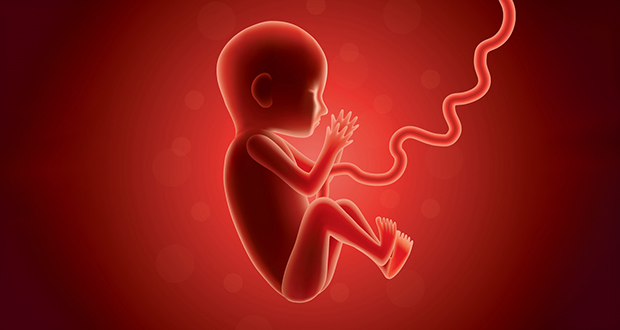
If a pregnant mother suffers organ damage during the pregnancy, the fetus can send stem cells to help repair the damage.
17. The Vlasic pickle Stork mascot was an attempt to capitalize on pregnant women's craving for pickles.
18. Royal women used to give birth in front of an audience to prove that the child was indeed the fruit of the royal woman’s womb.
19. The 2% failure rate for condoms means that for every 100 couples using them for 1 year 2 will get pregnant and not 2 times per 100 intercourses.
20. Female slaves in the American South chewed on the cotton root to abort a pregnancy, decreasing the production of more slave children.
21Men's Seam
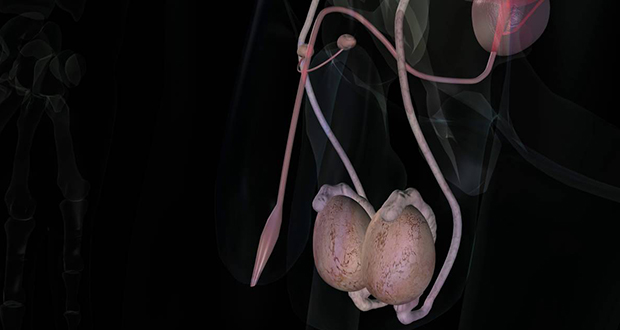
The seam on the scrotum every man has comes as a result of the fusing together of the proto-vagina in the womb.
22. Ignaz Philipp Semmelweis dropped the mortality rate for childbirth from 12% to 2% after he insisted that doctors wash their hands in between handling cadavers and delivering babies.
23. As many as 55% of all pregnancies end in miscarriage, most often before a woman misses a menstrual period or even knows she is pregnant and that more than 80% of miscarriages occur within the first three months of pregnancy, mostly caused by chromosomal abnormalities.
24. MTV's 16 and pregnant has been linked to a decrease in teen pregnancies.
25. In the early 1900s, obstetricians used to give pregnant women Scopolamine, a drug that inhibits memory formation to prevent women from remembering the experience of childbirth.


