


1Suitcase Nukes: Smuggling Threat
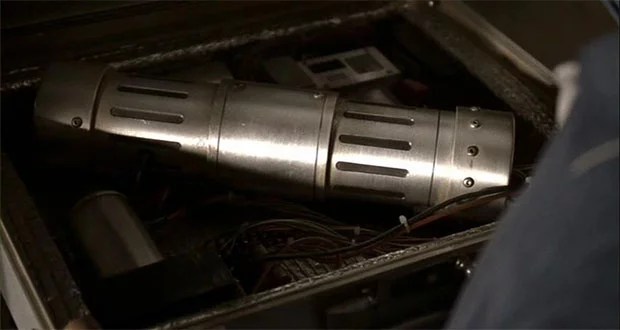
Suitcase nukes do exist, and according to the highest-ranking GRU defector, Stanislav Lunev, they may already be deployed by GRU operatives on US soil. Lunev claimed that "it is surprisingly easy to smuggle nuclear weapons into the US."
2. In the 1970s, the USA installed nuclear-powered undersea data cable taps to spy on the Soviet Union.
3. During the Cold War, the Soviet Union used an automatic nuclear weapons system known as Dead Hand. It had the capability to initiate the launch of Russian ICBMs targeting various cities in the event of a detected nuclear attack through seismic, light, radioactivity, and pressure sensors along the country's borders, even without human oversight. Allegedly, the Dead Hand system remains in use by Russia.
4. The US Air Force maintained a substantial fleet of B-52 bombers continuously airborne from 1961 to 1968. Known as Operation Chrome Dome, this program involved an average of 75 daily flights with nuclear payloads over the North Pole and the Atlantic as a deterrent against the USSR. Several nuclear weapons were lost in accidents, and some were never recovered.
5. In 1958, the U.S. conducted Operation Argus, a covert series of low-yield nuclear detonations in the upper atmosphere. The objective was to create a radiation belt capable of degrading radio and radar transmissions while damaging and destroying ICBM warheads. The tests demonstrated the potential effectiveness of such a belt but also revealed that it dissipated too rapidly to be highly efficient, posing risks to space vehicle crews.
Latest FactRepublic Video:
15 Most Controversial & Costly Blunders in History
6Project Sunshine: Deceased Infant Procurement
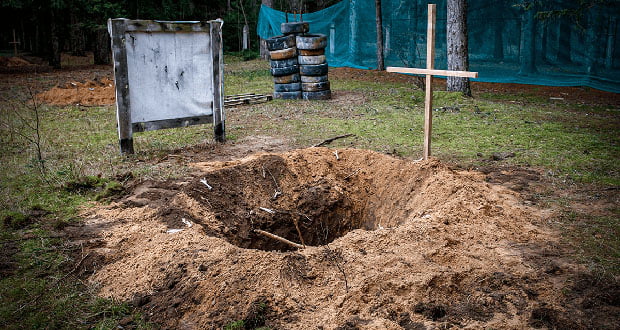
Britain's nuclear industry participated in a highly classified international endeavor known as Project Sunshine, which involved the clandestine procurement of deceased infants for approximately three decades. Scientists from the UK Atomic Energy Authority collected children's bones and bodies to be shipped to the United States for undisclosed nuclear experiments. Approximately 6,000 bodies were acquired between 1955 and 1970.
7. In the aftermath of Hiroshima, the U.S. made a pledge to dismantle all nuclear weapons on the condition that a single organization would oversee global nuclear material and mining operations under the Baruch Plan. The Soviet Union rejected Bernard Baruch's version of the proposal, fearing that it would perpetuate the American nuclear monopoly.
8. Project Sapphire involved a covert operation by the US Air Force to clandestinely transport nuclear material equivalent to 50 nuclear bombs from Kazakhstan following the collapse of the Soviet Union. The objective was to prevent the material from falling into the wrong hands.
9. The Iranian nuclear program had its beginnings with assistance from the United States. Through a program called "Atoms for Peace," the U.S. exported nuclear equipment, plans, and highly enriched uranium to 30 countries.
10. Project PACER, initiated in the 1970s, aimed to generate power using nuclear bombs by detonating them within an underground cavity filled with water, utilizing the resulting steam to drive a turbine. Controversy surrounding the use of nuclear bombs led to the cancellation of the project.
11Project Iceworm: Secret Underground Complex
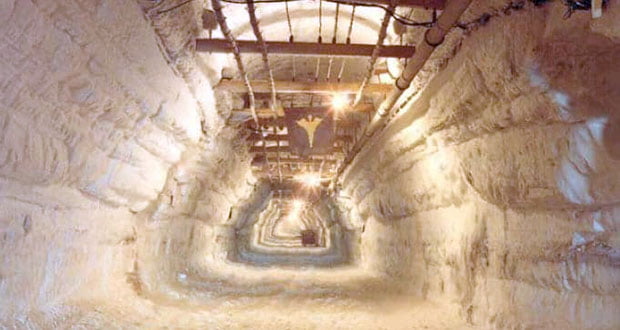
Project Iceworm was a covert United States Army initiative during the Cold War that focused on constructing a network of mobile nuclear missile launch sites beneath the Greenland ice sheet. Originally envisioned as a vast military complex spanning 52,000 square miles, the project's actual length at the time of its evacuation was 1.9 miles. The complex included facilities such as a hospital, a shop, a theater, and a church. Presently, the melting of the Greenland ice sheet poses a risk of potential toxin release into the ocean. Greenland only became aware of this classified project in 1995.
12. The Soviets embarked on Project Gamma Kolos, also known as nuclear tractors, in an attempt to induce mutations in wheat seeds before planting them. These tractors were equipped with containers of cesium 137 and lead shielding to protect the driver. The irradiation of wheat seeds aimed to generate beneficial mutations in the crops. Additionally, radiation was applied to the harvested grain to prevent germination.
13. General MacArthur proposed a strategy to achieve victory in the Korean War by employing 30 to 50 atomic bombs on air bases. Additionally, he suggested spreading nuclear waste along the ground to establish a lasting radioactive border, serving as a deterrent against future invasions from the North. However, President Truman's decision to relieve General Douglas MacArthur of his command in 1951 likely played a crucial role in averting the outbreak of a global nuclear conflict.
14. The W19 was a nuclear artillery shell that the United States developed for use from an 11-inch howitzer in the 1950s. With a yield of up to 15 kilotons, the W19 ranked among the smallest nuclear weapons ever developed by the US, yet it possessed sufficient power to inflict significant damage. However, the W19 was never produced in large quantities and was eventually phased out in the 1960s.
15. Despite possessing a nuclear arsenal capable of obliterating the world, the US government maintains the position that it must retain the ability to launch a first strike. While countries like the Soviet Union, India, and China have declared a No First Use (NFU) policy, the US, along with France, Pakistan, and the UK, explicitly refuses to adopt such a policy. Russia, on the other hand, asserts a "defensive only" policy, contending that its nuclear capabilities will solely be employed in self-defense.
16Contemplating Retaliation: Kill the Bastards
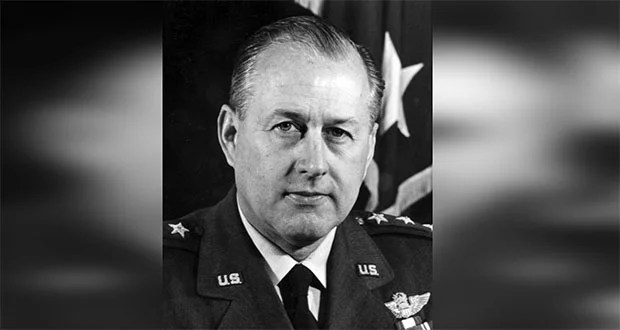
In the early years of the Cold War, a debate arose regarding whether the United States should retaliate in the event of a Soviet nuclear strike. Some argued that if such an attack occurred, the US would already have suffered a defeat. General Thomas S. Power, Commander in Chief of the Strategic Air Command, famously remarked, "Restraint? Why are you so concerned with saving their lives? The whole idea is to kill the bastards. At the end of the war, if there are two Americans and one Russian left alive, we win!"
17. The USA and the USSR entered into a treaty during the Cold War that restricted the development of defense systems against nuclear missiles. This agreement aimed to maintain the effectiveness of the Mutual Assured Destruction (MAD) doctrine, wherein neither party would initiate an attack due to the certainty of devastating retaliation in the absence of proper defense systems.
18. SIOP-62 was a US nuclear war plan rooted in the massive retaliation doctrine. It treated all communist countries as a unified bloc and called for a comprehensive strike employing the entire US nuclear arsenal-consisting of 3,200 warheads and 7,847 megatons-simultaneously targeting the USSR, China, and Soviet-aligned states.
19. In the aftermath of World War II, the United States contemplated launching a preemptive nuclear strike against the Soviet Union. The idea behind this strategy was the belief that by annihilating Russia with nuclear weapons before the Soviets could mass-produce their own, a nuclear war could be won. While ultimately discarded, this notion was seriously considered during the early years of the Cold War.
20. The US Air Force and later the Atomic Energy Commission made efforts to develop a nuclear propulsion system for aircraft between 1946 and 1961. This endeavor incurred a total cost of approximately $1 billion. Although ultimately unsuccessful, two assemblies consisting of a reactor and two modified turbojets are now on display at the Idaho National Laboratory.
21Mars Mission Shift: Nerva Rockets Abandoned
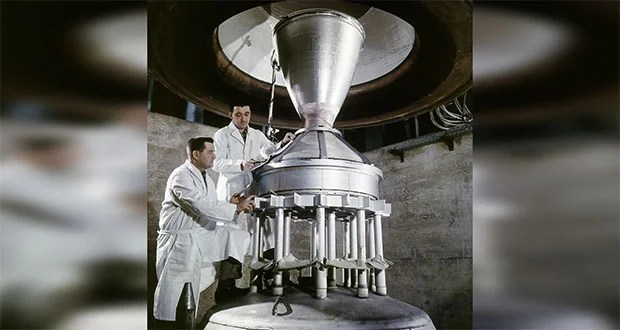
NASA had ambitious plans to send astronauts to Mars using Nerva nuclear rockets in 1981. Unfortunately, due to funding cuts by Congress and the subsequent cancellation of the Nerva project by President Nixon in 1973, NASA shifted its focus to the development of the Space Shuttle program instead.
22. Edward Teller, often referred to as the "father of the H-bomb," once proposed the idea of using nuclear bombs to mitigate hurricanes. However, meteorologists expressed skepticism, asserting that the trajectory of hurricanes cannot be controlled once they have formed.
23. Project Chariot, proposed in 1958, aimed to construct an artificial harbor in Alaska using five nuclear bombs as part of Operation Plowshare, which explored peaceful applications of nuclear explosions. Although it garnered significant public support, the project was ultimately abandoned due to strong opposition from the Inupiat village of Point Hope.
24. As part of Operation Fishbowl, the USA detonated Starfish Prime, a 1.4 megaton nuclear bomb, in space in 1962. The explosion generated an electromagnetic pulse that disabled satellites and caused damage to electrical infrastructure in Hawaii. Additionally, the event created a spectacular aurora visible from Honolulu.
25. In 1958, the US Air Force devised plans to detonate a nuclear bomb on the moon, aiming for its visibility with the naked eye from Earth. The objective was to boost American morale in response to the USSR's advancements in the space race. Known as Project A119, it was ultimately shelved due to concerns that the missile could miss the moon and return to an unknown location on Earth.


