

1Qausuittuq
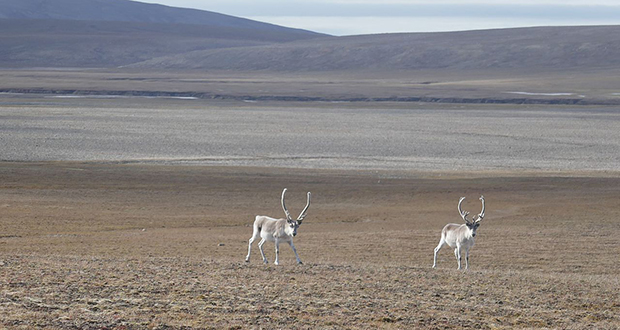
In 2015, Qausuittuq became Canada’s newest national park. Summer temperatures top out at around 5°C in this polar desert, and the landscape consists mostly of small rocks and dried mud flats with only sparse patches of lichens and mosses — not much for vegetarians like the caribou to live on.
2. There is a chimpanzee sanctuary in Quebec, where former lab and zoo chimpanzees can live out the rest of their days in peace.
3. Bayanaul National Park has been known for rocks that have taken on bizarre shapes due to many centuries of erosion. One sculpture resembles the head of a bald toothless old woman with a treacherous grin and the other rock is called "masculine dignity," resembling the head of a penis.
4. Part of Cuyahoga National Park in Ohio was an EPA Superfund site up until 2012. Ford, 3M, Chrysler, and Waste Management of Ohio were all held liable for the pollution.
5. Macaya National Park contains Haiti’s last primary forest and is a global biodiversity hotspot, containing endemic species of orchids, mammals, and the largest concentration of endemic amphibians in the world.
Latest FactRepublic Video:
15 Most Controversial & Costly Blunders in History
6Point Pelee National Park
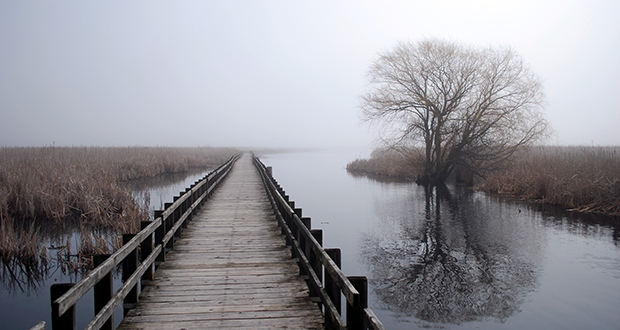
Point Pelee National Park has the southernmost point of mainland Canada. Because of its location at the crossroads of 2 major migration flyways, about 347- 360 different species of migratory birds have been recorded in the park and more than 100 species stay there for breeding.
7. Haiti's Deux Mamelles National Park is not accessible by road, making it difficult to access. The park was established in 2015 after the founders of the Haiti National Trust made a visit by helicopter to explore the area and collect data on the rich biodiversity in 2011.
8. Nááts'ihch'oh National Park Reserve in Canada is named after the Shúhtagot’ine language description of a mountain and it refers to its unique shape, which is sharp and pointed on the top like a porcupine quill. The mountain from which the park takes its name is said to have been credited with great powers.
9. While accounting for merely 3% of Taiwan’s total land area, Yushan National Park has half of Taiwan’s native plant species growing within its boundaries. In surveys, there are 2,522 different kinds of plants found in the park.
10. Botum Sakor is the largest national park in Cambodia. Only very little on-location research has been done and published on the biodiversity of the area so far and no scientific investigation has ever been carried out for the remote interior of the park. The human population living inside it is unknown.
11Northeast Greenland National Park

Northeast Greenland National Park is bigger than Pakistan, Venezuela, or France, and only 30 countries are bigger. There are abundant polar bears, hares, foxes, caribou, and walruses, as well as almost half the world’s population of musk oxen, about 15,000 head.
12. The Ukkusiksalik National Park in Canada lays uninhabited now, but the Inuit lived there from 11th century to the 1960s. Remains of fox traps, tent rings, and food caches have been discovered in the area. Usually, the park can only be visited during a few summer weeks.
13. There is a national park in New Zealand named the Egmont National Park, which from above looks almost symmetric. The forest is surrounded on all sides by pasture, giving it a distinctly circular shape. It is spread over a radius of 6 miles, surrounding a dormant volcano.
14. At the Hawaii's Volcanoes National Park visitor’s center, there used to be a Cursed Lava Rocks display featuring lava rocks stolen by tourists, mailed back to the park rangers, along with stories of the string of bad luck these tourists received since the rocks were in their possession.
15. Hundred Islands National Park in Philippines has 124 islands at low tide but only three of them have been developed for tourism: Governor Island, Quezon Island, and Children's Island. The peculiar “mushroom-like” shapes of some of the islands were caused by the eroding action of ocean waves.
16Serenity Park
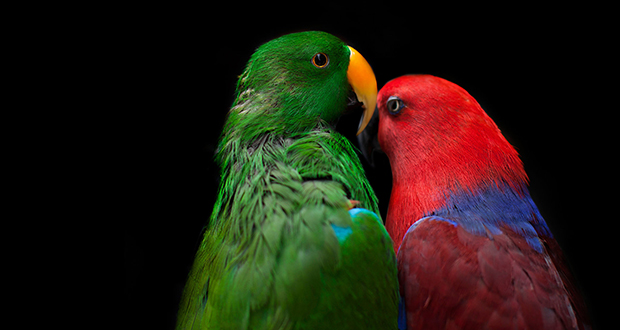
Tucked in the middle of Los Angeles, is a small bird sanctuary called Serenity Park. It's a place where abused birds and combat vets bond and heal. The theory is that, through their shared trauma, they connect on an emotional and almost spiritual level. They have had much success in treating PTSD.
17. Phumdis are a series of floating islands, exclusive to the Loktak Lake in Manipur, India. It has the world’s only floating national park, named Keibul Lamjao National Park.
18. Nigeria's Okomu National Park holds a small fragment of the rich forest that once covered the region and is now less than one-third of its original size. It continues to shrink, threatened by encroaching villages and logging around the park.
19. In 2004, tourists at the Yala National Park on Sri Lanka's south west coast (which fell victim to the 2004 Indian Ocean Tsunami), were unable to spot any wildlife on safari because the animals had sensed the tremor vibrations 4 days earlier and fled to higher ground.
20. Lions still live in their natural habitat in India. There are an estimated 650 lions living in Gir National Park. This makes India the only country where lions and tigers could theoretically meet in the wild.
21Isle Royale National Park

About 4 Canadian wolves were air-dropped into Isle Royale National Park in Michigan to boost the park's wolf pack to 8. The extra wolves were brought in to help keep the moose population in check, thereby preventing mass starvation of the moose herd.
22. The Florida Manatee Sanctuary Act makes it illegal to molest, harass, or disturb manatees. A Florida father was arrested by the Florida Fish and Wildlife Conservation Commission after posting photos of himself hugging a baby manatee out of the water, and letting his daughter sit on it.
23. 375 goats were airlifted from Olympic National Park in Washington State after they trampled tourists because they had developed a taste for human urine.
24. Yellowstone National Park is believed to not just be the first national park in America but is also the first national park in the world.
25. Zambia's Mweru Wantipa National Park has had no management and protection for several decades and lacks visitor facilities. Consequently, its wildlife population has been much reduced in recent years. Its black rhinoceros are extinct and it is also unlikely to have elephants and lions.


