

1Skylab 4

When the replacement crew for Skylab entered the empty space station, they found that it wasn't empty at all. There were 3 figures inside. Upon further inspection, the replacement crew found out that these were dummies placed in flight suits by the previous Skylab crew before they left.
2. Astronauts of Project Mercury, the first human spaceflight program of the United States, flew with a rectal thermometer in them, to record their body temperature during the mission. For the last six manned flights, however, rectal thermometers were replaced with oral thermometers.
3. In 1969, as requested by Richard Nixon, NASA made 250 display plaques for 135 nations, 50 States in the USA, and the United Nations. Flags from all the countries and states were flown onboard Apollo 11 to the moon and back, which were then gifted to each respective state and nation along with fragments of a lunar sample.
4. The ridiculous notion that NASA astronauts carry suicide pills for use in case they are marooned in outer space is untrue. Exposure to outer space results in a much faster and smoother demise compared to a suicide pill.
5. Thanks to 3D printing, NASA can send plans for new tools and equipment to the Space Station over email. Instead of waiting months for new gear, Astronauts can now print new gear in hours.
Latest FactRepublic Video:
15 Most Controversial & Costly Blunders in History
6NASA Space Pen
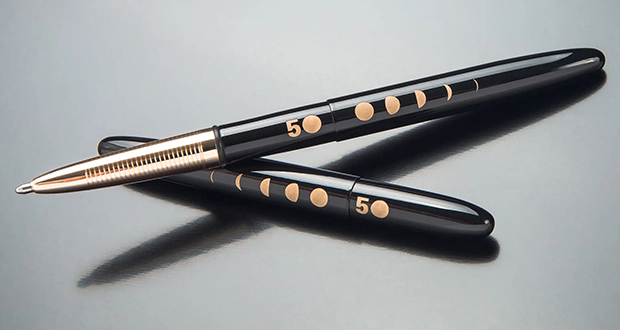
The reason why NASA (and later the Russians) use a specialized space pen instead of a pencil in space is that the graphite of pencils is conductive and can cause short circuits and even fires. The pens have been used since the Apollo era and are still being used right now on the International Space Station.
7. NASA disqualified an engineer named Charlie Walker and rejected his application in 1978 to become an astronaut. He then went on to co-develop a space-bound device that required him to accompany it. Walker flew into space three times with the device he co-patented and thus became the first non-government individual to fly into space.
8. Scott Carpenter was the only NASA Mercury astronaut who hadn't finished college. After his spaceflight, the university granted him his degree because "his subsequent training as an astronaut more than made up for the deficiency in the subject of heat transfer."
9. NASA has a detailed set of written procedures for dealing with a suicidal or psychotic astronaut in space. The astronaut's crewmates are supposed to bind the wrists and ankles of the astronaut who has "lost it" with duct tape, tie them down with a bungee cord and inject them with tranquilizers if necessary.
10. On Mercury, Gemini, and Apollo missions, astronauts had to do everything in their seats beside their crewmates due to limited space, including eating, sleeping, and toilet. For bowel movements, the astronaut would first tape a plastic bag to his buttocks. When he was done, he would seal the bag, then knead it to mix a liquid bactericide with the contents.
11NASA Pilots
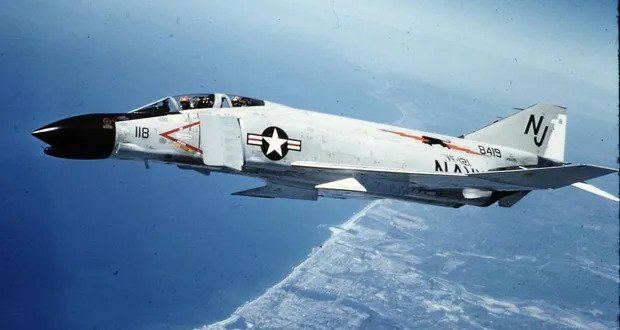
NASA pilots routinely intercepted and defeated U.S. Navy Phantom IIs in mock dogfights, until complaints from the Navy put an end to the harassment.
12. NASA's astronauts prefer using tortillas to make sandwiches instead of normal bread as pieces of bread have too many crumbs. When some astronauts discovered this fact, NASA wanted to make tortillas for space and failed as none met their microbiological needs. Taco Bell then made a tortilla in the 90s with a 9-month shelf life, so NASA started using those instead.
13. Whiskers can spontaneously grow from tin and several other metals, sometimes causing catastrophic damage within electrical circuits. NASA has a team dedicated to investigating this risk, but the fundamental cause of "whiskering" has still not been discovered.
14. Apollo Astronauts didn't qualify for life insurance nor were they insured by NASA. They had to resort to 'insurance autographs'. They signed these just before launch with the expectation that their autograph's value would skyrocket in the event of their deaths.
15. NASA has used evolutionary genetic algorithms in the past which mimic Darwinian evolution to design better antennas for radio communication. These algorithms produce unusual-looking but very high-efficiency antennas called Evolved Antenna.
16NASA Skylab
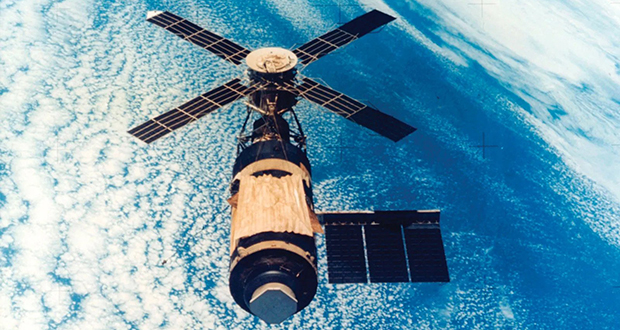
In 1979, as Skylab was about to crash back into the earth, the San Francisco Examiner offered $10,000 to the first person to deliver a piece to them within 72hrs. They knew it wasn't heading toward the USA and thought the prize would go unclaimed. It crashed in Esperance, Western Australia and an Aussie teenager collected a piece, jumped on a plane with no passport or luggage, and collected his prize.
17. Scientists at NASA have discovered stars that have temperatures lower than the human body. One of those, in particular, a brown dwarf star called 'WISE 1828+2650' is the record holder for the coldest star with an estimated atmospheric temperature cooler than room temperature, or less than 80 degrees Fahrenheit (25 degrees Celsius).
18. Since NASA astronauts weren't allowed to accept gifts or endorsements, General Motors leased Corvettes to several astronauts during the 1960s and 70s for just $1.
19. During the Space Race, NASA turned the creation of a functional spacesuit that could withstand the harsh conditions of space into a competition. The participants of the competition were largely military contractors. However, Playtex, the bra maker, entered the competition and won it.
20. NASA often shows the movie "Armageddon" as part of its management training program and asks its new staff to find as many scientific inaccuracies as they can. This movie has at least 168 scientific inaccuracies.
21John Aaron

NASA engineer John Aaron who is credited with saving both Apollo 12 and Apollo 13, was forced to resign years later while serving as the Chief of NASA when Texas Senator Robert Krueger accused him of overspending to the tune of $500 million on Space Station Freedom, which later evolved into the International Space Station (ISS).
22. During the Mercury Program, 13 women who were mostly civilian test pilots, qualified for spaceflight under the same standards as the Mercury 7 astronauts, but NASA declined to consider them for spaceflight. One of the people that testified against their inclusion was John Glenn.
23. In 1964, due to a malfunction aboard NASA's first unmanned Gemini mission, all messages to the craft from the southern hemisphere had to be delivered through an old automated telephone machine in Australia, operated by a woman named Lillian O'Donahue. She was rewarded with $6 for her overtime.
24. NASA took Nefertiti the jumping spider to the ISS to see if she could learn to hunt in zero gravity. She did, and when she returned to earth 110 days later, she successfully retrained her jumps again for earth's gravity.
25. NASA's 747 Shuttle Carrier Aircraft was secretly modified with missile countermeasures before bringing Enterprise to the 1983 Paris Air Show.
