


1Arctic Tribe
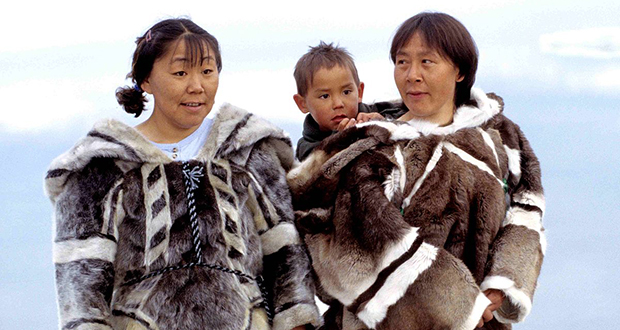
The skin of the members of arctic tribes is dark because they get all their vitamin D from fish instead of sunlight. Their skin does not need to lighten to try and get more sun for vitamin D production.
2. The Guugu Yimithirr is an Australian Aboriginal tribe, that doesn't use terms like "left" and "right". Instead, they use the geographical directions "north, east, south, and west". That means, that there can't be confused about your left or my left, since the directions are absolute for everyone.
3. The Taranaki Tribe of the South Island of New Zealand slaughtered almost all of the peaceful and non-violent Moriori of the Chatham Archipelago from 1835 to the early 1860s. Moriori were Pacifists, who when being wiped out by their neighboring Polynesian tribe, decided that their non-violent beliefs were more important than their own survival.
4. One of the reasons why Northern Cheyenne reservation traditionalists oppose coal mining on the reservation is that the 1700s Cheyenne mystic Sweet Medicine prophecized that mining the "black rock" would change the tribe forever.
5. The sport of lacrosse was originally a form of ceremonial combat played by Native American tribes with teams of 100-1,000 players, on a field several kilometers long, in games that lasted two to three days straight.
Latest FactRepublic Video:
15 Most Controversial & Costly Blunders in History
6Kalenjin tribe
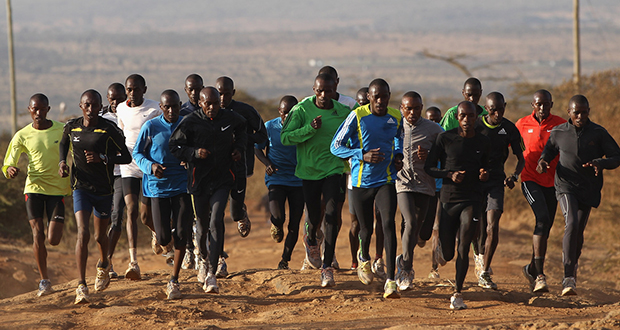
Kenya has produced the world’s best long distance runners for decades and most of them belong to the Kalenjin tribe. Until 2011, there only about 17 American men who ran under 2:10 in a marathon. There were 32 Kalenjin who did it in October of 2011 alone.
7. The famously isolated Sentinelese hunter-gatherer tribe appears not to know how to set fire. They rely on natural fire from thunderstorms and keep the embers burning as long as they can.
8. The Tlingit tribe of Alaska has a very peculiar origin story of the mosquitoes. According to their legends, a young man got revenge on a cannibal which had killed his two older brothers while they were out hunting. After he burned the cannibal’s body into ashes, he blew on the ashes and they flew off, turning into mosquitoes.
9. Many plains tribes recognized certain persons as having the role of “reverse” warriors. These were experienced warriors who in battle purposely abided by contrary, foolish or crazy principles. The “reverse” warrior charged when ordered to retreat and could only fall back when he was commanded to attack.
10. The Burkitshi tribe hunts with eagles (only female eagles as they are larger and believed to be fiercer). While eagles can live for decades, theirs are captured at the age of four and released after 10 years to live out their lives in the wild.
11Iroquois Tribes

Kanontsistóntie's is a cannibalistic spirit from the Iroquois mythology. Described as a human head with bat wings, long dark hair, and razor-sharp teeth, they are ravenous spirits that are cursed with an insatiable hunger. The legend caused tribes to steer clear of Lake Sacandaga for years.
12. In 1763, members of the Ojibwe and Sauk tribes took over a British fort by holding a baggatiway (like lacross) match in front of it on King George III's birthday and inviting the British, who let players chase the ball through the fort gate, secretly being handed tomahawks by women as they went in.
13. Fathers of the Central African tribe of Aka spend more time in close contact with their babies than in any other known society. Aka fathers have their infant within arm’s reach 47% of the time and make physical contact with them five times as often per day as fathers in some other societies.
14. The Etoro people of New Guinea believe that in order for a boy to achieve manhood they must first ingest the semen of their elders through fellatio. The nearby Kaluli tribe finds this barbaric, and instead, believes that the semen should be delivered to the boys in the anus.
15. The women of Bari tribe of Venezuela believe that a child can have multiple biological fathers. They believe that a child is not born from the sperm of a single man, but from the accumulation of sperm in a woman’s womb.
16Hadza Tribe

The Hadza tribe from Tanzania finds honey by whistling a special tune to a "honeyguide" bird that then leads them to a nearby beehive.
17. The Sewee was a Native American tribe who in 1670 decided to build a navy and sail en masse to England. Their canoes were swamped and survivors were sold to slavery in the West Indies, wiping out the tribe. They believed that by rowing to the point on the horizon where English ships came from, they could reach England, and once there, establish a profitable, direct trade.
18. When Dutch explorers first encountered the Asmat tribe of Papua, the Asmat frightened the Dutch into fleeing with loud noises and bursts of white powder.
19. Lacking access to saltwater or salt deposits, the remote Apatani tribe of Northeast India has made use of a homemade salt substitute called tapyo that is made from shrubs and ash.
20. The Vanuatu tribe in the South Pacific uses a form of bungee jumping as a rite of passage but instead of bungee cords, vines are used and some people do the feat at the age of 5.
21Satiyaa Community

There is a gypsy tribe named Satiyaa Community in India that celebrates death as one of the happiest events in their lives while treating births as occasions of great grief.
22. There is a tribe named Piraha in the Amazonas state in Brazil that does not engage in linear thinking and has no words for colors or numbers.
23. Members of the Pedi tribe in South Africa are known to wear red tartan kilts similar to Scots. Citing oral history, they have been using kilts since 1879. They say that’s when the tribe lost a battle because its warriors thought kilted Scots leading a British army were women and held their fire until realizing their mistake too late.
24. The ruler of the Natchez tribe of Lower Mississippi Valley was entitled to marry several wives and maintain servants. Upon his death, however, his wives and some servants, along with any others who wished to join him in the afterlife, were ritually sacrificed.
25. To become a warrior in the Sateré-Mawé tribe of Brazil, they have an initiation ritual where they subject boys to the sting of over 120 bullet ants. These ants have a sting 30 times more painful than that of a wasp.
