

1Sugar

Sugar does not cause hyperactivity in children. Double-blind trials have shown no difference in behavior between children given sugar-full or sugar-free diets, even in studies specifically looking at children with Attention deficit hyperactivity disorder or those considered sensitive to sugar.
2. Despite long-standing belief that adult brains cannot generate any new neurons, neuroregeneration does occur. A 2013 study further showed that also in old age, about 700 new neurons are produced in the hippocampus daily.
3. Eating nuts, popcorn, or seeds does not increase the risk of diverticulitis. These foods may actually have a protective effect.
4. In those with the common cold, the color of the sputum or nasal secretion may vary from clear to yellow to green and does not indicate the class of agent causing the infection.
5. Rhinoceros horn in powdered form is not used as an aphrodisiac in traditional Chinese medicine as Cornu Rhinoceri Asiatici (犀角, xījiǎo, "rhinoceros horn"). It is prescribed for fevers and convulsions, a treatment not supported by evidence-based medicine.
Latest FactRepublic Video:
15 Most Controversial & Costly Blunders in History
6Andrew Wakefield

Researcher Andrew Wakefield claimed a connection between vaccines and autism and autism spectrum disorders. Repeated attempts to reproduce the results by other researchers later showed that there is indeed no connection between the two and his research was ultimately shown to have been manipulated.
7. Mental abilities are not absolutely separated into the left and right cerebral hemispheres of the brain. Some mental functions such as speech and language (e.g. Broca's area, Wernicke's area) tend to activate one hemisphere of the brain more than the other, in some kinds of tasks. If one hemisphere is damaged at an early age, these functions can often be recovered in part or even in full by the other hemisphere (see Neuroplasticity). Other abilities such as motor control, memory, and general reasoning are served equally by the two hemispheres.
8. Shaving does not cause terminal hair to grow back thicker (more dense) or darker. This belief is due to hair which has never been cut having a tapered end, whereas after cutting the edge is blunt and therefore thicker than the tapered ends; the cut hair appears to be thicker and feels coarser due to the sharper, unworn edges. The shorter hairs being less flexible than longer hairs also contributes to this effect.
9. Exposure to a vacuum, or experiencing uncontrolled decompression, does not cause the body to explode, or internal fluids to boil. (However, fluids in the mouth or lungs will boil at altitudes above the Armstrong limit.) Instead, it would lead to a loss of consciousness once the body has depleted the supply of oxygen in the blood, followed by death from hypoxia within minutes.
10. Alcoholic beverages do not make the entire body warmer. The reason that alcoholic drinks create the sensation of warmth is that they cause blood vessels to dilate and stimulate nerve endings near the surface of the skin with an influx of warm blood. This can actually result in making the core body temperature lower, as it allows for easier heat exchange with a cold external environment.
11Eczema

In people with eczema, bathing does not dry the skin and may in fact be beneficial.
12. Toilet waste is never intentionally jettisoned from an aircraft. All waste is collected in tanks which are emptied on the ground by toilet waste vehicles. Blue ice is caused by accidental leakage from the waste tank. Passenger trains, on the other hand, have indeed historically flushed onto the tracks; modern trains usually have retention tanks on board and therefore do not dispose of waste in such a manner.
13. There is no scientific evidence for the existence of "photographic" memory in adults (the ability to remember images with so high a precision as to mimic a camera), but some young children have eidetic memory. Many people have claimed to have a photographic memory, but those people have been shown to have good memories as a result of mnemonic devices rather than a natural capacity for detailed memory encoding. There are rare cases of individuals with exceptional memory, but none of them have a memory that mimics a camera.
14. Most diamonds are not formed from highly compressed coal. More than 99% of diamonds ever mined have formed in the conditions of extreme heat and pressure about 90 miles (140 km) below the earth's surface. Coal is formed from prehistoric plants buried much closer to the surface, and is unlikely to migrate below 2 miles (3.2 km) through common geological processes. Most diamonds that have been dated are older than the first land plants, and are therefore older than coal. It is possible that diamonds can form from coal in subduction zones and in meteoroid impacts, but diamonds formed in this way are rare and the carbon source is more likely carbonate rocks and organic carbon in sediments, rather than coal.
15. American botanist George Washington Carver did not invent peanut butter, though he reputedly discovered 300 uses for peanuts and hundreds more for soybeans, pecans, and sweet potatoes.
16Bats

Bats are not blind. While about 70% of bat species, mainly in the microbat family, use echolocation to navigate, all bat species have eyes and are capable of sight. In addition, almost all bats in the megabat or fruit bat family cannot echolocate and have excellent night vision.
17. The notion that goldfish have a memory span of just a few seconds is false. It is much longer, counted in months.
18. Water-induced wrinkles are not caused by the skin absorbing water and swelling. They are caused by the autonomic nervous system, which triggers localized vasoconstriction in response to wet skin, yielding a wrinkled appearance. A 2014 study showed no improvement in handling wet objects with wrinkled fingertips.
19. Human blood in veins is not actually blue. Hemoglobin give blood its red color. Deoxygenated blood has a deep red color, and oxygenated blood has a light cherry-red color. The misconception probably arises for two reasons: 1) Veins below the skin appear blue or green. This is due to a variety of reasons only weakly dependent on the color of the blood, including subsurface scattering of light through the skin, and human color perception. 2) Many diagrams use colors to show the difference between veins (usually shown in blue) and arteries (usually shown in red).
20. Alcohol does not necessarily kill brain cells. Alcohol can, however, lead indirectly to the death of brain cells in two ways: (1) In chronic, heavy alcohol users whose brains have adapted to the effects of alcohol, abrupt cessation following heavy use can cause excitotoxicity leading to cellular death in multiple areas of the brain. (2) In alcoholics who get most of their daily calories from alcohol, a deficiency of thiamine can produce Korsakoff's syndrome, which is associated with serious brain damage.
21Brain
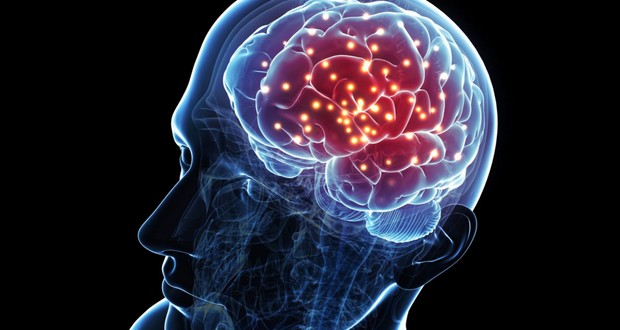
People do not use only 10% of their brains. While it is true that a small minority of neurons in the brain are actively firing at any one time, the inactive neurons are important too. This misconception has been commonplace in American culture at least as far back as the start of the 20th century, and was attributed to William James, who apparently used the expression metaphorically.
22. The common image of Santa Claus (Father Christmas) as a jolly old man in red robes was not created by The Coca-Cola Company as an advertising gimmick. Despite being historically represented with different characteristics in different colours of robes, Santa Claus had already taken his modern form in popular culture and seen extensive use in other companies' advertisements and other mass media at the time Coca-Cola began using his image in the 1930s.
23. While it was praised by one architectural magazine prior to its construction as "the best high apartment of the year", the Pruitt–Igoe housing project in St. Louis, Missouri, considered to epitomize the failures of urban renewal in American cities after it was demolished in the early 1970s, never won any awards for its design. The architectural firm that designed the buildings did win an award for an earlier St. Louis project, which may have been confused with Pruitt–Igoe.
24. Seasons are not caused by the Earth being closer to the Sun in the summer than in the winter. In fact, the Earth is farthest from the Sun when it is summer in the Northern Hemisphere. Seasons are caused by Earth's 23.4-degree axial tilt. In July, the Northern Hemisphere is tilted towards the Sun resulting in longer days and more direct sunlight; in January, it is tilted away. The seasons are reversed in the Southern Hemisphere, which is tilted towards the Sun in January and away from the Sun in July.
25. Thomas Edison did not invent the light bulb. He did, however, develop the first practical light bulb in 1880 (employing a carbonized bamboo filament), shortly prior to Joseph Swan, who invented an even more efficient bulb in 1881 (which used a cellulose filament).


