


1Red-Crested Turaco
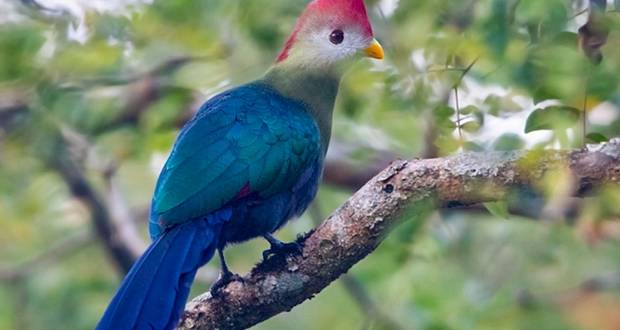
The red-crested turaco (Tauraco erythrolophus), the national bird of Angola, is one of the more colorful birds in its genus, and its call sounds somewhat like a jungle monkey. Turacos are found in large flocks and feed on fruits. Interestingly, all flock members help new moms with “childcare.”
2. The Philippine eagle, the national bird of the Philippines, is easily recognized by its shaggy, brown, and white, mane-like crest. It is the only blue-eyed bird of prey in the world and has 8 times the visual acuity of humans. Females lay only one egg every two years. Its lifespan is ~60 years.
3. The red-crested tree rat, thought to have gone extinct 119 years ago, showed up out of the blue at a hotel in Colombia where two conservationists were staying and let them photograph him for a few hours before disappearing again.
4. The star-nosed mole has 21 fingers on its nose and blows bubbles with it underwater to find food.
5. The last thylacine died in 1936, and, due to the fact that the zoo expected to find a replacement, they did not bother to keep records of the animal. In fact, its gender was only determined in 2011 by a team of researchers looking frame-by-frame at a video of it. When it was last captured on film it bit the cameraman in the butt.
Latest FactRepublic Video:
15 Most Controversial & Costly Blunders in History
6Antidote from Opossums
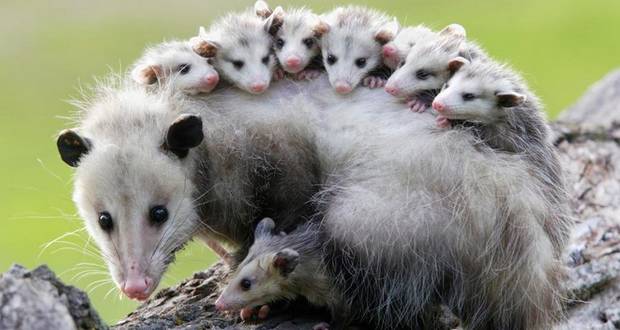
Opossums can survive up to 80 rattlesnake and coral snake bites. Thanks to them, there is a new and very inexpensive antidote for many different snake venom. In addition, they eat ticks and don't get rabies.
7. “Opossum” can refer to any one of more than 100 different species of marsupial animals found in the Americas, while “possum” technically refers only to any of 67 marsupial species found in Australia, Indonesia, and Papua New Guinea.
8. Dairy cows typically are born with horns and they are “de-horned” when young. Dairy farmers overtime use selective breeding to eliminate the recessive gene that causes horns in both male and female cattle.
9. The Tulu camel is a breed that results from mating a male Bactrian camel with a female Dromedary. A Tulu camel is larger than either of the other two kinds of camels and has traditionally been used as a draft animal. This breed of camel is also used in the sport of Camel wrestling.
10. Rhinoceros have a 450 days gestation period. This long gestation period is also an obstacle to replenishing the population. All five species of rhinoceros are endangered or considered vulnerable, and three out of the five are considered critically endangered.
11Tapirs

Tapirs are so well endowed that can step on their penises while mating and trip as a result.
12. There is a project underway to bring back an animal from extinction and reintroduce it into its former habitat. The last remaining quagga, a subspecies of the plains zebra, died in 1883, and to date, the Quagga Project has succeeded in producing breeding lineages in 10 locations in South Africa.
13. Flies find it hard to land on striped surfaces and zebras suffer far less from flies, which carry deadly diseases. Zebra stripes are more pronounced in environments that favor horseflies.
14. The donkey is the domesticated descendants of the African Wild Ass. It is a critically endangered West African horse and it is estimated that there are only 570 Wild Asses left in the wild.
15. Icelandic horses are not allowed to leave the country. If they do, they are banned from returning. This is because Iceland is an island so they have limited diseases, and this is another measure to prevent it.
16Pangolins
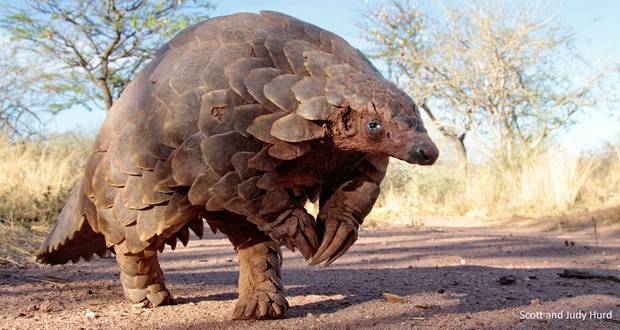
Pangolins are believed to be the world’s most trafficked mammal, accounting for as much as 20% of all illegal wildlife trade. Their scales can cost more than $3,000/kg on the black market.
17. Porcupines can often be seen hauling large bones back to their dens. They eat them as they require the nutrients in them for growing their quills.
18. Lemurs chew on, then rub, cyanide-secreting millipedes onto their fur to get high and to protect against mosquitos.
19. Anteaters do not produce their own stomach acid. Instead, the ants consumed are digested in the very own acid the ants carry in their bodies: Formic acid.
20. The Oxpecker not only eats ticks off of African wildlife (like elephants), it also drinks their blood and makes wounds even larger. Scientists now think the birds are actually parasites and not an example of mutualism, where both parties benefit.
21Dwarf Elephants

Fossil evidence suggests there once existed a species of dwarf elephants in Sicily. The male grew the biggest at around a meter tall, while the baby was the size of a pigeon.
22. There is only one mammal species that uses stridulation as a means of communication with other members of its group. The lowland streaked tenrec, native to Madagascar, uses its spines to create high-pitched sounds by rubbing them against each other just as crickets use their scrapers to chirp.
23. During World War II, the British Army had a dedicated monthly budget to feed the monkeys of Gibraltar. Any monkey that became seriously ill or injured was treated in Royal Navy hospitals. They were entitled to the same treatment that a human serviceman would receive.
24. Monkeys in Japan learned to wash sweet potatoes in freshwater to clean them. They later switched to washing sweet potatoes in saltwater. It is theorized that this is because they like the salty taste more than plain potatoes.
25. Other animals quickly eat shed deer/elk antlers because they are high in calcium, phosphorus, and protein. This is why they are hard to find even in places with abundant deer.


