


1Alaskan King Crab

The Alaskan king crab is considered to be an invasive species in the Barents Sea (the Arctic Ocean between Norway and Russia). It is advancing southwards along the coast of Norway at around 50 km a year.
2. Ring Necked Parakeets are invasive species in Greater London Area, and there are over 30,000 of them apparently.
3. In 1959, 3 goats were brought by fishermen to the Galapagos Islands. By 1970, there were 40,000 goats and by 1997, their population reached 250,000. That’s when the Galapagos Conservancy launched an all-out war against goats under the name Project Isabela, to save the dwindling population of Galapagos tortoises. Snipers were used to pick goats off from helicopters. It ended up restoring the population of the tortoises.
4. Razorback pigs are an invasive species in the United States and are descended from domesticated pigs that escaped from one of the first Spanish explorations of North America in the 1500s.
5. Cats are known as both an invasive species and super-predators due to their ability to rapidly wipe out entire species of small fauna and they are only surpassed by humans.
Latest FactRepublic Video:
15 Most Controversial & Costly Blunders in History
6North American Earthworms
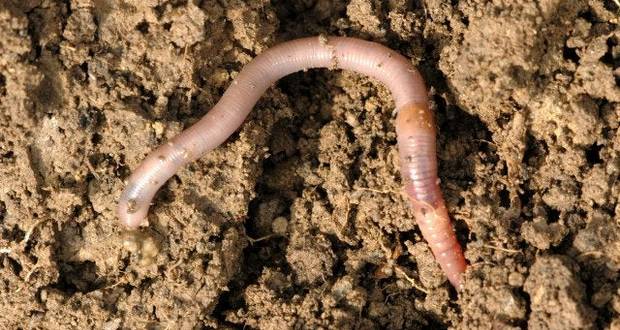
Most of North America's earthworms are not native as all of its native earthworms were killed off by an ice sheet around 10,000 years ago. All earthworms in North America today are descended from those introduced by settlers in the 18th century. These are invasive and disrupt the network of fungus that help trees communicate, which is leading to trees in the north east to have much shorter lifespans.
7. The wild boar is one of America's most problematic invasive species and an estimated 5-6 million pigs live across 35 states. They are continuing to spread and this is why there is a year-round open season on hunting feral hogs in many places in the USA.
8. While camels now live in Australia as an invasive species, there are records of aboriginal people first seeing them. One man, Andy Tjilari, recalled following the camels with his family, concluding that "this horse is ignorant."
9. Python hunting is allowed in Florida's Everglades as a measure to control the non-native snake. Pythons were previously owned as pets and were released by their owners. These giant snakes have decimated local bird populations and wildlife because it has no known natural predators.
10. In 1859, an Australian man named Thomas Austin released 24 rabbits for hunting into the wild. Prior to this, Australia had no native rabbit population. By 1920, their population increased to 10 billion. This is the fastest spread ever recorded of any mammal. In 1950, Australia conducted biological warfare against them by releasing a disease called Myxomatosis to control their population. It wiped out 500,000,000 rabbits by giving them skin tumors and causing blindness, often killing them within 2 weeks.
11Ballast Water

Large ships use seawater as ballast. This water can contain all sorts of living organisms which when released, results in the spread of invasive species around the world. This has an economic impact of billions of dollars a year on the US alone.
12. Lampreys are a type of fish that have been around for 360 million years, have razor sharp teeth and can regenerate. They are now an invasive species in the Great Lakes. In just 12 months, one lamprey can kill more than 20 kg of fish. From the 1940s-60s, they caused lake trout yields to drop from 15 million pounds to 300,000 pounds.
13. Armadillos are an invasive species from Central and South America. They weren't made popular as Texas souvenirs until the 1890s. They are also frequently carriers of leprosy.
14. Japanese barberry (a common garden plant) has been shown to increase tick abundance and Lyme disease. It is also an invasive species in America harming many local forests.
15. Cane toads are an invasive species in Australia because don't have many predators due to the toxins found on their back. The only creature that has figured out how to eat it safely without ingesting its toxins are the Torresian Crows. They've learned to flip them over and then eat them.
16Red Foxes

Australia uses Sodium fluoroacetate a.k.a. “1080” poison to kill mammalian invasive species such as cats and red foxes. It is found naturally in the plants of the region and native fauna has adapted to be immune to it.
17. Giant hogweed is a towering, invasive plant, whose sap is extremely phototoxic. If you touch the sap and are then exposed to UV rays from sun, it will produce severe caustic burns. These chemicals are also known to bond with your DNA and kill it.
18. Cannabis is invasive in North America and is referred to as 'feral cannabis,' 'wild marijuana,' and 'ditch weed' when it grows in the wild. Its seeds can lie dormant for 7-10 years and the wild plant can damage farm equipment. Feral cannabis is cultivated in North Korea.
19. There is an invasive species of flatworm in Ireland called the Australian Flatworm which feeds exclusively on earthworms. This has proven catastrophic for soil fertility and has led to serious plantation problems and has cost the Irish government millions.
20. Crazy Ants are an invasive ant species that have invaded the USA, have disrupted food chains by eating everything, are immune to fire ant venom, and are the trickiest for exterminators. They can be so great in number in a colony that they blanket the ground. They also target and short out electronics like air conditioners.
21Brown Marmorated Stink Bug

The brown marmorated stink bug is an invasive species in the USA. It was introduced from Asian countries in the late 1990s. Its odor can also be compared to the smell of coriander (cilantro).
22. Asian Carp is one of the most problematic invasive species and was introduced as an ecologically friendly way of controlling algae and invasive plant species. Scientists studying them have to wear protective head gear as they routinely jump out of the water and can cause severe head injuries. They are such a nuisance that an extreme fishing sport named Skarping has evolved around waters infested with them where competitors waterski armed with tridents, swords, and even basketball hoops.
23. The common House Sparrow was first introduced in the US in the 1850s when 25 mating pairs were released in Brooklyn. They then became an invasive species, but are currently declining in numbers across the country for unknown reasons.
24. Japanese Knotweed is listed by the World Conservation Union as one of the world's worst invasive species. It can damage buildings, roads, and architectural sites, and it's considered an epidemic in the UK, where it has spread nationwide. It is illegal to have it on your property in Australia.
25. The Hawaiian Islands do not have any squirrels, but they do have Mongooses, which were released in the 1800s to help control the rat population and are now considered an invasive species.


