

26Victor Lustig's Money-Printing Scam
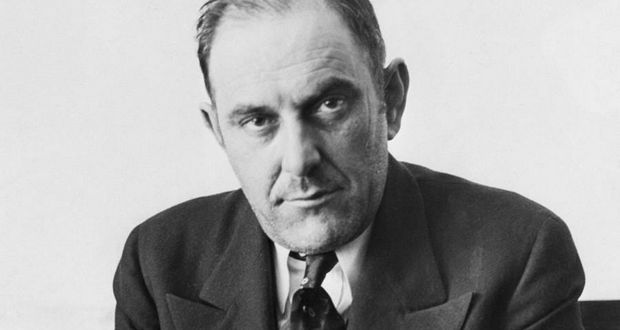
German con artist Victor Lustig created and sold a "money box" he claimed could print $100 bills. Victims, eager for profit, paid a high price for the machine, which contained six to nine genuine $100 bills for demonstration. However, it produced only blank paper afterward.
27. Sonya Golden Hand was a Russian con artist who carried out several meticulously planned robberies and stole tens of thousands of rubles in the 1880s. Authorities eventually captured her and exiled her to a penal colony. After she attempted to escape while disguised as a guard, they placed her in solitary confinement.
28. In 1784, Jeanne de Valois-Saint-Rémy, a French noblewoman and a con artist, tricked a cardinal into buying a $15.1 million diamond necklace by pretending to be a confidante of Marie Antoinette. This scam caused irreparable damage to the Crown's reputation and fueled support for the French Revolution.
29. A scam artist named Dennis Lee Montgomery deceived multiple U.S. government agencies into spending over $20 million on fake intelligence software. In 2003, the CIA grounded a U.S.-bound flight after the software flagged a credible threat. An investigation later revealed the con.
30. In 1806, a con artist named Mary Bateman inscribed "Christ is coming" on chicken eggs and then reinserted them into the chickens. She charged a penny for people to witness the "miraculous" eggs being laid. Authorities later executed her for murder, and strips of her skin were sold as charms to ward off evil spirits.
Latest FactRepublic Video:
15 Most Controversial & Costly Blunders in History
31The Origin of "Let the Cat Out of the Bag"

The phrase "let the cat out of the bag" originated in the late Middle Ages. Con artists would place a cat in a bag and claim it was a piglet. Buyers often agreed on a price without inspecting the contents, leading to later laws granting the right to inspect products before purchase.
32. Victor Lustig, a notorious con artist, famously "sold" the Eiffel Tower twice in 1925 to scrap metal dealers in one of history's most daring scams.
33. In 1997, a bankrupt con artist from Oregon named Van Brink opened an offshore bank in Grenada by fraudulently claiming ownership of a $20 million 4-pound ruby. The actual owner of the ruby, a man in California, was unaware of the scam.
34. In 1994, 13-year-old Nicholas Barclay went missing in San Antonio, Texas. Three years later, a 23-year-old French con artist named Frédéric Bourdin impersonated Nicholas and lived with his family for months. Despite his French accent and different-colored eyes, he managed to fool them. Authorities eventually arrested him, and he served six years in prison. He claims to have assumed at least 500 false identities.
35. A Brazilian con artist named Carlos Kaiser built a decade-long career as a football player from 1979 to 1992 by signing with multiple teams without ever playing a single game. On the one occasion he nearly had to play, he started a fight to get a red card and avoid taking the field.
