

1Hair Fashion

It was common for 19th-century Victorian men to fashion clippings of their lover's pubic hair into jewelry and wear them as hat ornaments or souvenirs.
2. Tuberculosis was so romanticized during the Victorian era that fashion trends emerged to highlight and emulate the symptoms of the disease. This fashion movement is referred to as “Consumptive Chic”.
3. In the Victorian era, it was a thing to send “Vinegar” or Hate valentines anonymously to people you disliked. They were often incredibly harsh, and some even suggested the recipient go kill themselves.
4. Toilets in ancient Rome were bad enough to warrant prayers to the Gods of fortune written on the walls. Problems included bursts of flame from the methane buildup, and biting creatures emerging from below.
5. In medieval times, red hair was associated with moral degradation and intense sexual desire. Redheads were regarded as vampires, werewolves, and witches. The Spanish Inquisition singled them out for persecution, believing their hair to be a sure sign that they stole the fires of hell.
Latest FactRepublic Video:
15 Most Controversial & Costly Blunders in History
6Ostracism
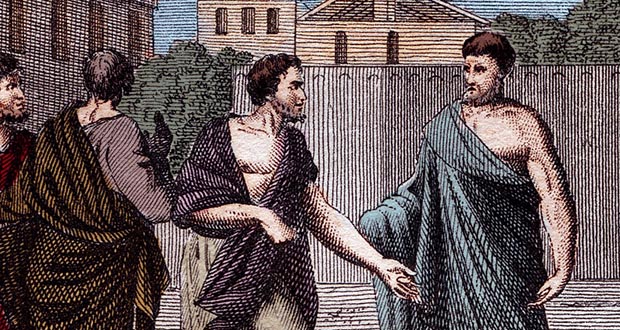
Between the 4th and 5th centuries, ancient Athens adopted Ostracism, a (check and balance) system that allowed the citizens to vote to exile and banish anyone deemed a threat or tyrant for 10 years. The ostracism was only considered valid if the total number of votes counted to at least 6000.
7. To clean up after using the lavatory, ancient Romans used a “tersorium”, a sponge on the end of a long stick that was shared by everyone in the community. When not in use, the stick stayed in a bucket of vinegar or seawater in the communal bathroom.
8. Making a purple pigment used to dye clothes for royalty in ancient Egypt, Greece and Rome involved harvesting the pigment from rotting snails. The stench was so bad that Jewish law specifically granted women the right to divorce any husband who became a dyer after marrying.
9. Approximately 7000 years ago, humans used to drill holes in their heads to allow spirits to flow in and out of the body. This practice is called 'Trepanation.'
10. Before the advent of reliable and affordable alarm clocks, British and Irish workers were woken up by a person who made sure they could get to work on time. The knocker-up used a baton to knock on clients’ doors or a long and light stick to reach windows on higher floors.
11Eyelashes

Romans believed that eyelashes fell out from excessive sex, so women would use cosmetics to make their eyelashes look fuller and longer to demonstrate their chastity.
12. In Ancient Rome, vestal virgins were a group of six women recruited at age six to tend the flame of the goddess Vesta. Expected to serve for 30 years, if their virginity ever came into question they would be buried alive as punishment. They were the only female priests in Ancient Rome.
13. In ancient Rome, in a practice known as “secessions of the plebeians” commoners would evacuate entire cities in acts of revolt, similar to the modern concept of a general strike, leaving the elite in the cities to fend for themselves.
14. Politicians in ancient Rome kept slaves named “nomenclators”, whose sole job was to remind their masters of the names and pertinent details of all the different people they met.
15. Christmas in the Middle Ages was more like Mardi Gras on steroids. It included raucous parties that lasted for days, animal sacrifices, gambling, and adult trick or treating.
16Ornatrix

Ornatrices were enslaved hairdressers. They were responsible to create insane looks that were popular at the time, in ancient Rome. This person had to deal with a lot of gnarly ingredients such as hair dyes made out of pigeon poop, rotten leeches, squid ink, and urine.
17. The ancient Egyptians believed that the ebb and flow of the Nile were caused by the god Atum masturbating to ejaculation. As such, Pharaohs were sometimes required to ceremonially masturbate into the Nile.
18. In the Middle Ages, Catholic women were prohibited from having sex on Sundays, Wednesdays, or Fridays, on feast days, while fasting for Lent or Advent or while “impure” (menstruation, pregnancy, 40 days after giving birth & while nursing). Everything but missionary position was considered sodomy.
19. There was a custom in ancient Babylon compelling all women at least once in their lives to go to the temple of Aphrodite and have sex with a stranger.
20. Ancient Romans didn’t measure time in 60-minute hours. An hour was about 45 minutes in winter and 75 minutes in summer.
21Testicular Belief

In the Middle Ages, men who wanted a boy sometimes removed their left testicle because it was believed that the right testicle made sperm for boys and the left testicle made sperm for girls.
22. Prior to the middle ages, the written script often did not use spaces in between words. Instead, writers used what was called “continuous script.” Monks under Charlemagne’s rule found it much easier to copy ancient Roman manuscripts and distinguish words by implementing spaces.
23. Viking military tactics succeeded mainly because they disregarded the conventional battlefield tactics, methods, and customs of the time. They ignored unspoken rules, like not attacking holy sites. On the contrary, Vikings intentionally targeted religious sites for their vulnerability and wealth.
24. In the middle ages it was an accepted political act for two kings to sleep in the same bed as a symbol of unity between their two countries; much like the modern-day photo-op. There was nothing sexual about it.
25. January 14th used to be observed as the Feast of the Ass. It was a Catholic feast day that was mostly celebrated in the Middle Ages to honor all the asses in the Bible, especially the one that bore Mary and the baby Jesus into Egypt after the birth.


