

26Voodoo Doughnut's Unorthodox Glazes
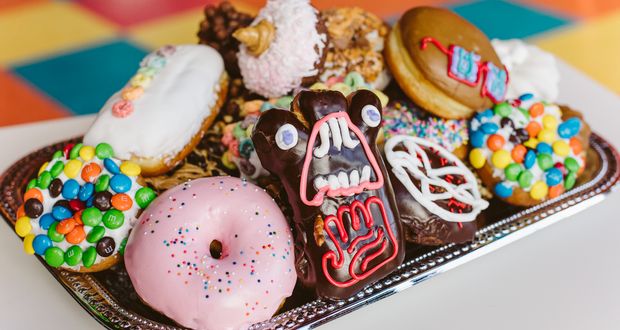
Voodoo Doughnut, a doughnut shop in Portland, used to sell doughnuts glazed with NyQuil and others packed with Tums and Pepto until local health officials ordered them to stop.
27. Croissants are an Austrian invention, created after their victory over the Ottoman Empire in 1683. The croissant's crescent shape is believed to symbolize the Turkish flag. It was the Austrian emperor’s daughter, Marie-Antoinette, who introduced it to France.
28. Pretzels get their unique flavor and color from being glazed with a sodium hydroxide (lye) solution before baking.
29. Traditional red velvet cake gets its signature red color and velvety texture from a chemical reaction occurring between unprocessed cocoa powder, acidic buttermilk, and basic baking soda.
30. American muffins are actually individual "quickbreads" or oil cakes (like zucchini bread), making them essentially cupcakes. English muffins are griddled flatbreads, which is why they are chemically and nutritionally more similar to pita or pizza than to American muffins.
Latest FactRepublic Video:
15 Most Controversial & Costly Blunders in History
31Pocky's Snap-Inspired Name

The onomatopoeic sound that occurs when you snap a Pocky Stick in half inspired the name of this Japanese chocolate biscuit.
32. Originally, the purpose of serving Yorkshire pudding as a first course with thick gravy was to stifle the diners' appetites with inexpensive ingredients so they wouldn't eat as much of the more expensive meat in the next course.
33. Pumpernickel, a type of rye bread, is named after the Germanic words "pumpern," meaning flatulent, and "Nickel," a reference to Old Nick (a familiar name for Satan). The dense bread is hard to digest, causing excess flatulence. Hence, pumpernickel means "the devil's fart."
34. Every loaf of sourdough that Panera Bread has ever baked comes from the same 33-year-old sourdough strain they refer to as the 'Mother dough'.
35. The Philippines creates its own version of apple pie using coconuts and condensed milk. Soledad Pahud, who discovered apple pie while working as a maid in the United States, is believed to have invented buko pie. Upon returning to the Philippines, the lack of apples led her to create the coconut-based recipe.
