

11Hot Shot

A "Hot Shot" was originally a cannonball that was heated in a furnace and then fired at wooden ships for the purpose of setting them on fire.
12Biological Weapon

In medieval times, corpses of sick people were used as catapult ammunition, as a form of biological weapon.
13War Elephants
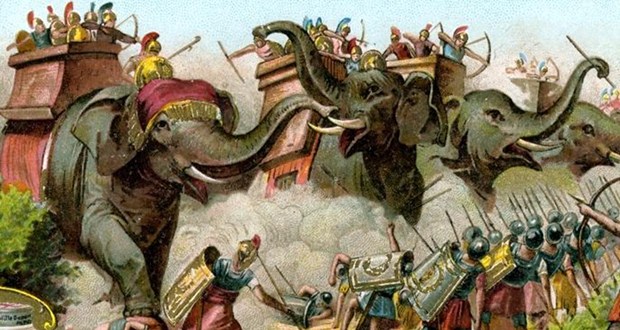
When the Romans first encountered war elephants, they used tow ropes attached to chariots to bind their legs and topple them much like the Rebels on Hoth in Star Wars.
14Urumi
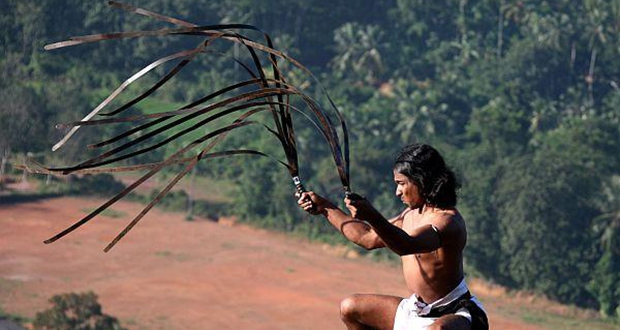
The Urumi is a flexible whip sword that is no longer used in battle. It is still practiced as an extremely dangerous martial art weapon in India.
15Insect Warfare

In the 14th century, ships would catapult beehives onto the decks of enemy ships to clear the way for boarding parties.
16Scythed Chariot

A weapon of war called a Scythed Chariot consisted of spinning blades powered by horses whose purpose was to saw the legs off of the enemy soldiers.
17Goedendag
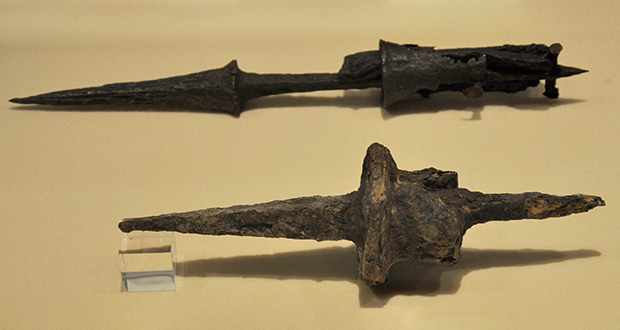
A Flemish medieval polearm, which is essentially an elongated club with a spearhead, is named Goedendag, literally meaning "good day" in English.
Latest FactRepublic Video:
15 Most Controversial & Costly Blunders in History
18Terracotta Army's Weapons
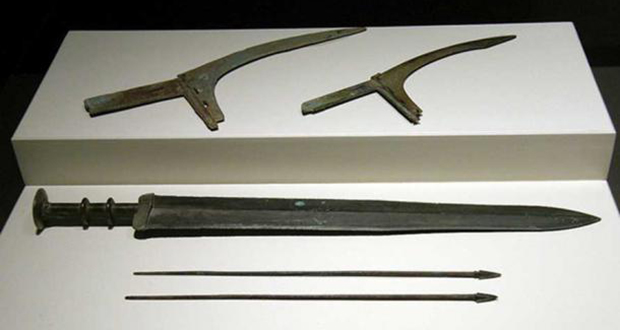
Due to the advanced metallurgy of the ancient Chinese, some of the weapons held by the Terracotta Army (after 2,200 years underground) were still sharp, rust-free, and shiny once a thin oxide layer was removed.
19Ball and Chain Flail
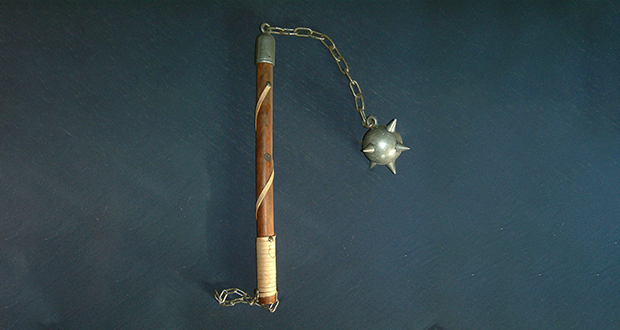
A spiked ball at the end of a chain is a 'ball and chain flail', not a morning star (which has spikes but no chain). Despite their popularity in fiction, there is little historical evidence that ball-and-chain flails ever saw widespread use.
20Helepolis

The Helepolis was a 130-feet multi-story siege tower equipped with 16 catapults, eight wheels, and a 3400-man crew.


