

1Pluto Lamps

Pluto Lamps were Victorian-Era street lights that sold hot coffee and soup.
2. Baby farming was a late Victorian practice where people would take custody of an infant or child in exchange for payment. As it wasn't a profitable business model, some baby farmers murdered the kids shortly afterward they were brought in.
3. During Victorian times, dead birds on a women’s hat was a fashion statement. These dead birds were treated with arsenic to preserve them. These items still test positive for arsenic today and museum conservators need to be careful handling them.
4. The tapeworm diet started with women in the Victorian Era. Women then found it fashionable to have pale skin, eyes that looked dilated, red cheeks and lips, and a tiny waist. In the age of corsets, they also ingested tapeworms to lose weight. Tapeworm diet is still practiced nowadays by some women, who take a pill that has a tapeworm egg inside.
5. Women in Victorian London caught on fire so often (due to the flammable material in their dresses) that husbands were advised to insure their wives at Fire Insurance offices.
Latest FactRepublic Video:
15 Most Controversial & Costly Blunders in History
6Victorian Remittance Men
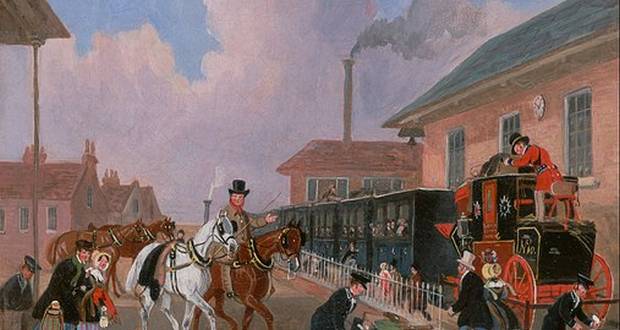
During Victorian times, some wealthy families sent away a family member (typically the Black Sheep) and paid them to stay away. Known as Remittance men, they were usually sent to a colony, far away from everyone else they knew. Even some women were sent away by their families.
7. Collecting orchids were so popular among the Victorians that they had a name for it, "orchidelirium." During this time, collecting and discovering orchids reached extraordinarily high levels. Orchids however often died after they were collected due to the owner’s lack of knowledge about their cultivation. This craze reduced after international trade in wild orchids was banned in 1973.
8. Popular newspaper and magazine columns during the Victorian Era were plagued with poisonous beauty advice. Some of it included lead face paint; mercury for eye treatments; belladonna drops (from the deadly nightshade plant) for the 'dilated pupil' look. Bathing in arsenic springs was also highly recommended.
9. Pteridomania was a Victorian craze for ferns. To cater to the demand numerous ferneries appeared across country. Decorative arts of the period presented the fern motif on everything from christening presents to gravestones and memorials, and even custard cream biscuits.
10. Many of the cookies consumed during the Victorian era were funeral cookies. These cookies were fed to mourners after dough was allowed to rise on the chest of the deceased. It was believed that the dough "absorbed" the qualities of deceased.
11Victorian Pure Finders

Streets of Victorian London were littered with 'brown gold.' Dog droppings during those times had a commercial value as they were used to soften raw leather. In 1830s, men known as ‘Pure Finders,’ haunted the streets where a large number of stray dogs lived and collected their 'booty' in a handled bucket. By 1850s, however, men, women and children joined the hunt for this brown gold and this competition lowered its price.
12. During the Victorian era, the 7 Sutherland sisters toured America to show off their long, Rapunzel-like hair. They had 37 feet of hair between them. They were also businesswomen, who ran a hair product business. By 1890, they had sold 2.5 million bottles of hair tonic, raking in above $3 million.
13. During the Victorian Era, wearing makeup was associated with low morals. Therefore British women often resorted to pinching their cheeks and biting their lips, to make them appear red instead.
14. Crinoline was a large wire cage that was worn around the waist by women of the Victorian Era. It created a large hoop that was considered stylish at that time. Because of its cumbersome nature, many women died because of this fad as it often knocked over lamps or candles that ignited its flammable fabric.
15. During Victorian times drinking alcohol was considered safer than drinking water. Due to rotten meat, infected vegetables, and raw sewage getting into well water amongst other disgusting food and drinks, meant even pregnant women, seriously ill people, and kids relied on beer, not water.
16Victorian Hangover Rope

The term "hangover" originates from the Victorian-era practice of sleeping over a rope, which was a popular way to sleep among the homeless. People living on the streets could catch a night of sleep in dormitories in one of three ways; paying a penny to sit-up, two pence to ‘hang-over’ an outstretched rope, or 4 or 5pennies to lie down.
17. Many people in Victorian London reported sightings of "Spring-heeled Jack." They described him to be a monster with claws and a cape, who could spit fire and jump more than 9 feet in the air. He reportedly often accosted and frightened women into seizure and catatonic states. His most notable sighting was reported in 1877 when a group of soldiers in Aldershot Garrison encountered him and opened fire. He is said to have slapped one soldier and jumped away.
18. Agnes Marshall was a Victorian female entrepreneur who revolutionized the way people consumed ice cream. She is often regarded as the inventor of the modern ice cream cone. Marshall's patented ice cream machine remains faster and more reliable than many modern electric ice cream machines. She was also the first person to have suggested the use of liquid nitrogen to freeze ice cream.
19. ‘Hot Cockles’ was a very popular party game from Medieval to Victorian times, where you would bury your face in a friend's lap and guess who spanked you.
20. Victims of most overdoses in Victorian London were kids. In 1854, 75% of opium overdoses occurred in children under the age of 5. This was due to the fact that children’s medicines of the time often contained alcohol and opiates to ‘soothe’ them. Many included opiates even for seemingly mundane complaints such as colic and wind.
21Victorian Fasting Girls

A number of girls during the Victorian era claimed to survive without any food or nourishment. Many regarded their supposed abilities as miraculous and supernatural. As they became a curiosity, many rushed to put them on display. One doctors ascribed the phenomenon to fraud and hysteria.
22. Kaleidoscopes saw such a craze in Victorian England that people were too distracted and obsessed with them, similar to today's smartphones.
23. It was common for 19th-century Victorian men to fashion clippings of their lover's pubic hair into jewelry and wear them as hat ornaments or souvenirs.
24. Tuberculosis was so romanticized during the Victorian era that fashion trends emerged to highlight and emulate the symptoms of the disease. This fashion movement is referred to as "Consumptive Chic."
25. London officials during the Victorian era were frantically looking for a solution for what to do with all their dead. That’s when architect Thomas Wilson proposed the Metropolitan Sepulchre. It was supposed to be a 94-story "Death Pyramid." It would have dominated London’s skyline and housed up to 5 million bodies. The project however never materialized for obvious reasons.


