


1Tally Sticks
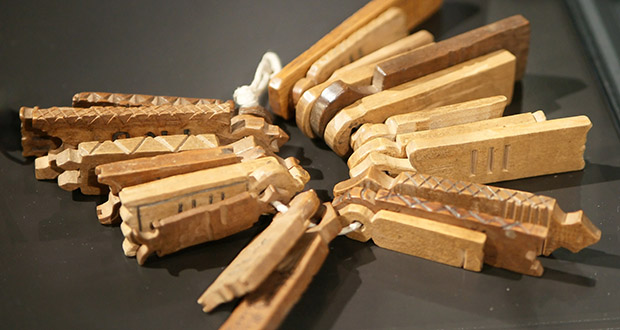
Wooden sticks were used to record tax payments in Britain until 1826. In 1834, two cartloads of such sticks were burnt in a furnace in the London Parliament House. Besides destroying centuries of valuable data, it also caused a chimney fire that ended up burning down the whole Parliament.
2. With only 324 households declaring ownership of a swimming pool on their tax form and fearing tax evasion, Greek authorities turned to satellite imagery for further investigation of Athens' northern suburbs. They discovered a total of 16,974 swimming pools.
3. Procter & Gamble argued for years that Pringles were not potato chips, but Britain's Supreme Court of Judicature ultimately determined that they were and required Procter & Gamble to pay $160 million in taxes.
4. To collect taxes, King Christian IV of Denmark asked captains of ships crossing the Øresund to estimate the value of their cargo, which was applied as the tax base without further audit. The king also claimed the right to buy the entire cargo at exactly that price if he decided.
5. After Oprah's famous "You get a car" episode, where she gave away 276 cars at a total cost of $7.6 million, many of the recipients sent in complaints to the show as they had all been charged $6000-$7000 "gift tax."
Latest FactRepublic Video:
15 Most Controversial & Costly Blunders in History
6Mercedes Sprinter Chicken Tax
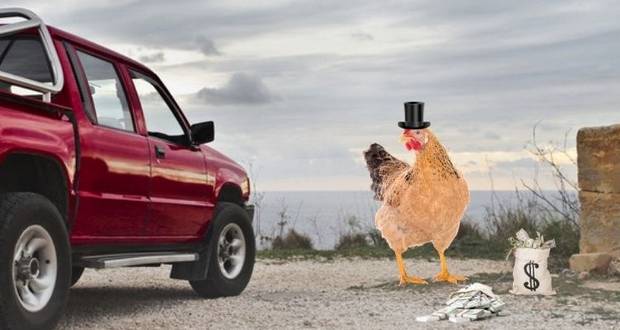
Mercedes Sprinter was rebranded as Dodge in the US to avoid paying a "chicken tax" on light trucks. After World War 2, when cheap American chickens flooded the European market, Germany enacted a protectionist “Chicken Tax” on US Chickens. In response, the USA retaliated with its own import tariffs on Light Trucks.
7. In 1898, the U.S. Congress passed a tax on long-distance phone calls to pay for the Spanish-American War. The war ended 4 months later, but the tax remained in place for over 100 years. On August 1, 2006, the IRS announced it would no longer collect the tax.
8. Everyone in Iceland pays church tax, and the payment of those unaffiliated with a church goes to the University of Iceland [at least as of 2004].
9. In 1954, the city of Bombay in India had such a bad rat problem that they began accepting dead rats as tax payments. This led to the mass breeding and killing of rats to use them for payment.
10. In 1949, students in Ghent, Belgium stormed a he medieval castle, lowered the portcullis, and threw fruits from the castle’s walls at the police to protest a new tax on beer. The event is still commemorated yearly by the city as the greatest student prank in its history.
11Witchcraft Tax

Witchcraft is so accepted in Romania that in 2011 the government tried to tax witches to help pull the country out of recession.
12. Due to a strange law in America where importing toys resembling humans are taxed higher than those that do not; Marvel successfully argued in court that because their X- men action figures are mutants, they should be exempt from the tax.
13. "Bob Jones University" in South Carolina was established by a Christian evangelist and therefore didn't allow African-Americans to attend the university until 1971. From 1971 to 1976 the only blacks that were allowed were married couples. In 1982 they lost a Supreme Court case and had to pay back taxes from 1971. Interracial dating wasn't allowed at the university until 2000.
14. In ancient Korea, rice was used as currency and to pay taxes. A rice payment law was even put in place during the 1600s which mandated collecting rice for state taxes. Consumption of rice was mostly limited to those from a higher socioeconomic status during this time.
15. Newspapers are so big (broadsheet) because the British government began taxing newspapers in 1712 based on the number of their pages.
16Window Tax

England used to have a "window tax." People refused to disclose how much money they made, considering it an invasion of privacy. So starting in 1696, English government started charging its citizens based on how many windows their house had. In retaliation, people bricked up their windows, traces of which can still be seen today.
17. The Gas Guzzler Tax was introduced in the USA in 1978 to discourage the production and purchase of fuel-inefficient vehicles. Disregarding the shift towards SUVs and pickups, it still only applies to cars.
18. The Rosetta Stone was a tax document outlining the tax-exempt status of a temple.
19. When Australia abolished its inheritance tax in 1979, a disproportionate number of parents died in the week immediately after the abolition went into effect, suggesting that many of their heirs were doing everything to keep them alive just long enough for the inheritance tax to expire.
20. Many famous British artists, including Rod Stewart and the Rolling Stones, left the UK in the early 70s to avoid an 83% tax on the top bracket of their income.
21Norwegian November Tax

Norwegians only have to pay half of the tax they should be paying in November (compensating by paying more tax in other months), so that they can have more money during Christmas.
22. Chocolate was classified as "candy" under the Revenue Acts of 1918 and 1921, and so it was taxed as such. Hershey's sued to recover about $8,000,000 in taxes by arguing it was "food," and so had been wrongly taxed. The Supreme Court ruled it was "candy."
23. Scientology obtained their tax exemption from the IRS by having personal investigators dig into the personal lives of IRS managers and initiating hundreds of lawsuits against IRS employees. Eventually, Scientology offered to drop all suits for religious tax exemption and the US government caved.
24. Alcohol's strength is measured in "proof" since 1500s when England increased taxes on drinks containing a higher percentage of alcohol. Officials measured alcohol’s strength by soaking gunpowder in the alcohol and trying to ignite it. If it ignited, this was "proof" that it had a high content.
25. In 1936, Pennsylvania imposed a 'temporary' tax on all alcohol sales to help out the victims of Johnstown Flood. That tax is still being charged.
