

1Ocean Trash
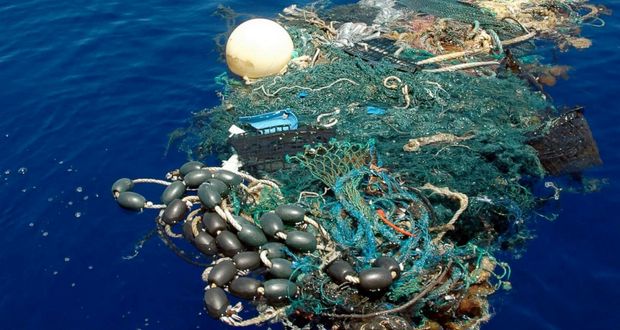
Fishing nets account for 46 percent of the trash in the Great Pacific Garbage Patch, with the majority of the rest composed of other fishing industry gear, including ropes, oyster spacers, eel traps, crates, and baskets.
2. Jellyfish live in every ocean and have survived five mass extinctions, for possibly 700 million years or more, despite most of them lacking specialized digestive, osmoregulatory, central nervous, respiratory, or circulatory systems.
3. The largest volcano on Earth is named Tamu Massif. Located at the bottom of the Pacific Ocean, it has the same surface as New Mexico, making it one of the largest volcanoes in the Solar System.
4. In order to stay hydrated, sea snakes drink a thin layer of fresh water that collects on the surface of the ocean, called a “lense”, after rainstorms. They do not drink seawater as previously thought.
5. Living in an area where you can see the ocean has been found to reduce psychological stress, even after controlling for factors such as income and neighborhood status.
Latest FactRepublic Video:
15 Most Controversial & Costly Blunders in History
6Inland Seas
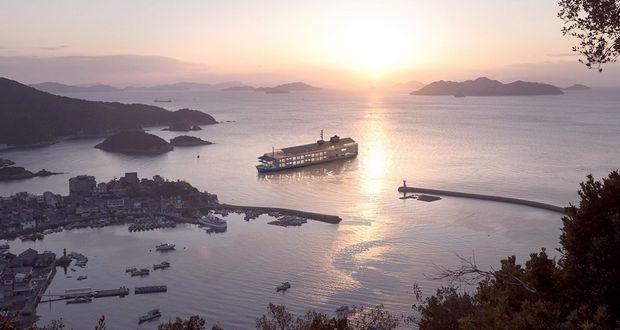
The difference between inland seas and lakes is that inland seas are formed as the result of oceans spilling over onto land during warm geological periods.
7. In 1998, a Frenchman named Benoît Lecomte swam 3,716 miles across the entire Atlantic Ocean, from Massachusetts to France; a feat that took him a total of 73 days, 5 of which he was being followed by a great white shark.
8. The Sargasso Sea in the North Atlantic is the only ‘sea’ with no land borders but instead is surrounded by ocean currents. It is known for being incredibly clear and full of a particular type of floating seaweed.
9. Internet cables that cross the Atlantic Ocean on the seabed are only as thick as a Magic Marker Pen in deep seas. Sharks like chewing these cables though it’s not known why. Sharks can sense electromagnetic fields so they may be attracted to the current.
10. The Bermuda Triangle has as many disappearances as any other place in the ocean of a similar size and many of the mysteries attributed to it happened outside of the triangle.
11Mediterranean Sea
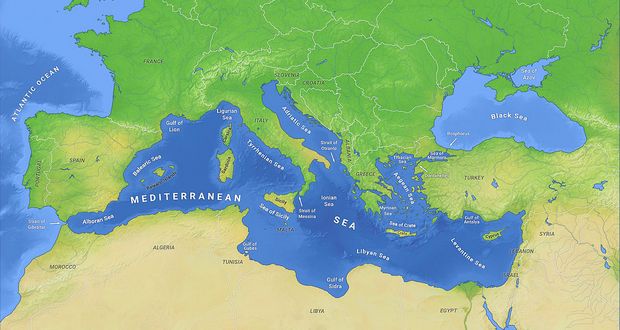
The area that is now the Mediterranean Sea was once dry, but about 5 million years ago the Atlantic Ocean poured through the Strait of Gibraltar at a rate 1000 times that of the Amazon, filling the Mediterranean Sea in about 2 years.
12. There is an intact cask of radioactive plutonium dioxide (part of radioisotope thermoelectric generator) on the bottom of the Pacific Ocean because Apollo 13 failed to land on the moon.
13. At 63,800,000 square miles, the Pacific Ocean is larger than all of Earth’s land area combined.
14. The U. S. Army secretly dumped 64 million pounds of nerve and mustard agents into the ocean, in at least 26 locations off both coasts. The Army can't say exactly where all the weapons were dumped because records are sketchy, missing or were destroyed.
15. We don’t get all of our drinking water from the ocean because it costs $1-2 dollars per cubic meter (264 gallons) to desalinate ocean water, while it only costs 10-20 cents to purify freshwater.
16Shipping Containers
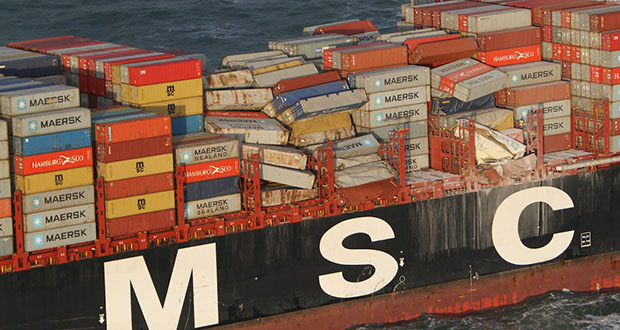
Thousands of Shipping Containers are lost to the sea each year, and if a container's cargo weight does not exceed 80% of the containers rated capacity, they will float. About 10,000 shipping containers are lost at sea each year and 10% of those hold toxic chemicals that may leak into the ocean.
17. Divers working on deep-sea infrastructure such as oil pipelines live in a pressurized chamber for a month. They are then taken between the chamber and their worksite by a pressurized diving bell. That way, they only need to be decompressed once, at the end of each 28-day job. This is called saturation diving.
18. Children from some ethnic groups of Southeast Asia (called Sea Gypsies) are capable of seeing clearly underwater and this skill wears off as they grow up. Some suggest that with practice any young person could achieve an underwater vision.
19. Most mermaid “sightings” by historical sea travelers were most likely manatees, dugongs, or Steller’s sea cows. In fact, Christopher Columbus spotted 3 manatees near the Dominican Republic and would later write that mermaids are “not half as beautiful as they are painted.”
20. Since sound can travel through the water better than it can in air, the potential number of decibels is greatly increased. LFA Sonar used by ships and submarines is the loudest man-made noise, reaching 200+ decibels. Marine biologists believe that sea creatures may beach themselves to escape the noise.
21Coconuts
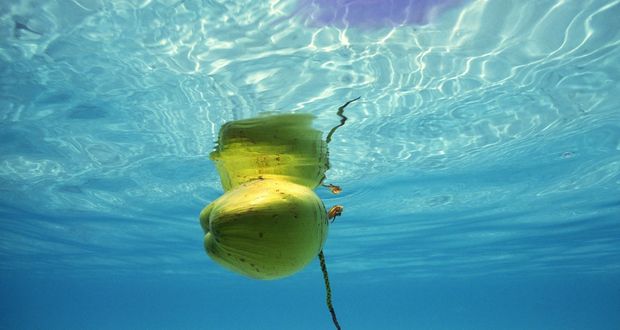
Coconuts transported themselves around the world by floating through the oceans. This is one of the reasons (along with human interference) coconuts are so widespread worldwide. So, yes, coconuts do migrate.
22. Until 40 years ago scientists believed all life and food chains ultimately depended on the sun for energy. The discovery of deep-sea vents with whole ecosystems driven solely by chemical energy changed this view. Now it’s thought that life may have actually originated from such systems.
23. Deep-Sea Gigantism is the tendency for species to be larger than their shallower-water relatives. Proposed explanations include: scarcer resources; greater pressure; and colder temperatures.
24. When a whale dies and its carcass falls into the Bathyal or Abyssal zone of the ocean floor, it can sustain a complex localized ecosystem of deep-sea organisms for decades. This is called a “whale fall”.
25. Old NYC subway cars are dumped into the Atlantic Ocean to help build an artificial reef to serve as a habitat for marine life.


