

1Copperhead's Warning Bite
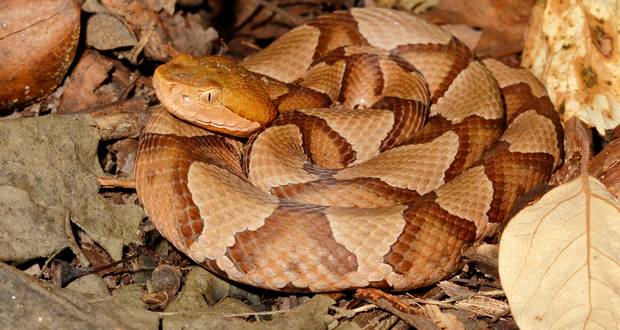
When stepped on or agitated, copperhead snakes often give a "warning bite" where they use little to no venom.
2. Anacondas mate in a giant "breeding ball" with 1 female and up to 12 males, and they stay in that position for a month.
3. In 2010, a boa constrictor was shown to have reproduced asexually via parthenogenesis. This is only the third genetically confirmed case of consecutive virgin births of viable offspring from a single female within any vertebrate lineage.
4. Coastal rubber boas are native to Southwestern Canada and the northwestern US. They are considered the most docile of boa species and are often used to help people overcome their fear of snakes. There are no reports of rubber boas ever biting a human under any circumstance.
5. Snakes are banned in New Zealand and smugglers could face penalties of up to a maximum of five years in jail and fines of up to $100,000. The ban is so strict that snakes are not allowed even in zoos.
Latest FactRepublic Video:
15 Most Controversial & Costly Blunders in History
6No Snakes In Ireland
There have never been snakes in Ireland because being cold-blooded, the snake couldn't survive the frozen ground during the ice age in the past.
7. Only 1/14,000th of an ounce of Australian brown snake venom can kill a human.
8. The Brown Tree Snake most likely traveled to remote Pacific Islands by hitching a free ride in the landing gear of an aircraft. As a result, the snake has decimated native bird populations on several islands like Guam.
9. Members of some Christian sects in the Southern United States are regularly bitten by venomous snakes while participating in "snake handling" rituals. This ritual is inspired by a literal interpretation of the Bible verses Mark 16:17–18.
10. The Texas rat snake, as well as two others types of vipers have been recorded to strike with accelerations up to 28 Gs (~275 m/s^2). Pilots lose consciousness at ~9 Gs.
11Pit Vipers
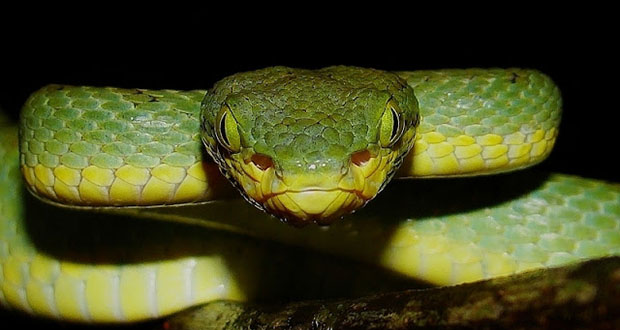
Pit vipers are named for the pits near their eyes which give them a sort of thermal vision.
12. The Black Mamba can reach a speed of 12mph (20km/h), which is faster than most humans can run.
13. The king cobra is the world's longest venomous snake, with a maximum length of over 19 feet.
14. Habushu is a liqueur made in Okinawa which involves submerging a living pit viper in a jar of alcohol and sealing it. Some variations involve putting the viper on ice to knock it out, gutting it and sewing it back up, and placing it in the alcohol only for it to wake up and get super aggressive before dying.
15. Based on past hunting experiences, snakes like vipers cam manipulate their ambush site by removing grass that comes in their strike path. They predict the future chain of actions and strategize their hunt.
16Cottonmouths

Although Cottonmouths are heavy-bodied snakes, they are also buoyant and swim with their whole body above the water.
17. Rattlesnake heads can see, flick the tongue, and inflict venomous bites for up to an hour after being severed from the body.
18. The western hooknose snake farts as a defense mechanism, and some of its farts are so strong that they can lift the snakes off the ground.
19. King cobras mainly eat other snakes, which requires more than killing rodents. This is why only one bite from a king cobra can kill an elephant.
20. The Arizona coral snake prefers aggressively farting at threats rather than using its powerful neurotoxic venom.
21Rhinoceros Viper

The rhinoceros viper is found in the forests of West and Central Africa. This colorful and nocturnal viper is considered to be one of the most venomous snakes in Africa, producing both a neurotoxic as well as hemotoxic venom, although very few cases of human envenomation have ever been reported.
22. The lake taal snake is a species of marine snake that evolved to adapt to a freshwater environment. It is found in a single Philippine lake that was cut off from the sea less than 500 years ago. This means that the snake evolved into a new species in just a few centuries.
23. Common kingsnakes (Lampropeltis getula) are notorious ophiophages and will consume rattlesnakes as readily as they will garter snakes. Immune to the venom of native pit vipers and capable of consuming a snake nearly as long as they are, kingsnakes also consume frogs, lizards, turtles & rodents.
24. Puff adders are a species of snake which are capable of hiding their scent from predators and prey.
25. The Echis a.k.a. Saw-Scaled Viper is responsible for more human-related deaths than any other snake and is arguably responsible for more deaths per year than all other snake species combined.


