


1Peeing Bones
Astronauts lose on average 1% of their bone mass a month, most of which is excreted in their urine. They literally pee their skeleton out.
2. Matches used to be made with toxic white phosphorus. It was so toxic that workers often contracted "Phossy Jaw," causing their face to rot away and their bones to literally glow in the dark.
3. An adult gets a whole new skeleton every 10 years due to constant bone remodeling.
4. It's possible to be declared brain-dead falsely because most physicians look at the brain stem, which controls heart and lung functions, but not the cortex, which coordinates consciousness.
5. The word ‘bonfire’ was a Middle English word to describe a large fire of bones typically used for cremation during plagues or wars.
Latest FactRepublic Video:
15 Most Controversial & Costly Blunders in History
6Road of Bones

There is a highway in Russia known as the Road of Bones, as the skeletons of the forced laborers who died during its construction were used in much of its foundations.
7. Bone marrow transplant recipients often inherit the donor’s immunities and allergies.
8. Osteogenesis imperfecta is a bone disorder in children that causes their bones to be extremely, easily broken, and parents are being sent to prison for child abuse because the disorder is very often overlooked or misdiagnosed.
9. The “ashes” you get after cremation is crushed bone, as the rest of the body (organic matter) vaporizes at high temperatures.
10. Doctors don’t bother lining up the bones when an infant breaks a bone. A bodily process called remodeling heals the bone in two weeks, and reshapes the bone back to normal in a couple of months.
11Camel Bites

Camel bites can cause your bones to dissolve.
12. The first-known definitive case of a benign bone tumor was discovered in the rib of a 120,000 year old specimen of a young Neanderthal.
13. There is a mutation that causes your bones to become super dense, filling life with inconveniences such as sinking like a rock and walking away from automobile accidents without a single fracture.
14. Titanium is the most bio-compatible metal, and new bone tissue will bond with it at the atomic level.
15. Humans are the only primates without a penis bone, leaving us dependent on hydraulic pressure alone. The penis bone in other primates “aids sexual reproduction by maintaining sufficient stiffness during sexual penetration.”
16Black Death
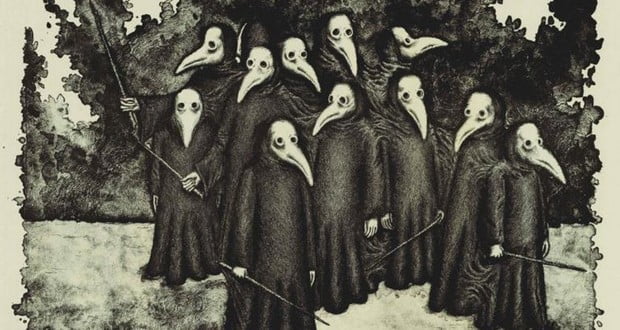
Black Death resulted in a stronger and longer-living human population. Scientists examined the bones of those who died before and after the plague and determined that people who were born after were stronger and more fit.
17. If a child loses their fingertip, it may sometimes grow back (nail, bone and all), though without a fingerprint.
18. After examining skeletal remains of medieval men, archeologists can tell who were archers because bows required a lot of strength to pull which deformed bones.
19. A pair of human feet consist of 52 bones and account for 25% of all bones in the body.
20. We typically do not start to think of foods as “too sweet” until our bone growth stops. Younger children have virtually no limit to the amount of sugar they find palatable.
21Facial Features in Men

Males may have evolved facial features specifically designed to take a punch. Researchers found that facial bones commonly broken during a fight grew more resilient as time progressed and were the same bones that showed the most divergence between males and females.
22. Fracture Putty is a material that is being developed that when packed in and around a bone fracture, provides full load bearing strength within days. It would create an osteoconductive bone-like structure that degrades into harmless resorbable byproducts as normal bone heals.
23. Strontium-90, an isotope emitted from nuclear fission, is chemically similar to calcium. This means that when it is inhaled after a nuclear blast, the body uses it as it would use calcium, depositing it straight into your bones where it delivers beta radiation to your bone marrow.
24. Hiccups are a holdover from early evolution when early land animals had both gills and lungs.
25. Drowning in salt water is different than drowning in freshwater. It takes longer, and salt water draws blood from the cells into the lungs. You drown in your own blood.


