


1Reindeer Vitamin D Efficiency

To survive the Arctic winter, reindeer evolved a gene mutation that allows them to process vitamin D 20% more efficiently, which is crucial for their antler development.
2. In 2010, Japan's RIKEN institute used ion beams in a particle accelerator to create mutant cherry blossom trees that bloom four times a year and produce more flowers.
3. Bats carry more viruses per species than most animals because of genetic mutations that weaken parts of their immune system. These changes let bats live with viruses without getting sick, making them ideal long-term hosts.
4. A study at Emory University nicknamed the gene RGS14 the "Homer Simpson gene" because deleting it in mice significantly enhanced memory and learning by unlocking plasticity in the previously inflexible CA2 region of the hippocampus. Mice lacking RGS14 were quicker at navigating mazes and better at recognizing objects, suggesting the gene normally acts as a brake on cognitive performance.
5. Owls possess serrated edges on their flight feathers, allowing for nearly silent flight. In contrast, fish eating owl species (such as the tawny and buffy fish owls) lack these feather adaptations, produce audible wingbeats, and rely more on vision than stealth while hunting.
Latest FactRepublic Video:
15 Most Controversial & Costly Blunders in History
6Grasshopper Mice vs. Scorpions

Grasshopper mice have evolved a remarkable adaptation: their Nav1.8 sodium channel carries a unique mutation that causes bark scorpion venom to bind and block it, effectively transforming a painful sting into a pain-relieving anesthetic. This allows them to prey on highly venomous Arizona bark scorpions with ease-grooming off the sting within seconds before killing and eating the scorpion without flinching.
7. Epidermodysplasia Verruciformis, also known as "Tree Man Illness," causes skin to resemble tree bark with wart growths due to HPV. This rare disorder occurs when an individual inherits a defective gene from each parent.
8. Many European and American Sphynx cats, known for their hairlessness, descend from two Minnesotan barn cats named Dermis and Epidermis, who naturally exhibited a hairless mutation.
9. A geneticist at Utah State University created "spider-goats" by inserting a spider silk gene into the DNA that controls milk production in goats. The resulting milk contains dragline silk proteins stronger than Kevlar, which can be used for sutures, artificial ligaments, and other medical applications.
10. A herd of non-albino white white-tailed deer was isolated by the 24-mile perimeter fence of the Seneca Army Depot in New York in 1941, capturing a small group carrying a recessive gene. With protection from hunting inside the depot, the white deer flourished, growing to about 700 deer by the 1950s-roughly 300 of which were white-making it the largest such herd in the world.
11Dogs' Starch-Digesting Evolution
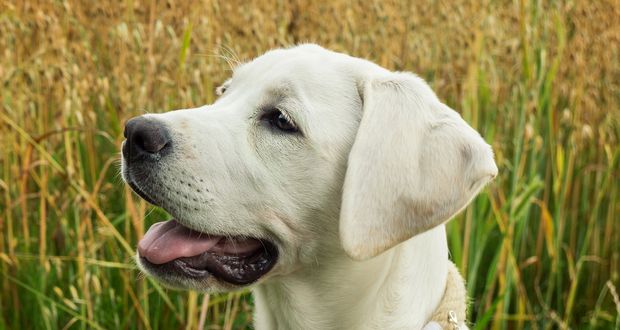
Modern dogs, descendants of wolves, are surprisingly adept at digesting starch thanks to a genetic adaptation: they have many more copies of the AMY2B gene-which codes for pancreatic amylase-than wolves do. Whereas wolves typically carry just two copies, dogs can have anywhere from 4 up to 30 (or even more), with an average around 10, and some breeds like the Tazi carrying up to 22 copies; this expanded copy number boosts starch?digesting enzyme levels and allowed dogs to thrive on human agricultural diets.
12. Giant pandas possess the full anatomical machinery to digest meat, but their TAS1R1 gene-a critical component of the umami (savory) taste receptor-has become a nonfunctional pseudogene, stripping them of the ability to taste meat. As a result, they lack any savory appetite and rely almost entirely on bamboo for nutrition, despite their carnivorous physiology.
13. A rare genetic condition called CAMRQ syndrome, which affects balance and coordination, has left a family in Turkey unable to walk. The disorder stems from a mutation that disrupts fat distribution in brain cells, leading to nerve damage, impaired motor control, and balance loss.
14. Fibromelanosis, a rare genetic mutation causing hyperpigmentation, causes silkie chickens' skin, muscle, and bones to appear black.
15. People with hypermobility often carry genetic variants affecting collagen and connective tissue, which studies suggest may be linked to a higher likelihood of having children with autism.
16Belgian Blue Cattle's Muscular Build

Belgian Blue cattle possess a myostatin-blocking mutation, making them exceptionally muscular. Despite their bulk, they have thin skin and small bones, resulting in lean meat that yields up to 40% more edible muscle than regular cattle.
17. A random mutation in our ape ancestors may have shortened their jawbones, reducing pressure on the skull and allowing the brain to grow larger. This simple change could have played a key role in the evolution of human intelligence.
18. A rare group of non-albino white coyotes in Newfoundland gets their unusual coat color from a gene mutation passed down through interbreeding with Golden Retrievers. This mutation, found in a gene called Mc1r, first entered the coyote population around 2001 and only appears when a coyote inherits the gene from both parents.
19. A rare mutation in the PDE10A gene among the Bajau tribe has enlarged their spleens, allowing them to store more oxygenated red blood cells. This adaptation enables them to free-dive for extended periods-often over 10 minutes-without breathing equipment.
20. Bdelloid rotifers, an all-female species that's been reproducing asexually for 80 million years, are known for stealing DNA from bacteria, fungi, and plants to mutate and enhance their genes. These microscopic marvels can also survive extreme conditions, including up to nine years of desiccation.
21Maned Lionesses' Genetic Mutation

A genetic mutation in lionesses can cause them to grow a mane, which elevates their pride's status over others.
22. A rare genetic mutation in the LRP5 gene can cause extremely dense bones, making them unusually strong and fracture-resistant. One man with this condition had bone density eight times higher than average, couldn't float while swimming, and walked away from a serious car crash without a single broken bone.
23. In 1947, a researcher at the University of Wisconsin-Madison accidentally created a colorless strain of Penicillium roqueforti, resulting in a "blue" cheese without the blue. Named Nuworld cheese, this unique variety is still produced in limited quantities today.
24. Distichiasis is a rare genetic disorder that causes a double row of eyelashes, often due to a mutation in the FOXC2 gene. While striking in appearance-as seen in Elizabeth Taylor-this mutation can also increase the risk of heart problems like lymphedema-distichiasis syndrome.
25. Wild almonds contain dangerous levels of cyanide due to high amygdalin content, making them bitter and toxic. A natural genetic mutation thousands of years ago reduced amygdalin, giving rise to the sweet, edible almonds we eat today.
